Skip to content

Posts from the ‘comment’ Category

No Items Found

On 10 March 1914, Mary Richardson, a militant member of the Women’s Social and Political Union, attacked the Rokeby Venus in the National Gallery. She slashed it with an axe in protest of the British establishment’s hypocrisy for prosecuting – or ‘destroying’, in her words – Emmeline Pankhurst and other suffragettes for demanding the right to vote, while admiring nudes and other idealised women in art galleries.

Although not my favourite feminist heroine, given her future role as the head of the women’s division of the British Union of Fascists, Richardson was the first of a long line of feminists to destroy or vandalise symbols of discrimination against women. The famous (non)burning of bras, curlers, and tights by the New York Radical Women at their anti-Miss America protest in 1968 signalled their refusal to buy into the stultifying middle-class feminine ideal – the ‘feminine mystique’ identified five years previously by Betty Friedan.

So what would women burn or chop today?

In a pleasing coincidence, I began teaching second wave feminism and the sexual revolution of the 1960s on International Women’s Day on Thursday. What struck – and depressed – me as I wrote these lectures is the extent to which the contemporary feminist movement is still fighting for the same things – equal pay, maternity leave, childcare – as women were during the 1960s and 1970s.

Even if sexism and gender inequality are now widely accepted as measures of injustice, the fact that the collection of nitwits running for the Republican candidateship feel that free access to contraception is an issue even worth debating, demonstrates that feminism still has some pretty basic battles to fight.

So when I suggest that many women would probably choose to burn women’s magazines, I do realise that women all over the world have to contend with considerably worse threats to their freedom. When Friedan and Helen Gurley Brown accused women’s magazines of the 1950s and 1960s of promoting an old-fashioned, limiting definition of femininity – one which confined women to the domestic space and which judged those women who chose alternative ways of living, as sluttish and improper – they did so in the belief that publications like Ladies Home Journal and Reader’s Digest contributed to the maintenance of patriarchy.

They bought into the view – told to Friedan by an advertising executive – that ‘properly manipulated…American housewives can be given that sense of identity, purpose, creativity, the self-realisation, even the sexual joy they lack – by the buying of things.’

I gave up reading women’s magazines when I moved to the UK for my PhD. I had to think more carefully about how to spend my money and decided on Waitrose Food Illustrated and Private Eye (I like to think of myself as well-rounded). I felt all the better for not having my various ‘imperfections’ pointed out to me monthly by the eternally chipper editorial staff of Marie Claire.

And that’s the invidious thing about women’s magazines: for all their guff about being aimed at ‘spirited‘ and ‘fearless’ women, these magazines peddle a deeply conservative vision of femininity: in their articles about balancing relationships with work, embracing physical ‘imperfections’ and ‘flaws’, eating ‘healthily’ (or not at all), and conforming to whatever’s fashionable that season, their implication is that the majority of their readers are not actually succeeding as women – that having a well-paying job is abnormal, that being fat (or even just not stick thin) is wrong, that women shouldn’t really enjoy sex, and not wearing or owning what’s fashionable is reprehensible. This is why women need to read Elle, Glamour, and, Lord help us, Cosmopolitan in order to become ‘normal’.

Doing research for this post this morning – thank you Melissa’s in Kloof Street for having such an excellent selection of magazines – I choked on my muesli as I read an article in Glamour advising its readers how to be ‘good at sex’, complete with a ‘confession’ from a reader who was, apparently, ‘bad’ as sex. How? How is it possible to be ‘bad’ at sex? Did the wrong bit end up in the wrong hole? Or what?

But what gets to me the most about these magazines is the nonsense they write about food and nutrition under the guise of promoting ‘healthy’ lifestyles. As the writer Hillary Rosner recounts of her experiences of writing for women’s magazines in the US, factual accuracy seems to be the last thing which interests magazine editors:

I was told multiple times by editors at another women’s mag to feed a source a quote—as in, ‘Can you call this source back and see if they’ll make this specific point in these exact words?’ These were stories about health, in a magazine women turn to for actual, truthful, information. (I refused.)

The Glamour website for South Africa lists a range of tips for healthy eating, most of which are not based on any firm, scientific evidence. For instance, a section on ‘detox’ perpetuates the myth that it’s necessary – and possible – to ‘detoxify’ one’s body after a particularly bad bout of unhealthy eating and drinking. This is not true. There is no evidence whatsoever to prove that going on ‘detox’ diets do our bodies any good. We don’t carry around in us ‘toxins’ and ‘impurities’ which need, somehow, to be flushed out of our systems.

So what do they suggest for detox – particularly when hung over? They begin with water and fruit juice, which are fine. But their suggestions of tuna, brown rice, and quinoa, while good to eat, won’t end a hangover. And, no, peppermint tea isn’t ‘known to speed up the detoxification process’, nor will eating gherkins. They suggest that there’s something wrong about eating carbohydrates (there isn’t) and that drinking milk will in some way ‘prevent alcoholic damage’ to your body (it won’t).

An even more preposterous post lists the ‘junk foods’ which are supposed to make readers lose weight. They suggest, wrongly, that the calcium in ice cream, milkshakes, and cheese will curb appetites and help to ‘break down fat’. And since when were popcorn and potatoes ‘junk food’? The long list of foods which, apparently, fight cellulite – from apples and celery to oats and popcorn (wait, wasn’t that supposed to be junk food?) – are all part of a healthy diet, but won’t specifically reduce one’s cellulite. There is no miracle cure for cellulite.

For a magazine which seeks, apparently, to promote healthy body images, it has a strange obsession with weight loss – and with foods which, apparently, limit one’s appetite. In a single post about ‘Post-Holiday Body Blues’ (no, me neither), yogurt, eggs, and beef are all credited for making one feel ‘fuller for longer’ and for combating ‘food cravings’.

Aren’t women supposed to eat? Or, if they are, they are not supposed to show any enjoyment of it. A post on puddings begins:

If we weren’t afraid of looking greedy, we’d admit that we don’t care much for mains, that starters are quite dull and that what makes restaurant trips so toe-tinglingly exciting is the prospect of gooey chocolate and burnt sugar.

There is nothing greedy, sinful, indulgent, or decadent – all favourite women’s mag terms for sweet things – about eating pudding. It is greedy to accept a bonus of a couple of million pounds; sinful to murder someone; indulgent to spoil a child; and decadent to play stringed instruments while Rome burns. These adjectives do not apply to the eating of cake.

We know stunningly little about the science of nutrition. The most common result on the databases I was using to research the relative benefits of gherkins, ice cream, and popcorn as proposed by Glamour, was ‘no items found’. For all that women’s magazines insist that ‘science’ or ‘scientists’ (never defined and never properly referenced) have proven the claims on which their advice is based, we only know that a healthy diet is high in fruit and vegetables, and relatively low in sugar and saturated fat. Everything else is pure speculation.

And this is a boon to women’s magazines. Their agenda is to discourage women from eating at all, and if they can marshal ‘science’ and facts pulled from the air – or, more likely, dodgy nutrition websites – to support this view, then so much the better.

Given the wide readership of these magazines, this is extraordinarily irresponsible journalism. But it also demonstrates the extent to which women’s magazines are complicit in the promotion of a femininity predicated on body shape: being ultra-thin is, in the eyes of these magazines, a signifier of success and, most importantly, of being in control.

I think that this is best exemplified by the conclusion of an article about dieting in this month’s Cosmopolitan:

And if you have friends who eat healthily and exercise regularly, don’t tempt them to have the dressing or the cheesecake they resolutely resist, or to skip gym or a run…. Be supportive or mind your own business – ‘many lie about their true diet simply because others are judgemental, and you may presume them into deception.’

If this is the only control allowed to women, then feminism still has a long way to go.

Further reading

Betty Friedan, The Feminine Mystique (New York: Norton, 1963).

Helen Gurley Brown, Sex and the Single Girl (New York: B. Geis Associated, 1962).

Mark H. Lytle, America’s Uncivil Wars: The Sixties Era, from Elvis to the Fall of Richard Nixon (New York: Oxford University Press, 2006).

Nora L. Magid, ‘The Heart, the Mind, the Pickled Okra: Women’s Magazines in the Sixties,’ The North American Review, vol. 255, no. 4 (Winter, 1970), pp. 20-29.

Susie Orbach, Fat is a Feminist Issue: The Anti-Diet Guide to Permanent Weight Loss (New York and London: Paddington Press, 1978).

Creative Commons License Tangerine and Cinnamon by Sarah Duff is licensed under a Creative Commons Attribution-ShareAlike 3.0 Unported License.

Bananas

This term a colleague and I are teaching a course on the 1960s to our third-year students (who are uniformly lovely – henceforth I shall only teach third-year students, Head of Department-willing). I’ve spent the past two lectures on the counter-cuisine, a movement located mainly in California from around 1966 onwards. Aside from the loonier fringes represented by the Diggers and some members of the back-to-the-land movement, the most durable remnant of the food counterculture was the co-operative movement. Over five thousand buying clubs and co-operative groceries were established between 1969 and 1979. Warren Belasco explains:

Although many consumers flocked to these hip stores just for the cheaper, healthier food, co-op organisers frequently had a more ambitious agenda: using socialised food distribution as a starting point, they hoped to establish a decentralised, democratic, alternative economic network that would sustain an oppositional culture and eventually subvert the wider society.

One woman, who was a member of the West Concord Food and Friendship Co-Op remembers:

Every week we picked up our orders of whole grains, nuts, oils, dried fruits, seeds, tofu, yogurt, cheese, and peanut butter, bringing our own re-used quart and gallon jars and plastic containers. When it was our turn to place and break down the order we collated all the previous week’s orders, placed the order with NEFCO, the New England Federation of Cooperatives, and then divided up the bulk goods into boxes for each member. The food was first rate: gallon jars of organic yogurt with the cream on top, vats of tofu in pound blocks bought directly from Boston’s Chinatown, and 10-pound blocks of sharp cheddar cheese from the Cabot dairy cooperative in Vermont – for we purchased from producer cooperatives whenever possible.

One of the things which struck me as I wrote these lectures was how similar the present food revolution – whatever that may be – is to the counter-cuisine: as the Diggers distributed free food at Golden Gate Park in 1966, using food discarded by supermarkets, so organisations like This is Rubbish raise awareness about food waste by ‘skipping’ – collecting fresh produce past its sell-by date and then serving it in free feasts. The amazing People’s Supermarket provides an alternative to supermarkets by being run along co-operative lines.

As the co-operatives of the 1960s went out of their way to support local producers – as Alice Waters’s Chez Panisse (founded in 1971) bases its menus on what local organic farmers are harvesting – so now eating ‘locally’ is seen as one of the best ways of eating responsibly and sustainably. ‘Locavorism’ offers an alternative to a globalised, industrialised food system which stocks supermarkets with strawberries – flown halfway across the world – in the middle of winter.

But our food supply has been globalised since at least the beginning of the twentieth century. Already in the 1870s, improvements in transportation meant that Canadian and American wheat fed Europe during one of the worst harvest failures of that century. But the excitement many felt during the twentieth century at the prospect of relatively cheap pineapples and papaya grown abroad and flown and shipped to Western supermarkets, has been replaced by a deep concern about the environmental cost of unseasonal eating, and the power of Big Food.

There is another reason to think twice about food shipped in from abroad: its political cost.

I’ve just finished reading Nicholas Shaxon’s eye-poppingly good Treasure Islands: Tax Havens and the Men Who Stole the World (2011). He argues that tax havens – which the International Monetary Fund estimates to hold more than a third of the world’s GDP on their balance sheets – have fundamentally undermined the world’s economic system. Not only has the legitimate, on-shore financial system become progressively deregulated to compete with offshore – helping to cause the 2008 crash – but tax avoidance keeps poor nations reliant on aid. He explains:

Offshore business is, at heart, about artificially manipulating paper trails of money across borders. To get an idea of how artificial it can be, consider the banana.

Each bunch takes two routes into your fruit bowl. The first route involves a Honduran worker employed by a multinational who picks the bananas, which are packaged and shipped to Britain. The multinational sells the fruit to a big supermarket chain, which sells it to you.

So far, so obvious. But then it becomes more interesting:

The second route – the accountants’ paper trail – is more round-about. When a Honduran banana is sold in Britain, where are the final profits generated, from a tax point of view? In Honduras? In the British supermarket? In the multinational’s US head office? How much do management expertise, the brand name, or insurance contribute to profits and costs? Nobody can say for sure. So the accountant can, more or less, make it up. They might, for example, advise the banana company to run its purchasing network from the Cayman Islands and run its financial services out of Luxembourg. The multinational might locate the company brand in Ireland; its shipping arm in the Isle of Man; ‘management expertise’ in Jersey and its insurance subsidy in Bermuda.

Say the Luxembourg financing subsidiary now lends money to the Honduras subsidiary and charges interest at $20 million per year. The Honduran subsidiary deducts this sum from its local profits, cutting or wiping them out (and its tax bill). The Luxembourg’s subsidiary’s $20 million in extra income, however, is only taxed at Luxembourg’s ultra-low tax haven rate. With a wave of an accountant’s wand, a hefty tax bill has disappeared, and capital has shifted offshore.

What are the implications of this? Most importantly, our banana multinational has managed to avoid paying the Honduran government – or indeed any government – any tax.

About two-thirds of global cross-border world trade happens inside multinational corporations. Developing countries lose an estimated $160 billion each year just to corporate trade mispricing of this kind. That much spent on health-care, Christian Aid reckons, could save the lives of 1,000 under-five children per day.

In 2006, the world’s three biggest banana companies, Del Monte, Dole, and Chiquita, paid only $235,000 tax between them – despite combined profits of nearly $750 million.

I’m sure that Shaxon chose deliberately to use Honduras as an example. Until 1970, Chiquita was known as the United Fruit Company. Fans of One Hundred Years of Solitude (1967) by Gabriel Garcia Marquez might have inkling about the United Fruit Company’s murky past:

The gringos…built a separate town across the railroad tracks with streets lined with palm trees…. The section was surrounded by a metal fence topped with a band of electrified chicken wire which during the cool summer mornings would be black with roasted swallows. No one knew yet what they were after, or whether they were actually nothing but philanthropists, and they had already caused a colossal disturbance…. Endowed with means that had been reserved for Divine Providence in former times, they changed the pattern of the rains, accelerated the cycle of the harvests, and moved the river from where it had always been and put it with its white stones and icy currents on the other side of the town, behind the cemetery.

The coming of the Americans – all of them employees of an unnamed banana company – is the cause of the ‘events that would deal Macondo its fatal blow’, chief of which is a massacre of striking workers. The employees of the banana company decide to down tools because of low pay and their appalling working conditions – something justified by the ‘mournful lawyers’ of the banana company on the grounds that

the banana company did not have, never had had, and never would have any workers in its service because they were all hired on a temporary and occasional basis. …it was established and set down in solemn decrees that the workers did not exist.

Caught in this ‘hermeneutical delirium’, the striking workers are at the mercy of the banana company and the army, sent to quell their action. The strike ends with a massacre in the town square, when soldiers turn their automatic weapons on an unarmed crowd.

This is a description of a real event, the massacre de las bananerasthe banana massacre – in Ciénaga, Colombia, on 6 December 1928. Garcia Marquez’s ‘banana company’ was the United Fruit Company, which hired labour only through local agents to avoid having to comply with Colombia’s labour laws. When Colombian workers demanded better conditions and formalised contracts, their strike became the biggest in Colombian history, and came to an end when the Colombian army opened fire on peaceful protestors in Ciénaga.

The term ‘banana republic’ was coined by O. Henry in his anthology Cabbages and Kings (1904) in his account of his brief stay in Honduras – on the run from an embezzling charge – to describe a country run for the profit of a small elite of politicians and businessmen. The business in question was the United Fruit Company – and the term could be used to describe most of the Latin American countries in which United Fruit operated.

Founded in 1909, United Fruit emerged as the largest North American banana importer during the first two decades of the twentieth century. Its success was due partly to its strategy of manipulating governments into allowing it to pursue its interests, mainly by excluding all other opposition. It created monopolies by paying local producers higher prices than its competitors – and then dropped these prices to well below acceptable levels once the rivals had left the market, often impoverishing its suppliers.

When United Fruit began cultivating its own plantations during the 1930s, it did so across Latin America. If one of its divisions succumbed to Panama disease (Fusarium cubens), the company simply abandoned it – and those workers – and destroyed all the infrastructure which would have allowed other companies to begin farming there again once the plants were rid of the fungus.

To top this, the company was not averse to manipulating governments through bribery and intimidation, and sponsoring the odd coup d’état. United Fruit lobbied hard for the CIA-backed coup in Guatemala in 1954, when the left-leaning Jacobo Árbenz Guzmán – who had expropriated land claimed by the company – was replaced by the rightwinger Carlos Castillo Armas.

As Pablo Neruda wrote in his poem ‘La United Fruit Co.’ (1950):

When the trumpet sounded
everything was prepared on earth,
and Jehovah gave the world
to Coca-Cola Inc., Anaconda,
Ford Motors, and other corporations.
The United Fruit Company
reserved for itself the most juicy
piece, the central coast of my world,
the delicate waist of America.

It rebaptised these countries
Banana Republics,
and over the sleeping dead,
over the unquiet heroes
who won greatness,
liberty, and banners,
it established an opera buffa:
it abolished free will,
gave out imperial crowns,
encouraged envy, attracted
the dictatorship of flies:

It seems that Chiquita still engages in questionable practises, other than doing its best not to pay tax. An investigation into Chiquita’s business dealings in Latin America during the late nineties alleged that the company bribed officials, used dangerous pesticides, employed its workers in appalling conditions, and illegally maintained a monopoly on banana production.

In 2003, Chiquita admitted to paying $1.7 million to the paramilitary group the United Self Defence Forces of Colombia (AUC), which has been listed as a terrorist organisation by the US State Department. The company also allegedly provided AK-47s to the group. Chiquita said that the payments were to protect its workers, but the Colombian authorities reject this, arguing that they were meant to allow Chiquita to continue producing bananas and to discourage labour unrest. It’s difficult to believe Chiquita’s claims as it becomes clear that nearly all of the victims of the AUC were Colombian workers.

So what are earnest locavores to do? They could stop buying bananas altogether, along with other imported produce. I have mixed feelings about this. I really like being able to support farmers in Kenya. We know that the distance that food travels between producer and plate is not necessarily linked to its impact on the environment: a ready meal made in a local factory may have a bigger carbon footprint than string beans grown in Tanzania. Another alternative would be to buy certified, Fair Trade products.

But, even so, Fair Trade can have only a limited impact. The problem with Fair Trade is that it asks consumers – those at the end of the food chain – to make the choices which will change a whole food system. This, particularly during a recession, is absolutely impossible. For real change to happen, we need a fundamental reform of both political and economic systems:

Fair trade alone cannot address the core problem of excessively concentrated markets in which a handful of overpowerful transnational corporations dictate terms of trade and suck profits up into their own coffers.

What is needed for really fair trade is a more equitable distribution of the money in the chain. That will only be achieved with a shift in power which requires political action.

Which is why, oddly, getting Chiquita to pay its taxes is the first step in creating a better and fairer food system.

Further Reading

Sources cited here:

Warren Belasco, Meals to Come: A History of the Future of Food (Berkeley: University of California Press, 2006).

Warren Belasco, Review of Storefront Revolution: Food Co-ops and the Counterculture by Craig Cox, The Journal of American History, vol. 82, no. 2 (Sep., 1995), pp. 853-854.

Marcelo Bucheli, ‘Enforcing Business Contracts in South America: The United Fruit Company and Colombian Banana Planters in the Twentieth Century,’ The Business History Review, vol. 78, no. 2 (Summer, 2004), pp. 181-212.

Gabriel Garcia Marquez, One Hundred Years of Solitude, trans. Gregory Rabassa (London: Penguin, [1967] 1973).

Mark Moberg, ‘Crown Colony as Banana Republic: The United Fruit Company in British Honduras, 1900-1920,’ Journal of Latin American Studies, vol. 28, no. 2 (May, 1996), pp. 357-381.

Nicholas Shaxon, Treasure Islands: Tax Havens and the Men Who Stole the World, revised ed. (London: Vintage, 2012).

Other sources:

Anthony Ashbolt, ‘From Haight-Ashbury to Soulful Socialism: Culture and Politics in the Movement,’ AJAS, vol. 1, no. 3 (July 1982), pp. 28-38.

Warren Belasco, Appetite for Change: How the Counterculture Took on the Food Industry, 1966-1988, revised ed. (London: Cornell University Press, 2007).

Andrew Kirk, ‘Appropriating Technology: The Whole Earth Catalog and Counterculture Environmental Politics,’ Environmental History, vol. 6, no. 3 (Jul., 2001), pp. 374-394.

Creative Commons License Tangerine and Cinnamon by Sarah Duff is licensed under a Creative Commons Attribution-ShareAlike 3.0 Unported License.


Brave New Food

The TV series which I most want to watch at the moment is Portlandia. Set in Portland, Oregon, it satirises and celebrates the city which originated the ur-hipster. It includes a scene in a restaurant – which I’ve watched only on youtube, alas – in which a couple questions their waitress about the provenance of the chicken on the menu. Assured that it’s free range, local, and organic – partly because their waitress provides them with its papers and name – they leave the restaurant to have a look at it:

This is hilarious because it so closely mimics reality: the menus which list the provenance of all the produce used in the restaurant; the farmers’ market stalls with photographs of happy animals pre-slaughter; the recipes which insist upon free-range, organic ingredients.

I laugh, but I’m as implicated in this hyper-sensitivity about where my food comes from, and how it was treated before it arrived on my plate. I don’t want to eat animals that suffered so that I can continue being an omnivore. I eat relatively little meat and am prepared to pay for free-range chicken, pork, and beef. (I’m not terribly fussed about it being ‘organic’ – whatever we may mean by that.)

It is a scandal how animals are treated in factory farms, and increasing demand for red meat is environmentally unsustainable. So how should we eat meat, without causing harm? If vegetarianism is as implicated in the meat economy – veal is a by-product of the dairy industry, for example – and veganism seems far too difficult, then one way out of this impasse is to consider synthetic alternatives.

I’ve been amused by the overwhelming response to reports about the apparent viability of lab-grown meat. ‘Eeew’ and ‘yuk’ seem to sum up how people feel about it. But lab-grown meat is only the most recent panacea to the world’s crisis produced by scientists – and our views on it say a great deal about our changing feelings about the relationship between food and technology.

The meat in question is being grown by Dr Mark Post at Maastricht University. He’s being funded by an anonymous donor who’s concerned about the greenhouse gas emissions produced by cattle farming. Using stem cells from cows, Post’s team have grown sheets of muscle between pieces of Velcro, which are shocked with an electric current to develop their texture and density:

Post said he could theoretically increase the number of burgers made from a single cow from 100 to 100m. ‘That means we could reduce the number of livestock we use by 1m,’ he said.

Meat grown in the laboratory could have several advantages, because its manufacture is controlled at each step. The tissue could be grown to produce high levels of healthy polyunsaturated fatty acids, or to have a particular texture.

He believes it will be a relatively simple matter to scale up the operation, since most of the technical obstacles have already been overcome. ‘I’d estimate that we could see mass production in another 10 to 20 years,’ he said.

Post hopes to produce a burger by October.

When I read the earliest reports about Post’s work, I thought immediately of a scene in Margaret Atwood’s Oryx and Crake, where the protagonist visits a lab which grows chicken breasts out of stem cells. This is a dystopian novel which plays on our suspicion of food grown in laboratories. It seems strange, now, for us to consider synthetic, artificial, man-made food to be superior to all that is ‘fresh’, ‘natural’ and ‘authentic’. But this is a relatively new way of thinking about food.

During the 1950s, a decade when science seemed to offer the possibility of a cleaner, healthier, and better organised world, there was a brief, but intense enthusiasm for Chlorella pyrenoidosa, a high-protein algae which grew rapidly and abundantly and was fed by sunlight and carbon dioxide.

The post-war baby boom gave rise to anxieties in the 1950s that the world would be unable to feed its growing population. Of course, we now know that innovations in agriculture during this period – including the wholesale mechanisation of farming, the increased use of pesticides, hormones, and antibiotics, and breeding high-yielding livestock – and the Green Revolution of the 1960s and 1970s produced the crops and farming methods which, at enormous environmental cost, still feed seven billion of us. But at the time, politicians worried that hungry nations would create a politically unstable world.

Algae looked like a sensible solution to the problem. Easy and cheap to grow, and apparently highly nutritious, this seemed to be the Brave New World of food production. Warren Belasco writes:

The alluring news came from pilot projects sponsored by the Carnegie Institution and conducted by the Stanford Research Institute in Menlo Park and by Arthur D. Little, Inc. in Cambridge. Initial results suggested that chlorella algae was an astounding photosynthetic superstar. When grown in optimal conditions – sunny, warm, shallow ponds fed by simple carbon dioxide – chlorella converted upwards of 20 per cent of solar energy…into a plant containing 50 per cent protein when dried. Unlike most plants, chlorella’s protein was ‘complete’, for it had the ten amino acids then considered essential, and it was also packed with calories, fat, and vitamins.

In today’s terms, chlorella was a superfood. Scientists fell over themselves in excitement: Scientific American and Science reported on it in glowing terms; the Rockefeller Foundation funded research into it; and some calculated that a plantation the size of Rhode Island was would be able to supply half the world’s daily protein requirements.

In the context of a mid-century enthusiasm for all that was efficient, systematic, and man-made, algae’s appeal was immediate: it was entirely usable and produced little or no waste; its farming was not dependent on variable weather and rainfall; it was clean and could be transformed into something that was optimally nutritious.

So why didn’t I have a chlorella burrito for supper?

Unfortunately, chlorella didn’t live up to the hype. Not only did the production of grains and soybeans increase exponentially during the 1950s, meaning that farmers were loath to switch to a new and untested crop, but further research revealed that chlorella production would be more complicated and expensive than initially envisaged. Growing chlorella in the quantities needed to be financially viable required expensive equipment, and it proved to be susceptible to changes in temperature. Harvesting and drying it was even more of headache.

On top of this, chlorella tasted terrible. There were some hopes that the American food industry might be able to transform bitter green chlorella into an enticing foodstuff – in much the same way they used additives and preservatives to manufacture the range of processed foods which bedecked the groaning supermarket shelves of 1950s America. Edible chlorella was not a world away from primula cheese.

Those who were less impressed by the food industry suggested that chlorella could be used to fortify bread and pasta – or even transformed into animal feed. But research demonstrated that heating chlorella destroyed most of its nutrients. Even one of its supporters called it ‘a nasty little green vegetable.’ By the 1960s, it was obvious that at $1,000 a ton, and inedible, chlorella was not going to be the food of the future.

All was not lost for chlorella, though. It proved to be surprisingly popular in Japan, where it is still sold as a nutritional supplement. The West’s enthusiasm for algae also hasn’t dimmed:

The discovery in the 1960s of the blue-green algae spirulina in the Saharan Lake Chad and in Mexico’s Lake Texcoco gave another boost to the health food uses of algae. Spirulina has a high-nutrient profile similar to chlorella’s but without…production problems….

Ironically, the food that was supposed to feed the world is now the preserve of the wealthy, health-conscious middle classes – those who suffer most from the diseases of affluence – who can afford to buy small jars of powdered algae.

I hope that Post’s project manages to create a viable product which can be used to supplement people’s diets. I’m not particularly revolted by the idea of lab-grown meat, and if means that it reduces the numbers of factory farms, then that can only be a good thing.

What concerns me more are the potential motives of the businesses which would produce lab-grown meat. If it is taken up by the global food industry – which has patchy records on environmental sustainability and social responsibility – will we be able to trust them to provide us with meat which is healthy for us, and ethically produced?

Source

Warren Belasco, Meals to Come: A History of the Future of Food (Berkeley: University of California Press, 2006).

Creative Commons License Tangerine and Cinnamon by Sarah Duff is licensed under a Creative Commons Attribution-ShareAlike 3.0 Unported License.

A world in your coffee cup

My friend Elizabeth and I have breakfast together every Friday morning. For the past month or so, we’ve managed to eat at a different cafe each week – our only criteria being that they’re in central Cape Town and open early. This week we went to The Power and the Glory, a restaurant and club now irredeemably associated with the city’s burgeoning population of hipsters. But it serves an excellent breakfast. (More evidence that hipsters can serve breakfast well.) And it is – inadvertently – immensely entertaining. As I sat at a window, waiting for Elizabeth to arrive, a hipster customer arrived to buy a take-away coffee.

The scene was almost a parody of hipster-ness: hipster customer was wearing a high-waisted print skirt, brogues, and an elaborate tattoo; hipster waitress behind the serving counter was in a red vintage frock with a tousled pixie hairdo. Both were very pale, and very skinny. (I think we need a term to describe the extreme thinness of hipsters.) Hipster customer removed her hipster shades and asked for a cappuccino.

An awkward silence fell.

Hipster cafes don’t sell cappuccinos. They sell flat whites. Asking for a flat white is as much an indicator of hipster membership as a subscription to The Gentlewoman.

This left hipster waitress in a difficult position. Should she forgo her hipster principles for a moment, ignore the faux pas and order her customer a flat white? Or should she correct her? Was the hipster customer an influential hipster, and not worth insulting? Or was this the time to establish which of the pair was the real hipster?

The barrista, a beefy non-hipster who’d been watching this with some amusement, stepped in. ‘I think you mean a flat white,’ he said.

‘I do!’ said hipster customer.

And all was resolved.

Even if this hilarious moment of hipster awkwardness was so much of its time and place – it was at once typically Capetonian and typical of a particular sub-culture – the fact that it happened over a coffee, gives it almost a timeless quality.

Coffee is unusual in that it has managed to remain fashionable since its arrival in Europe at the beginning of the seventeenth century. Flat whites are only the most recent manifestation of cool coffee. They seem to have originated in Auckland in the late 80s, and differ from cappuccinos or lattes – the more familiar, Italianate forms of hot coffee-and-milk – in that the milk is heated until it’s thick and warm, rather than only frothy.

Flat whites arrived in London four or five years ago, with the opening of a series of small coffee shops in the cooler parts of east and central London by Kiwi expats. Chains like Costa and Starbucks have since added flat whites to their menus, but – as hipsters know – a flat white is defined as much as the cafe and person who makes it, as it is by its ratio of coffee to milk.

And that is the issue. Coffee is coffee, but we’ve come to associate particular meanings with the ways in which we prepare it: between someone who buys their coffee from Origin or Truth in Cape Town and another who only drinks instant, chicory-flavoured Ricoffy with UHT milk. (Which is, incidentally, my idea of culinary hell.) Both are forms of coffee, but they are socially and culturally miles apart. Studying shifting patterns in coffee fashion is fascinating in itself, but they become more interesting when we think of them within the complex networks of trade and finance which allow us to buy coffee at restaurants and in supermarkets.

The coffee craze in Europe in the seventeenth and eighteenth centuries contributed to a boom in the coffee trade. Coffee had been available since early 1600s, having been imported to Europe from Turkey via Venice. Mixed with milk and sugar, it became popular with the new European middle classes. It was associated with exotic sophistication – and also became a marker of intellectual adventurousness. It’s difficult to underestimate the extent to which drinking coffee and the culture and politics of the Enlightenment were entangled, as Anne EC McCants writes:

The expression ‘to break bread together’ now has an archaic feel to it. A proximate contemporary substitute, albeit devoid of the powerful religious significance of bread, is to ‘go out for a cup of coffee’, which is at least as much about conversation as it is about nourishment per se. Historians associate this total reorientation of the culture of food and drink with the substitution of coffeehouses for taverns; the wider dissemination of public news; trading on the stock exchange; new table etiquette and table wares; new arrangements of domestic and public space; the ability to sustain new industrial work schedules despite their tedium….

One of the best depictions of the appeal of the new, middle-class coffee culture is JS Bach’s Coffee Cantata (1732-1735), in which a ‘disobedient’ and ‘obstinate’ young woman’s addiction to coffee so annoys her father that he threatens not to allow her to marry, unless she gives up coffee. In the end she agrees, but – without her father knowing – resolves to include her clause in her marriage contract which stipulates that she must have a steady supply of coffee.

The first coffee house opened in Britain in 1650, and within a decade there were around 3,000 of them in London. These were places where men could meet to talk in relative freedom. In 1675, Charles II tried to close them in fear that coffee house patrons were plotting to overthrow him. (Given his father’s sticky end, a paranoia about the middle classes was always inevitable.) Monarchical and official suspicion of coffee houses never really ended, though. These were places where the free exchange of information allowed for the dissemination of the Enlightenment ideas that transformed the eighteenth-century world.

But trade was also changing this world. When the Dutch managed to get hold of coffee plants from Arab traders in 1690, they established plantations in Java, where they already cultivated a range of spices. The French began to grow coffee in the West Indies at the beginning of the eighteenth century, and over the course of the next hundred years or so, coffee was planted in West Africa and parts of Latin America.

The plantation system – in many ways the origins of modern capitalism – was dependent on slave labour. Europe’s taste for coffee was satisfied by slavery. But even after the abolition of slavery in the early and middle of the nineteenth century, European demand for coffee shaped the economies of countries very far away.

The domestication of coffee consumption in the nineteenth century – when women began to drink coffee, and more of it was served at home – caused demand to spike. Improvements in transport meant that coffee could be shipped over longer distances far quicker and in greater quantities than ever before. During the 1820s and 1830s, coffee cultivation became a way of linking the economies of newly-independent nations in Latin America, to global trade. Coffee production in Guatemala, Nicaragua, Costa Rica, and El Salvador increased exponentially, and governments introduced measures to facilitate the industry: new transport infrastructure, tax breaks for landowners, low or no export duties, and legislation to lower the cost of labour.

Plentiful land and cheap labour were secured by progressively disenfranchising Indian populations, whose right to own property and to work where they pleased was eroded by pro-plantation legislation. Uprisings against governments and landowners were stamped out – usually with the help of the military. The argument for increased coffee production just seemed so compelling. By the end of the nineteenth century, ninety per cent of the world’s coffee came from South America.

Brazil was the largest single Latin American supplier of coffee, and from 1906 onwards was the controller of the international coffee trade. The Brazilian government bought up beans, stockpiled them, and then released them into the market, thereby regulating the coffee price. European and North American countries encouraged African countries to begin cultivating coffee on a grander scale too.

African producers tended to grow Robusta coffee varieties, which are generally hardier, but less tasty, than the Arabica coffee produced in Latin America. This meant that when demand for instant coffee grew in the 1950s, coffee production in postcolonial African states, whose governments subsidised coffee farmers and facilitated the free movement of labour, flourished. The entry of African coffee growers into the world market meant that the price began to plummet – and the Kennedy administration in the US realised that this was an ideal opportunity for some Cold War quiet diplomacy.

The 1962 International Coffee Agreement was meant to stabilise Latin American economies and to immunise them against potential Soviet-backed revolutions by introducing production quotas for every major coffee producing nation. Even if the ICA did include African producers, it favoured the US and Brazil, effectively giving them veto rights on any policy decisions.

The collapse of the Agreement in the late eighties – partly as a result of the increased production of non-signatories, like Vietnam – caused a major decline in the price of coffee. For consumers and cafe owners, this was distinctly good thing: good coffee was cheaper than ever before. Coffee shops in the US, in particular, fuelled a demand for good, ‘real’, coffee.

But for Rwanda, the collapse of the international coffee price and the end of regulation had disastrous implications. In 1986 and 1987, Rwanda’s annual coffee sales more than halved. The government was bankrupted and increasingly dependent aid from international institutions including the World Bank, which demanded the privatisation of state enterprises, cuts in government spending, and trade liberalisation. (Hmmm – sound familiar?) The government could no longer fund social services and schools and hospitals closed. This exacerbated existing political tensions, and created a large unemployed population, many of whom became volunteers for the paramilitary groups which carried out the genocide in 1994.

It’s supremely ironic that Rwanda has turned – again – to coffee to pull itself out of the disaster of the nineties. This time, though, coffee is being produced in ways which are meant to be more sustainable – both ecologically and economically. There, though, problems with this. Isaac A. Kamola writes:

However, widely lauded ‘fair-trade’ coffee is not without its own contradictions. First, fair-trade coffee is an equally volatile market, with much of the additional price paid to growers dependent upon goodwill consumption. Such consumption patterns are highly vulnerable to economic fluctuations, changes in cultural and ethical patterns, education campaigns, and individual commitment. Furthermore, fair-trade coffee also faces an oversupply problem, with more fair-trade coffee being produced than there are consumers of it.

In Mexico, for instance, the current instability in the global food prices – caused partly by food speculation – is placing incredible pressure on small farmers who cultivate coffee: the fluctuating coffee price has shrunk their incomes at a time when maize has never been so expensive. And even prosperity brings problems. Kenyan coffee is of particularly good quality, and the increase in the coffee price has benefitted local farmers. It has also brought an increase in crime, as gangs steal coffee berries and smuggle them out of the country.

Demand abroad fuels coffee production in Africa, Latin America, and elsewhere. No other commodity demonstrates the connectedness of global patterns of consumption and production than coffee. As Kamola makes the point, we need to make this system fairer, but the fair-trade model still ensures that African farmers are dependent on demand abroad:

This does not mean that fair trade should be discouraged. It should be underscored, however, that reforms in First World consumption patterns are not alone sufficient to ensure the protection of people from the violent whims of neoliberal markets.

As much as coffee is associated with sophistication in the West – as much as it helped to facilitate the Enlightenment – it has also been the cause of incredible deprivation and suffering elsewhere. Invented in New Zealand, popularised in the UK, and made from Rwandan beans certified by the Fairtrade Foundation based in London, a flat white in Cape Town tells a global story.

Further Reading

Sources cited here:

Anne E.C. McCants, ‘Poor consumers as global consumers: the diffusion of tea and coffee drinking in the eighteenth century,’ Economic History Review, vol. 61, no. 1 (2008), pp. 172-200.

Isaac A. Kamola, ‘Coffee and Genocide,’ Transition, no. 99 (2008), pp. 54-72.

Dale Pendell, ‘Goatherds, Smugglers, and Revolutionaries: A History of Coffee,’ Whole Earth, (June 2002), pp.7-9.

Craig S. Revels, ‘Coffee in Nicaragua: Introduction and Expansion in the Nineteenth Century,’ Conference of Latin Americanist Geographers, vol. 26 (2000), pp. 17-28.

Other sources:

Joyce Appleby, The Relentless Revolution: A History of Capitalism (New York: WW Norton, [2010] 2011).

Merid W. Aregay, ‘The Early History of Ethiopia’s Coffee Trade and the Rise of Shawa,’ The Journal of African History, vol. 29, no. 1, Special Issue in Honour of Roland Oliver (1988), pp. 19-25.

Roy Love, ‘Coffee Crunch,’ Review of African Political Economy, vol. 26, no. 82, North Africa in Africa (Dec.,1999), pp. 503-508.

Sidney W. Mintz, Tasting Food, Tasting Freedom (Boston: Beacon Press, 1996).

Sidney W. Mintz, Sweetness and Power: The Place of Sugar in Modern History (New York: Penguin, 1985).

Stefano Ponte, ‘Behind the Coffee Crisis,’ Economic and Political Weekly, vol. 36, no. 46/47 (Nov. 24-30, 2001), pp. 4410-4417.

Wolfgang Schivelbusch, Tastes of Paradise: A Social History of Spices, Stimulants, and Intoxicants, trans. David Jacobson (New York: Random House, 1992).

James Walvin, Fruits of Empire: Exotic Produce and British Taste, 1660-1800 (Basingstoke and London: Macmillan, 1997).

Creative Commons License Tangerine and Cinnamon by Sarah Duff is licensed under a Creative Commons Attribution-ShareAlike 3.0 Unported License.

Modernism, Postmodernism, Authenticism?

I’m not entirely sure what it says about me, but the first article I read in the Observer is always Jay Rayner’s restaurant review. (In fact, I started reading the Observer in high school because of Jay Rayner’s reviews – it came as a pleasant surprise that there was a really good newspaper organised around them.) Last week’s was on Viajante in Bethnal Green, which seems to specialise in a kind of sub-Adrià-esque complicated, miniaturised cuisine. Rayner was not impressed:

In its eagerness to be so very now and forward thinking, the food at Viajante manages at times to feel curiously dated; it recalls the first flush of Hestomania, when even he has moved on and is now cooking up big platefuls of heartiness at Dinner.

Modern techniques are great. They’re brilliant. If you want to cook my steak by banging it round the Large Hadron Collider, be my guest. Dehydrate my pig cheeks. Spherify my nuts. But only do so if the result tastes nicer. At Viajante deliciousness is too often forced to give way to cleverness.

Rayner’s point is that the modernist cooking presented by Viajante is beginning to feel old hat. Even if – as he’s admitted – restaurant critics are ‘rampant neophiliacs,’ it does seem that enthusiasm for the molecular gastronomy espoused most famously by Heston Blumenthal and Ferran Adrià has peaked. Or that, rather, it’s become so integrated into the repertoires of high-end chefs that it no longer seems to be so very experimental.

I was surprised when I first heard molecular gastronomy described as ‘modernist cuisine’ – a term now probably forever associated with Nathan Myhrvold and Chris Young’s five volume tome Modernist Cuisine: The Art and Science of Cooking. This was published last year – long after what most people would agree to be the end of literary and cultural modernism in the 1950s and 1960s. (I wonder how we should define the cuisine of the modernist movement during the early twentieth century? I tend to think of Virginia Woolf’s descriptions of feasts in To the Lighthouse and A Room of One’s Own.)

If anything, this should be postmodern cuisine. The purpose of molecular gastronomy is to reconsider the processes which underpin cooking: to understand them, and then reconfigure them. It’s all fairly similar to Derrida’s deconstruction – and Adrià has described his technique in precisely the same terms.

When I was in London at the end of last year, I went with a friend to the V&A’s exhibition, ‘Postmodernism: Style and Subversion, 1970-1990’. It was a strange exhibition: in an attempt to include all that could be considered postmodern in design and architecture, it had a scattergun approach as to what it included. It felt curiously empty – but I’m not sure if that’s the fault of the curator, or of the movement itself.

One of the oddest features of the exhibition was a strange preponderance of teapots. It was a pity that this was as far as the V&A got to thinking about postmodernism and food – because nouvelle cuisine, the food of the postmodern moment, was so design heavy. Even if the point of nouvelle cuisine was to liberate high-end cuisine from the heavy, meaty, and flour-based-sauce cooking of the 1960s and 1970s, it was also characterised by incredibly careful plating and presentation. In many ways, garnishes were as important as the food itself.

There are strong links, I think, between nouvelle cuisine and molecular gastronomy. Both disregard the orthodoxy established by classic French cooking and experiment with ideas and ingredients from other culinary traditions – best exemplified by the late 90s enthusiasm for ‘fusion food’, done well by Peter Gordon, done badly by legions of others – and the techniques of cooking itself. Other than the fact that molecular gastronomy is underpinned by the work of scientists Hervé This and Nicholas Kurti, it also differs from nouvelle cuisine in its playfulness – its refusal to take itself seriously, something which places it firmly within the postmodern moment. But, as Rayner suggests, it would seem that molecular gastronomy has had its day: Adrià has transformed El Bulli into a foundation, and Blumenthal is serving hearty, historical meals at Dinner.

Two years ago I taught an introduction to historiography at Goldsmiths in London, and was struck by how dated postmodern theory felt. When I studied it a decade ago – crucially, pre-9/11 – it seemed, even then, to be an exciting and useful way of understanding the world, particularly because of its emphasis on the relationship between language and power. I didn’t – and still don’t – agree with the critiques of history offered up by Hayden White and Keith Jenkins, but they were thought-provoking.

After the events of 11 September 2011, the War on Terror, the 2008 economic crash, and the Arab Spring, postmodernism appears even more the product of its time: of the prosperous, confident 1980s and 1990s, when the end of communism seemed to signal Francis Fukuyama’s end of history. I find it easier to take seriously the postmodernism and poststructuralism of the 1970s and earlier – when philosophers, linguists, and theorists were attempting to find a new way of thinking reality – partly by emphasising the extent to which narratives and discourses are contingent and rooted in their particular contexts. Jean-Francois Lyotard’s The Postmodern Condition (1979) is still an arrestingly original document.

This act of de-privileging dominant discourses – or indeed any discourse – has also been its undoing, as Edward Docx argues in a recent article for Prospect:

by removing all criteria, we are left with nothing but the market. The opposite of what postmodernism originally intended. … If we de-privilege all positions, we can assert no position, we cannot therefore participate in society or the collective and so, in effect, an aggressive postmodernism becomes, in the real world, indistinguishable from an odd species of inert conservatism.

So what follows postmodernism? Docx suggests that it is something he dubs ‘authenticism’. He explains:

we can detect this growing desire for authenticity all around us. We can see it in the specificity of the local food movement or the repeated use of the word ‘proper; on gastropub menus. We can hear it in the use of the word ‘legend’ as applied to anyone who has actually achieved something in the real world. … We can identify it in the way brands are trying to hold on to, or take up, an interest in ethics, or in a particular ethos. … Values are important once more…

…we can see a growing reverence and appreciation for the man or woman who can make objects well. We note a new celebration of meticulousness…. We uncover a new emphasis on design through making…. Gradually we hear more and more affirmation for those who can render expertly, the sculptor who can sculpt, the ceramist, the jeweller, even the novelist who can actually write.

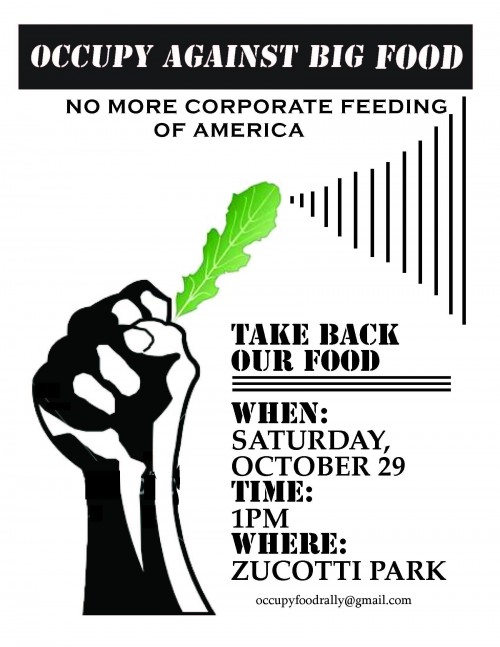
It’s telling that the various manifestation of the new, global food movement – from Occupy Food to the hundreds of local campaigns for small-scale agriculture and unadulterated food – tend to refer to themselves as ‘real food’ (as opposed to Big Food – or the plastic, ‘Frankenstein’ food it produces).

This is a good way of understanding the recent trend in food – which Docx identifies – for the artisanal (whatever we may mean by that), the handmade, the local, the ‘old-fashioned’ (again, this is open to debate and redefinition), and the ethical. It says a great deal that the chef of the moment is René Redzepi, the Danish chef and owner of Noma, who sees himself as much as a cook as a food activist. This demand for ‘authentic’ food is, strange as it may seem, political: it’s a refusal to buy into the advertising and branding of the food industry, even if it’s an act that only a very small proportion of people can afford to do. But it’s a beginning, and a welcome one.

Creative Commons License Tangerine and Cinnamon by Sarah Duff is licensed under a Creative Commons Attribution-ShareAlike 3.0 Unported License.
Justice, not Philanthropy

This week José Graziano da Silva, the Director General of the UN’s Food and Agriculture Organisation, announced that the famine in Somalia has ended. A combination of good rain, the most successful harvest in seventeen years, and the effective dispersal and deployment of food and agricultural aid means that most Somalis now have adequate access to food. But this is likely to be a temporary reprieve: it’s uncertain if food stocks will last until April, when the next rainy season begins and the main planting is done.

This already fragile situation is compounded by Somalia’s complicated politics: the southern part of the country is still controlled by the Islamist group al-Shabaab, which banned the Red Cross from operating in the area this week, and has disrupted food supplies in the past. Tellingly, around half of the 2.34 million people still in need of humanitarian assistance and seventy per cent of the country’s acutely malnourished children are in southern Somalia.

The end of the famine is no cause for celebration, then. Thirty-one per cent of the Somali population remains reliant on food aid, famine looms in another three months, and there are the after-effects of the famine to cope with: the plight of the refugees scattered around Somalia, Ethiopia, and Kenya; and the generation of malnourished children.

It’s estimated that between 50,000 and 100,000 people died in this famine, half of them children.

Clearly, something isn’t working.

And as one famine comes to an end – or, at least, a halt – in East Africa, another one seems to be developing on the other side of the continent. Niger, and, indeed, its neighbours Chad and Mali, is both drought- and famine-prone. Even in good years, it struggles to feed itself. Fifteen per cent of the world’s malnourished children live in Niger. But poor rainfall at the end of 2011 and a spike in global food prices means that the country’s population faces famine.

Niger’s last famine was in 2010, when the World Food Programme provided food to 4.5 million people. But things seem to be more hopeful there than in Somalia, and largely because Niger has a government which functions relatively well. Realising that it needs to store its food supply properly, provide jobs so that its population can afford to buy food, and also limit the growth of its population, the government of Niger is introducing measures to improve people’s access to food. One new piece of legislation will make it compulsory for children to remain in school until the age of sixteen, partly because of the strong link between girls’ education and declining family size.

Somalia’s weak and ineffectual government can’t do anything to prevent famine from occurring there again. With all the will in the world, there is no way that Somalia’s food crisis will end until its political situation stabilises.

The comparison of Niger and Somalia is particularly useful for demonstrating the extent to which responses to famine – from the media, NGOs, charities, and other international organisations – are heavily politicised. Reporting on the Niger famine in 2010 was fairly muted and I’ve only seen a couple of references to its most recent food crisis. Somalia, though, never seems to be out of the news. The reason for this is depressingly simple:

Niger, the large West African country whose name is best known for being just one unfortunate letter away from a pejorative racial insult, has a few terrorists, but not enough to really matter. Elements from al Qaeda in the Islamic Maghreb wander across Niger’s border every now and then, taking advantage of the large desolate areas which characterise most of the country, but for the most part its contribution to the War on Terror is minimal.

Al-Shabaab is loosely affiliated to al Qaeda and the United States fears that the Horn of Africa could prove to be a useful base for planning future terrorist activities. It probably also helps that Somalia has media-friendly pirates too.

So all famines aren’t equal. All famines are complicated. Indeed, the whole question of ‘hunger’ is complex. I was amused to note that Monday marks the beginning of the WFP’s Free Rice Week. The project encourages individuals to play a game on a website. For every correct answer, Free Rice Week’s sponsors donate ten grains of rice to the WFP. The aim of the project is to ‘provide education to everyone for free’. Hmm…. ok – it includes some basic, if vague, information about ‘hunger’. And also to ‘help end world hunger by providing rice to hungry people for free.’

Huh?

So this is going to end world hunger by giving all hungry people rice?

Seriously?

Other than the fact that it would be as – or even more – effective for the project’s sponsors and participants to skip the cute competition and simply donate rice to the WFP (or, even better, to a local feeding scheme or food bank), this really isn’t going to end world hunger.

I know that this seems like a soft target to shout at, and, really, there’s nothing wrong with donating food or money to the WFP, but my annoyance with projects and competitions like this one, stems from the fact that they’re dishonest. There is no way that Free Rice Week is going to end world hunger. It’s a pity that the WFP sees fit to inform people that by taking part in it they’re contributing to solving the food crisis.

In fact, I think that Free Rice Week and other, similar projects actually contribute to the problem.

Firstly, they fudge the meaning of ‘hunger’.  Over the past year or so, we’ve become familiar with the FAO’s horrifying statistic that one billion people go hungry every day – that one sixth of the world’s population does not have adequate access to food. But there are problems with this statistic:

it is not the only way to measure food insecurity. Over the years, it has been criticised on many fronts: for the poor quality of underlying data; for the focus on calorie intake, without consideration of proteins, vitamins and minerals; and for the emphasis on availability – rather than affordability, accessibility or actual use – of food. Some say we’d be better off focusing on improving household consumption surveys, opinion polls, and direct measures of height and body weight.

These figures need to be accurate because they ‘are also used to help guide where to send foreign aid, track progress towards international development goals, and hold governments to account for promises made.’

Moreover, it glosses over the fact that there are many kinds of hunger: the extreme events – the famines – which are the products of natural disasters, conflict, and state collapse; the hunger which is the product of poor diets and an inability to buy or access enough food; and the hunger in developed nations. In Britain and the United States, the numbers of people now reliant on food stamps and food banks has spiked during the recession.

Secondly, these projects ignore the fact that responding to various kinds of hunger requires far, far more than throwing money at the problem. In fact, the WFP’s website even acknowledges this: ‘People can go hungry even when there’s plenty of food around. Often it’s a question of access – they can’t afford food or they can’t get to local markets.’ Famines in the twentieth- and twenty-first centuries occur as a result of a collapse of distribution systems, usually caused by conflict or a crisis in government. Famines tend not to happen in stable democracies. The WFP must receive money for food aid – that is absolutely non-negotiable – but long-term change, as we’ve seen in the cases of Somalia and Niger, can only occur once stable, effective governments are in place. No amount of free rice is going to end famine in Somalia.

In other cases of hunger, it’s clear that people are simply too poor to buy food: employment, education, good health systems, and higher wages will go far in remedying this situation. But even then, we have to accommodate the choices that poor people make when spending their money. In an article for Foreign Policy’s special edition on food last year, Abhijit Banerjee and Esther Duflo took a closer look at the lives of the ‘one billion hungry’ and came to some interesting conclusions:

We often see the world of the poor as a land of missed opportunities and wonder why they don’t invest in what would really make their lives better. But the poor may well be more sceptical about supposed opportunities and the possibility of any radical change in their lives. They often behave as if they think that any change that is significant enough to be worth sacrificing for will simply take too long. This could explain why they focus on the here and now, on living their lives as pleasantly as possible and celebrating when occasion demands it.

We asked Oucha Mbarbk [a Moroccan peasant] what he would do if he had more money. He said he would buy more food. Then we asked him what he would do if he had even more money. He said he would buy better-tasting food. We were starting to feel very bad for him and his family, when we noticed the TV and other high-tech gadgets. Why had he bought all these things if he felt the family did not have enough to eat? He laughed, and said, ‘Oh, but television is more important than food!’

We need to take people’s choices about how they spend their limited funds, more seriously.

Thirdly, by focussing on raising funds, the WFP transforms itself into a philanthropic organisation. Donations of food and other forms humanitarian aid are absolutely necessary to alleviating food crises, but they won’t end these crises – or end ‘hunger’ (whatever we may mean by that). In an excellent article for the Guardian, the UN’s Special Rapporteur on the Right to Food, Olivier de Schutter argues:

our global food system…is in crisis. Last year’s famine in the Horn of Africa, and the current woes in the Sahel, are the surface cracks of a broken system. These regional outbreaks of hunger are not, as such, extreme events.

Beyond semantics, this is a crucial distinction. In viewing these events as extreme and unexpected, we fail to acknowledge the regularity and predictability of hunger. This flaw is fatal, for it means failing to acknowledge that the food system itself is broken. It means failing to build readiness for persistent famine into international development and humanitarian policy. And it means waiting until people starve before doing anything.

Food aid doesn’t address the deeper, structural problems underlying the food crisis. It doesn’t consider bad governance; the impact of food speculation on rising food prices; and agricultural efficiency, particularly in the light of climate change.

By appealing to people to donate money to fund their response to food crises – which could have been avoided – the WFP and others cast hunger as something which can be remedied with old-fashioned philanthropy. It’s certainly true that philanthropic organisations can do immensely good work – like reducing rates of polio and malaria in the developing world. But this doesn’t necessarily solve the problems which give rise to these crises:

the poor are not begging us for charity, they are demanding justice. And when, on the occasion of his birthday, a sultan or emperor reprieved one thousand prisoners sentenced to death, no one ever called those pardons justice. Nor is it justice when a plutocrat decides to reprieve untold thousands from malaria. Human beings should not have to depend upon a rich man’s whim for the right to life.

Precisely. The world’s poor should not be dependent on the goodwill of wealthy people who have the time and inclination to play games on the internet.

Creative Commons License Tangerine and Cinnamon by Sarah Duff is licensed under a Creative Commons Attribution-ShareAlike 3.0 Unported License.
Milking It

This week the committee organising the 2012 Olympics in London caused widespread anger when it announced that breastfeeding mothers would have to buy an extra ticket to bring their babies into sports venues. Some venues have a few discounted tickets for children, but others don’t. One commentator posted on Mumsnet

that while she and her husband were lucky enough to get tickets to an equestrian event in August, organisers had told her there are no children’s tickets so she will have to pay £95 for a three-month old in a sling.

Those who can’t afford an extra ticket, or who lose out in the next round of ticket allocation, are advised to stay away. Unsurprisingly, Britain’s Equality and Human Rights Commission has suggested that this is potentially a case of ‘indirect sex discrimination’ because it will affect considerably more women than men.

This situation is ridiculous in so many ways. What angers me the most is that the Olympic committee took this decision in a country where the National Health Service advises that babies be breastfed exclusively for the first six months of life. The members of the committee seem either to think that women shouldn’t breastfeed in public – an irritating view about which I am going to be extraordinarily rude at some stage – or that mothers with babies have no desire to attend public events.

In the midst of the uproar, The Ecologist tweeted an article which it had published six years ago about the debate over whether women should breast- or bottle-feed their babies. It’s an argument that parents, doctors, and policy makers have been holding since at least the beginning of the twentieth century, and it’s to the credit of Pat Thomas that her piece provides a good overview of shifting attitudes towards infant feeding over the course of the past hundred years or so.

But it’s also a problematic piece of writing, and one which demonstrates particularly well why so many mothers feel bullied about how they decide to feed their babies. Thomas makes no attempt to hide her view that all mothers should breastfeed their children. She begins with a terrifying list of statistics:

The health consequences – twice the risk of dying in the first six weeks of life, five times the risk of gastroenteritis, twice the risk of developing eczema and diabetes and up to eight times the risk of developing lymphatic cancer – are staggering. With UK formula manufacturers spending around £20 per baby promoting this ‘baby junk food’, compared to the paltry 14 pence per baby the government spends promoting breastfeeding, can we ever hope to reverse the trend?

I’d love to know where she found these figures – particularly given her opening statement that women have breastfed for ‘nearly half a million years’. (How does she know this? Why the coy, qualifying ‘nearly’?) Thomas is, though, correct to point to the compelling evidence that breastfed babies tend to be healthier than those who are fed on formula, and that breastfed children may do better at school and have stronger immune systems. Also, there is a direct and proven link between the use of baby formula and high child mortality rates in the developing world.

She blames the slow decline of breastfeeding over the course of the twentieth century on the medicalization of childcare, and on the advertising strategies employed by formula companies – most notoriously Nestle. I have little to add to her second point, other that, broadly, I agree with her. The International Code of Marketing of Breastmilk Substitutes, a response to the Nestle Boycott of the late seventies, needs to be properly implemented. But her argument about the medicalization of women’s experiences of childbirth and childrearing is not entirely correct. She quotes Mary Renfrew from the Mother and Infant Research Unit at the University of York:

‘If you look at medical textbooks from the early part of the 20th century, you’ll find many quotes about making breastfeeding scientific and exact, and it’s out of these that you can see things beginning to fall apart.’ This falling apart, says Renfrew, is largely due to the fear and mistrust that science had of the natural process of breastfeeding.

In particular, the fact that a mother can put a baby on the breast and do something else while breastfeeding, and have the baby naturally come off the breast when it’s had enough, was seen as disorderly and inexact. The medical/scientific model replaced this natural situation with precise measurements – for instance, how many millilitres of milk a baby should ideally have at each sitting – which skewed the natural balance between mother and baby, and established bottlefeeding as a biological norm.

During the early years of twentieth century, global concern about high rates of child mortality animated a child welfare movement which aimed to improve the conditions in which children were raised. In Europe, North America, Australia, New Zealand, and parts of Africa and Latin America, medical professionals held up rational and scientific methods of feeding and caring for babies as the best means of eradicating the ‘ignorant’ practises which, many believed, caused babies to die. This new emphasis on hygiene, speedy medical intervention, and regular monitoring of babies’ development and health at clinics and hospitals did lower rates of morbidity – as did declining fertility rates, the control of infectious disease, economic prosperity, and increased attendance of school.

Doctors and specialists in the relatively new field of paediatrics were particularly interested in how babies were fed. Contrary to what Thomas suggests, the nineteenth-century orthodoxy that breastfeeding was the healthiest and best option for both mothers and babies lasted well into the 1940s. Innovations in artificial formulas provided mothers who couldn’t breastfeed – for whatever reason – with good alternatives, and doctors did recommend them. There were anxieties that malnourished mothers’ milk would not feed babies sufficiently, and doctors recommended ‘top ups’ with formula or other liquid.

The real difference between nineteenth- and twentieth-century attitudes towards breastfeeding was that it was increasingly controlled and patrolled by trained professionals. As Renfrew notes, mothers were told how much milk their babies needed at each feed, and there was a lot of debate in medical journals and in other professional forums about how and when babies should be fed.

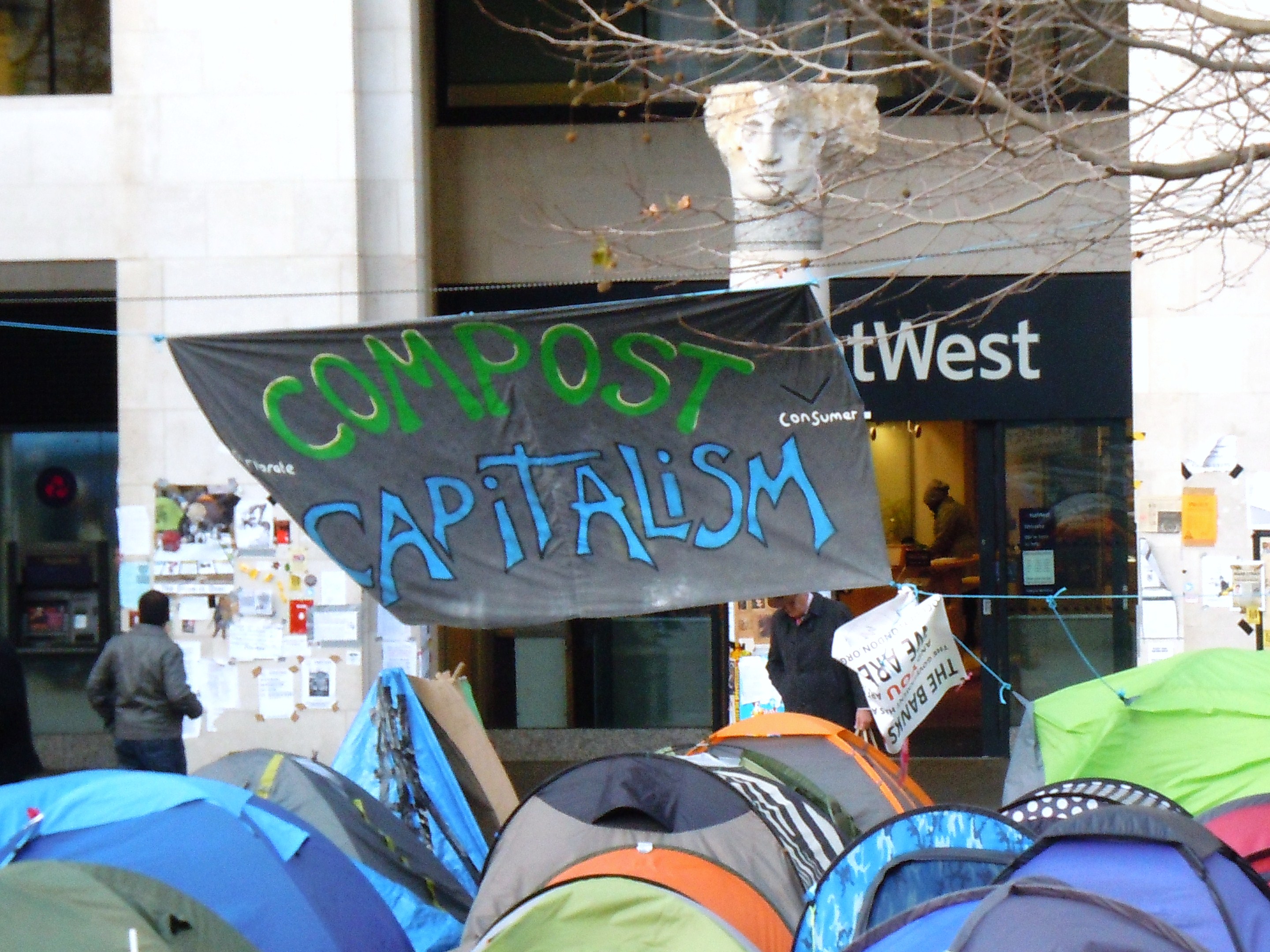
The set of guidelines formulated by the incredibly influential, New Zealand-based Dr Truby King emphasised the importance of routine in feeding. King’s mothercraft movement – which established clinics and training centres around the British Empire during the first half of the twentieth century – taught mothers to feed ‘by the clock’. At five months, a baby was to be fed only five times per day – and at the same time every day – while one month-old babies had an extra, sixth feed.

Like many childcare professionals of the period, King believed that feeding on demand was not only unhealthy – it placed babies at risk of under- or overfeeding – but it was morally and intellectually damaging too. Babies who understood that crying would cause them to be fed would become spoilt, lazy children and adults. Indeed, this points to the infant welfare movement’s more general preoccupation with mothers and motherhood. As the interests of the state were seen, increasingly, as being linked to the proper rearing and education of children, the role of the mother grew in importance. King called his centres ‘shrines to motherhood’, for instance.

But the naturally fussy, over-cautious, and credulous mother was not to be trusted to follow her own instincts: authorities and professionals, who tended to be male, were to provide her with rational, scientific advice on raising her baby. It’s difficult to gauge mothers’ response to the information aimed at them. In her study of mothers in the United States in the 1920s and 1930s, Julia Grant concludes that mothers did heed childcare professionals, but modified their advice according to the views and experiences of their peers. Similarly, mothers in New Zealand took what they wanted from King’s pamphlets on childrearing.

Equally, mothercraft clinics and breastfeeding advice days were well attended by mothers and babies. Several mothercraft centres all over the world also included a dietetic wing, where nursing mothers could stay for up to a fortnight, learning how to breastfeed their babies. There, they would be taught how to breastfeed by the clock, and how to cope with mastitis and painful breasts and nipples. Wonderfully, hospital fees were means tested, so poor mothers could attend for free.

Throughout its existence, the Cape Town dietetic hospital never had an empty waiting list, and similar units in Britain, Australia, and New Zealand were as enthusiastically supported by women. Mothercraft seems to have been at its most successful when mothers could choose how and when they wanted to its advice and services.

While it’s true that the medicalization of breastfeeding transformed this act into a ‘science’ which needed to be re-taught to mothers – that it became possible to inform a mother that she was breastfeeding incorrectly – and that this was underpinned by misogynistic and eugenicist ideas around childhood, motherhood, and the nation, it is as true that mothers did respond positively to the advice provided by mothercraft and other organisations. Clearly, mothers wanted more advice about how to feed their babies – and that they altered it to suit their conditions and needs.

It’s for this reason that I think that Thomas is doing mothers a disservice. Encouraging more women to breastfeed needs to respect the fact that women’s choices about how to feed their babies are influenced by a variety of factors and considerations. Thomas – and other breastfeeding evangelicals – seems to buy into the same discourse of maternal irresponsibility as childcare professionals did in the early twentieth century: the belief that women somehow don’t really understand what’s best for their babies, and must be properly educated. Even if her – and others’ – motives are progressive and well-meaning, they still fail to take mothers seriously.

Further Reading

Sources cited here:

Rima D. Apple, Mothers and Medicine: A Social History of Infant Feeding, 1890-1950 (Madison: University of Wisconsin Press, 1987).

Linda Bryder, A Voice for Mothers: The Plunket Society and Infant Welfare 1907-2000 (Auckland: Auckland University Press, 2003).

Julia Grant, Raising Baby by the Book: The Education of American Mothers (New Haven and London: Yale University Press, 1998).

Philippa Mein Smith, Mothers and King Baby: Infant Survival and Welfare in an Imperial World: Australia 1880-1950 (Basingstoke: Macmillan, 1997).

Other sources:

Linda M. Blum, At the Breast: Ideologies of Breastfeeding and Motherhood in the Contemporary United States (Boston: Beacon Press, 1999).

Molly Ladd-Taylor, Mother-Work: Women, Child Welfare, and the State, 1890-1930 (Urbana and Chicago: University of Illinois Press, 1994).

Marilyn Yalom, A History of the Breast (New York: Ballantine Books, 1997).

Creative Commons License
Tangerine and Cinnamon by Sarah Duff is licensed under a Creative Commons Attribution-ShareAlike 3.0 Unported License.
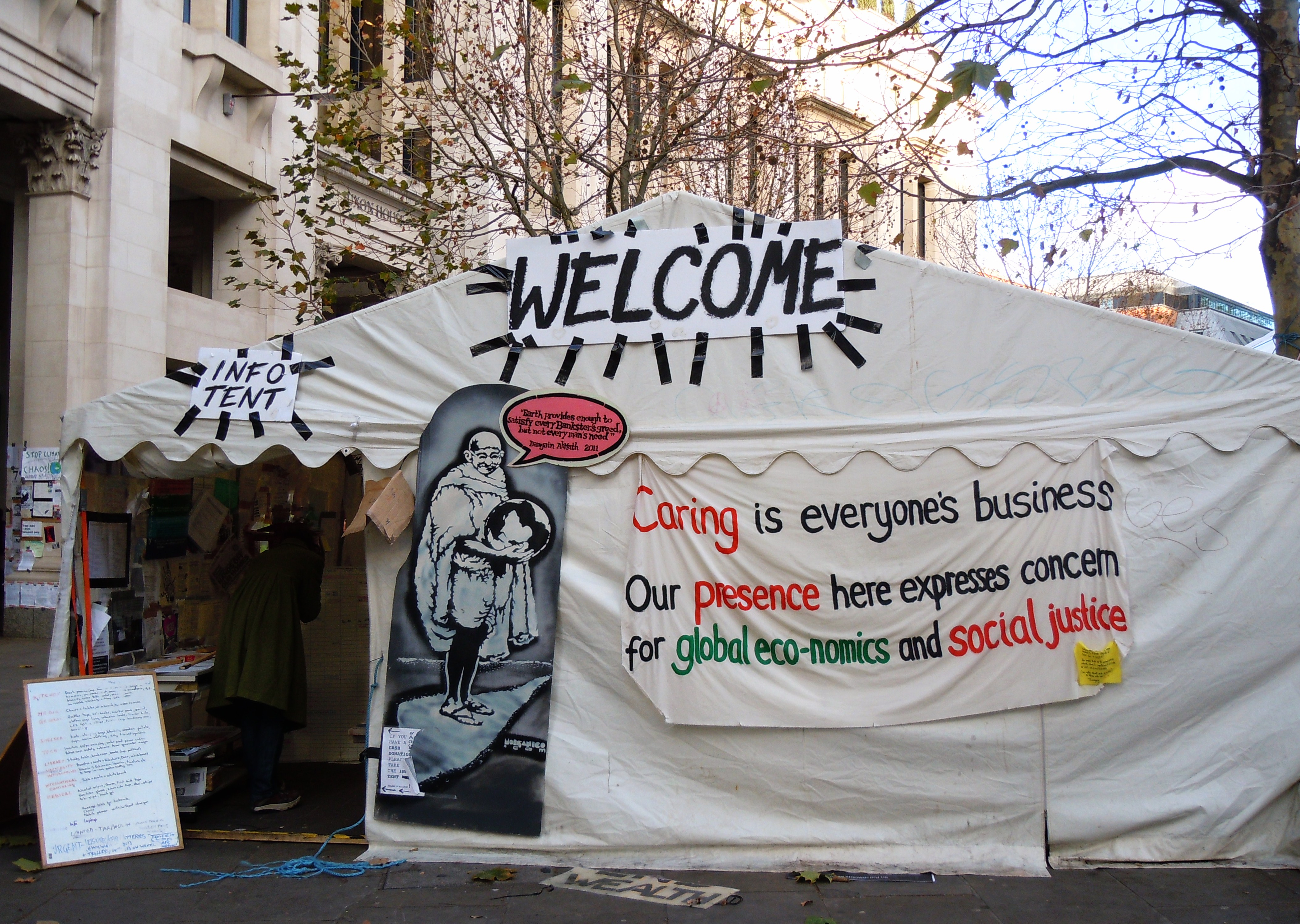
Occupy Food

So. Farwell then, Occupy London? There’s nothing like writing a (relatively) topical blog to remind you of how fast news develops. When I began thinking about this post, the protestors at Occupy London outside St Paul’s had lost their appeal against their eviction. It seemed that this wing of the occupy movement had gone the same way as Occupy Wall Street when Zuccotti Park was cleared. But now the campers have found a new, fifth spot, still in the City of London: Roman House, an empty building in the Barbican.

I visited Occupy London in December last year. I had arranged to attend a drawing class presented by Baduade (this is her account of it, with some of our contributions) and was hopelessly early, so I decided to visit two of the protest’s other sites, in Finsbury Square and in the abandoned UBS building in Sun Street – now rechristened the Bank of Ideas. I was struck by the social and ideological complexity of the protest. Not only did the protestors represent a variety of opinions, but were a varied group of people who had decided to camp for different reasons. Laurie Penny’s recent article on Occupy London sums this up particularly well:

The people who live full or part-time in the camps can now be divided into roughly three categories: those who were homeless before the occupations, those who will shortly be homeless, and those who merely look homeless. Three months of sleeping in tents, washing in the bathrooms of nearby cafes and working around-the-clock to run a kitchen feeding thousands with no running water and little electricity will transform even the most fresh-faced student into a jittering bundle of aching limbs and paranoia.

In his account of a night spent at the St Paul’s camp, James Macintyre noted a class difference between the sites, with more middle-class protestors choosing to settle at Finsbury Park – the site which produces The Occupied Times. My experience certainly bore this out: as I arrived at the Finsbury Park welcome tent, the girl supervising it bounded up to me and exclaimed in tones which would cheer any elocution teacher, ‘oh I love your badges!’.

Part of the appeal of the camp, commented Macintyre, particularly for homeless people, is that it has a kitchen which provides food for free:

The campers, a multi-ethnic mix, are fed in the soup kitchen by volunteers, including several part-time chefs; they say they feed up to 1,500 people a day, most of whom are just around the camp during the day. The volunteers’ chief concerns are the need for more donations of vegetables, and the lack of storage facilities for meat, rather than the evils of global capitalism.

The same was true at Zuccotti Park which developed a reputation for the quality of the cuisine which its cooks – some of them professional chefs – prepared. In fact, the kitchen’s output proved to be so popular that overworked and apparently ‘underappreciated’ volunteers temporarily refused to make food. Indeed, there were even some reports that Occupy Wall Street decided to limit the kitchen’s output because of the numbers of homeless people the protest was attracting.

Whatever the politics of feeding so many protestors may have been, Occupy Wall Street’s achievements are worth celebrating: its kitchen relied entirely on donations, meaning that meal planning was almost impossible and relied on cooks’ inventiveness and ability to think quickly. Also, the kitchen was not allowed to use any form of open flame.

The kitchen at the St Paul’s protest was as heroic, and reminded me of the cooking done at the Climate Camps a few years ago (and I think that there’s more to be said about the overlap between the Climate Camp movement and Occupy London): using mainly donated produce and almost always vegan – a practical choice in terms of storage and dietary requirements – food was prepared using wood-fired rocket stoves and provided free to all people on the campsite. It was delicious – and I write this as one whose experiment with veganism lasted only a week.

In both cases, the food served at the camps was emblematic of the concerns and ideals of the protestors, as the New York Times described the Zuccotti Park protest:

The makeshift kitchen has fed thousands of protesters each day. Along the way, it has developed a cuisine not unlike the Occupy Wall Street movement itself: free-form, eclectic, improvisatory and contradictory.

Requests for food go out on Twitter and various Web sites sympathetic to the protesters. And somehow, in spontaneous waves, day after day, the food pours in. The donations are received with enthusiasm, even when they are not precisely what the troops might have desired.

Robert Strype, 29, a protester from the Poughkeepsie, N.Y., area who was wearing a T-shirt that expressed his displeasure with Monsanto, said that anger about practices like factory farming and the genetic modification of vegetables was one of the factors that had roused him and some of his fellow occupiers. ‘Food plays a huge part in this movement,’ he said. ‘Because people are tired of being fed poison.’

Of all the various manifestations of the occupy movement – from the recent Occupy Nigeria, to Occupy Art and Occupy History (my favourite, obviously) – one of the most persistent has been Occupy Food. Perhaps unsurprisingly, it began in the United States. The Occupy movement was produced by the inequalities of Obama’s America, and no country on earth has as powerful a food industry as the US. Whereas it’s an exaggeration to refer to Big Food in South Africa or Argentina, this is certainly not the case for America. As Strype makes the point, Americans ‘are tired of being fed poison.’

But the idea has had a worldwide resonance, despite the fact that ‘occupying food’ seems like an inherently illogical idea: how can you ‘occupy’ something which is so ubiquitous? The organisers of the first Occupied Food protest at the re-named Zucchini Park explained:

We started Occupy Big Food because we thought it was really important to bring the discussion of food to what is happening at Occupy Wall Street. The goals of OWS and OBF are totally aligned — we are against the corporate takeover of our food system.

The Occupy Food rally was followed a month later by a farmers’ march to Occupy Wall Street to ‘to ‘fight and expose corporate control of the food supply.’ Willie Nelson – yes, for it was he – writing in his capacity as the President of Farm Aid, urged his readers to Occupy the Food System:

From seed to plate, our food system is now even more concentrated than our banking system. Most economic sectors have concentration ratios hovering around 40%, meaning that the top four firms in the industry control 40% of the market. Anything beyond this level is considered ‘highly concentrated,’ where experts believe competition is severely threatened and market abuses are likely to occur.

Many key agricultural markets like soybeans and beef exceed the 40% threshold, meaning the seeds and inputs that farmers need to grow our crops come from just a handful of companies. Ninety-three per cent of soybeans and 80% of corn grown in the United States are under the control of just one company. … Today, three companies process more than 70% of beef in the U.S.; four companies dominate close to 60% of the pork and chicken markets.

In an article for Mother Jones, Tom Philpott elaborated on Nelson’s point. Firstly, the food system is dominated by a handful of very big businesses, whose reach is global: Monsanto has a virtual monopoly of the world’s seed supply; only four companies – including Cargill (which begs the question why the World Food Programme sees fit to do business with it) – control the grain trade; and Walmart’s reach is extending around the world.

Secondly, the size of these businesses allows them unprecedented power over the whole food chain. In an effort to drive down prices, farmers and suppliers are put out of business, wages plummet, standards of animal welfare decline steeply, and the use of pesticides, antibiotics, and other poisons increases.

Thirdly, the growing involvement of hedge funds and banks in the commodities market – which now includes food commodities – has led to concern that speculation on wheat, maize, and other staples is driving up the price of food. The best known example of this occurred two years ago when hedge fund Armajaro bought up Ghana’s total cocoa crop – about 7% of global production – causing a 150% rise in cocoa prices and many Ghanaian farmers to go out of business. Several economists have drawn a link between high food prices and the origins of the Arab Spring.

Finally, the relationship between food companies and governments can be uncomfortably close. In the United States, intense lobbying from the food, agriculture, and beverage industries has caused already light regulation to crumble. In the UK, a collection of food companies – including PepsiCo and Mars – advise the government on how to curb obesity and have formulated a programme which helps to swell their profits.

In other words, the food system is controlled by too few organisations. A lack of regulation of both industry and the economic system has driven up prices, contributed to a decline in the quality of food, and undermined job security, animal welfare, and ethical farming practices. On its own, this is enough to compel us to occupy the food system by growing our own food, supporting small farmers and producers, lobbying supermarkets to stock sustainable and ethically-produced food, and taking action against the cosy relationship between business and government.

But beyond this, there are few more potent indicators of inequality than access to food. The Occupy movement came to prominence partly because of, as my friend Seb commented, one of the best slogans in history: ‘we are the 99%’. It’s catchy and, most importantly, accurate (even if it may be the case that we’re actually the 99.9%). We know that the poorer people are, the poorer their diets are. In extreme cases, they simply can’t afford food, and starve and suffer from extreme malnutrition. But for most of the 99%, good, fresh, ‘whole’ food – the food that the shrinking middle classes can afford to buy from Woolworths, Waitrose, and Trader Joe’s – is simply too expensive, or too far away. They rely instead on heavily processed food.

As a recent report published by the World Health Organisation indicates, obesity and other lifestyle-related diseases are now as much a problem in the developing world as they are in the developed. This is partly the result of prosperity – the new middle classes crave McDonald’s burgers and Coca Cola as indicators of status – but mainly because of shifts in eating patterns caused by high food prices and the greater availability of cheap, processed proteins and non-foods.

In an extract from his new book Why It’s Kicking Off Everywhere: The New Global Revolutions, Paul Mason responds to critics who argue that the Occupy movement – and, indeed, the other protests which dominated the news in 2010 and 2011 – had few clearly defined goals and viable alternatives to the social and political status quo. Referring to Andre Gorz’s Farewell to the Working Class (1980), he explains:

parts of the book now bear rereading, in particular Gorz’s definition of revolution: taking power implies taking it away from its holders, not by occupying their posts but by making it permanently impossible for them to keep their machinery of domination running. Revolution is first and foremost the irreversible destruction of this machinery. It implies a form of collective practice capable of bypassing and superseding it through the development of an alternative network of relations. By this definition we are in the middle of a revolution: something wider than a pure political overthrow and narrower than the classic social revolutions of the 20th century.

If this is so, the occupy movement signals a beginning in a shift in our understanding of how power should work in society, and particularly as regards inequality.

We are the 99%. And we demand to eat well too.


Creative Commons License Tangerine and Cinnamon by Sarah Duff is licensed under a Creative Commons Attribution-ShareAlike 3.0 Unported License.

Free Markets

A couple of months ago I spent a weekend in Johannesburg to celebrate my friend Kate’s thirtieth birthday. Knowing me well, she suggested that we have lunch at the newish Neighbourgoods Market in Braamfontein, a neighbourhood which has been included in Joburg’s inner city improvement district scheme. Alongside 70 Juta, a small row of shops (one, inevitably, devoted to lomography), galleries, and cafes, the Neighbourgoods Market is part of a wider effort to attract people – and particularly those with disposable income – back into the city’s centre.

The decline of the Joburg CBD since mid-90s has been well documented: the flight of businesses to suburbs like Sandton and developments such as Melrose Arch means that the old city centre has changed beyond recognition. Buildings are derelict and crumbling, and crime is a significant problem. To my shame, I don’t know Joburg terribly well, even though I enjoy visiting it enormously. What struck me was not that the city centre has ‘died’, but, rather, that it is vibrantly alive, albeit – with the abundance of cheap Chinese shops, fast food joints, and street stalls – not in ways we would usually define a bustling, ‘healthy’ CBD.

The entrance to Braamfontein's Neighbourgoods Market

The point is that something needs to be done to bring businesses back to central Johannesburg, crime and grime must to be brought under control, and the city’s amazing mid-century architecture should be restored. The Neighbourgoods Market is in the parking lot of the most incredible brutalist skyscraper, the façade of which was designed by Eduardo Villa. Open on Saturday mornings, it brings people in to an area which would be otherwise deserted – and dangerous – on weekends. I really, really enjoyed it: the food was great and, as is usually the case in Joburg, both punters and stall holders were fantastically friendly.

Inside Braamfontein's Neighbourgoods Market

In fact, I liked it rather more than the original Neighbourgoods Market in Cape Town. Established for similar reasons as the Joburg incarnation, the Market in Cape Town is located in a newish redevelopment of an old biscuit mill in the traditionally working- and lower middle-class suburb of Woodstock – although this area is now achingly cool, having been dubbed ‘Cape Town’s Manhattan’ by the New York Times. The more gentrified sections of Woodstock are now awash with vintage stores, bicycle shops, and Michelle Obama-attracting organic lunch cafes. Particularly on the main road, it’s all beginning to look like a set for a Wes Anderson movie.

At the Woodstock Neighbourgoods Market

There’s been a fair amount of debate about the gentrification of Woodstock, and much as I find the Neighbourgoods Market unpleasantly overcrowded and many of the people it attracts deeply annoying, I am less unsettled by its effects on the suburb than the wholesale transformation of the Bo-Kaap, near the centre of Cape Town, where a very poor group of people – many of them descendants of slaves – have slowly been evicted from their picturesque, brightly-painted cottages by landlords keen to attract yuppies in their massive Chelsea tractors.

The view from the Williamsburg Flea

The debates we’re having in Cape Town about gentrification are by no means particular to South Africa. In New York last year, my friend Geoff commented that he found the new-found coolness of Brooklyn’s Williamsburg – a working-class suburb once dominated by Orthodox Jews – baffling. I went to the Williamsburg Flea, a market selling food, craft, and an assortment of handmade and vintage clothes and furniture. My friends and I enjoyed it enormously – as much as we did exploring Bedford Avenue – but I could understand the original inhabitants’ unhappiness at how much this hipster invasion has changed the neighbourhood.

At the Williamsburg Flea

The point about the Neighbourgoods Market and the Williamsburg Flea is that they both attract people who are either new to those suburbs, or who don’t live there at all: they’re not aimed at the existing communities. (They’re too expensive, to begin with.) At a hipster night market in Dalston in December – it sold food, not hipsters because that would be illegal – I stood for a half an hour in a queue, risking hypothermia to buy supper at a food market in a covered parking lot near the Dalston Kingsland overground station.

At the Long Table night market in Dalston

Dalston has followed on from Islington, Shoreditch, and Stoke Newington as being the favoured spot for not-particularly-wealthy lefties looking for somewhere cheap and central to stay. It’s in Hackney, one of the poorest boroughs in Britain, and not overwhelmingly picturesque, but it’s now overrun with hipsters and Guardian-reading lefties (I count myself as one of these, obviously, I mean obviously). I didn’t see any members of Dalston’s original community at the night market – which included a stall run by Moro.

More of the Dalston night market

As I’ve noted before, this link between food and gentrification is nothing new. Kathe Newman has argued that ‘cupcake shops can provide a more accurate and timely guide to the frontiers of urban gentrification than traditional demographic and real estate data sets.’ Danya al-Saleh demonstrates this particularly well in her map of the slow encroachment of cupcake bakeries in San Francisco’s gang territories (click here for a bigger version):

As one commentator explains:

In the 1990s, it might have been the proliferation of Starbucks coffee houses that indicated gentrifying neighbourhoods, and in the 1980s, perhaps gourmet yoghurt shops moving into an area, etc. I don’t know about other cities, but in NYC where I live, right now it would be the new doggie day care centres that are springing up in many places that appear to designate a change to a more affluent, up-and-coming hipster-ish nabe.

Markets, cafes, and restaurants increase footfall in cities. I had breakfast at the newly-opened Clarke’s in the Cape Town CBD yesterday morning (it was fantastic – go), and was struck by how busy the area was: aside from the tourist traps around Greenmarket Square (not a green market) and Long Street, the CBD used to be deserted over weekends. Now, though, Capetonians are flocking to Jason’s, Skinny Legs & All and other places. The city feels safe, and alive again. The Cape Town Partnership, which has driven much of this renewal, has recognised the power of coffee shops in attracting pedestrians into the city.

At the furthest extreme, there is the urban farming which is seeking to transform Detroit, a city brought to the edge of collapse by bad urban planning and, more recently, the 2008 recession. But Detroit is a deeply unusual case. What’s happening in Braamfontein, Woodstock, Williamsburg, Dalston, and elsewhere is part of a trend which began in the 1990s: the connection between the, then, new-found enthusiasm for whole, ‘real’ food  brought into city markets by farmers and small producers, and the regeneration and gentrification of poor or decayed urban districts. Visiting the Union Square farmers’ market now, it’s difficult to imagine that Union Square used to be extremely dangerous.

At the Union Square farmers' market

These are markets for the middle classes, and it’s easy to criticise them for not doing more to integrate wealthy newcomers and less well-off original inhabitants – which is why, I think, the Joburg Neighbourgoods Market is a potentially less awkward experience than the Woodstock version. There aren’t very many people actually living in Braamfontein.

But I’m interested in the continuing success of these markets – and they’ve proliferated – in a time of economic downturn. They’re sustained by gentrification, but why their continuing success during times of financial insecurity? Will they continue to flourish as the tide of gentrification begins to recede? Are they sustainable?

As sales of organic vegetables in supermarkets have plummeted during the recession, there are more food and farmers’ markets than ever before. Last week’s coverage of Tesco’s extraordinarily bad performance over Christmas in the UK referred to the fact that part of the business’s problem is that it hasn’t responded adequately to changing patterns in consumer culture. As one article noted, people are relying increasingly on the internet for basic food shopping because it’s convenient and also allows them to compare deals and prices more efficiently. Shoppers are savvier in the recession.

But they still buy treats and luxuries – hence the success of Marks & Spencer, Waitrose, and John Lewis. Waitrose has been particularly clever in opening convenience stores in city centres: they’re certainly pricier than the ubiquitous Tesco Metro, but shoppers seem to be willing to fork out cash to shop in bright, clean, and, yes, convenient shops. The Tesco model of establishing enormous, town centre-decimating, and car-reliant hypermarkets on the edge of urban developments no longer appears to be successful. Tesco CEO Philip Clarke

was not sure Tesco needed any more of the sprawling out-of-town Extra stores it has spent so long battling planners to build – and that were vital in its conquest of Britain’s retail sector in the 1990s. He didn’t want to go as far as to label its more than 200 out-of-town hypermarkets as ‘white elephants’ but said they were now a ‘less potent force’ as electricals and clothing sales shifted online.

I think we can account partly for farmers’ markets’ continued success in similar ways. Even if very few people can afford to do a weekly shop at them, many will buy small luxuries to perk up meals in a time of financial insecurity: nice chunks of unusual cheese, proper bread, and handmade sausages. I wonder, though, if this change in shopping patterns indicates a fundamental shift in the functioning of consumerism – and in attitudes towards food.

At the Braamfontein Neighbourgoods Market

Creative Commons License
Tangerine and Cinnamon by Sarah Duff is licensed under a Creative Commons Attribution-ShareAlike 3.0 Unported License.

Real Revolutions

When Keenwa opened in Cape Town last year, much was made of the fact that it serves ‘authentic’ Peruvian food. I put ‘authentic’ in quotes partly because I’ve read far too much Derrida and Foucault, but mainly as a result of some scepticism. I doubt that any of the reviewers who’ve eaten at Keenwa have ever been to Peru, and there’s something odd about deciding how a varied and changing cuisine can be made ‘authentic’. The bobotie I cook has grated apple in it, but a friend’s doesn’t: which is more authentic? Neither, obviously.

I was thinking about this a month ago when I had supper with my friends Katherine and Ricardo in London. Ricardo is from Cuba, and cooked us a Cuban-themed dinner. The only Cuban food I’ve ever eaten was at Cuba Libre, a restaurant and tapas bar in Islington. It’s the kind of place which people recommend by saying ‘it’s not authentic, but….’ I haven’t the faintest idea if it’s authentic (whatever that may be), but it was certainly fun.

The food that Ricardo made showed up the problem with the mania for ‘authenticity’ particularly well. We had fried plantain, tortilla, and congrí. This is, to some extent, the kind of food his family would eat in Cuba, although because he and Katherine are vegetarians, we had tortilla instead of the usual, more meaty accompaniment to the meal (hurrah – I love tortilla), and the congrí was pork-free. It was delicious, but was it any less authentic? You tell me.

Christiane Paponnet-Cantat describes the food eaten in Cuba as ‘contact cuisine’, a concept borrowed from Mary Louise Pratt’s conceptualisation of the colonial space as a cultural and social ‘contact zone’ which ‘treats the relations among colonisers and colonised…not in terms of separateness or apartheid, but in terms of co-presence, interaction, interlocking understandings and practice’. She suggests that Cuban, and colonial cooking more generally, is a manifestation of the complex relationships between different groups of people in colonies.

Congrí is an excellent example of this contact cuisine. As in the rest of the Caribbean, Cuba’s indigenous population was eradicated – by disease and conflict – after the arrival of European colonists during the seventeenth century. Slaves were imported from West and Central Africa to work on sugar plantations. In the nineteenth century, indentured labourers from India replaced slaves. Along with foodstuffs introduced by the Spanish – like rice in the 1690s – these groups brought with them a variety of cuisines.

Congrí – at its most basic, a dish of rice and beans – can be found in various forms around the Caribbean. It’s a version of moros y cristianos (Moors and Christians) and rice and peas. And jollof rice, popular in West Africa, is similar too. The term congrí seems to have originated in Haiti and is a combination of ‘Congo’ and ‘riz’ (the French for rice), suggesting its African origins.

The recipe that Ricardo used for his congrí was by Nitza Villapol. To my shame, I’d never heard of her until Ricardo mentioned one of her best-known recipe books, Cocina al minuto. This was published in 1958, four years after Cocina criolla, the Bible of Cuban cuisine. Villapol seems to have been a kind of Cuban Delia Smith or Julia Child: she was as interested in writing about Cuban cuisine as she was in communicating it to people. She had a long-running television series which aired between 1951 and 1997. (She died in 1998.)

Villapol would be interesting simply on these grounds, but she was also an enthusiastic supporter of the Cuban Revolution. Born into a wealthy family in 1923, she was named after the Russian river Nitza by her communism-supporting father. She spent her early childhood in New York, returning to Cuba with her family at the age of nine. During World War Two she trained as a home economist and nutritionist at the University of London.

This experience of wartime rationing proved to be surprisingly useful. In Cuba, Villapol began her career during the 1950s by teaching cookery classes to young, middle-class brides and her earliest recipe books emerged out of this work. But after Fidel Castro seized power in 1959, she devoted to her formidable talents to teaching a kind of revolutionary cuisine. Tellingly, editions of her recipe books published after 1959 no longer included advertisements for American consumer goods.

Under the new communist regime, food distribution was centralised, and rationing was introduced in 1962. People collected their allowances of food – listed in a libreta (ration book) – from the local bodega, or depot. Villapol’s aim was to teach Cubans how to cook when they had little control over the quantity or the nature of the ingredients they would receive at the bodega. She taught a cuisine developed to underpin the goals of the revolution. Unfortunately, I don’t read Spanish and I haven’t been able to track down any substantial scholarship on Villapol. From what I’ve gleaned, though, it seems to me that she was interested in cooking a form of a ‘traditional’ Cuban cooking – but the cooking of ordinary Cubans, rather than those at the top of the social scale who would, presumably, have favoured American or European dishes as a marker of wealth and sophistication. This elevation of ‘every day’ Cuban food would have meshed well with the aims of the revolution.

By writing recipes for favourites like congrí and flan, Villapol created a kind of canon for Cuban cooking. The popularity – and possibly the ubiquity – of her writing and television programmes meant that not only was she seen as the authority on Cuban cuisine, but she also became the source for all that was (or is) ‘authentically’ Cuban. The irony is that this happened during a time of rationing, when what people ate was determined by supplies available to the state.

This system functioned relatively well until the collapse of communism in Europe in 1989. Peter Rosset et al. explain:

When trade relations with the Soviet Bloc crumbled in late 1989 and 1990, and the United States tightened the trade embargo, Cuba was plunged into economic crisis. In 1991 the government declared the Special Period in Peacetime, which basically put the country on a wartime economy-style austerity program. An immediate 53 percent reduction in oil imports not only affected fuel availability for the economy, but also reduced to zero the foreign exchange that Cuba had formerly obtained via the re-export of petroleum. Imports of wheat and other grains for human consumption dropped by more than 50 percent, while other foodstuffs declined even more.

There was simply not enough food to go around. (A similar set of factors caused the famine in North Korea, a country as dependent on trade with the USSR as Cuba.) As a 1998 article from the sympathetic New Internationalist noted:

The monthly rations from the State for a family of four cost around 50 pesos ($2.15), almost a quarter of the average salary of 214 pesos ($9.30). Food from the bodega is not enough to live on and no-one, neither the Government nor the people, pretends it is. It may take you halfway through the month, but no more.

Even though he was shielded – to some extent – from the worst food shortages because he was in school and university accommodation during the Special Period, Ricardo described what it was like to live while permanently hungry – and entirely obsessed with the next meal, even if it was likely to be thin, watery soup or overcooked pasta. In fact, one of the most traumatic features of the Special Period was that staples like rice and coffee – things which most people ate every day – were no longer available. Some people seem to have made congrí from broken up spaghetti.

Drawing on her experience of wartime cooking in London, Villapol used her cookery series to show her audience how to to replicate Cuban favourites with the meagre rations available to the population. Ricardo mentioned one episode during which she fashioned a steak out of orange peel. She received widespread ridicule for doing this, and I think deservedly so.

Cuba managed to pull itself out of its food crisis by radically reorganising its agricultural sector. The state transformed most of its farms into worker-owned co-operatives which

allowed collectives of workers to lease state farmlands rent free, in perpetuity. Property rights would remain in the hands of the state, and [co-operatives] would need to continue to meet production quotas for their key crops, but the collectives were the owners of what they produced. What food crops they produced in excess of their quotas could be freely sold at newly opened farmers’ markets.

In addition to this, urban agriculture helped to provide a supply of vegetables and pork:

The earlier food shortages and resultant increase in food prices suddenly turned urban agriculture into a very profitable activity for Cubans, and, once the government threw its full support behind a nascent urban gardening movement, it exploded to near epic proportions. Formerly vacant lots and backyards in all Cuban cities now sport food crops and farm animals, and fresh produce is sold from stands throughout urban areas at prices substantially below those prevailing in the farmers’ markets.

Food may not be abundant now, and there are still occasional shortages of particular items, but no-one goes hungry anymore. Cuba does offer a model of a sustainable, largely organic and pesticide-free food system, and we can learn a great deal from it.

I’m interested, though, in how Cuban food has changed as a result of the Special Period. From a quick trawl of the internet, it seems to me that Nitza Villapol still exercises a kind of nostalgic appeal to some Cubans living in Miami – there’s even one woman who’s heroically cooking her way through Villapol’s oeuvre. But for those still in Cuba – and those who experienced the deprivations of the Special Period – she seems to be tainted by association. It’s certainly the case that despite Villapol’s best efforts, Cuban diets are more meat-heavy and vegetable-poor than ever before. I wonder if this is the effect of the hunger of the nineties: a diet which was based once mainly on rice and fresh produce, has become increasingly focussed around red meat because meat is associated with plenty – and with having a full stomach.

So where does that leave us on ‘authentic’ Cuban cuisine?

Sources cited here:

Mavis Alvarez, Martin Bourque, Fernando Funes, Lucy Martin, Armando Nova, and Peter Rosset, ‘Surviving Crisis in Cuba: The Second Agrarian Reform and Sustainable Agriculture,’ in Promised Land: Competing Visions of Agrarian Reform, ed. Peter Rosset, Raj Patel, and Michael Courville (Food First Books, 2006), pp. 225-248. (Also available here.)

Christiane Paponnet-Cantat, ‘The Joy of Eating: Food and Identity in Contemporary Cuba,’ Caribbean Quarterly, vol. 49, no. 3 (Sept., 2003), pp. 11-29.

Jeffrey M. Pilcher, ‘Tamales or Timbales: Cuisine and the Formation of Mexican National Identity, 1821-1911,’ The Americas, vol. 53, no. 2 (Oct., 1996), pp. 193-216.

Mary Louise Pratt, Imperial Eyes: Travel Writing and Transculturation (London: Routledge, 1992).

Creative Commons License Tangerine and Cinnamon by Sarah Duff is licensed under a Creative Commons Attribution-ShareAlike 3.0 Unported License.