
Scandalous
Just as it appeared that the meat contamination scandal in the UK had come, if not to a resolution, then to a point where there were no new revelations of unlabelled horsemeat in ready meals, fast food, and other processed meat, the Guardian has released a report on the employment practices of one of the Dutch firms implicated in food adulteration.
Not only does the investigation reveal the appalling conditions in which a group of poorly-paid Polish immigrants were forced to work, but it demonstrates the extent to which the Willy Stelten factory mixed horsemeat as well as old and rotting meat into meat sold as beef. The owner of the business – the titular Willy Stelten – was arrested earlier this week for allegedly selling 300 tonnes of horsemeat as beef.
As the Guardian’s handy timeline of the scandal demonstrates, for all of the recent lull in new developments, it’s been in the news for nearly half a year. In contrast, South Africa’s contaminated meat scandal was reported widely in April but has since then largely disappeared from the headlines.
I think that it’s worth comparing the two scandals. These are my observations about the similarities and differences between them. If you’ve any to add, list them in the comments, below, and I’ll incorporate them into the post.
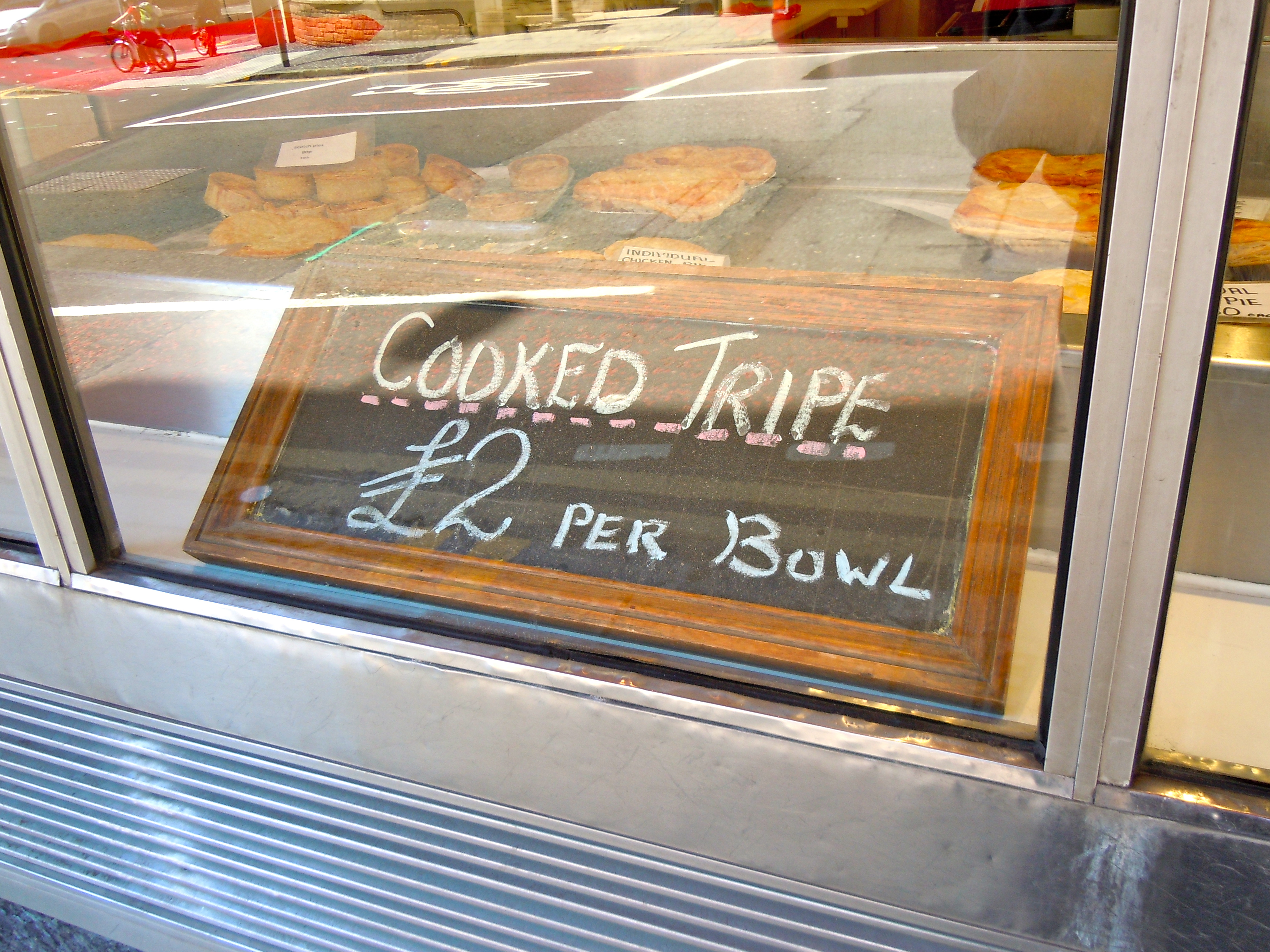
A butcher in Edinburgh.
The most striking difference between the British and South African scandals was the ways in which they originated. In January, the Irish Food Standards Authority reported that it had found unlabelled horsemeat in burger patties sold by Tesco, Iceland, Aldi and Lidl. It implicated ABP Silvercrest, one of Europe’s biggest meat processors, in selling unlabelled horsemeat and pork to a range of factories and supermarkets, including, even, upmarket, ethical Waitrose.
As the UK Food Standards Authority began its investigation, an increasing number of food producers, supermarkets, and fast food chains have been accused of passing off horse- and other meats in food products labelled, usually, as beef. In fact, it now seems to be easier to identify those retailers not linked to the scandal, than those who are.
The South African food scandal was the product of a study carried out by meat scientists at Stellenbosch University. In February, they announced that they had found traces of horse, donkey, goat, and water buffalo meat in a range of products in supermarkets and butchers around the country. Because the researchers were unwilling to make their list of retailers public, City Press submitted an FOI request, and, in April, named all of South Africa’s major supermarkets, Food Lovers’ Market, and smaller, independent shops as guilty of mislabelling meat products.
In many ways, the two scandals are very similar. They occurred because of a failure of regulation; the contamination of meat was widespread (it wasn’t limited to one or two supermarkets, but occurred across the food industry); and there is evidence to suggest that some illegal meat entered both food chains because of criminal activity.
Also both scandals hit poorest customers the hardest: those people who buy the budget burgers and processed meat sold at massive, bargain supermarkets. Possibly because poverty is so obvious in South Africa, local commentators managed – mercifully – to avoid making silly, snotty arguments about having no sympathy for people who had been duped into buying horsemeat.
Indeed, it’s striking how frequently the South African scandal has been described as a crisis of mis-labelling. Retailers argued that the traces of donkey, horse, and other meats in products were very, very small, and probably the result of cross-contamination. The Department of Trade and Industry ordered the National Consumer Commission – an agency of the Department – to investigate the issue.
South Africa has very strict laws which regulate the length of the food chain – from the slaughter of animals to the labelling of meat products in shops. In fact, the Consumer Protection Act is one of the strictest of its kind in the world. The problem lies in enforcing these rules. The three departments responsible for patrolling food safety – health, agriculture, and trade and industry – have, collectively, failed to do so adequately. Herman Blignaut, an attorney with copyright experts Spoor & Fisher, said to City Press:
The respective departments probably don’t have the manpower to sustain a firm hold on compliance of the requirements, so the policing is not what it should be.
Another factor that can make policing more difficult is the fact that slow, expensive and expert analysis is necessary to establish whether the meat claimed to be in the product actually is, and whether it could be contaminated by other meats.
But this focus on food labelling, while important, obscures some other, more fundamental questions. Most of the cases of contamination identified by the Stellenbosch report related to unlabelled chicken, mutton, and pork, and these can be dealt with through the enforcement of labelling regulations. But the report does not explain how and why water buffalo, donkey, and horsemeat entered the food chain.
Answering questions posed by the opposition Democratic Alliance in Parliament, Minister for Agriculture, Forestry and Fisheries Tina Joemat-Pettersson admitted that South Africa imported horse and water buffalo, as well as other meats, from Brazil and India:
According to the department, South Africa’s Brazilian meat imports included 61 tons of horse meat in 2011, 150 tons in 2012 and 49.8 tons this year. More than 460 tons of poultry and 45.5 tons of beef were imported from Brazil from 2011 to 2012.
…
South Africa imported 1 175 tons of water buffalo from India in 2011 until imports were suspended in May, 2011.
The reason why imports were suspended from both countries was because of the ‘significant risk’ their products posed to South Africans. Unfortunately, the Minister ‘declined to disclose the names of importers or give a reason why the department considered meat imports from these countries to be potentially harmful.’
In addition to this, a confidential police report from 2012 alleges that crime syndicates illegally import meat – including water buffalo meat from Asia. Jacques Pouw explains:
The crime intelligence report says the syndicates are also involved in money laundering, bribery and, in some cases, narcotics and trafficking.
The report was compiled after South Africa’s red meat industry bodies apparently warned authorities that water buffalo meat was being smuggled into the country.
The report, called ‘Criminal syndicates and the meat market’, reveals that an Interpol investigation has found South Africans are members of syndicates that smuggle meat from Asia, South America and our neighbouring states into the country.
It is not clear if police are currently investigating these syndicates. So the South African tainted meat scandal has not been resolved. Crucial questions have yet to be answered: what are the authorities doing to prevent the illegal import of meat? And why were legal meat imports from Brazil and India halted?

Tangerine and Cinnamon by Sarah Duff is licensed under a Creative Commons Attribution-ShareAlike 3.0 Unported License.




 Tangerine and Cinnamon
Jun 2
Let them eat burgers
Earlier this month, Patricia de Lille – the former firebrand stalwart of the radical Pan Africanist Congress – handed over the key to Cape Town, to a man dressed up as a hamburger.
Now the mayor of the opposition-controlled City of Cape Town, De Lille met with the senior management of Grand Parade Investments, as well as the hamburger, to celebrate the opening of the first branch of Burger King in South Africa.
Since selling its first burger on 9 May, queues have snaked all the way down Heerengracht Street – not Cape Town’s loveliest quarter – as punters wait hours to try Whoppers and the chain’s other products.
So far the only controversy that the chain seems to have generated is a call from People against Gangsterism and Drugs (Pagad) to boycott Burger King because Grant Parade Investments also owns Grand West Casino – to which Pagad is opposed on the grounds that gambling further impoverishes the poor communities which surround Grand West.
There has been a lot of chatter about the opening of a new fast food chain in South Africa: will the 120 planned Burger King outlets contribute to the country’s increasingly high instance of obesity? How will existing brands respond to this new competition? And is Burger King’s arrival part of a ‘McDonaldisation’ of South African food? In other words, is a kind of globalised junk food changing the ways in which South Africans eat?
All of these are complex questions which are impossible to answer less than a month after the opening of one branch of Burger King. But we can begin to address the last because South Africa’s experience of global Big Fast Food is fairly similar to what has happened abroad, and in the past.
In the weeks preceding the opening of Burger King, Grand Parade Investment’s CEO, CFO, and Chairman lovebombed the South African media. In the several radio interviews that I heard, they reiterated over and over again that although the product they’re bringing into South Africa is the same as that served in the US – and of the same quality – it will be produced by well-trained South African employees, and made using ingredients processed locally. (Burger King will open a factory in Philippi.)
The flagship Burger King has a mural of Table Mountain and the Grand Parade in a prominent place. For all the fact that Burger King’s appeal is based on its status as an exotic foreign product, it’s been modified to appeal specifically to South African customers.
This, however, is not unique. One of the main reasons for the incredible success of McDonald’s all over the world is that while it maintains the pretence of selling precisely the same product in India, Belgium, and Argentina, each of those countries has both a menu and a dining experience which is – more or less – tailored to the expectations and preferences of local diners.
For instance: recently, there has been some coverage of McDonald’s attempt to add pasta to its menus in Italy. Although this has been greeted with derision, the chain has done similar things elsewhere. It tried to introduce falafel to its menu in Israel, and yak burgers in Mongolia.
One of the reasons for Taco Bell’s relative lack of success outside of the United States is its inability to adjust its model to local tastes. Indeed, McDonald’s isn’t the only chain to allow its menus and, even, restaurant design to be fairly flexible: Subway, for example, sells a Chicken Tikka sandwich – flatbread optional – in the UK.
In France, despite sustained opposition from anti-globalisation activists and the food movement, McDonald’s has more than 1,200 branches. In contrast, South Africa – considered to be one of McDonald’s most successful ventures – has only 161. Why? Because it uses ingredients popular with French customers – cheese, Dijon mustard – allows for diners to stay longer in their restaurants (French customers are more likely to eat full meals at McDonald’s rather than to snack), and it opened the McCafe, which sells patisserie.
I use the example of France deliberately, because it’s usually described as having an admirably distinct and healthy food culture (whatever we may mean by ‘food culture’). McDonald’s success there not only suggests that this reputation is based, to some extent, on myth and a lot of PR, but also that the implications of the presence of Big Fast Food for people’s diets, are complex.
Although the ‘South Africanisation’ of Burger King is interesting to explore, I think it might be more useful to understand the arrival of the chain in relation to the country’s shifting demographics and economic development. Arriving almost two decades after the dawn of democratic government, Burger King has certainly taken its time to get here.
McDonald’s opened its first branch in 1995, and, initially, exerted the same appeal in South Africa as it did in Russia during the late 1980s. Similar to South Africa’s participation in the 1992 Summer Olympics in Barcelona, it symbolised the end of the country’s isolation.
In 2013, Burger King has arrived to take advantage of the growth of South Africa’s middle class. As Jonny Steinberg notes in a recent article:
Despite the slowing down of economic growth – despite the fact that at the moment R10 will buy only $1 – there are still more South Africans to spend cash on fast food, and other consumer goods, than ever before. It’s telling that the malls and other locations at which the new Burger King branches will open tend towards the upper end of the market – and that the chain will focus its operations on the Western Cape and Gauteng, the country’s two wealthiest provinces.
In his study of the exponential success of McDonald’s in Japan, South Korea, Taiwan, and China, James L. Watson argues that McDonald’s took off at the same time that family structures in these countries changed: as the size of families shrunk, as women began, increasingly, to work outside the home, and as it became more common for nuclear families to live separately from grandparents, so McDonald’s found a market in these comparatively wealthy families with children to spoil. He writes:
As in China, Burger King is a treat for South Africa’s newly-affluent middle-class families, and not (yet) associated with absolutely cut-priced eating. The association of big fast food chains with poverty seems to remain limited to wealthier nations.
My point is that the arrival of Burger King now – in 2013 – says far more about South Africa than it does about Burger King.
I think one of the best examples of the massive change which the country has experienced, is the rise and rise of the current Deputy President of the ANC – and future Deputy President (and President?) of South Africa. In 1994 he was known as a founder of the National Union of Mineworkers, arguably South Africa’s most powerful union, and as a key figure in the negotiations which ended apartheid. Now Cyril Ramaphosa is one of South Africa’s wealthiest people. And, until recently, the owner of the local franchise for McDonald’s.
Sources
Ian Brailsford, ‘US Image but NZ Venture: Americana and Fast-Food Advertising in New Zealand, 1971-1990,’ Australasian Journal of American Studies, vol. 22, no. 2 (December 2003), pp. 10-24.
Rick Fantasia, ‘Fast Food in France,’ Theory and Society, vol. 24, no. 2 (Apr., 1995), pp. 201-243.
EU Igumbor, D. Sanders TR Puoane, L. Tsolekile, C. Schwarz C, et al., ‘“Big Food,” the Consumer Food Environment, Health, and the Policy Response in South Africa.’ PLoS Med, vol. 9, no. 7, (2012), e1001253.
John W. Traphagan and L. Keith Brown, ‘Fast Food and Intergenerational Commensality in Japan: New Styles and Old Patterns,’ Ethnology, vol. 41, no. 2 (Spring, 2002), pp. 119-134.
James L. Watson, ‘China’s Big Mac Attack,’ Foreign Affairs, vol. 79, no. 3 (May-Jun., 2000), pp. 120-134.
Jianying Zha, ‘Learning from McDonald’s,’ Transition, no. 91 (2002), pp. 18-39.
Tangerine and Cinnamon by Sarah Duff is licensed under a Creative Commons Attribution-ShareAlike 3.0 Unported License.