Skip to content

Food Links, 02.01.2013

Public service announcement: Yesterday, thousands of Capetonians lost their homes in a devastating fire which swept Khayelitsha and Du Noon. Equal Education is collecting non-perishable food, clothing, blankets, and, particularly, baby food and clothing for the victims. Donations can be dropped off at The Bookery (20 Roeland Street).

What food activists should focus on in 2013.

Trish Deseine’s wish list for the new year.

Growing food in the desert.

The strange ingredients of 2012.

Why can’t India feed its people?

Food infographics from 2012.

The declining sales of organic produce.

The legacy of a mission orchard in Tucson, Arizona.

Can soup make Detroit a better city?

On Chicago‘s urban farm district.

The Pig Genome Project and bacon.

Tim Hayward on the vogue for the local.

Why ‘natural‘ snack foods aren’t all that ‘natural’.

How precise do recipes need to be?

Super cheap caviar.

Why does Britain love instant coffee so much?

Fifteen of Africa‘s favourite dishes.

An interview with Deb Perelman of Smitten Kitchen.

Why preserves are back in fashion.

Coffee as a remedy against the plague.

A sensory wheel for rooibos tea.

Cadbury’s non-melting chocolate.

A silk scarf that looks incredibly like bacon.

Hemingway’s favourite cocktails.

Anatomical pastries.

The New York Times reviews Bee Wilson’s Consider the Fork.

Poets‘ favourite recipes.

The pop-up restaurants of Buenos Aires.

Why Coke cost a nickel for seventy years.

Did the Dogme manifesto *really* change Danish cooking?

Martha Stewart, beloved of hipsters.

How food is made to look good on television.

How best to juice a lime.

The rise of eating competitions.

Unusual cooking techniques.

These links are courtesy of my mum:

Treacle‘ from animals?

The International Banana Club Museum.

Medieval stoves.

Why do Japanese politicians wave fish?

A love story in fifteen cookies.

The world’s biggest wholesale fish market – in Tokyo – is to be redesigned.

Á bientôt

Festive readers – I must leave you for December. I have so much work to do that unless I retreat into seclusion in the West Wing, I’ll never get it done. I leave you, though, with a list of favourite history blogs. This is my mother’s brilliant idea: because of the popularity of a post I wrote a while ago about why (South African) historians should write blogs, she suggested that it would be useful to have a selection of some of the vast number of academic history blogs around. In fact, there are now so many that the American Historical Association offers a prize for history blogging – and has a great blog of its own. Check out Blogging for Historians for an exploration of some of the issues raised by history blogging – and if you read or write a history blog, why don’t you fill out its survey?

This is just a small selection of blogs and sites – most of them historical, all of them academic – I enjoy. Some of them are really just virtual noticeboards, but others publish book reviews and longer, more considered posts.

ActiveHistory

African Arguments

The Archival Platform

Asylum Geographies

Cap and Gown

Catherine Baker‘s blog

Centre for Medical Humanities Blog

Chomping at the Bloodied Bit

Congo Siasa

Demography and the Imperial Public Sphere

Dr Alun Withey‘s blog.

A Don’s Life

Family & Colonialism Research Network

The H Word

Historiann

The History of Emotions Blog

Ian Mosby‘s blog

Jacob Darwin Hamblin‘s blog

Lamingtons & Lasagne

Mid-Atlantic Musings

Nursing Clio

Shakespeare’s England

Texas in Africa

Through the Looking Glass

The Toronto Dreams Project

The Voluntary Action History Society‘s blog

The Wellcome Library‘s blog

Oh, and before I go: if you’re still looking for a calendar for next year, why not consider the Right2Know campaign’s 2013 whistleblower calendar? It celebrates some very brave people who’ve blown the whistle on corruption, torture, and profound mismanagement. It’s beautifully designed, and can be ordered for free from our website – all you need to do is to donate a small sum to cover postage costs.

Some festive-looking beetroot from Union Square Farmers' Market in New York.

Some festive-looking beetroot from Union Square Farmers’ Market in New York.

See you in January. xx

Food Links, 28.11.2012

Did farmers in the past know more than we do about agriculture?

Barclays gets criticised for its role in food speculation.

How Big Sugar influenced US food policy.

Maize: a sign of Brazil‘s growing clout.

How can Africa’s food supply be made more reliable?

The food desert in Hawaii.

Why energy drinks are not obliged to list caffeine levels.

This year’s honey harvest in Britain has been reduced by the wet summer.

Bee keeping in Vietnam is under threat.

Singapore now has a commercial vertical farm.

Should we take fish oil supplements?

Some tick bites may cause an allergy to meat.

Tim Hayward on deconstructed food.

A tonic tasting.

Why American eggs could not be sold in British supermarkets.

The Onion on the gluten-free fad.

The ultimate guilt-free diet.

Can you fry mayonnaise?

Milk and western civilisation.

How food has taken the place of high culture. (Thanks, Jane!)

Fortnum and Mason launches…Privilege Spread.

Why do the French like chocolate bears?

Daniele Delpeuch, chef to Francois Mitterrand.

Britain’s craft beer revolution.

The best independent cafes in Montreal.

Leninade.

An espresso-milk sandwich.

A 112ft long chocolate train.

Raymond Blanc‘s favourite restaurants.

How to make piccalilli.

Sakir Gökçebag’s geometric compositions of fruit.

Bicycle-powered coffee.

The most useful kitchen gadgets.

Food GIFs.

A visit to Amsterdam.

Sicilian sweets.

A copy of the Canadian government’s guide to canning, from the Second World War.

How to make fake blood.

Make your own peanut butter.

A chef goes off at a food blogger.

Why the hipster enthusiasm for coleslaw?

The physics of coffee rings.

Guerilla grafting.

How to eat, according to women’s magazines.

Sue Quinn on Nigella Lawson.

These are courtesy of my Mum:

Is nutrition getting enough attention from development organisations?

The story of Britain through its cooking.

The Taste of Love.

Laser-etched sushi.

A botanist, a butcher, and a body.

Amazing manga plates.

Bread Lines

Most of my friends went slightly mad as they finished their PhD dissertations; some cried compulsively, another forgot to eat, and I knew a couple who never wore anything other than pyjamas for months on end. My lowest ebb came when I developed a mild addiction to The Archers, a daily, fifteen-minute soap on Radio 4, featuring the activities of a large, extended family in the fictional village of Ambridge.

Described by Sandi Toksvig as ‘a memorable theme tune, followed by fifteen minutes of ambient farm noise and sighing,’ The Archers was created in 1950 as a kind of public information service: the BBC collaborated with the Ministry of Agriculture, Fisheries, and Food to broadcast information about new technologies and methods to farmers during a period when Britain was trying to increase agricultural productivity.

The series still has an agricultural story editor, and there’s at least one fairly awkward moment in each episode when Ruth Archer discusses milking machines, or Adam Macy mulls over the relative benefits of crop rotation. But its appeal lies now in its human drama. It’s been criticised – rightly – for avoiding complex or uncomfortable social issues, but, recently, it’s featured an excellent storyline involving the series’ poorest family, the Grundys.

Struggling with cuts in benefits and reduced wages, Emma Grundy runs out of money and takes refuge in a food bank, where she and her daughter are given a free lunch. In a sense, this thread dramatizes the Guardian’s excellent Breadline Britain Project, which tracks the ‘impact and consequences of recession on families and individuals across the UK.’ The project has demonstrated convincingly that British people are eating worse as they become less financially secure.

One of its most arresting reports argues that Britain is in a ‘nutrition recession’:

Detailed data compiled for the Guardian, which analysed the grocery buying habits of thousands of UK citizens, shows that consumption of fat, sugar and saturates has soared since 2010, particularly among the poorest households, despite the overall volume of food bought remaining almost static. Food experts and campaigners called for government action to address concerns the UK faces a sustained nutritional crisis triggered by food poverty, which is in turn storing up public health problems that threaten to widen inequalities between rich and poor households.

The data show consumption of high-fat and processed foods such as instant noodles, coated chicken, meat balls, tinned pies, baked beans, pizza and fried food has grown among households with an income of less than £25,000 a year as hard-pressed consumers increasingly choose products perceived to be cheaper and more ‘filling’.

Over the same period, fruit and vegetable consumption has dropped in all but the most well-off UK households, and most starkly among the poorest consumers, according to the data.

It’s no wonder that so many columnists have evoked George Orwell’s description of the very poor eating habits of Wigan’s most impoverished residents during the Great Depression in The Road to Wigan Pier (1937). But the use of the term ‘breadline’ harks back to an earlier, and arguably more influential study, Seebohm Rowntree’s Poverty: A Study in Town Life (1901). Rowntree (1871-1954), the son of the philanthropist and chocolate tycoon Joseph (1836-1925), had studied chemistry in Manchester before beginning work as a scientist in the family business in York.

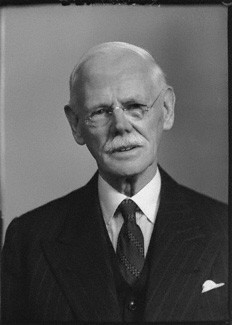
Benjamin Seebohm Rowntree*

But like his father – whose awareness of poverty had been awakened, apparently, by a trip to Ireland during the potato famineRowntree’s encounters with York’s poor led to the first of three studies which he undertook into poverty in York. Inspired partly by Charles Booth’s The Life and Labour of the People (1886), which analysed the lives of London’s poor, in 1899 Rowntree conducted a survey of the working-class population of York. His findings caused a national outcry, as Ian Packer explains:

Poverty: A Study of Town Life (1901)…became an important subject of debate because of its assertion that not only were 28 percent of the total households in York in poverty but nearly 10 percent had incomes so low that they could not keep the members of the family in what Seebohm termed ‘physical efficiency,’ that is, provided with sufficient nutritional food to maintain health.

Rowntree used access to food as a means of gauging poverty, and it is here that he originated the idea of the ‘breadline’. Diana Wylie writes:

Rowntree latched on to food, or, more precisely, its lack, as a convenient and revealing means of measuring socially unacceptable levels of deprivation. He drew an absolute poverty line; below it, people did not earn enough to buy the ‘minimum necessities for the maintenance of merely physical efficiency.’ If working men did not consume 3,500 calories of food energy daily, and women four-fifths that amount, their intelligence became dulled and their stature stunted. This quite pragmatic definition of hunger, the ‘underfeeding’ that would destroy a person’s stamina, served for Rowntree as the index for judging Britain’s social progress.

This and Rowntree’s subsequent two studies of poverty in York, published in 1936 and 1951, became some of the most significant evidence on which arguments for the creation of a British welfare state, were based. Rowntree’s point was that unemployment and low wages – and not bad eating or spending habits – were at the root of working-class poverty. It became, then, the ethical duty of the state to provide the means of freeing the population from the threat of hunger.

There is a direct line between Poverty: A Study in Town Life and the 1942 Beveridge Report, one of the most important documents of the twentieth century, which provided the foundation for Britain’s welfare state. But the influence of Rowntree’s work was felt beyond Yorkshire and the UK. In Starving on a Full Stomach (2001), Diana Wylie demonstrates the impact of the idea of the breadline on social scientists in South Africa during the early twentieth century.

In 1935, Edward Batson, a graduate of the London School of Economics, Beveridge enthusiast, and professor of social science at the University of Cape Town, arrived in South Africa and began work on ‘the first systematic survey of black urban poverty in sub-Saharan Africa.’

By 1938, Batson had surveyed 808 Cape Town households to discover how much they spent on six essential food groups, and compared their diet with the…minimum daily standard recommended in 1933 by the British Medical Association. His figures revealed that half of Cape Town’s Coloured people lived below the poverty datum line.

Like Rowntree

Batson refuted some common social scientific assumptions such as that ignorance determined the poor diets of poor Capetonians, a perspective that, he said, had recently become ‘fashionable.’ … On the contrary, Batson wrote, most people simply could not afford to eat better.

Batson’s research was undertaken in the midst of widespread debates around the founding of a South African welfare state, the underpinnings of which were put in place during the 1920s and 1930s with legislation such as the 1928 Old Age Pensions Act, and the 1937 Children’s Act. But although his work concentrated on black people, the South African welfare state was established largely to benefit whites. Indeed, Jeremy Seekings makes the point that pensions legislation in the 1920s emerged out of concerns about protecting the white (and, to some extent, coloured) ‘deserving’ poor from a perceived black ‘threat.’ This meant that evidence of significant hunger among black people was not a force in the formulation of South African welfare policy, at least before the Second World War.

So whereas Rowntree’s research contributed to the creation of a universal welfare state in Britain, where all people qualified for assistance from the state through the provision of social security payments, and free healthcare and education, in South Africa, welfare was raced: the welfare state was created to protect and to maintain white power, and to entrench racial segregation.

Understanding the origins of the term ‘breadline’ helps us to see the extent to which attitudes towards, and efforts to eradicate, hunger have changed over time, and the ways in which they’re influenced by thinking about race, as well as class. That being hungry and white meant – and means – something different to being hungry and black.

This photograph is from the National Portrait Gallery‘s collection.

Sources

William Beinart, Twentieth-Century South Africa, new ed. (Oxford: Oxford University Press, 2001).

Timothy J. Hatton and Roy E. Bailey, ‘Seebohm Rowntree and the Postwar Poverty Puzzle,’ The Economic History Review, vol. 53, no. 2 (Aug. 2000), pp. 517-543).

Ian Packer, ‘Religion and the New Liberalism: The Rowntree Family, Quakerism, and Social Reform,’ Journal of British Studies, vol. 42, no2 (April 2003), pp. 236-257.

Jeremy Seekings, ‘“Not a Single White Person Should be Allowed to Go Under”: Swartgevaar and the Origins of South Africa’s Welfare State, 1924-1929,’ Journal of African History, vol. 48, no. 3 (Nov. 2000), pp. 375-394.

Diana Wylie, Starving on a Full Stomach: Hunger and the Triumph of Cultural Racism in Modern South Africa (Charlottesville and London: University Press of Virginia, 2001).

Creative Commons License
Tangerine and Cinnamon by Sarah Duff is licensed under a Creative Commons Attribution-ShareAlike 3.0 Unported License.

Foodie Pseudery (35)

This is from a New York Times review of Ganso, a new Japanese restaurant in Brooklyn:

Some ramen broths detonate at first spoonful, then fizzle out halfway through; others start off meek and turn carnal. Ganso aspires to the latter. After my initial disappointment, I kept eating, idly, expecting nothing, and as I dragged up broth from the bottom of the bowl, the flavours began to deepen and assert themselves. What I had thought nebulous took on a distinct point of view. But some of my dining companions never got that far, abandoning hope a few spoonfuls in.

No MSG is used, no artificial flavor boosters. And no condiments are on the table. (A house-made chile sauce is available on request.) There is an austerity to the proceedings, a sense that something is being asked of us, the diners, as well. Patience, perhaps.

Food Links, 21.11.2012

The lawyers who took on Big Tobacco take on Big Food.

Britain’s nutrition recession.

Pesticides are killing bumblebees.

Obama did best in those states which watch Top Chef.

Improving Kenyan children’s access to good nutrition.

The implications of buying more food from China.

Apple and pear farmers face increasing challenges in Britain.

The myth of breakfast, lunch, and dinner. (Thanks, Lindie and Milli!)

The success of roof-top gardening in Mexico City.

How to eat like the president of the US.

The history of the jaffa orange.

The Twinkie: can it survive? And what are the alternatives?

The New Yorker takes on THAT review of Guy’s American Kitchen in Times Square.

Trish Deseine is excellent on chefs’ egos and why we should eat real.

Why we don’t have to drink eight glasses of water a day.

There are growing tensions around keeping chickens in Brooklyn.

The link between cooking and the evolution of the human brain.

Tan Twan Eng on street food in Penang.

This is incredible: sushi chefs battle sea monsters.

A cultural history of the spoon.

In praise of the English apple.

On Denis Papin.

What to do if your jam doesn’t set.

Nelson Mandela‘s favourite food.

Amazing anatomically-correct cakes.

When is a food truck more than a food truck?

The London restaurant Tube map.

Food-based idioms.

The history of toad-in-the-hole. (Thanks, Deva!)

A cheeseburger made out of leaves.

Fifty Shades of Chicken. (Thanks, Justin!)

Teabag tags.

An attempt to make cinnamon buns.

The chemistry behind food pairings. (Thanks, Raffaella!)

Stop de-seeding tomatoes.

Five $10 dinners.

Which are the best gins?

Cakes throughout American history.

Rothko paintings recreated with rice.

Exploding fraudulent ketchup.

Old Finnish drink labels.

Are food bloggers pushovers?

Are there any decent substitutes for truffles?

The slow spread of Vegemite.

These are courtesy of my mum:

An ancient recipe.

Is the food movement real?

The dinners of old London.

How are hot dogs made?

Toothbutter.

The vast scale of counterfeit food in Italy.

Forensic scientists battle food fraud.

The Story of the Teeth

I was born with comically bad teeth. I have only one wisdom tooth – welded firmly to my jaw – and had multiple permanent teeth for some of my milk teeth, and none for others. (I still have two milk teeth.) That I don’t look like a caricature of a Blackadder-ish wisewoman is down entirely to my parents’ swift removal of me to a brilliant orthodontist who – with the aid of braces, plates, and two operations – gave me a decent set of teeth.

I spent rather a lot of my childhood and adolescence in pain, as my teeth and jaw were cajoled and wired into place. (I must add, though, that my parents provided me with an endless supply of sympathy, and soft, delicious things to eat, as well as plenty to read.) It was partly for this reason that I never understood the outrage that greeted the news of Martin Amis’s decision to spend around £20,000 in fixing his teeth, ending decades of persistent toothache.

Of course, much of the anger about this amount was linked to his lucrative move, in 1995, from the late Pat Kavanagh, the literary agent who helped him to build his career, to Andrew Wylie, causing an acrimonious rift with Julian Barnes, Kavanagh’s husband. Indeed, AS Byatt later apologised to him for having criticised both his dental work and his acceptance of an extraordinarily high advance negotiated by Wylie, explaining that she had had toothache at the time.

In his memoir, Experience (2000), Amis writes evocatively of the hell of toothache: that it seems to be the only manifestation of dull pain which can’t be blocked out or ignored. It demands attention. (Apparently James Joyce and Vladimir Nabokov were fellow martyrs to tooth pain. There is, clearly, a link between toothache and stylistic experimentation.)

It’s no wonder that modern dentistry is usually cited as one of the best reasons against time travel. The dentist Horace Wells (1815-1848) originated the use of nitrous oxide (laughing gas) as an anaesthetic during dental surgery. Wells died – partly as a result of an addiction of chloroform, ironically – before nitrous oxide became the anaesthetic of choice, rather than ether for example, among dentists. In South Africa, I’ve found evidence to suggest that it was possible to have teeth extracted under anaesthetic from around the 1880s – although it’s likely that this was available to wealthier patients before then.

In fact, the state of one’s teeth has been a potent indicator of class difference since at least the nineteenth century. Access to dentists and technology – powders, pastes – to prevent tooth decay meant that the middle and upper classes had better teeth than those who were poor, whose diets tended to feature substantial amounts of tooth-eroding sugar, and whose visits to dentists – who had usually had little or no training – were done only in case of dire emergency.

In the pub conversation described in TS Eliot’s The Waste Land (1922), the speaker refers to a friend, Lil, who worries that her recently demobbed husband will leave her, partly because she had aged so much during the recent Great War:

Now Albert’s coming back, make yourself a bit smart.
He’ll want to know what you done with that money he gave you
To get yourself some teeth. He did, I was there.
You have them all out, Lil, and get a nice set

As false teeth became cheaper and more widely available, it seemed to make better sense to have all one’s teeth out at once, rather than suffer a lifetime’s worth of dental pain.

We attach a wide range of meanings to teeth: from the elongated incisors of vampires, to the whiter-than-white rictus grins of celebrities. My friend Shahpar in Dhaka points out that in south Asia, some Muslims associate oral hygiene using the bark of the miswak tree with holiness, as they believe that the Prophet used the bark to clean his teeth. More generally, people in the region place an exceptionally high value on having a healthy, full mouth of teeth – reflected in some truly appalling jokes.

I’ve been reading about anxieties about oral hygiene and dentistry recently, hence this interest in shifting cultural and social constructions of teeth. During the early decades of the twentieth century, global anxieties about infant mortality and childhood health, resulted in a heightened concern about the care of children’s teeth. This was part of an infant welfare movement which had emerged all over the world at the end of the nineteenth century, in response to unease about high rates of infant mortality (usually as a result of diarrhoea), the apparently failing health of urban working-class men, and eugenicist anxieties about maintaining white control over political, social, and economic power.
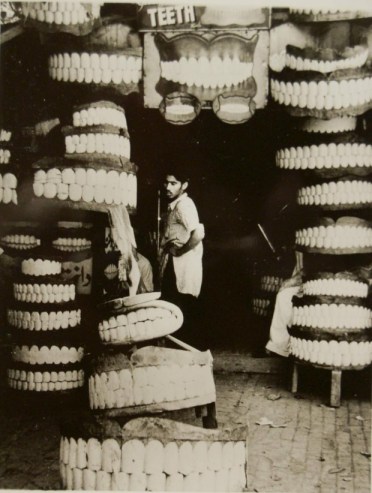
Denture Shop, India, 1946*

Although child welfare campaigners during the nineteenth century drew parents’ attention to the need to instil in their children good habits of dental hygiene, the discourse around the state of children’s teeth during the early twentieth century differed. To be fair, rotting teeth and gum disease are the cause of a range of health problems, and it makes sense to direct public health policy towards making dental services freely available.

But particularly during the 1920s and 1930s, preventing poor oral hygiene and tooth decay began to take on moral overtones. Doctors and child welfare activists increasingly understood bad oral health as a signifier of chaotic, ‘unscientific’ upbringings – which, they believed, tended to occur in working-class families. Writing about Major General Sir Frederick Barton Maurice’s influential 1903 study of the large numbers of volunteers who were deemed to be physically unfit to fight in the South African War (1899-1902), Anna Davin explains:

If, as it seemed, these puny young men were typical of their class (‘the class which necessarily supplies the ranks of our army’), the problem was to discover why [they suffered from so many physical ailments], and to change things. Proceeding to speculate on possible explanations, [Maurice] accounted for the prevalence of bad teeth among recruits by unsuitable food in childhood (‘the universal testimony that I have heard is that the parents give the children even in infancy the food from off their own plates’), and decided at once that ‘the great original cause’ (of bad teeth at this point, but subsequently, and with as little evidence, of all the ill-health) was ‘ignorance on the part of the mothers of the necessary conditions for the bringing up of healthy children’.

This was one of several essays and articles which argued that poor nutrition in childhood – most notably feeding babies food meant for adults – caused ‘bad teeth’ and, thus, compromised health in adulthood. The best means of remedying this situation was to encourage mothers (and in the minds of doctors, welfare campaigners, and policy makers, these mothers were inevitably working-class) to adhere to ‘scientific principles’ in raising their children, chief of which was providing babies and young children with a diet calibrated precisely to their needs. These principles and diets were formulated by health professionals – medical men – and they, as well as nurses, health visitors, and others, encouraged mothers to abandon ‘superstitious’ and ‘ignorant’ childrearing practice in favour of properly ‘scientific’ guidelines.

Those doctors and campaigners influenced by eugenics argued, though, that children’s moral character depended on good dental hygiene. (Susanne Klausen explains what we mean by ‘eugenics’: ‘in its broadest definition…eugenics was concerned with improving the qualities of the human race either through controlling reproduction or by changing the environment or both.’) In The Story of the Teeth, and How to Save Them (1935), Dr Truby King, the extraordinarily influential founder of the global mothercraft movement, argued that the health and strength of babies’ and children’s teeth depended, firstly, on the health of the pregnant and lactating mother, and, secondly, on proper nutrition.

Breastfeeding – not on demand, but at regular intervals depending on the age of the baby – was, he believed, the foundation for the development of strong teeth and jaws. The introduction of nutritious food once the baby was six months old should, he wrote, encourage the child to chew, thus stimulating the nerves and blood vessels in the face, causing the milk and permanent teeth to emerge quickly and cleanly.

King had dire warnings to those parents – particularly mothers – who, he suggested, ‘gave in’ to the demands of their babies and children:

Decay of the teeth is not a mere chance unfortunate disability of the day – it is the most urgent and gravest of all diseases of our time – a more serious national scourge than Cancer or Consumption….

Why? Because oral hygiene and healthy teeth ensured that the citizens of the future would be morally good, productive, conscientious individuals:

‘Building the Teeth’ and ‘Forming a Character’ are parts of construction of the same edifice – standing in the relationship of the underground foundations of a building to the superstructure.

Our dentists tell us that nowadays when they insist on the eating of crusts and other hard food [necessary for encouraging the child to chew and, thus, in King’s view, develop its jaw], the mother often says ‘Our children simply won’t!’ Such children merely exemplify the ineptitude of their parents – parents too sentimental, weakly emotional, careless, or indifferent to train their children properly. The ‘can’t-be-so-cruel’ mother who cries half the night and frets all day on account of the mother’s failure to fulfil one of the first of maternal duties, should not blame Providence or Heredity because her progeny has turned out a ‘simply-won’t’ in infancy, and will become a selfish ‘simply-can’t’ in later childhood and adolescence. Power to obey the ‘Ten Commandments,’ or to conform to the temporal laws and usages of Society is not to be expected of ‘SPOILED’ babies when they reach adult life. …

Unselfishness and altruism are not the natural outcome of habitual self-indulgence. Damaged health and the absence of discipline and control in early life are the natural foundations of failure later on – failure through the lack of control which underlies all weakness of character, vice, and criminality.

Good teeth meant good citizens. Bizarre as this thinking may have been, it did – often – have positive outcomes. For instance, similar views held among South African doctors and child welfare campaigners were behind the establishment of a network of dental clinics for poor children – albeit mainly white children – during the 1920s and 1930s. Children whose parents could not afford private dental care, could attend these clinics gratis.

One of the most striking characteristics of eugenicist thinking was its tendency to blame mothers’ ignorance, stupidity, or credulousness for the poor health of their babies and children, ignoring the environmental factors – the contexts – in which they raised their offspring. King’s implication was that mothers were ultimately responsible for the ‘vice and criminality’ of society: if they, he wrote, had simply disciplined their children, feeding them properly and ignoring their demands, then all adults would be productive, self-controlled citizens.

Although King’s reasoning is demonstrably bonkers, this tendency to blame (single) mothers for children’s anti-social behaviour persists, particularly within right-wing political and media circles. This is a strategy which absolves the state and other institutions of any responsibility for ensuring that children are adequately care for.

The study of attitudes towards teeth and dentistry reveals a range of beliefs about parenting, childhood, and, nutrition. It seems, then, that we are not only what we eat, but we are also how we eat.

Sources cited here:

Anna Davin, ‘Imperialism and Motherhood,’ History Workshop, no. 5 (Spring 1978), pp. 9-65.

Susanne Klausen, ‘“For the Sake of the Race”: Eugenic Discourses of Feeblemindedness and Motherhood in the South African Medical Record, 1903-1926,’ Journal of Southern African Studies, vol. 23, no. 1 (March 1997), pp. 27-50.

Antora Mahmud Khan and Syed Masud Ahmed, ‘“Why do I have to Clean Teeth Regularly?” Perceptions and State of
Oral and Dental Health in a Low-income Rural Community in Bangladesh’ (Dhaka: BRAC, 2011).

Truby King, The Story of the Teeth and How to Save Them (Auckland: Whitcombe & Tombes, 1935).

Further Reading:

Naomi Murakawa, ‘Toothless: The Methamphetamine “Epidemic,” “Meth Mouth,” and the Racial Construction of Drug Scares,’ Du Bois Review, vol. 8, no. 1 (2011), pp. 219-228.

Alyssa Picard, Making the American Mouth: Dentists and Public Health in the Twentieth Century. (New Brunswick: Rutgers University Press. 2009).

David Sonstrom, ‘Teeth in Victorian Art,’ Victorian Literature and Culture, vol. 29, no. 2 (2001), pp. 351-382.

* This photograph is from Retronaut.

Creative Commons License
Tangerine and Cinnamon by Sarah Duff is licensed under a Creative Commons Attribution-ShareAlike 3.0 Unported License.

Food Links, 14.11.2012

The political implications of food shortages.

Cargill’s profits are up 300%.

It’s time to rethink our food system.

Can only organic farming feed the world?

Can Britain farm itself?

Global wheat and maize stocks are set to fall next year.

War rations.

Rising food prices are changing shopping habits.

How not to feed the world.

Mark Bittman’s dream food label.

On healthy school meals: rejected by pupils, and far too good. (Thanks Lindie and Lize-Marie!)

Sustainable food in hospitals.

There’s a shortage of yams in Lagos.

Literature and carbohydrates.

The most astonishing interview with Christopher Kimball of Cook’s Illustrated.

The long history of chicken soup.

Favourite meals of famous writers.

AA Gill is magnificent on the Michelin guide. (Thanks, Jane-Anne!)

Five steps to teetotalitariansim.

A cultural history of the whisk.

How good are Heston Blumenthal’s ready meals?

Flying frozen chicken.

What to eat on the frozen tundra.

Sylvia Plath’s recipe for tomato soup cake.

How to cope with the bacon shortage.

Where to find truffles in England.

On tipping.

Bizarre new flavours for Pringles.

Japanese chewing gum wrappers.

The legend of the potato king.

Jean-Christophe Novelli goes after Nigella Lawson.

It’s time for the spaghetti harvest.

These are courtesy of my Mum:

Outrage about the exclusion of pizzerias in Naples from Italy’s most influential food guide.

General Tso’s chicken by Fuchsia Dunlop.

Foodie Pseudery (34)

The strange power of Lobster Thermidore:

It was time for us to cook a lobster and join the rest of Maine. I wanted to connect it symbolically; I would knit together past, present, and literary past pluperfect.  And I’d finally learn what Lobster Thermidor tasted like.