Skip to content

Posts tagged ‘advertising’

Food Links, 22.02.2012

Why we can end world hunger. And famine looms in the Sahel. Again.

A guide to restaurants according to how they treat their employees.

Walmart’s slow take over of the American food system.

What to eat while watching Downton Abbey (which is about to begin in South Africa).

Peta has tofu for brains.

A menu change sparks class conflict in Stoke Newington. (Where else?)

Mountain Dew can dissolve mouse carcasses. Nice.

The psychology of cupcakes.

A dream of toasted cheese.

Charles McIlvaine, pioneer of mycophagy in America.

Bruised cakes.

Everything you need to know about different cuts of meat.

Why gluten-free diets are over-hyped (unless you have coeliac disease, obviously).

The very worst of British cuisine.

Changing patterns of bush meat consumption in Gabon.

Communal eating.

Terry Wogan considers the catering at the BBC.

Books written on rice.

The true cost of winter tomatoes.

How much would you have to eat to rupture your stomach?

The rampant corruption in the Italian olive oil industry. (Thanks Isabelle!)

I’m not all that sure about this advertising campaign to end obesity in Georgia (in the US).

Will vegetarianism save the planet?

Crisps taste better if you open them from the bottom.

In 1977, Andy Warhol almost opened a fast food joint – and nine other failed New York restaurants.

Bees without Borders.

The curse of the Michelin star.

Milking It

This week the committee organising the 2012 Olympics in London caused widespread anger when it announced that breastfeeding mothers would have to buy an extra ticket to bring their babies into sports venues. Some venues have a few discounted tickets for children, but others don’t. One commentator posted on Mumsnet

that while she and her husband were lucky enough to get tickets to an equestrian event in August, organisers had told her there are no children’s tickets so she will have to pay £95 for a three-month old in a sling.

Those who can’t afford an extra ticket, or who lose out in the next round of ticket allocation, are advised to stay away. Unsurprisingly, Britain’s Equality and Human Rights Commission has suggested that this is potentially a case of ‘indirect sex discrimination’ because it will affect considerably more women than men.

This situation is ridiculous in so many ways. What angers me the most is that the Olympic committee took this decision in a country where the National Health Service advises that babies be breastfed exclusively for the first six months of life. The members of the committee seem either to think that women shouldn’t breastfeed in public – an irritating view about which I am going to be extraordinarily rude at some stage – or that mothers with babies have no desire to attend public events.

In the midst of the uproar, The Ecologist tweeted an article which it had published six years ago about the debate over whether women should breast- or bottle-feed their babies. It’s an argument that parents, doctors, and policy makers have been holding since at least the beginning of the twentieth century, and it’s to the credit of Pat Thomas that her piece provides a good overview of shifting attitudes towards infant feeding over the course of the past hundred years or so.

But it’s also a problematic piece of writing, and one which demonstrates particularly well why so many mothers feel bullied about how they decide to feed their babies. Thomas makes no attempt to hide her view that all mothers should breastfeed their children. She begins with a terrifying list of statistics:

The health consequences – twice the risk of dying in the first six weeks of life, five times the risk of gastroenteritis, twice the risk of developing eczema and diabetes and up to eight times the risk of developing lymphatic cancer – are staggering. With UK formula manufacturers spending around £20 per baby promoting this ‘baby junk food’, compared to the paltry 14 pence per baby the government spends promoting breastfeeding, can we ever hope to reverse the trend?

I’d love to know where she found these figures – particularly given her opening statement that women have breastfed for ‘nearly half a million years’. (How does she know this? Why the coy, qualifying ‘nearly’?) Thomas is, though, correct to point to the compelling evidence that breastfed babies tend to be healthier than those who are fed on formula, and that breastfed children may do better at school and have stronger immune systems. Also, there is a direct and proven link between the use of baby formula and high child mortality rates in the developing world.

She blames the slow decline of breastfeeding over the course of the twentieth century on the medicalization of childcare, and on the advertising strategies employed by formula companies – most notoriously Nestle. I have little to add to her second point, other that, broadly, I agree with her. The International Code of Marketing of Breastmilk Substitutes, a response to the Nestle Boycott of the late seventies, needs to be properly implemented. But her argument about the medicalization of women’s experiences of childbirth and childrearing is not entirely correct. She quotes Mary Renfrew from the Mother and Infant Research Unit at the University of York:

‘If you look at medical textbooks from the early part of the 20th century, you’ll find many quotes about making breastfeeding scientific and exact, and it’s out of these that you can see things beginning to fall apart.’ This falling apart, says Renfrew, is largely due to the fear and mistrust that science had of the natural process of breastfeeding.

In particular, the fact that a mother can put a baby on the breast and do something else while breastfeeding, and have the baby naturally come off the breast when it’s had enough, was seen as disorderly and inexact. The medical/scientific model replaced this natural situation with precise measurements – for instance, how many millilitres of milk a baby should ideally have at each sitting – which skewed the natural balance between mother and baby, and established bottlefeeding as a biological norm.

During the early years of twentieth century, global concern about high rates of child mortality animated a child welfare movement which aimed to improve the conditions in which children were raised. In Europe, North America, Australia, New Zealand, and parts of Africa and Latin America, medical professionals held up rational and scientific methods of feeding and caring for babies as the best means of eradicating the ‘ignorant’ practises which, many believed, caused babies to die. This new emphasis on hygiene, speedy medical intervention, and regular monitoring of babies’ development and health at clinics and hospitals did lower rates of morbidity – as did declining fertility rates, the control of infectious disease, economic prosperity, and increased attendance of school.

Doctors and specialists in the relatively new field of paediatrics were particularly interested in how babies were fed. Contrary to what Thomas suggests, the nineteenth-century orthodoxy that breastfeeding was the healthiest and best option for both mothers and babies lasted well into the 1940s. Innovations in artificial formulas provided mothers who couldn’t breastfeed – for whatever reason – with good alternatives, and doctors did recommend them. There were anxieties that malnourished mothers’ milk would not feed babies sufficiently, and doctors recommended ‘top ups’ with formula or other liquid.

The real difference between nineteenth- and twentieth-century attitudes towards breastfeeding was that it was increasingly controlled and patrolled by trained professionals. As Renfrew notes, mothers were told how much milk their babies needed at each feed, and there was a lot of debate in medical journals and in other professional forums about how and when babies should be fed.

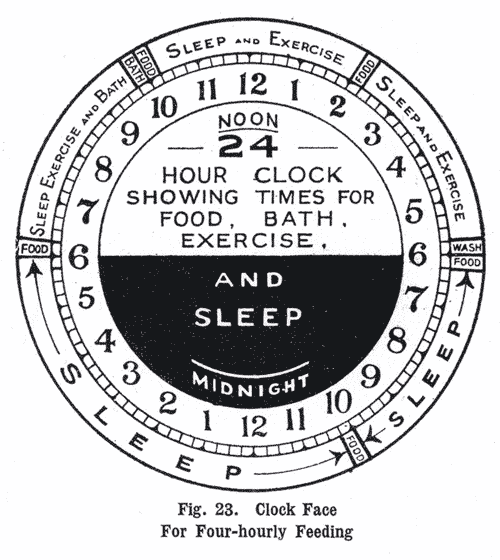
The set of guidelines formulated by the incredibly influential, New Zealand-based Dr Truby King emphasised the importance of routine in feeding. King’s mothercraft movement – which established clinics and training centres around the British Empire during the first half of the twentieth century – taught mothers to feed ‘by the clock’. At five months, a baby was to be fed only five times per day – and at the same time every day – while one month-old babies had an extra, sixth feed.

Like many childcare professionals of the period, King believed that feeding on demand was not only unhealthy – it placed babies at risk of under- or overfeeding – but it was morally and intellectually damaging too. Babies who understood that crying would cause them to be fed would become spoilt, lazy children and adults. Indeed, this points to the infant welfare movement’s more general preoccupation with mothers and motherhood. As the interests of the state were seen, increasingly, as being linked to the proper rearing and education of children, the role of the mother grew in importance. King called his centres ‘shrines to motherhood’, for instance.

But the naturally fussy, over-cautious, and credulous mother was not to be trusted to follow her own instincts: authorities and professionals, who tended to be male, were to provide her with rational, scientific advice on raising her baby. It’s difficult to gauge mothers’ response to the information aimed at them. In her study of mothers in the United States in the 1920s and 1930s, Julia Grant concludes that mothers did heed childcare professionals, but modified their advice according to the views and experiences of their peers. Similarly, mothers in New Zealand took what they wanted from King’s pamphlets on childrearing.

Equally, mothercraft clinics and breastfeeding advice days were well attended by mothers and babies. Several mothercraft centres all over the world also included a dietetic wing, where nursing mothers could stay for up to a fortnight, learning how to breastfeed their babies. There, they would be taught how to breastfeed by the clock, and how to cope with mastitis and painful breasts and nipples. Wonderfully, hospital fees were means tested, so poor mothers could attend for free.

Throughout its existence, the Cape Town dietetic hospital never had an empty waiting list, and similar units in Britain, Australia, and New Zealand were as enthusiastically supported by women. Mothercraft seems to have been at its most successful when mothers could choose how and when they wanted to its advice and services.

While it’s true that the medicalization of breastfeeding transformed this act into a ‘science’ which needed to be re-taught to mothers – that it became possible to inform a mother that she was breastfeeding incorrectly – and that this was underpinned by misogynistic and eugenicist ideas around childhood, motherhood, and the nation, it is as true that mothers did respond positively to the advice provided by mothercraft and other organisations. Clearly, mothers wanted more advice about how to feed their babies – and that they altered it to suit their conditions and needs.

It’s for this reason that I think that Thomas is doing mothers a disservice. Encouraging more women to breastfeed needs to respect the fact that women’s choices about how to feed their babies are influenced by a variety of factors and considerations. Thomas – and other breastfeeding evangelicals – seems to buy into the same discourse of maternal irresponsibility as childcare professionals did in the early twentieth century: the belief that women somehow don’t really understand what’s best for their babies, and must be properly educated. Even if her – and others’ – motives are progressive and well-meaning, they still fail to take mothers seriously.

Further Reading

Sources cited here:

Rima D. Apple, Mothers and Medicine: A Social History of Infant Feeding, 1890-1950 (Madison: University of Wisconsin Press, 1987).

Linda Bryder, A Voice for Mothers: The Plunket Society and Infant Welfare 1907-2000 (Auckland: Auckland University Press, 2003).

Julia Grant, Raising Baby by the Book: The Education of American Mothers (New Haven and London: Yale University Press, 1998).

Philippa Mein Smith, Mothers and King Baby: Infant Survival and Welfare in an Imperial World: Australia 1880-1950 (Basingstoke: Macmillan, 1997).

Other sources:

Linda M. Blum, At the Breast: Ideologies of Breastfeeding and Motherhood in the Contemporary United States (Boston: Beacon Press, 1999).

Molly Ladd-Taylor, Mother-Work: Women, Child Welfare, and the State, 1890-1930 (Urbana and Chicago: University of Illinois Press, 1994).

Marilyn Yalom, A History of the Breast (New York: Ballantine Books, 1997).

Creative Commons License
Tangerine and Cinnamon by Sarah Duff is licensed under a Creative Commons Attribution-ShareAlike 3.0 Unported License.

Food Links, 16.11.2011

The fascinating history of maple syrup.

The best chocolate recipe books.

If you read any of these links this week, make it this one: an interview with a former big food executive.

How did 200,000 tonnes of rice go missing?

The Middle Class Handbook considers soup.

The link between our parents’ diets and our health.

Incredible advertisements for Pepsi.

‘A vigorous and energetic race is always carnivorous’. A Victorian view on Scottish diets. (Thanks Sarang!)

What chicken feed produces the best eggs?

Michael Pollan rethinks his stance on high-fructose corn syrup.

Ten more stubborn food myths. (Thanks Mum!)

Kitchens powered by leftovers.

Thoughts on the history of table manners.

The growing fashion for prickly pears.

The psychology of food aversion.

The American cocktail revival. (As someone who once had drinks at the Tonga Room and Hurricane Bar in San Francisco, I can only regard this as a Good Thing.)

Smuggling drugs in food.

George Orwell on British food.

A map of all the branches of McDonald’s in the US.

Tim Hayward on a year spent rescuing Fitzbillies cake shop in Cambridge.

Margarine Myths

So this week’s blog post was going to be about food and fiction – having had drinks and supper at Pablo Neruda-themed Maremoto last night, it seemed appropriate – but along with the post on authenticity which I promised yonks ago, it will have to wait while I simmer with annoyance at the World Food Programme’s decision to solve the world’s food problems by working with Unilever.

Yes, you read that correctly. The World Food Programme is working with Unilever to alleviate the hunger crisis.

Unilever. The Anglo-Dutch food, margarine, and cosmetics giant which also happens to be the biggest consumer goods company in the world. Is this really a good idea?

I have nothing whatsoever against corporate social responsibility. In fact, I wish that more countries encouraged the private sector to become involved in philanthropic work. With their efficient logistical support and understanding of the market, there are few organisations better positioned to help poor communities that those which provide services or produce consumer products.

And as big corporations go, Unilever ranks pretty high up the sustainability stakes. Last year it launched its Sustainable Living Plan which aims not only to reduce Unilever’s greenhouse gas emissions, waste, and water use, but that of its suppliers and customers as well. It’s an ambitious plan which seeks to make the whole supply chain sustainable – while doubling Unilever’s profits. The company is also funding a range of projects, including encouraging the sustainable production of palm oil (although who knows if it’ll be able to roll back the incredible damage it did by investing in palm oil in the first place), and sponsoring hygiene programmes in the developing world to reduce the numbers of children who die as a result of diarrhoea.  I really hope that they succeed, even as it becomes increasingly apparent that we need to consume less for social and ecological good.

I think that my concern about the WFP’s enthusiasm for Unilever is connected to the fact that this business makes a profit by selling food which isn’t particularly good for its customers. However much Unilever might like to promote its fluffy credentials – and buying Ben and Jerry’s, the business which gave away scoops of Yes Pecan! ice cream on the day of Obama’s inauguration, was certainly part of this – its purpose is to make as much money as possible for its shareholders. The question we need to ask is how it goes about raising those profits.

For all of Unilever’s good intentions, it has a patchy track record on the quality of the food it produces. Consider the ingredients in a jar of Skippy peanut butter:

Roasted peanuts, corn syrup solids, sugar, soy protein, salt, hydrogenated vegetable oils (cottonseed, soybean, and rapeseed) to prevent separation, mono- and diglycerides, minerals (magnesium oxide, zinc oxide, ferric orthophosphate, copper sulfate), vitamins (niacinamide, pyridoxine hydrochloride, folic acid)

In comparison, the sugar- and salt-free version of South Africa’s Black Cat peanut butter (also the product of a big food company), contains peanuts and ‘stabiliser’. There are other brands of mass-produced peanut butter which contain only peanuts and oil.

I know that this might seem like nitpicking, but the point is that Unilever doesn’t sell ‘whole’, unprocessed food to make a profit: like any other big food company, it adds strange and occasionally harmful ingredients to its products to make them taste better or last longer, and it hides this fact with a vast advertising budget. In 2009, for example, it spent £148 million on advertising in the UK alone. In the same year, in Canada it promoted Hellman’s mayonnaise as part of an ‘eat localdrive. Two years before that, a US-based campaign around ‘real food’ suggested that Hellman’s could be included in a diet of ‘real’, ‘whole’ food. Hellman’s is neither ‘local’, nor ‘real’. Its low-fat version contains the following:

Water, modified corn starch, soybean oil, vinegar, high fructose corn syrup, egg whites, salt, sugar, xantham gum, lemon and lime peel fibres, colours added, lactic acid, (sodium benzoate, calcium disodium edta) used to protect quality, phosphoric acid, natural flavours

The bulk of Unilever’s profits come from margarine, which it promotes heavily on the grounds of its health benefits – something which still divides the medical world. This is a business which chooses its ethics carefully.

Consider its involvement in the Public Health Commission, a body created in 2008 by the UK’s then-shadow Minister of Health, Andrew Lansley (greedy):

In the chair of the commission, by invitation of Lansley, was Dave Lewis, UK and Ireland chairman of Unilever, one of the largest processors of industrial fats in the world.

With him were Lucy Neville-Rolfe, corporate affairs director of Tesco, , the supermarket that has been a leading opponent of the traffic light food labelling scheme favoured by the Food Standards Agency, and Lady Buscombe, Conservative peer and former head of the Advertising Association, where she established herself as a formidable political champion of the ad industry’s right to operate free of restrictions.

Asda’s corporate affairs director, Paul Kelly, formerly PR head of Compass, the school meals company of turkey twizzler fame, had to send his apologies. Mark Leverton, policy director of Diageo, manufacturer of leading vodka, whisky and beer brands, joined them by phone.

Lansley – who has links with the food industry – is now Minister of Health and, surprise, surprise, had invited this dubious collection of businesses, alongside McDonald’s, KFC, PepsiCo, and Mars, to help shape Britain’s public health policies around obesity and diet-related diseases. This is as pointless as asking BP, Shell, and Chevron to end the world’s reliance on fossil fuels.

One of the first outcomes of this public-private partnership was the Department of Health’s ‘Great Swapathon’ which encourages families in England to choose healthy products through a voucher scheme. The vouchers

can be exchanged for products deemed to be healthy, including Unilever’s Flora Light margarine, Mars’ Uncle Ben’s rice and Molson’s alcohol free lagers. Other businesses offering vouchers will include supermarket Asda, for its own brand goods; sportswear firm JJB Sports; outdoor activity provider Haven Holidays; Weight Watchers; and private gym group the Fitness Industry Association. The News of the World will help promote the scheme.

The list of companies includes food manufacturers whose products have been blamed for increasing obesity. Unilever’s product range includes ice creams, Pot Noodle and Peperami, while Mars makes chocolate and Molson is a brewer.

‘The News of the World will help promote the scheme.’ Priceless.

This is so misguided it’s almost amusing. A scheme to promote healthy eating actually benefits a clutch of big food companies whose products facilitate Britain’s obesity crisis.

The WFP is engaged in a similar project. It also works in partnership with PepsiCo, manufacturer of crisps, soft drinks, and a range of non-foods; Cargill, whose inhumane and unhygienic slaughterhouse practises contributed to an outbreak of antibiotic-resistant salmonella in some of its meat in the US; Yum! Brands, whose chains include KFC, Pizza Hut, and Taco Bell; and Vodafone, a company’s whose outstanding £6 billion tax bill in 2010 could have paid the UK’s welfare bill for a year.

The WFP was established in 1961 to eliminate hunger and malnutrition. Its focus is on providing food aid, but aims ultimately to reform the food system to the extent that food aid will become largely unnecessary. While the WFP has been invaluable in bringing emergency supplies of food to disaster areas, it has singularly failed to do anything else. We are in the midst of a global food crisis where food aid is needed more than ever before.

One could argue that this is precisely the reason why it’s necessary for the WFP to work with big organisations: they have money and resources. The WFP can only respond to the crisis with adequate funding and assistance. But even given the fact that the WFP is desperately in need of funds at the moment, there is no great imperative for it to work with Unilever, PepsiCo, Vodafone or any other dodgy multinational – and I think that these partnerships only serve to undermine the WFP’s aims. (And it’s worth taking a closer link at the WFP’s finances, as this excellent investigation into the WFP by Sheila Dillon of the BBC’s Food Programme does.)
Famine and malnutrition are caused by a range of factors and, paradoxically, a lack of food isn’t one of them. As the Nobel Prize-winning economist Amartya Sen wrote, people starve or go hungry when they can’t buy food: when food becomes too expensive for them to afford it, or when distribution systems fail or are inadequate. There’s usually enough food to go around, but people have difficulty accessing it.

One of the best, and most poignant, examples of this was the 1992 famine in Somalia which occurred in Bay, one of the country’s most agriculturally productive regions. People starved because militias prevented food from being cultivated and distributed efficiently. It’s no coincidence that famines occur in countries with dysfunctional – or no – governments. The Ethiopian famine in the mid-1980s began after the collapse of its government – the country had managed to feed itself before then.

Democracies tend to have food systems which function properly. Instead of focussing on raising money and sending food parcels, promoting democracy and drawing attention to the connection between bad governance and hunger should be at the top of the WFP’s agenda.

Getting big food and agriculture companies to sponsor the WFP’s work will not bring democracy to the developing world, nor will it end the food crisis. These are organisations have little or no interest in promoting good governance if it’s bad for business.

And, secondly, some of these organisations have actually benefitted from the food crisis. Cargill is the world’s biggest agricultural commodities trader, and it’s been doing rather well recently, as the Financial Times reported in January:

Cargill benefited from supply disruptions in the global food chain and rising prices to report a tripling in profits in the second quarter of its fiscal year.

The world’s largest agricultural commodities trader said net income in the three months to November 30 rose to $1.49bn, up from $489m in the same period a year earlier.

First-half earnings more than doubled to $2.37bn, up from $1.01bn in the six months to the end of November 2010.

The windfall highlights the big margins in the sector led by Cargill, which rose to prominence in the 2007-08 food crisis, when agricultural commodities prices hit all-time highs.

Chris Johnson, credit analyst at Standard & Poor’s in New York, said that droughts in some of the key grain-producing regions and the ensuing trade dislocations were behind the strong results.

‘To the extent that you’re able to provide grains in parts of the world where they cost more you can get a larger profit margin,’ he said.

Food prices have been driven up by food speculation. Cargill is both a hedge fund and a commodities trader, so it not only benefits from higher food prices – but is partly responsible for causing them to rise too.

The title of this post comes from an essay by Roland Barthes from his collection Mythologies (1957). In ‘Operation Margarine’ he argues that advertisers use a kind of reverse psychology to persuade us to buy things we know aren’t all that good for us: the advertisement acknowledges that the product, margarine in the example Barthes provides, isn’t as tasty or healthy as its rivals, but then turns this on its head by emphasising its convenience and cheapness. Margarine then becomes the obvious product to buy.

The WFP is attempting some margarine-mythmaking in insisting that its work can only be achieved in partnership with these big multinationals: yes, they’re bad, but – hey, what can you do? They have money and power and people are hungry. Nonsense. The WFP is inadvertently giving the best PR possible to a clutch of businesses which, at best, have very little interest in producing good, healthy food. At worst, the WFP is trying to solve world hunger in partnership with organisations which have a vested interest in keeping the world hungry.

Further Reading

Texts cited here:

Peter T. Leeson, ‘Better off stateless: Somalia before and after government collapse,’ Journal of Comparative Economics, vol. 35 (2007), pp. 689-710.

Ken Menkhaus, ‘The Crisis in Somalia: Tragedy in Five Acts,’ African Affairs, vol. 106/204 (2007), pp. 357-390.

Marion Nestle, Food Politics: How the Food Industry Influences Nutrition and Health, revised ed. (Berkeley: University of California Press, 2007).

Amartya Sen, ‘The Food Problem: Theory and Policy,’ Third World Quarterly, vol. 4, no. 3 (Jul., 1982), pp. 447-459.

Other sources:

A. Clarkson and E. Margaret Crawford, Feast and Famine: Food and Nutrition in Ireland 1500-1920 (Oxford: Oxford University Press, 2001).

Jean Drèze and Amartya Sen (eds.), The Political Economy of Hunger, 3 vols. (Oxford: Clarendon Press, 1990).

Cormac Ó Gráda, Black ’47 and Beyond: the Great Irish Famine in History, Economy and Memory (Princeton: Princeton University Press, 1999).

Cormac Ó Gráda, Famine: A Short History (Princeton: Princeton University Press, 2009).

Cormac Ó Gráda, ‘Making Famine History,’ Journal of Economic Literature, vol. 45, no. 1 (Mar., 2007), pp. 5-38.

Cormac Ó Gráda, ‘Revisiting the Bengal Famine of 1943-4,’ History Ireland, vol. 18, no. 4, The Elephant and Partition: Ireland and India (July/August 2010), pp. 36-39.

Cormac Ó Gráda, ‘The Ripple that Drowns? Twentieth-Century Famines in China and India as Economic History,’ Economic History Review, vol. 61, (2008), pp. 5-37.

Amartya Sen, ‘Famines as Failures of Exchange Entitlements,’ Economic and Political Weekly, vol. 11, no. 31/33, Special Number: Population and Poverty (Aug., 1976), pp. 1273-1280.

Amartya Sen, Poverty and Famines: An Essay on Entitlement and Deprivation (Oxford: Clarendon Press, 1981).

C.P. Melville, ‘The Persian Famine of 1870-72: Prices and Politics,’ in Food, Diet, and Economic Change Past and Present (Leicester: Leicester University Press, 1993), pp. 133-150.

Anne M. Thompson, ‘Somalia: Food Aid in a Long-Term Emergency,’ Food Policy (Aug. 1983), pp. 209-219.

C. Paul Vincent, The Politics of Hunger: The Allied Blockade of Germany, 1915-1919 (Athens: Ohio University Press, 1985).

Christian Webersik, ‘Mogadishu: An Economy without a State,’ Third World Quarterly, vol. 27, no. 8 (2006), pp. 1463-1480.

S.G. Wheatcroft, ‘Famine and Food Consumption Records in Early Soviet History, 1917-25,’ in Food, Diet, and Economic Change Past and Present (Leicester: Leicester University Press, 1993), pp. 151-174.

Creative Commons License Tangerine and Cinnamon by Sarah Duff is licensed under a Creative Commons Attribution-ShareAlike 3.0 Unported License.

From Customers to Consumers

I love this video – it’s an overview of a century of fashion, music, and dance in London’s East End:

It’s not an art installation. It’s not part of a community project. It’s an ad. For a shopping mall. And this isn’t any mall – it’s Europe’s biggest, and one of the key developments in the Olympic site in Stratford. In fact, it seems that most of the spectators attending next year’s Summer Olympics will enter the games through Westfield Stratford City: its casino, 300 shops, 50 restaurants, three hotels, and 17 cinema screens.

I’m not a massive fan of shopping malls, and said as much when I posted this video on Facebook. And then my friend Jean-François, who’s an architect, made the point that the development will create a massive 10,000 jobs, and has funded literacy classes for the astonishingly high number of applicants who seemed to be illiterate. In an area as deprived as Stratford, surely this shopping centre could only be a Good Thing?

There has been a great deal of criticism of the way in which Stratford has been transformed by the Olympic site. I don’t want to romanticise life in a very poor borough of London, and I’m not sure that commentators like Iain Sinclair – who has been vociferous in his opposition to the 2012 Olympic bid – offer much in the way of ideas for providing jobs, decent housing, and education for the area. But I feel uncomfortable about the way that a temple to consumerism seems to be offered up as the only possible way of raising living standards in Stratford. As Suzanne Moore – not, admittedly, my favourite columnistwrote in yesterday’s Guardian:

Next week a new Westfield opens. It’s not in west London, it’s in the east, in Stratford. It will cash in on the Olympics. Is this what this deprived area really needs? Another giant, weatherless mall that has exactly the same shops as everywhere else? Maybe this deliberately disorientating social space will be a place of connection and hope. Maybe it will offer the local youth something other than an expensive bowling alley, a multiplex and some minimum-wage jobs.

But is this just a case of lefty, middle-class squeamishness? When I buy a Margot Molyneux blouse from Mungo & Jemima, or even a dress from an upmarket chain like White Stuff or online store like Toast, it’s not any ‘better’ than purchasing a t-shirt from Mr Price. Both decisions support people who designed and made the garment. When I buy from small, local grocers and food shops, it’s partly because of a belief that this is good for our food system, but it also says something about me – about how I choose to constitute my identity in relation to a particular way of thinking about being an ‘ethical’ shopper. However critical I may be of consumerism, I am, inevitably, bound up in it.

I am interested in the shift from defining people who buy things from shops as ‘customers’ to being described as ‘consumers’. There’s a growing collection of historians interested in tracing and analysing this transition. One of the reasons why I’m so interested in it is because of the pivotal role played by the food industry in creating consumers.

Given the dire state of the average American diet, it probably comes as no surprise to learn that the United States was the first country to witness the rise of a food industry reliant on consumers who had begun to buy an increasing number of good produced in factories by big food companies towards the end of nineteenth century. Consumerism is inextricably linked to the industrialisation of food production.

The first people to benefit from the Industrial Revolution were the middle classes. In Britain, Europe, America and elsewhere, the newly-wealthy bourgeoisie could afford to buy more food, and employed more servants to prepare it. They had leisure in which to enjoy the eating of this food – and it became a way of marking newly-acquired middle-class status.

Until 1850 in Europe, and 1830 in the US, the diets of the urban poor actually deteriorated. The average height of working-class people living in the rapidly expanding cities of the industrialised world actually declined – one of the most potent indicators of the levels of deprivation experienced by this new proletariat. This was the first generation of workers to be disconnected from food production: these were people who no longer grew their own food, and were dependent on inadequate and expensive food systems to supply towns and cities. Poor diets were centred around starches and cheap, poor-quality food.

But from the mid-nineteenth century onwards, food became progressively cheaper, more plentiful, and varied – and this happened earlier and more quickly in the United States. So what caused this drop in price and greater availibility in cities? A revolution in transport made it easier to take produce from farms to urban depots by rail, and shipping brought exotic fruit and vegetables from the rest of the world to Europe and the United States. When Europe’s grain harvest failed during the 1870s, the continent was fed with wheat imported by steam ship from Canada. Farmers now began to cultivate land which had previously been believed to be inaccessible – and to grow market-oriented produce. The rise of the iceberg lettuce – which could cope with being transported over vast distances with little bruising – is directly attributable to this.

The agricultural revolution of the eighteenth century made farming more productive. New systems of crop rotation, the use of higher-yielding plant hybrids and improved implements, and the enclosure movement in Britain meant that fewer farmers were producing more food than ever before. And this produce was processed far more quickly, and cheaply. With innovations in the preservation of food through refrigeration, bottling, and canning, food could be transported over greater distances, but also, and crucially, manufactured in larger quantities and then kept before distribution on a mass scale.

Food companies began to control nearly every aspect of the newly industrialised food chain: businesses like Heinz formed alliances with farmers and transportation companies which supplied their factories with meat, fruit, and vegetables. Increasingly, they also began to advertise their products. The rise of these ‘food processors’, as they’re often called, caused a fundamental change in the way in which people ate. Most Americans began to eat similar diets based around processed food produced in factories.

Americans weren’t, of course, compelled to eat processed food. They did so for a number of reasons. Factory-baked bread, tinned vegetables, and processed meat were cheap, easy to prepare, and, importantly, believed to be free from contamination and disease. But with most people’s basic nutritional and calorific needs now met, food processors began to use advertising and brands to a far greater extent to encourage customers – dubbed ‘consumers’ – to buy more and that which they didn’t need. Susan Strasser explains:

Formerly customers, purchasing the objects of daily life in face to-face relationships with community-based craftspeople and store keepers, Americans became consumers during the Progressive Era. They bought factory-produced goods as participants in a complex network of distribution – a national market that promoted individuals’ relationships with big, centrally organised, national-level companies. They got their information about products, not from the people who made or sold them, but from advertisements created by specialists in persuasion. These accelerating processes, though by no means universal, had taken firm hold of the American way of life.

Food processors needed to persuade consumers to buy their products, and in greater quantities:

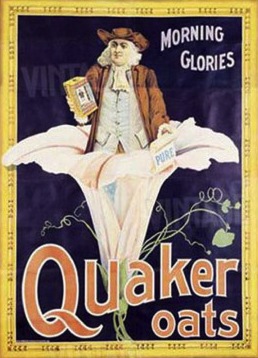
People who had never bought cornflakes were taught to need them; those once content with oats scooped from the grocer’s bin were told why they should prefer Quaker Oats in a box. Advertising, when it was successful, created demand…. Advertising celebrated the new, but many people were content with the old. The most effective marketing campaigns encouraged new needs and desires…by linking the rapid appearance of new products with the rapid changes that were occurring in all areas of social and cultural life.

We have always attached a variety of meanings to food, but within a consumer society, the decisions we make about what to buy and eat are shaped to a large extent by the desires and needs manufactured by a massive advertising industry.

The industrialisation of food production has, as I noted last week, allowed more people to eat better than ever before. But this has come at a cost: we know that many food companies engage in ecologically unsustainable practices, mistreat their employees, hurt animals, and occasionally produce actively harmful food. Moreover, it was part of a process which transformed people from customers into consumers – into individuals whose happiness is linked to what and how much they buy. This does not make us happy – nor is it environmentally or economically sound. Justin Lewis writes:

the promise of advertising is entirely empty. We now have a voluminous body of work showing that past a certain point, there is no connection between the volume of consumer goods a society accumulates and the well-being of its people.

The research shows that a walk in the park, social interaction or volunteering – which cost nothing – will do more for our well-being than any amount of ‘retail therapy’.  Advertising, in that sense, pushes us towards maximising our income rather than our free time.  It pushes us away from activities that give pleasure and meaning to our lives towards an arena that cannot – what Sut Jhally calls ‘the dead world of things’.

As customers were made consumers, so it is possible for us to change once again. How we are to achieve this, though, is difficult to imagine.

Further Reading

Texts quoted here:

Harvey A. Levenstein, Revolution at the Table: The Transformation of the American Diet (New York: Oxford University Press, 1988).

Susan Strasser, Customer to Consumer: The New Consumption in the Progressive Era,’ OAH Magazine of History, vol. 13, no. 3, The Progressive Era (Spring, 1999), pp. 10-14.

Other sources:

Warren Belasco and Philip Scranton (eds.), Food Nations: Selling Taste in Consumer Societies (New York: Routledge, 2002).

Jack Goody, ‘Industrial Food: Towards the Development of a World Cuisine,’ in Cooking, Cuisine, and Class: A Study in Comparative Sociology (Cambridge: Cambridge University Press, 1982), pp. 154-174.

Roger Horowitz, Meat in America: Technology, Taste, Transformation (Baltimore: Johns Hopkins University Press, 2005).

Tim Jackson, Prosperity without Growth: Economics for a Finite Planet (London: Earthscan, 2009).

Nancy F. Koehn, ‘Henry Heinz and Brand Creation in the Late Nineteenth Century: Making Markets for Processed Food,’ The Business History Review, vol. 73, no. 3 (Autumn, 1999), pp. 349-393.

Rebecca L. Spang, The Invention of the Restaurant: Paris and Modern Gastronomic Culture (Cambridge: Harvard University Press, 2000).

Peter N. Stearns, ‘Stages of Consumerism: Recent Work on the Issues of Periodisation,’ The Journal of Modern History, vol. 69, no. 1 (Mar., 1997), pp. 102-117.

Susan Strasser, ‘Making Consumption Conspicuous: Transgressive Topics Go Mainstream,’ Technology and Culture, vol. 43, no. 4, Kitchen Technologies (Oct., 2002), pp. 755-770.

Lorine Swainston Goodwin, The Pure Food, Drink, and Drug Crusadors, 1879-1914 (Jefferson: McFarland & Co., 1999).

Frank Trentmann, ‘Beyond Consumerism: New Historical Perspectives on Consumption,’ Journal of Contemporary History, vol. 39, no. 3 (Jul., 2004), pp. 373-401.

Creative Commons License Tangerine and Cinnamon by Sarah Duff is licensed under a Creative Commons Attribution-ShareAlike 3.0 Unported License.

Food Futures

One of the funniest articles I’ve read recently was Robert Webb’s account of his experience writing a weekly column for the Daily Telegraph. He describes – for gleeful readers of the New Statesman – his battles with the commentators on the newspaper’s online edition. The internet’s equivalent to the ‘green Biro brigade’ of usually right-wing newspaper letter-writers, these ‘Ghouls’ as, Webb calls them, used the Telegraph’s comment function to heap scorn and ridicule on Webb.

These guys love Britain so much that they all seem to live in Gibraltar. Their ‘comments’ were characterised by a suspicion of nuance, a tin ear for irony, a conviction that political correctness and Stalinism were the same thing, and a graceless irascibility of the kind we are now expected to find endearing in Prince Philip. There was also an assumption of intellectual superiority, rather cruelly undermined by a vulnerability to cliché and an inability to spell.

The problem was not that they disagreed with Webb, but that their comments were aimed solely at reminding him what a ‘worthless bastard’ he was.

I hadn’t realised that these internet trolls had moved beyond the places I’d usually expect to find them – news sites, mainly – and on to food sites as well. In a post which seems to have gone viral this week, Shauna James Ahern of Gluten Free Girl explains the extent to which she’s been subjected to internet bullying:

Every day, there is some nasty, vituperative comment on a post, something I skim quickly then delete. It could be comments about my husband (‘He’s obviously retarded. Look in his eyes. There’s something wrong.’) about our life on Vashon (‘Oh that’s right, everything is perfect on  your fucking ISLAND.’), about our food (‘That looks like dog vomit. Why does anyone pay you to do this?’), and mostly about me (my weight? my writing? my hair? my mere presence in the world? take your pick).

I want to make this clear: criticism and debate are absolutely vital – even on food blogs. I have no truck with writers who believe that any form of critical thinking is ‘mean’ or ‘negative’. But I have no time whatsoever for bullies. I had a small brush with one (or two?) this week after publishing a post critical of the Toffie Food Festival’s Menu magazine. A few commentators using dodgy Hotmail accounts and a suspiciously identical IP address sent comments which were fairly personal and meant only to tell me and the world that my ideas are stupid.

But a decade in academia has helped me to grow rhino hide for skin and it takes more than a few bullies to stop me. So troll who lives at IP 41.133.175.4, you know who you are. As do I.

Troll at IP 41.133.175.4 did, though, ask a good question, and one which is worth answering. He (or indeed she) responded to my point that the authors of Menu have a profoundly problematic conception of food as a consumer product – like jewellery or clothing – which can be used and thrown away at whim, by asking: ‘where do you live where you don’t have to buy food’?

Yes, dear troll at IP 41.133.175.4, you’re quite right: food is a product or commodity which has to be bought (unless, of course, you grow or rear it yourself). But there’s an important difference between food and bed linen, perfume, cutlery, or clothes, for example. Only one of those products is absolutely essential to human life – only one has a significant impact on people’s incomes and the ways in which they live. Only one can cause ordinary people to protest when prices become too high.

Food is, then, is bought by consumers and treated as a consumer product even though it’s significantly different from other products. Our understanding of food as a consumer product is a relatively recent phenomenon: it’s only a century or two old, and linked strongly to the industrial revolution and mass production, as well as the development of a very powerful advertising industry.

Why should we care about this? Given that the mass production of food allowed greater numbers of people to eat better and more cheaply than ever before, surely these processes could only be considered a Good Thing. There is nothing inherently wrong with the industrialisation of food production as long as it is environmentally sustainable, humane to animals, respects workers’ rights, and produces safe and uncontaminated food – which, as the industry functions at the moment, is not always the case.

Moreover, as I wrote last week, this conception of food as a consumer product means that we understand food differently. Food moves from being something we associate primarily with nourishment to being a commodity which has the same meaning for consumers as other, less essential goods. This means, for example, that they are more willing to throw away large quantities of food. As the United Nations’ Food and Agriculture Organisation reported a few months ago, the average consumer in the West wastes 95 to 115kg of food every year – and wealthy countries are responsible for half of the total amount of food wasted every year.

There are many other implications for seeing food as a consumer product – not least the foodie worship of food since the early eighties – and I’ll consider these more carefully in the next few weeks. For the moment, I’d like to take a quick look at food speculation.

Of the many causes of the current global food crisis, food speculation is the most contested and seems to be the most complicated to understand. As the UN’s Special Rapporteur on the Right to Food Olivier de Schutter as well as Oxfam and other organisations have argued recently, the deregulation of commodities markets in the West during the mid-nineties have had catastrophic implications for food prices.

Let me explain: farmers have long traded in food futures to secure their incomes. Farmers protect themselves against bad harvests by selling their produce in advance to traders. They use the profits they make in bad years – when they have less to sell – to protect themselves against future losses. This works well for traders, who do particularly nicely in good years. Writing about the United States, Frederick Kaufman explains how well this tightly regulated system worked:

The result: Over the course of the 20th century, the real price of wheat decreased (despite a hiccup or two, particularly during the 1970s inflationary spiral), spurring the development of American agribusiness. After World War II, the United States was routinely producing a grain surplus, which became an essential element of its Cold War political, economic, and humanitarian strategies – not to mention the fact that American grain fed millions of hungry people across the world.

But things changed at the end of the twentieth century. Partly because of intensive lobbying from hedge funds and banks, like Barclays, governments in the West deregulated commodity derivatives markets. Banks and investors became interested in trading on the commodities market – once the preserve of specialists like Glencore – when bankers at Goldman Sachs (yes, they really do their best to be the embodiment of venality) devised new investment products which included speculation in food futures. Investors which hadn’t before been involved in the commodities markets, like pension funds, were, then, willing to play the futures markets.

As a result of this, food – grain, cocoa, fruit, rice, and meat – can be traded in exactly the same way as other commodities, like gold, timber, and coal. Brett Scott writes:

The controversy can be broken down into two separate issues. Firstly, are financial players in commodity derivatives markets causing derivatives prices to disassociate from what the price ‘should be’ if it were reflecting the fundamental balance of supply and demand in the underlying commodity? Secondly, does such a disassociation in futures prices get transmitted into the real price of food people end up paying?

The answer from the UN and a range of other charities is a definite, ringing ‘yes’. Irresponsible banks are driving up the price of food, they argue. John Vidal cites two well-known examples of food speculation causing price spikes:

Last year, London hedge fund Armajaro bought 240,000 tonnes, or more than 7%, of the world’s stocks of cocoa beans, helping to drive chocolate to its highest price in 33 years. Meanwhile, the price of coffee shot up 20% in just three days as a direct result of hedge funds betting on the price of coffee falling.

But what role does speculation play in causing food prices to rise more generally? This is more difficult to pin down, as Scott implies. De Schutter argues, convincingly in my mind, that even if speculation was not responsible on its own for causing the spike in food prices in 2008, it was a major contributing – and new – factor. I think it’s worth quoting him at length:

a number of signs indicate that a significant portion of the price spike was due to the emergence of a speculative bubble. Prices for a number of commodities fluctuated too wildly within such limited time-frames for such price behaviour to have been a result of movements in supply and demand: wheat prices, for instance, rose by 46% between January 10 and February 26, 2008, fell back almost completely by May 19, increased again by 21% until early June, and began falling again from August. The 2008 food price crisis was unique in that it was possibly the first price crisis that occurred in an economic environment characterized by massive amounts of novel forms of speculation in commodity derivative markets.

The particular area of concern is speculation in derivatives based on food commodities. A study conducted by Lehman Brothers just before its bankruptcy revealed that the volume of index fund speculation increased by 1,900% between 2003 and March 2008. Morgan Stanley estimated that the number of outstanding contracts in maize futures increased from 500,000 in 2003 to almost 2.5 million in 2008. …the changes in food prices reflected not so much movements in the supply and/or demand of food, but were driven to a significant extent by speculation that greatly exceeded the liquidity needs of commodity markets to execute the trades of commodity users, such as food processors and agricultural commodity importers.

Food speculation is a manifestation on a very grand scale of a shift in thinking of the value and significance of food: here, food is simply another commodity to be bought and traded, often very lucratively. We know the futures are useful and important to farmers, but the unregulated speculation of food means that food prices are no longer linked to what people can afford to pay. When the UN and other organisations call for a greater regulation of commodities markets – to a return, to some extent, to the derivatives trading of the twentieth century – they are also pointing to the fact that food cannot be understood in the same terms as other commodities and consumer goods.

Creative Commons License Tangerine and Cinnamon by Sarah Duff is licensed under a Creative Commons Attribution-ShareAlike 3.0 Unported License.