
Malawian Cornish Pasties
This week, Oxfam released a report on the world’s favourite food. Based on a survey of 16,000 people in Australia, Brazil, Germany, Ghana, Guatemala, India, Kenya, Mexico, the Netherlands, Pakistan, the Philippines, Russia, South Africa, Spain, Tanzania, the UK and the USA, it tabulates the top three meals in each of these countries. In South Africa, pasta, pizza, and steak are favourites, while it’s chicken, pizza, and Chinese (whatever that may be) in Guatemala. Pasta rules supreme as the world’s favourite food.
Although fun, I think that the conclusions drawn by the survey, which is part of Oxfam’s Grow campaign, are pretty dubious. I don’t think that the likes and dislikes of sixteen thousand people – of a global population of six billion – count for terribly much. I am very surprised that Oxfam reports that most South Africans list pasta as their favourite food. Pasta isn’t included in the Medical Research Council’s list of the most widely foods consumed in South Africa – the top five of which are maize meal, white sugar, tea, bread, and milk. It seems to me that the people included in this survey were mainly middle-class urban dwellers – precisely the people who would list pizza, pasta, and steak as their favourite food.
But the purpose of the survey, flawed as it may be, is to demonstrate
the spread of Western diets across the world. Although national dishes are still popular – such as paella in Spain, schnitzel in Germany and biryani in India – pizza and pasta are now the favourite foods of many, with more than half of the countries (nine out of 17) listing one or both in their top three foods.
I doubt that, as Oxfam suggests, all ‘people’s diets are actually changing, with many not eating the same foods as they did just two years ago.’ Diets change slowly over time. It’s more accurate to suggest that food preferences are changing. It’s only the affluent who can afford to change what they eat. As in Western Europe after 1945, the Chinese and Indian middle classes are eating more animal protein than ever before. In South Africa, pasta remains prohibitively expensive for most people – who still base their diets around maize meal.
It’s worth considering how the meanings of particular food stuffs change over time and space. Particular dishes may mean one thing in the region in which they originate and something quite different in the countries to which they are taken by immigrants, fashion, or supermarkets and restaurants. We tend to assume that this ‘globalisation’ of food or taste is a relatively recent and pernicious phenomenon. But it’s far more complicated than that.
In response to last week’s post on cupcakes, feminism, and gentrification, our woman in Bangladesh comments:
I am also thinking about the term ‘gentrification’ in Dhaka‘s context. We have cakeshops here but they didn’t pop up as precursors to gentrification. They tended to set up shop near urban dwellings (lots of birthday cakes to be sold?) and later on they became common near office areas, since cakeshops in Dhaka these days also sell fried chicken and chicken patties (pronounced chicken petis) that office people love to eat, along with pastries (pronounced pess tree). Given that, what does gentrification connote in Dhaka and what are the precursors to it?
Shahpar had noted previously:
I was with Bangladeshi friends while chasing cupcakes. We noted how different cupcakes were in NYC than in Dhaka. Here they are made with the cheapest quality ingredients and sold in roadside shops. No frosting. Just a chunk of cake in marigold yellow, sitting in a greasy pleated paper skirt. We used to get them in our school canteens and kids in Bengali medium schools like the one I went to probably still eat cupcakes. It’s the food to go with roadside tea and is a quick snack for the blue collar workers. Rickshaw wallahs and bus ticket sellers and garment factory workers all eat it. Nothing girly about it.
In Dhaka, cupcakes and cake shops mean very different things than they do in Cape Town. Can you imagine a more heavenly combination than cake and fried chicken?

A cupcake in Dhaka
Cupcakes, cake, and pastries are the, now entirely assimilated, products of the long British presence in Bengal. As I wrote a few weeks ago, colonialism gave rise to imperial cuisines – the fusion of foreign and domesticated cooking – all over the world. It also caused a range of British or European foodstuffs to take on new meanings once exported to the colonies.
Set in Rhodesia in the 1960s, Tsitsi Dangarembga’s novel Nervous Conditions (1988) is a bildungsroman which focuses on Tambudzai, a little girl sent from her parents’ impoverished homestead to be educated by her middle-class, town-dwelling aunt and uncle. Upon her arrival at her new home, she has afternoon tea with her aunt, Maiguru:
There was food too, lots of it. Lots of biscuits and cakes and jam sandwiches. Maiguru was offering me the food, but it was difficult to decide what to take because everything looked so appetising. We did not often have cake at home. In fact, I remembered having cake only at Christmas time or at Easter. At those times Babamukuru [her father] brought a great Zambezi slab home with home and cut it up in front of our eager eyes, all the children waiting for him to distribute it. This he did one piece each at a time so that for days on end, long after the confectionery had lost its freshness, we would be enraptured. We would spend many blissful moments picking off and nibbling, first the white coconut and then the pink icing and last the delicious golden cake itself…. Biscuits were as much of a treat as cake, especially when they were dainty, dessert biscuits with cream in the middle or chocolate on top.
For Tambudzai, cheap cake and biscuits were part of annual celebrations. But for her wealthier, well educated aunt who had lived abroad, afternoon tea is indicative of her sophisticated, middle-class status. It’s also a marker of her assimilation of ‘western’ (or ‘civilised’) values and patterns of living.
One of the most striking features of the diets of British officials and expats living in southern Africa and southeast Asia during the late nineteenth and twentieth centuries was their rigid adherence to the menus and diets of ‘Home’. In publications like the Kenya Settlers’ Cookery Book and Guide, readers were urged not to go native. Eating roast beef, porridge, custard, and dumplings was a way of demonstrating civilised, European status. Local cooks were taught how to cook British staples. In White Mischief James Fox describes the eating habits of Kenya’s aristocratic expats during the 1930s:
The astonishing African talent for cooking European food, in particular hot English puddings, provided undreamed-of comfort. For their part, the Africans were astonished at the number of meals required by Europeans every day, and the quantity of food consumed. Europeans seemed always to be eating.
These attitudes towards food persisted even as – or possibly because – imperial rule came to an end in Africa in the 1960s. My father was a little boy in Olifantsfontein – then a mining village between Johannesburg and Pretoria – during this period. His mother, whose interest in food, cooking, and eating was minimal, employed a Malawian cook to take care of the kitchen. The strange set of cultural and racist prejudices of the time decreed that Malawians were particularly good cooks. Luckily for my grandmother, Frank Nyama conformed to stereotype. (In a pleasing coincidence, ‘nyama’ means meat in Swahili.)
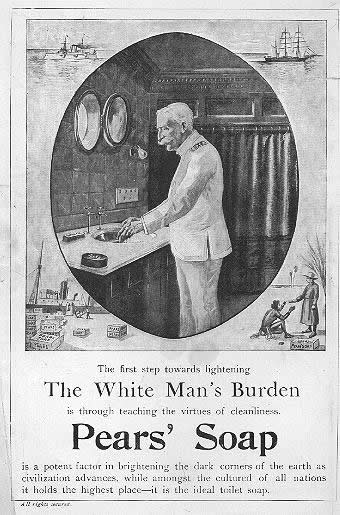
For my father and his friends in the village, Nyama achieved minor celebrity status on the grounds that his brother had been eaten by a crocodile. (A pointless way to go, as Dad notes.) He cooked the ‘British’ food demanded by my grandparents. In fact, the Cornish pasties that we make at home are from his recipe. Yes, Cornish pasties – from Cornwall – made from a recipe written by a Malawian chef. And they’re fantastic – they’re as good as the (excellent) pasty I ate in Cornwall. Nyama cooked local dishes for himself, sharing them occasionally with Dad and his brothers. For my grandparents, Cornish pasties and other ‘European’ food was the cooking of civilisation, of ‘whiteness’, and of cultural superiority. To eat Nyama’s regional faire would have been, in their view, to admit a kind of racial defeat.
The point is that food has been globalised for as long as human beings have travelled around the world. It has been used to bolster and construct colonial, local, and foreign identities, and as a result of this, the meanings which we attach to particular dishes and food stuffs have changed over time. There is nothing inherently wrong with the globalisation of food. Food is adapted to suit local tastes and to fit into existing attitudes towards cooking and eating.
The change in contemporary diets and food preferences identified by Oxfam is not, then, anything new. I think it’s worth remembering this as we rethink the ways in which we grow and consume food: that there’s no mythical and ‘authentic’ regional food past for us to return to, and that there’s very little point in stopping people from borrowing cuisines and tastes from other countries.
Further Reading
Texts quoted here:
Tsitsi Dangarembga, Nervous Conditions (London: The Women’s Press, [1988] 2001).
James Fox, White Mischief (London: Vintage: [1982] 1988).
The Kenya Settlers’ Cookery Book and Household Guide, seventh ed. (Nairobi: Church of Scotland Women’s Guild, no date).
Other sources:
Janet M. Bujra, ‘Men at Work in the Tanzanian Home: How Did They Ever Learn?’ in African Encounters with Domesticity, ed. Karen Tranberg Hansen (New Brunswick, New Jersey: Rutgers University Press, 1992).
Timothy Burke, ‘“Fork Up and Smile”: Marketing, Colonial Knowledge and the Female Subject in Zimbabwe,’ in Gendered Colonialisms in African History, eds. Nancy Rose Hunt, Tessie P Liu, and Jean Quataert (Oxford: Blackwell, 1997).
Helen Callaway, Gender, Culture and Empire: European Women in the Colonial Nigeria (London: Macmillan, 1987).
Jean and John L. Comaroff, ‘Home-Made Hegemony: Modernity, Domesticity, and Colonialism in South Africa,’ in African Encounters with Domesticity, ed. Karen Tranberg Hansen (New Brunswick, New Jersey: Rutgers University Press, 1992).
LeRay Denzer, ‘Domestic Science Training in Colonial Yorubaland, Nigeria,’ in African Encounters with Domesticity, ed. Karen Tranberg Hansen (New Brunswick, New Jersey: Rutgers University Press, 1992).
Nancy Rose Hunt, ‘Colonial Fairy Tales and the Knife and Fork Doctrine in the Heart of Africa,’ in African Encounters with Domesticity, ed. Karen Tranberg Hansen (New Brunswick, New Jersey: Rutgers University Press, 1992).
Elizabeth Schmidt, ‘Race, Sex, and Domestic Labour: The Question of African Female Servants in Southern Rhodesia, 1900-1939,’ in African Encounters with Domesticity, ed. Karen Tranberg Hansen (New Brunswick, New Jersey: Rutgers University Press, 1992).
Karen Tranberg Hansen, ‘White Women in a Changing World: Employment, Voluntary Work, and Sex in Post-World War II Northern Rhodesia,’ in Western Women and Imperialism: Complicity and Resistance, eds. Nupur Chaudhuri and Margaret Strobel (London and New York: Routledge, 1992).
 Tangerine and Cinnamon by Sarah Duff is licensed under a Creative Commons Attribution-ShareAlike 3.0 Unported License.



 Tangerine and Cinnamon

Sep 4
The Root of the Evil
Over the past few weeks I’ve been watching with barely-disguised glee, the evisceration of a recent Newsweek article by Niall Ferguson – pet historian of the American right – in which he provides a deeply flawed analysis of Barack Obama’s past four years in power. As Matthew O’Brien notes, before systematically working through Ferguson’s argument (or, indeed, ‘argument’), ‘He simply gets things wrong, again and again and again.’
I’m no fan of Ferguson’s. This has less to do with our political differences – in relation to him, I’m so left-wing I should be living in a Himalayan hippy commune practising an obscure form of yoga while teaching Capital to peasants – but because of the way he shapes his interpretations of the past to suit a particular neoliberal agenda.
Of course, no historian is capable of writing an absolutely objective history of anything – nor would we want to because it would be dreadfully boring – but Ferguson presents, and defends, his arguments on the grounds that they are absolute truth.
He was called out on this last year by Pankaj Mishra, in a fantastic review of Civilisation: The West and the Rest for the London Review of Books. In Civilisation, Ferguson argues that
Leaving aside the strange question of why an historian writing in the twenty-first century thinks that it’s possible to divorce the ‘West’ (whatever we may mean by that) from the rest of the world – and even why an historian feels like writing a triumphalist history of Europe and North America (I thought we stopped doing that in the sixties?) – this is a history which largely ignores, or plays down, the implications of modern capitalism and globalisation for those people outside of the West.
As in his writing on the creation of European empires, Ferguson has a problem with accounting for the widespread resistance of Africans, Asians, and others to European conquest – and the violence and exploitation which followed colonisation. Mishra writes:
Recently I’ve been thinking a great deal about a comment which Roger Casement made in a report for the British government about atrocities committed in the Congo Free State during the late nineteenth century. Writing in 1900, he concluded:
The Congo Free State came into being at the 1884-1885 Berlin West Africa Conference, where the assembled representatives of European states acknowledged the Belgian king’s right to establish a colony in central Africa. Leopold II’s International Association – a front organisation for his own commercial interests – was allowed to operate in the region.
There were strings attached to the deal – Leopold had to encourage both humanitarianism and free trade, for instance – but with the sharp increase in international demand for rubber in the 1890s, after JB Dunlop’s invention of inflatable rubber tyres, Leopold’s interest in the Congo, which had only ever extended to exploiting the country for its natural resources, narrowed even further. Leopold operated his own monopoly on the rubber trade, leasing some land to other companies on the proviso that they pay him a third of their profits.
The ‘evil’ to which Casement referred was the transformation of the Congolese population into a mass of forced labourers compelled to contribute quotas of rubber to the various businesses operating in the Free State. Those who failed to do so, those who refused to do so, or those who were suspected of not doing so, faced brutal reprisals from the State’s Force Publique, including being killed, often along with their families; having their hands cut off; and seeing their villages and property burned and destroyed.
It’s estimated that ten to thirteen million Congolese died as a result of murder, starvation, exhaustion, and disease between 1885 and 1908, when international condemnation of Leopold’s regime forced the Belgian government to take control of the Free State.
Although other colonial regimes in Africa could be brutal, violent, and unjust, none of them – with the possible exception of Germany in (what is now) Namibia – managed to commit atrocities on the scale that Leopold did in the Congo. As Casement makes the point, ‘the root of the problem’ was that the Congo was run entirely for profit, and that the businesses which operated in the region were not regulated in any way. This was capitalism at its most vicious.
But what does this all have to do with food? Well I was reminded of Casement’s comment when reading about Glencore’s response to the current droughts – chiefly in the US, but also elsewhere – which are partially responsible for global increases in food prices:
This weekend, it was revealed that Barclays has made more than £500 million from food speculation:
What bothers me so much about these massive profits is partly the massive profits – the fact that these businesses are actually making money out of a food crisis – but mainly it’s that these monstrously wealthy businessmen are so unwilling to admit that what they’re doing is, even in the most charitable interpretation, morally dubious.
Barclays’s claim that its involvement in food speculation is simply a form of futures trading is disingenuous: futures trading is an entirely legitimate way for farmers to insure themselves against future bad harvests. What Barclays and other banks, as well as pension funds, do is to trade in agricultural commodities in the same way as they do other commodities – like oil or timber.
In 1991, Goldman Sachs came up with an investment product – the Goldman Sachs Commodity Index – which allowed for raw materials, including food, to be traded as easily as other products. When the US Commodities Futures Trading Commission deregulated futures markets eight years later, for the first time since the Great Depression, it became possible to trade in maize, wheat, rice, and other foodstuffs for profit.
The current food crisis has been caused by a range of factors – from the drought, to the excessive use of maize and other crops for biofuel – and exacerbated by climate change and pre-existing conflicts, corruption, inequalities, and problems with distribution. In Europe, unemployment and low wages will add to people’s inability to buy food – hence the rise in demand for food banks in Britain, for example.
Food speculation has not caused the crisis, but it does contribute to it by adding to food price volatility. I’m not – obviously – comparing Glencore or Barclays to Leopold II’s International Association, but the atrocities committed in the Congo Free State provide an excellent example of what happens when capitalism is allowed to run rampant. Let’s not make that mistake with our food supply.
Tangerine and Cinnamon by Sarah Duff is licensed under a Creative Commons Attribution-ShareAlike 3.0 Unported License.