Today’s City Press includes a fantastically interesting article about the increased incidence of obesity in post-1994 South Africa. The piece explores the links between the country’s transition to democracy and the fact that 61% of all South Africans – 70% of women over the age of 35, 55% of white men 15 years and older, and a quarter of all teenagers – are obese or overweight.
The reasons for these incredibly high levels of obesity are, as the article acknowledges, complex. In many ways, South Africa conforms to a pattern emerging throughout the developing world. In a report published a few months ago, the World Health Organisation noted that lifestyle-related diseases – like diabetes, high blood pressure, heart disease, and obesity – are now among the main causes of death and disease in developing nations. These diseases of affluence are no longer limited to the West.
For the new South African middle classes, fast food and branded processed products, like Coke, are markers of sophistication: of having ‘made it’ in this increasingly prosperous society. But, as in the rest of the world, those at the top of the social scale tend not to be overweight:
contrary to popular myth, obesity is not a ‘rich man’s disease’.
Indeed, the most affluent urbanites can get into their SUVs and drive to gym or to Woolies food hall where, for a price, they can load up their trolleys with fresh, top-quality groceries – from free-range chickens to organic lemons.
This means, says [Prof Salome] Kruger, that ‘the highest income earners are thinner’.
For urban dwellers who earn less, fresh food is usually more difficult, and expensive, to buy than processed non-food:
But for your average city dweller – earning money, but not necessarily enough to own a car to get them out to the major supermarket malls – food is where you find it.
Typically, this is in small corner shops selling a limited, and often more expensive, range of fresh foods. Fruit and veg can be hard to find among the toothpaste and toilet paper spaza staples.
‘R15!’ It’s taxi fare from Orlando to the Pick n Pay in Soweto’s Maponya Mall – and it was 25-year-old road worker Lindiwe Xorine’s reply when City Press asked her how far it was to the nearest supermarket.
We call these areas where access to fresh food is limited, ‘food deserts’. It’s entirely possible to buy fruit, vegetables, and free-range meat in South African cities, but high prices and bad transport infrastructure limit people’s ability to purchase these products.
We’re dealing, effectively, with the effects of mass urbanisation since the ending of influx control in the mid-1980s and the 1994 elections.
The migration of South Africans from rural to urban areas has been a key factor in the nation’s radical change of lifestyle habits.
Twenty years ago, restricted by apartheid laws, just 10% of black South Africans lived in urban areas. Today, more than 56% do.
Alison Feeley, a scientist at the Medical Research Council, says this massive shift to a fast-paced urban life has resulted in dietary patterns shifting just as dramatically from ‘traditional foods to fast foods’.
But this isn’t the first time that South Africa, or indeed other countries, has had to cope with the impact of urbanisation on people’s diets. During the nineteenth century, industrialisation caused agricultural workers to abandon farming in their droves, and to move to cities in search of employment, either in factories or in associated industries. In Britain, this caused a drop in the quality of urban diets. Food supplies to cities were inadequate, and the little food that the new proletariat could afford was monotonous, meagre, and lacking in protein and fresh fruit and vegetables.
One of the effects of this inadequate diet was a decrease in average height – one of the best indicators of childhood health and nutrition – among the urban poor in Victorian cities. In fact, British officers fighting the South African War (1899-1902) had to contend with soldiers who were physically incapable of fighting the generally fitter, stronger, and healthier Boer forces, most of whom had been raised on diets rich in animal protein.
This link between industrialisation, urbanisation, and a decline in the quality of city dwellers’ diets is not inevitable. For middle-class Europeans in cities like London, Paris, and Berlin, industrialised transport and food production actually increased the variety of food they could afford. In the United States, from the second half of the nineteenth century onwards, a burgeoning food industry benefitted poorer urbanites as well. Processed food was cheap and readily available. Impoverished (and hungry) immigrants from Eastern Europe, Ireland, and Italy were astonished by the variety and quantity of food they could buy in New York, Detroit, and San Francisco.
It’s difficult to identify similar patterns in South Africa. We know that the sudden growth of Kimberley and Johannesburg after the discovery of diamonds (1867) and gold (1882) stimulated agriculture in Griqualand West and the South African Republic. Farmers in these regions now supplied southern Africa’s fastest growing cities with food. The expansion of Kimberley and Johannesburg as a result of the mineral revolution was different from that of London or New York because their new populations were overwhelmingly male – on the Witwatersrand, there were roughly ninety men for every woman – and highly mobile. These immigrants from the rest of Africa, Europe, Australia, and the United States had little intention of settling in South Africa. As a result of this, it’s likely that these urban dwellers weren’t as badly effected by poor diets as their compatriots in the industrialised cities of the north Atlantic.
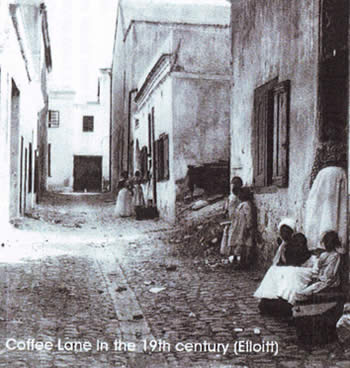
Cape Town’s slums and squatter settlements were, though, populated by a new urban poor who migrated with their families to the city during the final three decades of the nineteenth century. Most factory workers were paid barely enough to cover their rent. Mr W. Dieterle, manager of J.H. Sturk & Co., a manufacturer of snuff and cigars, said of the young women he employed:
It would seem incredible how cheaply and sparsely they live. In the mornings they have a piece of bread with coffee, before work. We have no stop for breakfast, but I allow them to stand up when they wish to eat. Very few avail themselves of this privilege. They stay until one o’clock without anything, and then they have a piece of bread spread with lard, and perhaps with the addition of a piece of fish.
This diet – heavy on carbohydrates and cheap stimulants (like coffee), and relatively poor in protein and fresh produce – was typical of the city’s poor. It wasn’t the case that food was unavailable: it was just that urban workers couldn’t afford it.
In fact, visitors to the Cape during this period commented frequently on the abundance and variety of fruit, vegetables, and meat on the tables of the middle classes. White, middle-class girls at the elite Huguenot Seminary in Wellington – a town about 70km from Cape Town – drank tea and coffee, ate fruit, and smeared sheep fat and moskonfyt (syrupy grape jam) on their bread for breakfast and supper. A typical lunch consisted of soup, roasted, stewed, curried, or fried meat (usually mutton), three or four vegetables, rice, and pudding.
It’s also worth noting that the Seminary served its meals during the morning, the middle of the day, and in the evening – something which was relatively new. Industrialisation caused urban workers’ mealtimes to change. Breakfast moved earlier in the day – from the middle of the morning to seven or eight o’clock – lunch (or dinner) shifted to midday from the mid-afternoon, and dinner (or tea) emerged as a substantial meal at the end of the day.
Factory workers in Cape Town ate according to this new pattern as well. The difference was the quality of their diet. A fifteen year-old white, middle-class girl in leafy Claremont who had eaten an ample, varied diet since early childhood was taller and heavier than her black contemporaries in Sturk’s cigar factory. In all likelihood, she would have begun menstruating earlier, and would have recovered from illness and, later, childbirth far more quickly than poorer young women of the same age. She would have lived for longer too.
Urbanisation changes the ways in which we eat: we eat at different times and, crucially, we eat new and different things. By looking at a range of examples from the nineteenth century, we can see that this change isn’t necessarily a bad thing. The industrial revolution contributed to the more varied and cheaper diets of the middle classes. Industrialised food production and transport caused the urban poor in the United States to eat better than many of those left behind in rural areas, for example. But it’s also clear that it exacerbates social inequality. In the 1800s, the poor had too little to eat and that which they did have was not particularly nutritious. Children raised on these diets were shorter and more prone to illness than those who ate more varied, plentiful, and protein-rich food. Now, the diets available to the poor in urbanising societies are as bad, even if the diseases they contribute to are caused by eating too much rather than too little.
Most importantly, we have an abundance of food in our growing cities. Just about everyone can afford to eat. The point is that only a minority can afford good, fresh food, and have the time, knowledge, and equipment to prepare it. Food mass produced in factories helped Europe and North America’s cities to feed their urban poor a hundred years ago. I’m not sure if that’s the best solution for the twenty-first century.
 Tangerine and Cinnamon by Sarah Duff is licensed under a Creative Commons Attribution-ShareAlike 3.0 Unported License.


 Tangerine and Cinnamon
Apr 14
Hot Cross Bun Fight
Just before Easter this year, a group of Christians in South Africa objected to the labelling of hot cross buns at Woolworths, a premium supermarket, as halal. Possibly chastened by the furore which erupted over its stocking of Christian magazines a couple of years ago, Woolies apologised. But, wonderfully, the response of the South African public was hilarity: what on earth, asked people on social media and radio chat shows, was wrong with making hot cross buns available to Muslims?
As many pointed out, it would be interesting to see if these Christians also avoided McDonald’s, KFC, Nando’s or any of the other fast food chains which serve halal food. In a country as socially and culturally diverse as South Africa, it makes sense for restaurants and shops to sell halal and kosher products. Most chicken sold in South Africa is halal, for instance.
In fact, the South African Easter meal of choice is pickled fish – a dish developed by slaves brought to the Cape from southeast Asia, India, and elsewhere during the seventeenth and eighteenth centuries. Many of these slaves would have been Muslim, a religion tolerated by the Dutch and, later, British authorities on the grounds that they believed it to be ‘civilised’ and unlikely to encourage slaves to revolt or disobey their masters and mistresses.
So South African Christians eat a dish at Easter which was created by Muslim slaves more than two centuries ago. And even those who are not Christian eat it: we had my Mum’s version of pickled fish on Good Friday – based on a recipe my Great-Grandmother cooked – with pilaf instead of the usual bread-and-butter, and it was delicious.
I was interested by the hot cross bun debate because – I think – it’s the first major discussion South Africans have had about the labelling of halal food. Last year there was some controversy about a meat supplier which allegedly sold haram meat as halal, but the debates then were about the regulation of the meat industry, and not about the public’s willingness – or otherwise – to eat halal food.
This ‘storm in a baking pan,’ as Father Chris Townsend of the Southern African Catholic Bishops’ Conference put it, was fairly unusual, in international terms, in the way that it was greeted with such widespread condemnation. In France, the first country in Western Europe to ban women from wearing the burqa and niquab in public, the labelling of halal food is now an electoral issue. Concerned by the depressing popularity of far-right loon Marine le Pen, Nicolas Sarkozy announced in January that if re-elected, he would enact legislation to ensure that all halal foods are clearly labelled. (You can donate to Francois Hollande’s campaign here.)
Sarkozy justified these new measures – which angered Jewish leaders as well – by implying that the ritual slaughter of animals for halal and, by implication, kosher meat is inhumane. But French Muslims argue that Sarkozy and the French right’s attack on ritual slaughter has less to do with the treatment of animals than it does to broader debates about multiculturalism and social integration in France. As one French blogger commented:
This isn’t the only recent debate about the labelling of halal meat and ritual slaughter. Australia and Canada have seen similar discussions, and the Daily Mail seems to specialise in a kind of hysterical journalism which links the widespread availability of halal meat to the end of Britain and the imminent arrival of Armageddon. Religious slaughter is banned in New Zealand, Switzerland, Luxembourg, Norway, and Sweden. An attempt to enact a similar ban in the Netherland last year was blocked at the last minute.
What makes these debates interesting is that they are hardly new. David Smith writes that in 1995,
In his excellent Franz Kafka, the Jewish Patient (1995), Sander Gilman explores shifting attitudes towards shehitah, the slaughter of animals in accordance with Judaic law and custom. In the 1880s and 1890s, various campaigns to outlaw shehitah emerged in Europe. In Germany, only Saxony eventually banned shehitah in 1897. While many supporters of the campaign were anti-vivisectionists or were concerned about the treatment of animals in abattoirs, there is no coincidence that this interest in the butchering of kosher meat developed at the same time as a wave of anti-Semitism swept Europe.
In 1883, delegates at a meeting of the Congress for the Protection of Animals in Vienna argued that the protection of ritual slaughter was an indication of Jewish influence over European politics. But others pointed out that the attempt effectively to ban kosher meat was driven by anti-Semitism. In 1885, the Lord Mayor of London compared the campaign to the allegations around Jewish ritual murder during the medieval period. The liberal Berlin Daily News declared in 1893 that those opposed to ritual slaughter were ‘pure anti-Semites’. Unsurprisingly, the Nazis outlawed ritual slaughter – also in the name of preventing cruelty to animals – during the 1930s.
There is, then, an obvious link between anxiety about religious difference, and even racism, and concerns about ritual slaughter. That said, expressing concern about the ways in which animals are slaughtered should not necessarily immediately be construed as religious or cultural intolerance. Countries need to find a balance between facilitating the religious practices of all their citizens, and the humane treatment of animals.
The South African hot cross bun fight (ahem, sorry) was not, though, about ritual slaughter. The Christians who complained about the labelling of hot cross buns in Woolworths were angry about the association of a Christian symbol – the cross on the bun – with a sticker connected to Islam. Next year, Woolies will sell hot cross buns (without the halal sticker) and spiced buns (with a halal sticker). The buns will be identical, with the exception of a flour-and-water-paste cross on the former.
I don’t know enough about the history of attitudes towards religious slaughter in South Africa to position this incident within a broader, historical context, but there are several examples of religious communities coexisting fairly harmoniously during periods of this country’s past. Most of the butchers in nineteenth-century Cape Town were Muslim, for example. This meant that the majority of Victorian Capetonians ate halal meat, regardless of their religious beliefs.
This incident demonstrates not only the extent to which food is integral to the maintenance of religious identities – which is particularly ironic given the fact that so many of the traditions and rituals we associate with Easter have pagan origins – but that people’s anxieties about religious freedom and identity are frequently played out through debates around food.
Further Reading
Sources cited here:
Sander Gilman, Franz Kafka, the Jewish Patient (New York and London: Routledge, 1995).
Pablo Lerner and Alfredo Mordechai Rabello, ‘The Prohibition of Ritual Slaughtering (Kosher Shechita and Halal) and Freedom of Religion of Minorities,’ Journal of Law and Religion, vol. 22, no. 1 (2006/2007), pp. 1-62.
David Smith, ‘“Cruelty of the Worst Kind”: Religious Slaughter, Xenophobia, and the German Greens,’ Central European History, vol. 40, no. 1 (Mar., 2007), pp. 89-115.
Ellen Wiles, ‘Headscarves, Human Rights, and Harmonious Multicultural Society: Implications of the French Ban for Interpretations of Equality,’ Law & Society Review, vol. 41, no. 3 (Sep., 2007), pp. 699-735.
Tangerine and Cinnamon by Sarah Duff is licensed under a Creative Commons Attribution-ShareAlike 3.0 Unported License.