Skip to content

Posts tagged ‘London’

Free Markets

A couple of months ago I spent a weekend in Johannesburg to celebrate my friend Kate’s thirtieth birthday. Knowing me well, she suggested that we have lunch at the newish Neighbourgoods Market in Braamfontein, a neighbourhood which has been included in Joburg’s inner city improvement district scheme. Alongside 70 Juta, a small row of shops (one, inevitably, devoted to lomography), galleries, and cafes, the Neighbourgoods Market is part of a wider effort to attract people – and particularly those with disposable income – back into the city’s centre.

The decline of the Joburg CBD since mid-90s has been well documented: the flight of businesses to suburbs like Sandton and developments such as Melrose Arch means that the old city centre has changed beyond recognition. Buildings are derelict and crumbling, and crime is a significant problem. To my shame, I don’t know Joburg terribly well, even though I enjoy visiting it enormously. What struck me was not that the city centre has ‘died’, but, rather, that it is vibrantly alive, albeit – with the abundance of cheap Chinese shops, fast food joints, and street stalls – not in ways we would usually define a bustling, ‘healthy’ CBD.

The entrance to Braamfontein's Neighbourgoods Market

The point is that something needs to be done to bring businesses back to central Johannesburg, crime and grime must to be brought under control, and the city’s amazing mid-century architecture should be restored. The Neighbourgoods Market is in the parking lot of the most incredible brutalist skyscraper, the façade of which was designed by Eduardo Villa. Open on Saturday mornings, it brings people in to an area which would be otherwise deserted – and dangerous – on weekends. I really, really enjoyed it: the food was great and, as is usually the case in Joburg, both punters and stall holders were fantastically friendly.

Inside Braamfontein's Neighbourgoods Market

In fact, I liked it rather more than the original Neighbourgoods Market in Cape Town. Established for similar reasons as the Joburg incarnation, the Market in Cape Town is located in a newish redevelopment of an old biscuit mill in the traditionally working- and lower middle-class suburb of Woodstock – although this area is now achingly cool, having been dubbed ‘Cape Town’s Manhattan’ by the New York Times. The more gentrified sections of Woodstock are now awash with vintage stores, bicycle shops, and Michelle Obama-attracting organic lunch cafes. Particularly on the main road, it’s all beginning to look like a set for a Wes Anderson movie.

At the Woodstock Neighbourgoods Market

There’s been a fair amount of debate about the gentrification of Woodstock, and much as I find the Neighbourgoods Market unpleasantly overcrowded and many of the people it attracts deeply annoying, I am less unsettled by its effects on the suburb than the wholesale transformation of the Bo-Kaap, near the centre of Cape Town, where a very poor group of people – many of them descendants of slaves – have slowly been evicted from their picturesque, brightly-painted cottages by landlords keen to attract yuppies in their massive Chelsea tractors.

The view from the Williamsburg Flea

The debates we’re having in Cape Town about gentrification are by no means particular to South Africa. In New York last year, my friend Geoff commented that he found the new-found coolness of Brooklyn’s Williamsburg – a working-class suburb once dominated by Orthodox Jews – baffling. I went to the Williamsburg Flea, a market selling food, craft, and an assortment of handmade and vintage clothes and furniture. My friends and I enjoyed it enormously – as much as we did exploring Bedford Avenue – but I could understand the original inhabitants’ unhappiness at how much this hipster invasion has changed the neighbourhood.

At the Williamsburg Flea

The point about the Neighbourgoods Market and the Williamsburg Flea is that they both attract people who are either new to those suburbs, or who don’t live there at all: they’re not aimed at the existing communities. (They’re too expensive, to begin with.) At a hipster night market in Dalston in December – it sold food, not hipsters because that would be illegal – I stood for a half an hour in a queue, risking hypothermia to buy supper at a food market in a covered parking lot near the Dalston Kingsland overground station.

At the Long Table night market in Dalston

Dalston has followed on from Islington, Shoreditch, and Stoke Newington as being the favoured spot for not-particularly-wealthy lefties looking for somewhere cheap and central to stay. It’s in Hackney, one of the poorest boroughs in Britain, and not overwhelmingly picturesque, but it’s now overrun with hipsters and Guardian-reading lefties (I count myself as one of these, obviously, I mean obviously). I didn’t see any members of Dalston’s original community at the night market – which included a stall run by Moro.

More of the Dalston night market

As I’ve noted before, this link between food and gentrification is nothing new. Kathe Newman has argued that ‘cupcake shops can provide a more accurate and timely guide to the frontiers of urban gentrification than traditional demographic and real estate data sets.’ Danya al-Saleh demonstrates this particularly well in her map of the slow encroachment of cupcake bakeries in San Francisco’s gang territories (click here for a bigger version):

As one commentator explains:

In the 1990s, it might have been the proliferation of Starbucks coffee houses that indicated gentrifying neighbourhoods, and in the 1980s, perhaps gourmet yoghurt shops moving into an area, etc. I don’t know about other cities, but in NYC where I live, right now it would be the new doggie day care centres that are springing up in many places that appear to designate a change to a more affluent, up-and-coming hipster-ish nabe.

Markets, cafes, and restaurants increase footfall in cities. I had breakfast at the newly-opened Clarke’s in the Cape Town CBD yesterday morning (it was fantastic – go), and was struck by how busy the area was: aside from the tourist traps around Greenmarket Square (not a green market) and Long Street, the CBD used to be deserted over weekends. Now, though, Capetonians are flocking to Jason’s, Skinny Legs & All and other places. The city feels safe, and alive again. The Cape Town Partnership, which has driven much of this renewal, has recognised the power of coffee shops in attracting pedestrians into the city.

At the furthest extreme, there is the urban farming which is seeking to transform Detroit, a city brought to the edge of collapse by bad urban planning and, more recently, the 2008 recession. But Detroit is a deeply unusual case. What’s happening in Braamfontein, Woodstock, Williamsburg, Dalston, and elsewhere is part of a trend which began in the 1990s: the connection between the, then, new-found enthusiasm for whole, ‘real’ food  brought into city markets by farmers and small producers, and the regeneration and gentrification of poor or decayed urban districts. Visiting the Union Square farmers’ market now, it’s difficult to imagine that Union Square used to be extremely dangerous.

At the Union Square farmers' market

These are markets for the middle classes, and it’s easy to criticise them for not doing more to integrate wealthy newcomers and less well-off original inhabitants – which is why, I think, the Joburg Neighbourgoods Market is a potentially less awkward experience than the Woodstock version. There aren’t very many people actually living in Braamfontein.

But I’m interested in the continuing success of these markets – and they’ve proliferated – in a time of economic downturn. They’re sustained by gentrification, but why their continuing success during times of financial insecurity? Will they continue to flourish as the tide of gentrification begins to recede? Are they sustainable?

As sales of organic vegetables in supermarkets have plummeted during the recession, there are more food and farmers’ markets than ever before. Last week’s coverage of Tesco’s extraordinarily bad performance over Christmas in the UK referred to the fact that part of the business’s problem is that it hasn’t responded adequately to changing patterns in consumer culture. As one article noted, people are relying increasingly on the internet for basic food shopping because it’s convenient and also allows them to compare deals and prices more efficiently. Shoppers are savvier in the recession.

But they still buy treats and luxuries – hence the success of Marks & Spencer, Waitrose, and John Lewis. Waitrose has been particularly clever in opening convenience stores in city centres: they’re certainly pricier than the ubiquitous Tesco Metro, but shoppers seem to be willing to fork out cash to shop in bright, clean, and, yes, convenient shops. The Tesco model of establishing enormous, town centre-decimating, and car-reliant hypermarkets on the edge of urban developments no longer appears to be successful. Tesco CEO Philip Clarke

was not sure Tesco needed any more of the sprawling out-of-town Extra stores it has spent so long battling planners to build – and that were vital in its conquest of Britain’s retail sector in the 1990s. He didn’t want to go as far as to label its more than 200 out-of-town hypermarkets as ‘white elephants’ but said they were now a ‘less potent force’ as electricals and clothing sales shifted online.

I think we can account partly for farmers’ markets’ continued success in similar ways. Even if very few people can afford to do a weekly shop at them, many will buy small luxuries to perk up meals in a time of financial insecurity: nice chunks of unusual cheese, proper bread, and handmade sausages. I wonder, though, if this change in shopping patterns indicates a fundamental shift in the functioning of consumerism – and in attitudes towards food.

At the Braamfontein Neighbourgoods Market

Creative Commons License
Tangerine and Cinnamon by Sarah Duff is licensed under a Creative Commons Attribution-ShareAlike 3.0 Unported License.

is on holiday.

I’m away this week and will be spending the rest of the month eating. Hurrah! But I leave you with some holiday reading:

A ‘Jewnitarian‘ Christmas.

How to bake two perfect Christmas cakes: by Felicity Cloake and Edd Kimber. (This is an interview with him.)

David Lebovitz on Christmas in France.

Seventeenth-century decorations for mince pies.

A frugal Christmas cake for the recession from the Observer.

Yum – panettone.

Eva Wiseman on the Christmas sandwich.

Making Estonian blood sausages for Christmas.

It’s time to make latkes.

Christmas recipes from Nigel Slater, Giorgio Locatelli, Sam Harris, and Jacob Kenedy.

Two of my favourite things: stollen and egg nog.

Christmas in Mexico.

Christmas recipes for those of us sweltering in the southern hemisphere.

Also, the Design Indaba magazine’s theme for its final edition of the year is food and design. Do take a look. (I’ve a piece in its Food Fight section, but don’t let that put you off.)

See you in 2012.

Which Formula?

So this is my blog’s thirty-sixth post. And, wow, what a year it’s been. Thank you, dear readers, for staying the course, and I promise more for 2012. This, though, is going to be the last essay for 2011. I’ll be spending December eating, cooking, researching, and teasing the cat. Really, it’s going to be wild. But before the fun begins, I’ll be in the UK for ten days, to present a seminar paper and to do a little research at the amazing Wellcome Library.

My real, live academic research pertains to the history of childhood in the British Empire. My PhD thesis traces the ways in which ideas around childhood and youth changed in the Cape Colony during the second half of the nineteenth century. It pays particular attention to the role and impact of Dutch Reformed evangelicalism in this process. But my postdoctoral project – which is being funded by the National Research Foundation (peace be upon it) – looks at the work of the Mothercraft movement within the British Empire between 1907 and 1945.

Mothercraft was pioneered in New Zealand in 1907 in response to concerns about the very high child mortality rates among the country’s Pākehā population. Dr Truby King devised a twelve-point programme to teach specially-trained nurses – known as Plunket nurses in New Zealand and Athlone nurses in South Africa – how to encourage mothers raise healthy babies. The success of Mothercraft was such that King was invited to establish a Mothercraft Training Centre in Britain in 1917. First called the Babies of the Empire League, it sent its nurses around the Empire: to Canada, Australia, India, east Africa, the Caribbean, and South Africa. My project focuses on the work the South African Mothercraft Centre and League, which were established in the mid-1920s.

But what, I hear you say, does this have to do with food? Well, a surprising amount. One of the main emphases of Mothercraft was on the proper feeding of babies. King was an enthusiastic promoter of breastfeeding.

We have a misconception that most babies were fed by wet nurses during the nineteenth century. It bolsters the view we have of middle-class Victorian ladies who were so terrified of their own bodies that feeding their babies was simply beyond the pale. This wasn’t strictly true, though. To begin with, wet nurses were expensive to hire and only the very wealthiest families could afford them. Most middle class women fed their own babies, as did many working-class women too.

In fact, the majority of women who relied on others to feed their babies were poor. In a time when working hours were yet to be properly defined by law, long days in factories or shops were the norm for female urban workers. Those without relatives, paid ‘baby farms’ – a house run by a woman who would care for babies and young children – to care for their offspring, often for weeks at a time. The quality of the care in these early crèches was variable: some were good, but many neglected the babies kept there. All over the world, baby farms had astonishingly high mortality rates.

Most of the popular childrearing manuals of the 1800s recommended that women breastfeed their babies. Thomas Bull, the author of the very popular Maternal Management of Children, in Health and Disease (1840) recommended breastfeeding on the grounds that it benefitted both mother and baby.

The period of suckling is generally one of the most healthy of a women’s life. But there are exceptions to this as a general rule; and nursing, instead of being accompanied by health, may be the same cause of its being materially, and even fatally, impaired. This may arise out of one of two causes, – either, a parent continuing to suckle too long; or, from the original powers or strength not being equal to the continued drain on the system.

If the mother could not breastfeed, then the best alternative was to hire a wet nurse. Only if this was an impossibility should the child be raised ‘by hand’:

To accomplish this with success requires the most careful attention on the part of the parent, and at all times is attended with risk to the life of the child; for although some children, thus reared, live and have sound health, these are exceptions to the general rule, artificial feeding being in most instances unsuccessful.

Bull acknowledged that the various concoctions fed to babies tended often to undermine, rather than fortify, their health. Popular recipes for baby formulas usually included corn or rice flour mixed to a paste with water or milk. This had little or no nutritional value, and would have been very difficult for immature digestive systems to process. Other popular substitutes were cows’ or goats’ milk, tea, and thin gruel.

It’s little wonder, then, that the Mothercraft programme placed such emphasis on breastfeeding. Many Mothercraft Centres provided beds for new mothers, who could spend up to a fortnight there, learning how to feed their babies.

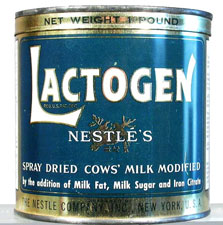
At around the same period, infant formulas were beginning to improve in quality and producers, most notably Nestlé, began to promote them as a healthy – even the healthier – and clean alternative to breast feeding. Nestlé is credited – rightly or wrongly – with the invention of formula milk in 1867. The popularity of powdered baby milk only began to grow during the 1940s and 1950s. Nestlé promoted Lactogen through recipe books, pamphlets, and free samples. Problematically, these were usually distributed at hospitals and clinics – at precisely the places where women would be taught how to breastfeed. By the middle of the twentieth century in the west, it was increasingly the norm for babies to be bottle fed.

I don’t particularly want to address the fraught debate over whether women should breastfeed or not. I am, though, interested in the politics of bottle feeding in the developing world, where big companies – like Nestlé – have promoted formula assiduously since the 1950s. Here, the issue with bottle feeding is not so much the quality of the formula, but the fact that it’s mixed with dirty water or fed to babies in unsterilized bottles. Also, many of the women who use formula can’t afford it, so they water it down, meaning that their children don’t receive adequate nutrition.

In 1974, War against Want published a pamphlet accusing Nestlé of profiting from the deaths of millions of children in poor countries. Three years later, an international boycott of Nestlé began, causing the World Health Organisation to proscribe the promotion of Lactogen and other formulas in its 1981 International Code for the Marketing of Breast Milk Substitutes.

But the Code has been poorly policed, and even in developed nations, compliance has been slow. In Australia, for instance, the advertising of baby milk powders only ended in the mid-1990s. There is much evidence to suggest that Nestlé and others continue the practice, albeit under different guises. In the United States, for instance, the Special Supplemental Nutrition Programme for Women, Infants and Children (WIC) distributes more than half the formula sold in the US every year. Companies provide this formula to the WIC at a discount.

All over the world, governments are endorsing breastfeeding in the first six months of life as the best – the healthiest and the cheapest – way of feeding a baby. Companies like Nestlé are actively undermining this, despite the best intentions of the WHO. The implications of the continued use of formula in the developing world are devastating:

According to Save the Children… infant mortality in Bangladesh alone could be cut by almost a third – saving the lives of 314 children every day – if breastfeeding rates were improved. Globally, the organisation believes, 3,800 lives could be saved each day. Given that world leaders are committed to cutting infant mortality by two thirds by 2015 as one of the Millennium Development Goals, protecting and promoting breastfeeding is almost certainly the biggest single thing that could be done to better child survival rates.

A few weeks ago I wrote a post which criticised the World Food Programme’s decision to go into partnership with a range of exceptionally dodgy multinationals – Cargill, Vodafone, Unilever, Yum!Brands – to reduce world hunger. I really don’t have anything against public/private partnerships, and am an enthusiastic supporter of corporate social responsibility (when it’s done well, though). But it’s deeply concerning that the WFP is providing unwitting PR to a group of particularly nasty businesses.

In a recent article for the Guardian, Felicity Lawrence discusses growing concern about big food companies’ decision to shift their focus to developing markets:

As affluent western markets reach saturation point, global food and drink firms have been opening up new frontiers among people living on $2 a day in low- and middle-income countries. The world’s poor have become their vehicle for growth.

SABMiller, Unilever, and Nestlé have developed campaigns to target poorer markets:

The companies say they are finding innovative ways to give isolated people the kind of choices the rich have enjoyed for years and are providing valuable jobs and incomes to some of the most marginalised. But health campaigners are raising the alarm. They fear the arrival of highly processed food and drink is also a vector for the lifestyle diseases, such as obesity, diabetes, heart disease and alcoholism, which are increasing at unprecedented rates in developing countries.

This is Nestlé’s strategy in Brazil:

Nestlé’s floating supermarket took its maiden voyage on the Amazon last year and has been distributing its products to around 800,000 isolated riverside people each month ever since. Christened Nestlé Até Você, Nestlé comes to you, the boat carries around 300 branded processed lines, including ice creams, and infant milk , but no other foods. The products are in smaller pack sizes to make them more affordable. The boat also acts as a collection point for the network of door-to-door saleswomen Nestlé has recruited to promote its brands. Targeting consumers from socioeconomic classes C, D and E is part of the company’s strategic plan for growth, it says. Nestlé has also set up a network of more than 7,500 resellers and 220 microdistributors to reach those at the bottom of the pyramid in the slums of Rio and São Paulo and other major Brazilian cities.

Even if Nestlé does respect the terms of the International Code for the Marketing of Breast Milk Substitutes, and I hope it does, not only is it selling unhealthy processed non-foods, but it also gains legitimacy via its partnership with…the United Nations. Earlier this year, Nestlé supported the UN’s ‘Every Woman Every Child’ initiative, which aims to improve child and maternal health. So an organisation implicated in contributing to the high rate of child mortality in the developing world, and in facilitating a global obesity epidemic, is working with the UN…to improve child health.

Merry Christmas.

Further Reading

Texts quoted here:

Thomas Bull, The Maternal Management of Children, in Health and Disease (London: Longman, Orme, Brown, Green, and Longmans, 1840).

Christina Hardyment, Dream Babies: Childcare Advice from John Locke to Gina Ford. Revised ed. (London: Frances Lincoln, 2007).

Virginia Thorley, ‘Commercial Interests and Advice on Infant Feeding: Marketing to Mothers in Postwar Queensland,’ Health and History, vol. 5, no. 1 (2003), pp. 65-89.

Other sources:

Linda Bryder, ‘Breastfeeding and Health Professionals in Britain, New Zealand and the United States, 1900-1970,’ Medical History. vol. 49, no. 2 (2005), pp. 179-196.

Linda Bryder, ‘From breast to bottle: a history of modern infant feeding.’ Endeavour, vol. 33, issue 2 (June 2009), pp. 54-59.

Linda Bryder, Not Just Weighing Babies: Plunket in Auckland, 1980-1998 (Pyramid Press, Auckland, 1998).

S.E. Duff, ‘What will this child be? Children, Childhood, and the Dutch Reformed Church in the Cape Colony, 1860-1894’ (PhD thesis, Birkbeck, University of London, 2010).

Nancy Rose Hunt, ‘“Le Bebe en Brousse”: European Women, African Birth Spacing and Colonial Intervention in Breast Feeding in the Belgian Congo,’ The International Journal of African Historical Studies, vol. 21, no. 3 (1988), pp. 401-432.

Creative Commons License Tangerine and Cinnamon by Sarah Duff is licensed under a Creative Commons Attribution-ShareAlike 3.0 Unported License.

White Food

Public service announcement: The National Assembly is due to vote on the Protection of State Information Bill on Tuesday, 22 November. Please wear black to show your opposition to the Bill, and join the Right2Know Campaign’s protests against this Draconian piece of legislation. (If you’d like to know more about the Secrecy Bill, check out this post I wrote for FeministsSA.)

One of my favourite places in London is Exmouth Market. It was about a five-minute walk from my amazing hall of residence in Bloomsbury, and its street food – some of the best in the UK, apparently – made a pleasingly delicious lunch from time to time. Its book shop, Clerkenwell Tales, is also excellent.

I think, though, that Exmouth Market is best known as the sometime home of Brindisa, the Spanish delicatessen which is also based in Borough Market, and Moro, the restaurant which more-or-less introduced the cooking of Spain, North Africa, and the eastern Mediterranean to Britain. Having cooked from the first Moro recipe book, and having read a great deal about its founders, Sam and Sam Clark, I was curious about the restaurant itself, but I never went further than a detailed perusal of its menu: the place was simply far too pricey for my student budget.

Like so many of the young chefs who led the revolution in Britain’s eating habits during the 1990s and early 2000s, and this includes Jamie Oliver and Hugh Fearnley-Whittingstall, the Clarks had worked at the River Cafe. Founded by Ruth Rogers and Rose Gray, the restaurant was never intended to be more than a canteen for Rogers Stirk Harbour + Partners, the famous architectural firm run by Ruth’s husband, Richard Rogers. But it evolved into something more: into the first restaurant in Britain to emphasise the heavily regionalised and seasonal nature of Italian cuisine. The River Cafe imported Ligurian olive oil, cavolo nero, and Pecorino Romano to replicate the cooking of Italy in London.

It could be terribly precious and seemed to confuse eating ‘authentic’ Italian cuisine with some kind of food-based morality. The River Cafe recipe books exuded the restaurant’s self-righteousness, as Julian Barnes explains:

When the first River Cafe Cook Book came out – the blue one – it drew high praise followed by a certain raillery. Some felt they were having a lifestyle package thrust at them; some felt the emphasis on just this kind of olive oil and just those kinds of lentils was a little discouraging. As James Fenton put it in the Independent at the time: ‘I’ve been picking it up and putting it down for weeks now. I can’t say I’ve actually cooked anything from it. More, what I’m doing is deciding whether I can live up to its exacting standards.’

As many pointed out, the food served by the River Cafe, Moro, and others, is, essentially, peasant food. There is something deeply – and amusingly – ironic about the lefty middle classes (and the River Cafe had a deserved association with the rise of New Labour) paying through the nose to eat bread and cabbage soup, a range of cheap cuts of meat, and polenta.

Polenta is a staple of northern Italy and for all its association with the sophisticated eating of the 1990s, it’s really only cornmeal – or maize– or mielie meal, as we’d call it in South Africa. Partly because of the endless variety of the maize plant, cornmeal comes in both yellow and white and can be ground as finely or as coarsely as tastes demand. In fact, the difference between the yellow, medium-ground cornmeal used to produce polenta or the finer-textured yellow flour for cornbread from the American south, and the fine, white cornmeal favoured for mielie pap in South Africa is minimal.

People’s preferences for yellow or white cornmeal are, then, culturally determined. A recent article published by the magnificent Mail and Guardian explores South Africa’s taste for whiter, finer maize meal:

In the poorest communities a bag of maize meal is often the only way of satisfying a family’s hunger, and the cost factor plays a role too. An 80kg bag of maize meal is about R400: on a 500g portion a person a day, an extended family of 10 people would consume an 80kg bag in about 16 days. The daily total consumption of maize meal in South Africa is about 10 000 tonnes.

But these maize-meal consumers demand a product that is white – stripped of roughage and nutrients – and manufacturers have remodelled their businesses to serve this demand.

South Africa’s best-selling brand of maize meal is White Star, produced by Pioneer Foods. White Star is whiter and finer than other brands. Premier Foods and Tiger Brands, the country’s other two big producers of maize meal, have also invested in technology which produces this whiter maize meal.

In the pursuit of whiteness, the big millers began installing new-generation degerminators about a decade ago. In the grinding process, the degerminator extracts the greyish germ of the maize, which contains oil and other nutrients. The more of the germ extracted, the whiter and blander the end product.

Maize meal that has the least germ extracted is called ‘unsifted’; moving up the scale it becomes ‘sifted’, ‘special’ and ‘super’. Unsifted and sifted maize-meal products have been discontinued by the bigger millers. ‘Super’ is generally defined by millers as having less than 1% oil and it almost exclusively consists of the starchy endosperm. Degerminators were originally expensive technology used only by large mills, but today even relatively small maize millers have them.

The latest development in the quest for greater whiteness is colour-sorting machines, which examine every grain of maize and remove any discoloured (non-white) grain. …

A manager at Premier Foods’ Kroonstad mill, the largest in the world, said there might nevertheless still be some discoloured specks in the final product, which happened when the seed was white on the outside but had discolouration within.

Removing the germ from the maize meal means that it tastes blander and has a longer shelf life (the germ contains oil which goes off quickly). It also means that the meal is considerably less nutritious – even though South African millers do fortify maize meal and wheat flour with vitamins A, B1, B2, and B6, as well as niacin, folic acid, iron, and zinc. And what happens to the discarded germ? It goes into cattle feed, rendering animal feed more nutritious than human food.

This demand for white food is neither particular to South Africa – there is a similar trend in Mexico, for instance – nor is it a recent phenomenon. Historically, food that is white – white bread, white sugar, white rice, or white maize meal – is more expensive to produce because it needs to be processed in order to rid it of those impurities or elements which cause it to be darker in colour. white food is associated with wealth and luxury.

The coming of industrialised food production caused an increase in the scale of the adulteration of food to make it go further or seem more appealing. As a result of this, whiteness was associated increasingly with purity. Ironically, though, food producers used poisonous additives like caustic lime to make bread and other products whiter.

The production of food in factories also reduced its price, and this was particularly noticeable for highly processed products like white sugar and white flour. Now produced on a mass scale, even the very poor could afford to drink white sugar in their tea. Indeed, white bread and sugar came to be seen as ‘affordable luxuries’ from the end of the nineteenth century and into the twentieth. These were comforting, ‘special’ items which could make an already meagre diet seem more luxurious. George Orwell wrote in The Road to Wigan Pier (1937):

The miner’s family spend only tenpence a week on green vegetables and tenpence half-penny on milk (remember that one of them is a child less than three years old), and nothing on fruit; but they spend one and nine on sugar (about eight pounds of sugar, that is) and a shilling on tea. The half-crown spent on meat might represent a small joint and the materials for a stew; probably as often as not it would represent four or five tins of bully beef. The basis of their diet, therefore, is white bread and margarine, corned beef, sugared tea, and potatoes – an appalling diet. Would it not be better if they spent more money on wholesome things like oranges and wholemeal bread…? Yes, it would, but the point is that no ordinary human being is ever going to do such a thing. The ordinary human being would sooner starve than live on brown bread and raw carrots. And the peculiar evil is this, that the less money you have, the less inclined you feel to spend it on wholesome food. A millionaire may enjoy breakfasting off orange juice and Ryvita biscuits; an unemployed man doesn’t. … When you are unemployed, which is to say when you are underfed, harassed, bored, and miserable, you don’t want to eat dull wholesome food. You want something a little bit ‘tasty’. There is always some cheaply pleasant thing to tempt you. Let’s have three pennorth of chips! Run out and buy us a twopenny ice-cream! Put the kettle on and we’ll all have a nice cup of tea! … White bread-and-marg and sugared tea don’t nourish you to any extent, but they are nicer (at least most people think so) than brown bread-and-dripping and cold water. Unemployment is an endless misery that has got to be constantly palliated, and especially with tea, the English-man’s opium. A cup of tea or even an aspirin is much better as a temporary stimulant than a crust of brown bread.

In the same way, in the midst of rising food prices and a stagnating job market, South Africa’s poor buy white, fine maize meal.

However, there does seem to be a surprising shift in bread sales, as lower-income consumers appear to be buying more brown bread – as opposed to the white bread they usually favour. This, though, is probably due to the fact that brown bread costs less because it’s exempted from value-added tax. This is a change caused by necessity rather than a new set of ideas around white or brown bread.

As Orwell makes the point, it’s the association of comfort with particular kinds of food which renders them more attractive – even if a diet rich in white sugar and white bread is not at all healthy. A combination of education, affluence, and a new set of values which associate unprocessed, ‘whole’ food – wholegrain bread, whole wheat flour, brown or wild rice, and sticky brown sugar – cause the middle classes to favour products which are overwhelmingly more nutritious.

It is infinitely strange that former peasant food – like polenta – should be sold at a premium to the middle classes at restaurants, while those who are poor prefer white maize because of an association with luxury and wealth. If we are to encourage more people to eat better, it’s clear that we need to lower the prices of ‘whole’ foods. But changing people’s buying habits is related more to a set of cultural assumptions about whiteness than to cost or even knowledge about their nutritional value.

Further Reading

Sources cited here:

Julian Barnes, The Pedant in the Kitchen (London: Atlantic, 2003).

Warren Belasco, Meals to Come: A History of the Future of Food (Berkeley: University of California Press, 2006).

Sidney W. Mintz, Sweetness and Power: The Place of Sugar in Modern History (New York: Penguin, 1985).

George Orwell, The Road to Wigan Pier (London: Gollancz, 1937).

Lorine Swainston Goodwin, The Pure Food, Drink, and Drug Crusadors, 1879-1914 (Jefferson: McFarland & Co., 1999).

Other sources:

Joyce Appleby, The Relentless Revolution: A History of Capitalism (New York: WW Norton, [2010] 2011).

Warren Belasco and Philip Scranton (eds.), Food Nations: Selling Taste in Consumer Societies (New York: Routledge, 2002).

Jack Goody, ‘Industrial Food: Towards the Development of a World Cuisine,’ in Cooking, Cuisine, and Class: A Study in Comparative Sociology (Cambridge: Cambridge University Press, 1982), pp. 154-174.

Harvey A. Levenstein, ‘The Rise of the Giant Food Processors,’ Revolution at the Table: The Transformation of the American Diet (New York: Oxford University Press, 1988), pp. 30-87.

Anne EC McCants, ‘Poor consumers as global consumers: The Diffusion of Tea and Coffee Drinking in the Eighteenth Century,’ Economic History Review, vol. 61 (2008), pp. 172-200.

Sidney W. Mintz, ‘Sweet, Salt, and the Language of Love,’ MLN, vol. 106, no. 4, French Issue: Cultural Representations of Food (Sep., 1991), pp. 852-860.

Sidney W. Mintz, Tasting Food, Tasting Freedom (Boston: Beacon Press, 1996).

James Walvin, Fruits of Empire: Exotic Produce and British Taste, 1660-1800 (Basingstoke and London: Macmillan, 1997).

Creative Commons License Tangerine and Cinnamon by Sarah Duff is licensed under a Creative Commons Attribution-ShareAlike 3.0 Unported License.

Eat the Rich

Today’s City Press includes a fantastically interesting article about the increased incidence of obesity in post-1994 South Africa. The piece explores the links between the country’s transition to democracy and the fact that 61% of all South Africans – 70% of women over the age of 35, 55% of white men 15 years and older, and a quarter of all teenagers – are obese or overweight.

The reasons for these incredibly high levels of obesity are, as the article acknowledges, complex. In many ways, South Africa conforms to a pattern emerging throughout the developing world. In a report published a few months ago, the World Health Organisation noted that lifestyle-related diseases – like diabetes, high blood pressure, heart disease, and obesity – are now among the main causes of death and disease in developing nations. These diseases of affluence are no longer limited to the West.

For the new South African middle classes, fast food and branded processed products, like Coke, are markers of sophistication: of having ‘made it’ in this increasingly prosperous society. But, as in the rest of the world, those at the top of the social scale tend not to be overweight:

contrary to popular myth, obesity is not a ‘rich man’s disease’.

Indeed, the most affluent urbanites can get into their SUVs and drive to gym or to Woolies food hall where, for a price, they can load up their trolleys with fresh, top-quality groceries – from free-range chickens to organic lemons.

This means, says [Prof Salome] Kruger, that ‘the highest income earners are thinner’.

For urban dwellers who earn less, fresh food is usually more difficult, and expensive, to buy than processed non-food:

But for your average city dweller – earning money, but not necessarily enough to own a car to get them out to the major supermarket malls – food is where you find it.

Typically, this is in small corner shops selling a limited, and often more expensive, range of fresh foods. Fruit and veg can be hard to find among the toothpaste and toilet paper spaza staples.

‘R15!’ It’s taxi fare from Orlando to the Pick n Pay in Soweto’s Maponya Mall – and it was 25-year-old road worker Lindiwe Xorine’s reply when City Press asked her how far it was to the nearest supermarket.

We call these areas where access to fresh food is limited, ‘food deserts’. It’s entirely possible to buy fruit, vegetables, and free-range meat in South African cities, but high prices and bad transport infrastructure limit people’s ability to purchase these products.

We’re dealing, effectively, with the effects of mass urbanisation since the ending of influx control in the mid-1980s and the 1994 elections.

The migration of South Africans from rural to urban areas has been a key factor in the nation’s radical change of lifestyle habits.

Twenty years ago, restricted by apartheid laws, just 10% of black South Africans lived in urban areas. Today, more than 56% do.

Alison Feeley, a scientist at the Medical Research Council, says this massive shift to a fast-paced urban life has resulted in dietary patterns shifting just as dramatically from ‘traditional foods to fast foods’.

But this isn’t the first time that South Africa, or indeed other countries, has had to cope with the impact of urbanisation on people’s diets. During the nineteenth century, industrialisation caused agricultural workers to abandon farming in their droves, and to move to cities in search of employment, either in factories or in associated industries. In Britain, this caused a drop in the quality of urban diets. Food supplies to cities were inadequate, and the little food that the new proletariat could afford was monotonous, meagre, and lacking in protein and fresh fruit and vegetables.

One of the effects of this inadequate diet was a decrease in average height – one of the best indicators of childhood health and nutrition – among the urban poor in Victorian cities. In fact, British officers fighting the South African War (1899-1902) had to contend with soldiers who were physically incapable of fighting the generally fitter, stronger, and healthier Boer forces, most of whom had been raised on diets rich in animal protein.

This link between industrialisation, urbanisation, and a decline in the quality of city dwellers’ diets is not inevitable. For middle-class Europeans in cities like London, Paris, and Berlin, industrialised transport and food production actually increased the variety of food they could afford. In the United States, from the second half of the nineteenth century onwards, a burgeoning food industry benefitted poorer urbanites as well. Processed food was cheap and readily available. Impoverished (and hungry) immigrants from Eastern Europe, Ireland, and Italy were astonished by the variety and quantity of food they could buy in New York, Detroit, and San Francisco.

It’s difficult to identify similar patterns in South Africa. We know that the sudden growth of Kimberley and Johannesburg after the discovery of diamonds (1867) and gold (1882) stimulated agriculture in Griqualand West and the South African Republic. Farmers in these regions now supplied southern Africa’s fastest growing cities with food. The expansion of Kimberley and Johannesburg as a result of the mineral revolution was different from that of London or New York because their new populations were overwhelmingly male – on the Witwatersrand, there were roughly ninety men for every woman – and highly mobile. These immigrants from the rest of Africa, Europe, Australia, and the United States had little intention of settling in South Africa. As a result of this, it’s likely that these urban dwellers weren’t as badly effected by poor diets as their compatriots in the industrialised cities of the north Atlantic.

Cape Town’s slums and squatter settlements were, though, populated by a new urban poor who migrated with their families to the city during the final three decades of the nineteenth century. Most factory workers were paid barely enough to cover their rent. Mr W. Dieterle, manager of J.H. Sturk & Co., a manufacturer of snuff and cigars, said of the young women he employed:

It would seem incredible how cheaply and sparsely they live. In the mornings they have a piece of bread with coffee, before work. We have no stop for breakfast, but I allow them to stand up when they wish to eat. Very few avail themselves of this privilege. They stay until one o’clock without anything, and then they have a piece of bread spread with lard, and perhaps with the addition of a piece of fish.

This diet – heavy on carbohydrates and cheap stimulants (like coffee), and relatively poor in protein and fresh produce – was typical of the city’s poor. It wasn’t the case that food was unavailable: it was just that urban workers couldn’t afford it.

In fact, visitors to the Cape during this period commented frequently on the abundance and variety of fruit, vegetables, and meat on the tables of the middle classes. White, middle-class girls at the elite Huguenot Seminary in Wellington – a town about 70km from Cape Town – drank tea and coffee, ate fruit, and smeared sheep fat and moskonfyt (syrupy grape jam) on their bread for breakfast and supper. A typical lunch consisted of soup, roasted, stewed, curried, or fried meat (usually mutton), three or four vegetables, rice, and pudding.

It’s also worth noting that the Seminary served its meals during the morning, the middle of the day, and in the evening – something which was relatively new. Industrialisation caused urban workers’ mealtimes to change. Breakfast moved earlier in the day – from the middle of the morning to seven or eight o’clock – lunch (or dinner) shifted to midday from the mid-afternoon, and dinner (or tea) emerged as a substantial meal at the end of the day.

Factory workers in Cape Town ate according to this new pattern as well. The difference was the quality of their diet. A fifteen year-old white, middle-class girl in leafy Claremont who had eaten an ample, varied diet since early childhood was taller and heavier than her black contemporaries in Sturk’s cigar factory. In all likelihood, she would have begun menstruating earlier, and would have recovered from illness and, later, childbirth far more quickly than poorer young women of the same age. She would have lived for longer too.

Urbanisation changes the ways in which we eat: we eat at different times and, crucially, we eat new and different things. By looking at a range of examples from the nineteenth century, we can see that this change isn’t necessarily a bad thing. The industrial revolution contributed to the more varied and cheaper diets of the middle classes. Industrialised food production and transport caused the urban poor in the United States to eat better than many of those left behind in rural areas, for example. But it’s also clear that it exacerbates social inequality. In the 1800s, the poor had too little to eat and that which they did have was not particularly nutritious. Children raised on these diets were shorter and more prone to illness than those who ate more varied, plentiful, and protein-rich food. Now, the diets available to the poor in urbanising societies are as bad, even if the diseases they contribute to are caused by eating too much rather than too little.

Most importantly, we have an abundance of food in our growing cities. Just about everyone can afford to eat. The point is that only a minority can afford good, fresh food, and have the time, knowledge, and equipment to prepare it. Food mass produced in factories helped Europe and North America’s cities to feed their urban poor a hundred years ago. I’m not sure if that’s the best solution for the twenty-first century.

Creative Commons License Tangerine and Cinnamon by Sarah Duff is licensed under a Creative Commons Attribution-ShareAlike 3.0 Unported License.
Food Links, 26.10.2011

The truth about right wing politics and cupcakes.

If you read any of these links, please make it this one: why being vegetarian is not a political choice.

The worst recipes ever.

Baking + the Tube = genius.

A history of pineapples in London.

Ferran Adrià has written a recipe book for families.

On the food served at festivals in India. And what do you eat at Diwali?

Interesting ice cream flavours.

The origins of anti-margarine laws in the US.

The psychology of yogurt.

Is a burrito a sandwich?

The appeal of novelty carrots.

On cooking from the first edition of Mrs Beeton’s Book of Household Management.

Fifty of the world’s best breakfasts. (Thanks, Sarang!)

Occupy the pasture.

These five links are courtesy of my eagle-eyed Mum:

On food as inspiration for fashion.

Moments of Zen in Sam Sifton’s restaurant reviews.

Bolognese Machiavelli.

How to make apple-free apple pie.

On TV dinners and the making of an American identity.

Food Links, 05.10.2011

The best and worst places for vegetarian travellers.

Things are looking up for bottled beer in Britain.

Pissaladiere.

A useful infographic on food speculation and global hunger.

Farming after the Fukushima disaster.

How pure is the milk we buy?

On the Irish Famine.

Did you know that Cape Town has more than 3,000 micro-farmers? Here’s a video of them too.

Farmers in Vermont rebuild after Hurricane Irene.

Use food to show your support for Occupy Wall Street.

What a novel idea: making gelatine from human DNA. (Which makes one totally rethink jelly babies.)

An ode to mutant fruit.

Sam Clark from Moro shows how he makes the restaurant’s sourdough bread every morning.

The second hungriest state in the US is…Rick Perry’s Texas.

The Middle Class Handbook ponders the caffeine-averse.

Snacks of the great scribblers. (Thanks Mum!)

Almond and yogurt cake at Design*Sponge.

Macaroon wars.

A socially-responsible approach to dairy farming in the UK.

Knitting + baking = cupcakes in the shape of balls of wool. (Thanks to Jane-Anne!)

From Customers to Consumers

I love this video – it’s an overview of a century of fashion, music, and dance in London’s East End:

It’s not an art installation. It’s not part of a community project. It’s an ad. For a shopping mall. And this isn’t any mall – it’s Europe’s biggest, and one of the key developments in the Olympic site in Stratford. In fact, it seems that most of the spectators attending next year’s Summer Olympics will enter the games through Westfield Stratford City: its casino, 300 shops, 50 restaurants, three hotels, and 17 cinema screens.

I’m not a massive fan of shopping malls, and said as much when I posted this video on Facebook. And then my friend Jean-François, who’s an architect, made the point that the development will create a massive 10,000 jobs, and has funded literacy classes for the astonishingly high number of applicants who seemed to be illiterate. In an area as deprived as Stratford, surely this shopping centre could only be a Good Thing?

There has been a great deal of criticism of the way in which Stratford has been transformed by the Olympic site. I don’t want to romanticise life in a very poor borough of London, and I’m not sure that commentators like Iain Sinclair – who has been vociferous in his opposition to the 2012 Olympic bid – offer much in the way of ideas for providing jobs, decent housing, and education for the area. But I feel uncomfortable about the way that a temple to consumerism seems to be offered up as the only possible way of raising living standards in Stratford. As Suzanne Moore – not, admittedly, my favourite columnistwrote in yesterday’s Guardian:

Next week a new Westfield opens. It’s not in west London, it’s in the east, in Stratford. It will cash in on the Olympics. Is this what this deprived area really needs? Another giant, weatherless mall that has exactly the same shops as everywhere else? Maybe this deliberately disorientating social space will be a place of connection and hope. Maybe it will offer the local youth something other than an expensive bowling alley, a multiplex and some minimum-wage jobs.

But is this just a case of lefty, middle-class squeamishness? When I buy a Margot Molyneux blouse from Mungo & Jemima, or even a dress from an upmarket chain like White Stuff or online store like Toast, it’s not any ‘better’ than purchasing a t-shirt from Mr Price. Both decisions support people who designed and made the garment. When I buy from small, local grocers and food shops, it’s partly because of a belief that this is good for our food system, but it also says something about me – about how I choose to constitute my identity in relation to a particular way of thinking about being an ‘ethical’ shopper. However critical I may be of consumerism, I am, inevitably, bound up in it.

I am interested in the shift from defining people who buy things from shops as ‘customers’ to being described as ‘consumers’. There’s a growing collection of historians interested in tracing and analysing this transition. One of the reasons why I’m so interested in it is because of the pivotal role played by the food industry in creating consumers.

Given the dire state of the average American diet, it probably comes as no surprise to learn that the United States was the first country to witness the rise of a food industry reliant on consumers who had begun to buy an increasing number of good produced in factories by big food companies towards the end of nineteenth century. Consumerism is inextricably linked to the industrialisation of food production.

The first people to benefit from the Industrial Revolution were the middle classes. In Britain, Europe, America and elsewhere, the newly-wealthy bourgeoisie could afford to buy more food, and employed more servants to prepare it. They had leisure in which to enjoy the eating of this food – and it became a way of marking newly-acquired middle-class status.

Until 1850 in Europe, and 1830 in the US, the diets of the urban poor actually deteriorated. The average height of working-class people living in the rapidly expanding cities of the industrialised world actually declined – one of the most potent indicators of the levels of deprivation experienced by this new proletariat. This was the first generation of workers to be disconnected from food production: these were people who no longer grew their own food, and were dependent on inadequate and expensive food systems to supply towns and cities. Poor diets were centred around starches and cheap, poor-quality food.

But from the mid-nineteenth century onwards, food became progressively cheaper, more plentiful, and varied – and this happened earlier and more quickly in the United States. So what caused this drop in price and greater availibility in cities? A revolution in transport made it easier to take produce from farms to urban depots by rail, and shipping brought exotic fruit and vegetables from the rest of the world to Europe and the United States. When Europe’s grain harvest failed during the 1870s, the continent was fed with wheat imported by steam ship from Canada. Farmers now began to cultivate land which had previously been believed to be inaccessible – and to grow market-oriented produce. The rise of the iceberg lettuce – which could cope with being transported over vast distances with little bruising – is directly attributable to this.

The agricultural revolution of the eighteenth century made farming more productive. New systems of crop rotation, the use of higher-yielding plant hybrids and improved implements, and the enclosure movement in Britain meant that fewer farmers were producing more food than ever before. And this produce was processed far more quickly, and cheaply. With innovations in the preservation of food through refrigeration, bottling, and canning, food could be transported over greater distances, but also, and crucially, manufactured in larger quantities and then kept before distribution on a mass scale.

Food companies began to control nearly every aspect of the newly industrialised food chain: businesses like Heinz formed alliances with farmers and transportation companies which supplied their factories with meat, fruit, and vegetables. Increasingly, they also began to advertise their products. The rise of these ‘food processors’, as they’re often called, caused a fundamental change in the way in which people ate. Most Americans began to eat similar diets based around processed food produced in factories.

Americans weren’t, of course, compelled to eat processed food. They did so for a number of reasons. Factory-baked bread, tinned vegetables, and processed meat were cheap, easy to prepare, and, importantly, believed to be free from contamination and disease. But with most people’s basic nutritional and calorific needs now met, food processors began to use advertising and brands to a far greater extent to encourage customers – dubbed ‘consumers’ – to buy more and that which they didn’t need. Susan Strasser explains:

Formerly customers, purchasing the objects of daily life in face to-face relationships with community-based craftspeople and store keepers, Americans became consumers during the Progressive Era. They bought factory-produced goods as participants in a complex network of distribution – a national market that promoted individuals’ relationships with big, centrally organised, national-level companies. They got their information about products, not from the people who made or sold them, but from advertisements created by specialists in persuasion. These accelerating processes, though by no means universal, had taken firm hold of the American way of life.

Food processors needed to persuade consumers to buy their products, and in greater quantities:

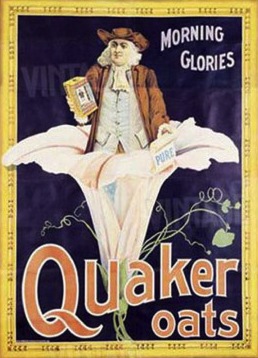
People who had never bought cornflakes were taught to need them; those once content with oats scooped from the grocer’s bin were told why they should prefer Quaker Oats in a box. Advertising, when it was successful, created demand…. Advertising celebrated the new, but many people were content with the old. The most effective marketing campaigns encouraged new needs and desires…by linking the rapid appearance of new products with the rapid changes that were occurring in all areas of social and cultural life.

We have always attached a variety of meanings to food, but within a consumer society, the decisions we make about what to buy and eat are shaped to a large extent by the desires and needs manufactured by a massive advertising industry.

The industrialisation of food production has, as I noted last week, allowed more people to eat better than ever before. But this has come at a cost: we know that many food companies engage in ecologically unsustainable practices, mistreat their employees, hurt animals, and occasionally produce actively harmful food. Moreover, it was part of a process which transformed people from customers into consumers – into individuals whose happiness is linked to what and how much they buy. This does not make us happy – nor is it environmentally or economically sound. Justin Lewis writes:

the promise of advertising is entirely empty. We now have a voluminous body of work showing that past a certain point, there is no connection between the volume of consumer goods a society accumulates and the well-being of its people.

The research shows that a walk in the park, social interaction or volunteering – which cost nothing – will do more for our well-being than any amount of ‘retail therapy’.  Advertising, in that sense, pushes us towards maximising our income rather than our free time.  It pushes us away from activities that give pleasure and meaning to our lives towards an arena that cannot – what Sut Jhally calls ‘the dead world of things’.

As customers were made consumers, so it is possible for us to change once again. How we are to achieve this, though, is difficult to imagine.

Further Reading

Texts quoted here:

Harvey A. Levenstein, Revolution at the Table: The Transformation of the American Diet (New York: Oxford University Press, 1988).

Susan Strasser, Customer to Consumer: The New Consumption in the Progressive Era,’ OAH Magazine of History, vol. 13, no. 3, The Progressive Era (Spring, 1999), pp. 10-14.

Other sources:

Warren Belasco and Philip Scranton (eds.), Food Nations: Selling Taste in Consumer Societies (New York: Routledge, 2002).

Jack Goody, ‘Industrial Food: Towards the Development of a World Cuisine,’ in Cooking, Cuisine, and Class: A Study in Comparative Sociology (Cambridge: Cambridge University Press, 1982), pp. 154-174.

Roger Horowitz, Meat in America: Technology, Taste, Transformation (Baltimore: Johns Hopkins University Press, 2005).

Tim Jackson, Prosperity without Growth: Economics for a Finite Planet (London: Earthscan, 2009).

Nancy F. Koehn, ‘Henry Heinz and Brand Creation in the Late Nineteenth Century: Making Markets for Processed Food,’ The Business History Review, vol. 73, no. 3 (Autumn, 1999), pp. 349-393.

Rebecca L. Spang, The Invention of the Restaurant: Paris and Modern Gastronomic Culture (Cambridge: Harvard University Press, 2000).

Peter N. Stearns, ‘Stages of Consumerism: Recent Work on the Issues of Periodisation,’ The Journal of Modern History, vol. 69, no. 1 (Mar., 1997), pp. 102-117.

Susan Strasser, ‘Making Consumption Conspicuous: Transgressive Topics Go Mainstream,’ Technology and Culture, vol. 43, no. 4, Kitchen Technologies (Oct., 2002), pp. 755-770.

Lorine Swainston Goodwin, The Pure Food, Drink, and Drug Crusadors, 1879-1914 (Jefferson: McFarland & Co., 1999).

Frank Trentmann, ‘Beyond Consumerism: New Historical Perspectives on Consumption,’ Journal of Contemporary History, vol. 39, no. 3 (Jul., 2004), pp. 373-401.

Creative Commons License Tangerine and Cinnamon by Sarah Duff is licensed under a Creative Commons Attribution-ShareAlike 3.0 Unported License.

Food Links, 31.08.2011

On Spanish pigs.

What to drink with your meal if you’re teetotal.

Where are the undernourished?

This infographic demonstrates beautifully that healthy food tends to be more expensive than sugary, salty snack food.

Chocolate is good for your heart.

Tom Philpott reviews Nick Cullather‘s The Hungry World, a new history of the Green Revolution.

The dangers of ‘detox’.

On the famine in Somali: It’s the Politics…Stupid.

Transforming fridges into cinemas.

The rise of street food in Britain.

Are vegetables losing their nutrients?

Mark Bittman discusses US legislation around salmonella.

A Swedish man splits atoms in his kitchen. I think this is glorious. And this is his blog which is named, of course, Richard’s Reactor.

On the rise of the ‘super insects’ which are resistant to the pesticides which the evil empire Monsanto markets alongside its seeds.

The tricks of food photography (thanks Isabel!).

How far would you travel for amazing food?

Is eating well and healthily always expensive?

London Meals

Like many people, I spent this week glued to the news, following the riots in Britain. I have friends who live in the parts of London which witnessed some of the worst violence, and I was stunned how areas of London I know and love – areas which I think of as home – were transformed by the rioting and looting. Even Bloomsbury was not left unscathed: Gay’s the Word in Marchmont Street, one of the most beloved bookstores in London, had its windows smashed, rather undermining claims that the looters tended to leave book shops alone. (And such a pity they missed Alain de Botton’s daft School of Life next door.)

So when I read on Twitter that Broadway Market was a potential target for the rioters, my heart sank. When I moved to London to begin my PhD, I remapped the city according to the destinations I most loved: book shops, art galleries (so that was central London, South Kensington, Pimlico, the south bank, Whitechapel, and Dulwich sorted), and places to eat. I did this because I have a comically bad sense of direction. During a holiday in Ireland a few years ago, my friend Carina realised quickly that the best way of discovering the correct direction to walk in, was to go in the opposite way I suggested. If I turned left, it was almost certainly the case that we should have gone right.

Guided partly by the London Farmers’ Markets website, I came to know London through its markets, delis, and kitchen and food shops. I walked all the way to Notting Hill from Bloomsbury once (map-reading has never been a strength) and, disappointed by that farmers’ market, spent the morning at Books for Cooks and discovered possibly the best culinary invention in the history of humanity at a local deli: glass jars containing crème de marrons and vanilla-flavoured yogurt. When Charles Saatchi (re-)opened his gallery in the Duke of York’s Building, it gave me another reason to visit that part of Sloaney London: Partridges also sells those crème de marrons-and-yogurt concoctions (admittedly for £1.50 each, but with all that yogurt they’re practically health food).

At Broadway Market

If I was feeling uninspired on Saturday mornings, I would walk to the inevitable Borough Market through the eerily silent City, and buy coffee from Monmouth and a bacon roll – easy on the mustard, heavy on the brown sauce – and watch the stall holders set up before the tourist hordes arrived.

But my favourite parts of the city were further east. Broadway Market, near London Fields, trades on a stretch of road which has been used by merchants and travellers for around a thousand years. It’s ancient and at the same time, emblematic of the regeneration of Hackney, London’s poorest borough, but also, arguably, its most socially diverse. On Sundays it was a long walk through Clerkenwell, Old Street, Shoreditch, and Bethnal Green for breakfast at Columbia Road Flower Market – with coffee bought from what must be the city’s smallest coffee shop – a splurge at the second hand bookshop, and an attempt not to knock over any plants (I once caused, accidentally, an avalanche of Christmas trees).

My other guide was sent to me by my mother: the fantastic London Review of Breakfasts. It’s a website which takes breakfast Very Seriously Indeed. Listing cafes, greasy spoons, and restaurants from all over London, it considers not only what these establishments serve and how they go about doing this, but why. What I like about it most – other than its understanding of the psychologically restorative nature of breakfast – is its anti-snobbery.  Bermondsey’s Cat and Cucumber is given higher – and deserving – praise for its breakfast, than the branch of Whole Foods in Kensington:

It just doesn’t feel organic in the way I understand it. And frankly neither do any of the 26 varieties of killer tomatoes on sale, particularly the insipid orb that is part of my tepid, refectory-style ‘English Breakfast; on the first floor. The rest of this dry, fatty, Americanised assembly – grey-green scrambled eggs, semi-raw sausage, bacon jerky, white toast (‘no brown available’! In the temple of choice!) – requires five separate squirts of ketchup to render it edible. It is pathetic.

More of Broadway Market

No other collection of reviews is this relentlessly entertaining. My favourite remains of the Euphorium Bakery in Islington:

you started to tremble and had to content yourself with an egg mayonnaise sandwich on thick brown bread. It would have been an eggy, creamy delight, I think, if there had been any filling to delight in. But alas, a mere smear across the bread, a hint of a yolk and a whiff of white was all that was present. We wept. I craved a sympathetic glance from the staff. They were oblivious to our pain and announced that “that was how they made their sandwiches”. How they let themselves down. How they let us down. The pastries so perfect. The sandwiches so disappointing. My fan dropped to the floor, you rose from your chair, nearly careering into one of the many mothers with babies as you hastened to exit.

‘Pierre!’ I shouted, ‘Don’t leave me! I will make you an egg sandwich wearing nothing but a silk negligee whilst I recite passages from Voltaire!’

In short, the London Review of Breakfasts sets a standard not only for eating breakfast, but for living.

It’s particularly fitting that this website devoted to breakfast should be based in London. We know that mass urbanisation at the beginning of the nineteenth century caused changes in people’s behaviour. Quite simply, people lived and behaved differently in cities – where most of them were crammed into tenements and slums – than they did in the countryside. This change was caused overwhelmingly by the fact that the nature of work altered during the 1800s. Cities grew as a result of industrialisation. Factory employees, as well as the office workers who staffed the businesses that serviced these new industrial economies, worked longer and more regular hours than ever before.

In a predominantly agrarian society, work is determined by the weather and is seasonal – hours tend to be longer in summer than in winter, for example. In the factories and offices of Victorian Britain, the clock – and then laws governing how long people were allowed to work – ruled the working day, something Dickens satirised in Hard Times. Work began promptly at around seven or eight o’clock, and continued without stopping until the evening. Gas lamps and, later, electricity, meant that work could go on regardless of when the sun rose or set. Work was decoupled from nature.

The tiny coffee shop at the Columbia Road Flower Market

One of the first aspects of people’s lives to change as a result of these new working patterns was how they ate. In Britain, up until the early nineteenth century, most people ate a substantial breakfast at around ten or eleven o’clock (what we’d now refer to as brunch), and then dinner, the main meal of the day, in the mid-afternoon. In the evening, before they went to bed, they’d have tea with biscuits or a light snack. Supper was a late, savoury meal eaten by the wealthy, and usually after an evening’s entertainment.

With the coming of industrialisation, mealtimes changed and particularly according to the kind of work people performed. For the urban middle classes, dinner moved later into the day, partly as an indicator of the fact that they were wealthy enough to afford candles, gas, or electricity to light the meal. Luncheon and afternoon tea, served with cake and sandwiches, emerged to fill the long gap between breakfast and dinner. Further down the social scale, tea, served at the end of the working day, frequently replaced dinner. This tea – referred to as ‘high tea’ or ‘meat tea’ – included protein, usually potted meat or smoked fish, to assuage the hunger pangs of tired labourers.

The strange British snobbery around the names of mealtimes emerges from this period: it’s upper- and middle-class to refer to breakfast, lunch, and dinner (or supper), and lower-middle- and working-class to say breakfast, dinner, and tea. Breakfast, though, changed in the same way for workers of all kinds: it was eaten earlier in the

day, but remained fairly substantial.

Flowers at the Columbia Road Flower Market

Our eating habits are still evolving – and they’ll continue doing so, particularly as urbanisation continues. It’s estimated that seventy per cent of the world’s population will live in cities by 2050, and we know that this will have massive implications for how we live: from the way in which we plan our cities, to how we eat. It’s not simply a case that our food systems will have to accommodate the fact that food will have to travel further – or will need to be grown in cities – to feed us all, but our working patterns will change too. What and how we eat cannot be disentangled from where we live.

Creative Commons License Tangerine and Cinnamon by Sarah Duff is licensed under a Creative Commons Attribution-ShareAlike 3.0 Unported License.