
Thirsty Knowledge
I’ve recently resuscitated my iTunes account, and I’ve been re-acquainting myself with the joys of the podcast. As a mad fan of Internet radio, having the most recent episodes of More or Less, the New York Times Book Review, the Guardian‘s Science Weekly, NPR’s Fresh Air, the Granta Podcast and, obviously, the Food Programme, arriving periodically is a glorious thing.
Relatively recently, I’ve become faintly obsessed with This American Life, and have relied on its extensive archive to keep me sane while writing lectures. I particularly enjoyed two, linked, episodes on Pennsylvania State University. The first, broadcast in December 2009, is an account of why Penn State has consistently been nominated as ‘America’s number one party school,’ and the second, from the end of last year, revisits the university’s reputation for heavy drinking in light of the recent scandal.
As you’d expect of This American Life, both episodes are thoughtful, intelligent accounts of life in State College, PA, where townsfolk have to put up with the antics of drunken students – from stealing traffic signs, to urinating in private gardens – and where the university’s various strategies for dealing with the campus’s drinking culture are impeded by a strong lobby from alumni and other donors.
A lot of what these episodes covered felt familiar. I grew up in a South African university town and now hold a fellowship at that university. The institution is based in the heart of the country’s wine-producing region, so alcohol is cheap and plentiful. As someone with a comically low tolerance of alcohol, I’ve never been a big drinker. I sailed through university as, usually, the only sober person at parties.
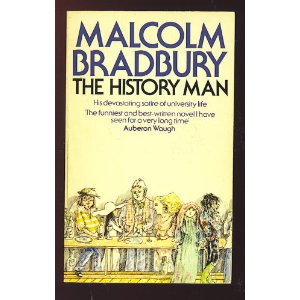
A while ago, I wrote a post about academia and the food at conferences, and one of the themes in the responses I received was that I needed to focus more on the booze. And that’s absolutely true: while we may be – justifiably – concerned about undergraduate binge drinking, there’s a stereotype that academics drink – in the same way that we dress badly, drive banged-up cars, and are chronically forgetful. As Malcolm Bradbury writes in The History Man (1975):
It has often been remarked, by Benita Pream, who services several such departmental meetings, that those in History are distinguished by their high rate of absenteeism, those in English by the amount of wine consumed afterwards, and those in Sociology by their contentiousness.
I think that many would suggest that Benita’s point about the wine could apply to all departmental meetings, regardless of the discipline involved.
Just about every decent campus novel contains at least one scene of drunken, academic embarrassment. Or, indeed, in Kingsley Amis’s Lucky Jim (1954), of success. Jim Dixon spends most of the novel either pursuing the pretty-but-dim Christine in a fairly desultory way, or trying – in post-war, still rationed Britain – to scrape together enough money to buy cigarettes and drink. In the famous, final scene, he gets completely hammered, delivers a speech which should get him fired, but which, instead, gets him both the girl and his dream job.

My two favourite campus novels, The History Man and Michael Chabon’s Wonder Boys (1995) – yes the one that was turned into the surprisingly fun movie – both feature heroes whose academic careers are linked to the – occasionally excessive – consumption of alcohol and various banned substances. Both novels have parties at key turning-points in the narrative. In The History Man the suave socialist sociologist Howard Kirk and his long-suffering wife, Barbara, host parties at the beginning and end of the novel – places where students and lecturers at a red brick, radical university mingle, discussing contraception, Hegel, revolution, and, of course, religion:
No sooner are the first arrivals in the living-room, with drinks, talking breastfeeding, when more guests arrive. The room fills. There are students in quantities; bearded Jesus youths in combat-wear, wet-look plastic, loon-pants, flared jeans, Afghan yak; girls, in caftans and big boots, with plum-coloured mouths. There are young faculty, serious, solemn examiners of matrimony and its radical alternatives…. Howard goes about, a big two-litre bottle hanging on the loop from his finger, the impresario of the event, feeling the buoyant pleasure of having these young people round him…. He poured wine, seeing the bubbles move inside the glass of the bottle in the changing lights of his rooms.
Howard maintains – and gains – his position of power within his department and on his campus by wielding wine at important moments.
The appropriately named Grady Tripp in Wonder Boys uses grass and a range of other drugs – legal and illegal – to cope with the collapse of his marriage, his career, and his reputation as a writer. He holds a position at a small liberal arts university in Pittsburgh, but can’t finish his novel, is having an affair with the Chancellor, and has been (deservedly) deserted by his wife. Over the course of the university’s annual Wordfest weekend, his life falls apart. As in The History Man, parties take place at pivotal moments – one of them in Grady’s house. He returns to discover
writers in the kitchen, making conversation that whip-sawed wildly between comely falsehood and foul-smelling truths, flicking their cigarette ash into the mouths of beer cans. There were half a dozen more of them stretched out on the floor of the television room, arranged in a worshipful manner around a small grocery bag filled with ragweed marijuana, watching Ghidorah take apart Tokyo.
But most academic drinking is done more decorously: over dinner, and after conferences and workshops. Some of the Oxford and Cambridge colleges have legendarily well-stocked cellars. Just about every seminar I attended in London ended with a trip to the pub. There’s even a Radio 4 series called The Philosopher’s Arms, where Matthew Sweet and a collection of philosophers discuss ideas and issues in a real pub:
Welcome to the Philosopher’s Arms, the only boozer in Britain where, if you ask the landlady whether there’s a happy hour, she’ll remind you of the words of John Stuart Mill: ‘Ask yourself whether you are happy, and you’ll cease to be so.’
The appeal of the pub is that it allows for the usually fairly byzantine rules which govern academic life to relax a little. Anxious postgrads get to talk to well-known, senior researchers, gossip is exchanged, and friendships and alliances formed. One very grand historian who used to convene a weekly seminar I attended, was transformed from an incisive and ruthless eviscerator of poorly-constructed arguments, to a jovial old cove as he nursed his half-pint of real ale.

It’s also true that pubs and drinking can be used to exclude those who don’t drink, for whatever reason, or those who don’t feel welcome in pubs or bars. As AS Byatt points out in an interview with the Paris Review, up until the mid-1960s, university departments could prevent their female staff from contributing to important decisions by conducting meetings in pubs, then an almost exclusively male preserve.
But I don’t think that it’s any coincidence that pubs, in particular, feature so strongly in a lot of the mythology surrounding significant moments in academia: in the discovery of the double helix structure of DNA, and in the meetings of the Inklings – the most famous members of which were CS Lewis and JRR Tolkien – at the Eagle and Child in Oxford, for instance. Pubs – and other, similarly festive occasions involving drinking – provide academics with a chance to talk and to think beyond the usual strictures of academia and, in doing so, to arrive at new and surprising ideas.

Tangerine and Cinnamon by Sarah Duff is licensed under a Creative Commons Attribution-ShareAlike 3.0 Unported License.



 Tangerine and Cinnamon
Oct 28
No More Cakes or Biscuits
This year marks the centenary of the end of the South African War (1899-1902), a conflict which, it’s not too much to claim, produced modern South Africa, geographically, politically, economically, and, to some extent, socially. There is, unsurprisingly, a vast scholarship on the war, ranging from, for example, more recent sallies into the multiple ways in which it’s been commemorated, and medical histories of the concentration camps established for Boer and African refugees, to more old-fashioned accounts of its battles and sieges.
There are a few – interesting – lacunae in this research, and one of these is around food. For various reasons I’ve recently been doing some work around children in the war, and I’ve been struck how so many of the sources I’ve read are preoccupied with food. This isn’t really surprising. As Lizzie Collingham demonstrates in her recent book, The Taste of War: World War Two and the Battle for Food, it’s during war that the ways in which food is processed, distributed, sold, and valued become particularly significant to states. Food can be made a weapon of war.
Ironically, diets often improve during times of war, and this is particularly true of people who, in peacetime, can’t afford to feed themselves well. Italy during the First World War is an excellent example of this. Italian diets declined in the late nineteenth century because of exponential population growth and poor systems of distribution. The majority of Italians ate what was, essentially, a nutritionally inadequate pre-industrial diet based on cereals and legumes, supplemented occasionally with vegetables, and, even more rarely, with meat and dairy products.
What changed in 1914 was that the Italian state took control over the distribution of food. Carol Helstosky explains:
Something similar occurred in Britain during the Second World War, where the strict system of rationing controlled by Lord Woolton’s Ministry of Food ensured not only that there was enough food to go around, but that most people ate fairly well. All adults received regular – if small – rations of butter, meat, sugar, and eggs. Everyone was encouraged to eat fruit, vegetables, and fish. For poor families who had subsisted on cheap white bread and sweet tea before the war, this represented a considerably healthier and more varied diet.
A combination of increased exercise and this standardised, if limited diet, relatively low in saturated fat and sugar meant that the health of the British population actually improved in the 1940s. This is not, though, to romanticise the effects of conflict on people’s diets. Millions of people died of starvation during the Second World War, as Timothy Snyder explains in his review of A Taste for War:
This latter description of disrupted and destroyed food supplies seems to apply more accurately to the South African War. In fact, understanding how and why people were able to access food during the conflict helps us to create a more nuanced understanding of power within South African society during this period. There was enough food to go around – the tragedy was that it didn’t get to those people who needed it.
Indeed, the images most usually associated with the conflict are photographs of emaciated Boer children in concentration camps. These are both testimony to the war’s heavy toll on civilian lives – around 28,000 Boers died in the camps, 22,000 of them under the age of sixteen – as well as an indictment of British mismanagement of the concentration camps. And this, of course, is to say nothing of the even worse organised and provisioned camps for Africans, where both adults and children were used as free labour.
People went hungry in the camps because the British army hugely underestimated the logistics of supplying around 110,000 Boer inhabitants with food and water. The first camps were established early in 1901, in response to the Boer decision to switch to guerrilla warfare after the British annexation of the Transvaal in October 1900. Boer commandoes relied on the network of homesteads across South Africa’s rural interior for support, and it was these households – run overwhelmingly by Boer women – that the British targeted in their scorched earth tactics to end the guerrilla war.
Homesteads were burned or dynamited, crops and livestock were either commandeered or destroyed, and Boer women and children and their African servants were sent to camps. Rations were meagre. Emily Hobhouse, the British humanitarian who campaigned to bring the appalling mismanagement of the Boer – but not the African – camps to the attention of British politicians, wrote to her brother in March 1901:
Leonard Hobhouse did not do as his sister suggested, but her speculation that this inadequate diet, alongside the chaos and poor sanitation of the camps, left children particularly vulnerable to the epidemics of measles and typhoid which swept the camps, was correct.
Because of Hobhouse’s campaigning, rations did improve in the camps for Boers. Race, clearly, determined which interned people had access to food: Africans received even smaller rations than did Boers, and these did not increase after the international outcry about the concentration camps – summed up, famously, in Henry Campbell-Bannerman’s ‘methods of barbarism’ speech in June 1901.
Even within the Boer camps, though, there were divisions between those women who were able to buy provisions from the British army, and those who had arrived without money or possessions – and a large proportion of the Boer families in the camps were very poor.
In Johannesburg, this link between class and access to food was particularly evident. Isabella Lipp, the wife of the manager of the African Banking Corporation, kept a diary between the outbreak of war in October 1899, and the capture of Johannesburg by the British in June the following year. Although she complained occasionally of certain foodstuffs – butter, eggs, meat – not being available, throughout this early phase of the war, she and her husband were well fed. But this was not the case for the impoverished Boer women living in the city:
The situation was considerably more desperate in the towns – Ladysmith, Mafeking, and Kimberley – to which the Boers laid siege during the first six months of the war. As food stocks ran low, Africans were either forced out or encouraged to leave – putting them at the mercy of Boer soldiers – to reduce the numbers of people dependent on rations.
In Kimberley, Lillian Hutton, the wife of a local minister, kept a diary over the course of the siege. The slow reduction of the food available to the inhabitants of the town – and rationing was introduced in December 1899 – signalled the ever more desperate state of Kimberley, as fresh supplies were halted by the Boers. While she noted with amusement in November that Colonel Robert Kekewich – under whose command Kimberley fell – had ordered that ‘No more cakes or biscuits to be made’, she became increasingly critical of the British army as the siege progressed.
As beef and mutton ran out, horses and donkeys were slaughtered for meat. Milk became scarce. She wrote in January 1900:
White babies wanted fresh milk, but it’s unlikely that black babies received any adequate nutrition at all. Africans in Kimberley were allotted only mealie meal. Of the 1,500 people who died during the siege – which was ended in February 1900 – nearly all of them were African.
So although in Kimberley, the other siege towns, Johannesburg, the concentration camps, and in all the parts of South Africa under military command, everyone experienced the effects of either government or army control of the food supply, access to food was still mediated by race and class.
The study of food in the South African War also sheds light on contemporary concerns about food. Firstly, as diaries and letters written during the conflict demonstrate, most middle-class and, indeed, poor inhabitants of South African towns and cities at the turn of the century were reliant on shops to buy their food. The idea that ‘we’ (whoever ‘we’ may be) once (whenever that was) grew all our own food is disproved fairly neatly by desperate Kimberley housewives unable to find eggs, milk, or fresh vegetables at the grocer. In fact, Lillian Hutton commented on the novelty of people in Kimberley giving over their flower gardens to vegetables.
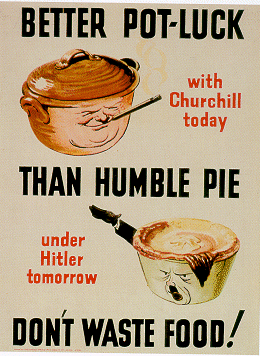
Secondly, there has been a vogue recently for holding up Britain’s experience of rationing as a potential solution for both the country’s obesity epidemic, as well as the current, global food crisis. While I agree that eating less meat and dairy, using up leftovers, and other wartime strategies are excellent means of encouraging healthy eating and reducing food waste, we need to be careful of fetishizing austerity.
And, thirdly: we must acknowledge the significance of distribution systems to ensuring that all people receive an adequate supply of food. When shops in rural areas are badly provisioned; when social grants are not paid timeously; when officials steal food intended for the very poor, people go hungry.
Sources
Elizabeth Ann Cripps, ‘Provisioning Johannesburg, 1886-1906’ (MA thesis, Unisa, 2012).
Carol Helstosky, Garlic & Oil: Food and Politics in Italy (Oxford and New York: Berg, [2004] 2006).
Emily Hobhouse: Boer War Letters, ed. Rykie van Reenen (Cape Town and Pretoria: Human & Rousseau, 1984).
Bill Nasson, The Boer War: The Struggle for South Africa (Stroud: The History Press, [2010] 2011).
Tangerine and Cinnamon by Sarah Duff is licensed under a Creative Commons Attribution-ShareAlike 3.0 Unported License.