
Human Beans
A few weeks ago, my friend Nafisa sent me a photograph of a banner outside a cafe in Linden in Johannesburg’s northern suburbs. In a particularly good demonstration of why punctuation helps to avoid horrific confusion, it advertises that it ‘now serves TIM NOAKES’—with ‘breakfasts and lunches’ in smaller script below.

In Linden, Johannesburg. Courtesy of Nafisa Essop Sheik.
Personally, I would prefer neither to eat Tim Noakes nor his high-fat, low-carbohydrate diet. This sign is interesting, though, because it still refers to a Noakes, rather than Banting, diet. In the past couple of months, restaurants all over South Africa have added Banting friendly meals to their menus, and I think it’s worth taking a closer look at Banting, his diet, and context. William Banting (1796-1878) was a prominent undertaker and funeral director whose family had long been responsible for organising the Royal Family’s funerals. He and what became known as ‘Bantingism’ rose to prominence in 1863 with the publication of A Letter on Corpulence, Addressed to the Public. In it, he described how he shrunk from obesity to a ‘normal’ weight as a result of a miraculous diet. The aptly named Michelle Mouton explains:
After many vain attempts to find a doctor with a cure for corpulence, and after futile experiments with Turkish baths and the like, it is ironically diminished sight and hearing that incidentally lead Banting to his miracle. His ear surgeon suspects a constriction of the ear canals, Banting reports, and advises him to abstain from what Banting terms ‘human beans’—‘bread, butter, milk, sugar, beer, and potatoes’—so called because they are as harmful to older persons as are beans to horses.
The diet was so efficacious that Banting lost forty-six pounds in a year, and reported feeling healthier than ever before. So what did he eat?
For breakfast, I take four or five ounces of beef, mutton, kidneys, broiled fish, bacon, or cold meat of any kind except pork; a large cup of tea (without milk or sugar), a little biscuit, or one ounce of dry toast. For dinner, five or six ounces of any fish except salmon, any meat except pork, any vegetable except potato, once ounce of dry toast, fruit out of a pudding, any kind of poultry or game, and two or three glasses of good claret, sherry, or Madeira—champagne, port and beer forbidden. For tea, two or three ounces of fruit, a rusk or two, and a cup of tea without milk or sugar. For supper, three or four ounces of meat or fish, similar to dinner, with a glass or two of claret. For nightcap, if required, a tumbler of grog—(gin, whisky, or brandy, without sugar)—or a glass or two of claret or sherry.
Noakes-ites will note that Banting included some carbohydrates in his diet, and seemed to shun pork (if not bacon) and salmon, possibly on the grounds that they were too fatty. His injunction against sugar is mildly ridiculous considering the amount of fortified alcohol he drank. No wonder he enjoyed the diet so much—it gave him licence to remain in a permanent state of gentle tipsiness.
Much of Bantingism’s popularity was linked to the fact that it emerged during a period when diets, perceptions of physical and moral beauty, and ideas about health were undergoing rapid change. The wild success of his pamphlet in Britain, the United States, and elsewhere caused intense debate within a medical profession which was increasingly linking weight—Banting’s corpulence—to health. Urban living and industrialised food production reduced the price of food and altered eating patterns. For the middle classes, for instance, meals were now eaten three times a day, with dinner moving to the evening. At the same time, thinness was increasingly associated both with physical beauty and moral behaviour. This diet seemed to offer an easy way to achieve both ideals. Self-denial would result in a more moral, thinner person. Mouton writes:
Toward the end of 1864, George Eliot wrote to a friend, ‘I have seen people much changed by the Banting system. Mr A. [Anthony] Trollope is thinner by means of it, and is otherwise the better for the self-denial,’ she adds.
The diet also offered the new middle classes a way of navigating new food choices, in much the same way that their embrace of evangelical Christianity assisted them in finding a place for themselves within Britain’s class system. As Joyce L. Huff observes, Banting chose to write his pamphlet as a tract. Similar to other confessions of earnest Christians who had come to the light of God’s grace, Banting’s Letter traces the journey of a humble man—a sinner in a fat body—to the light and clarity of a high protein diet. He had achieved full mastery of both his body and his soul.
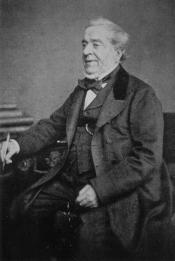
William Banting (from here), presumably after his diet.
Enthusiasm for the diet petered out fairly quickly, but Banting’s writing has been resuscitated more recently by pro-protein evangelicals like Robert Atkins, Gary Taubes, and Noakes. Thinking about Banting’s diet in historical context draws attention to a few exceptionally important points:
Firstly, anxieties about diet occur in the midst of major social change. I don’t think that it’s any accident that Noakes has found an audience among South Africa’s middle classes: whose numbers are growing, but who are also feeling the impact of global recession. Diets—particularly strict diets—offer a sense of being in control and of group belonging in times of radical uncertainty.
Secondly, as a closer look at Banting’s day-to-day eating demonstrates, his diet and that advocated by Noakes are fairly different. In fact, I wonder if Banting lost weight simply because he was eating less food more generally, than as a result of his switch to greater quantities of protein. Noakes cites Banting and other eighteenth- and nineteenth-century high protein dieters to lend his writing greater validity. This is knowledge, he implies, that has been around for some time. All he’s done is to bring it to wider public knowledge. Yet it’s clear that what we define as high protein has changed over time. Noakes’s diet is a diet of the early twenty-first century.
Thirdly, as the short lived initial enthusiasm for Bantingism suggests, this diet is no more successful than other diets at causing weight loss. Put another way, while eating a high protein diet will cause initial, dramatic weight loss—partly through dehydration—those who follow diets which encourage greater exercise and generally lower calorie intake lose the same amount of weight over a longer period of time. This has been demonstrated by study after study. More worryingly, we have no idea what the longterm health implications of high protein diets may be.
Connected to this, Noakes argues that it is largely industry—Big Food—which has been behind efforts to discredit high fat diets. Although Banting was ridiculed by some doctors during the 1860s, this was at a time when medical professionals jostled with quacks for recognition, and did not occupy the same position of authority that they have since the mid-twentieth century. Doctors could not band together to suppress this kind of information. Moreover, food companies were in their infancy. Clearly, people chose to relinquish the diet for a range of other reasons.
Finally, this—as Banting’s contemporaries pointed out—is a diet for the wealthy, and for a planet with unlimited resources. It is out of reach for the vast majority of people who are obese, most of whom are poor. We know that intensive livestock farming has a devastating impact on the environment. Addressing poverty and rethinking agriculture offer the best means of improving the health of the world’s population and of mitigating climate change. Not eating more animal protein.
Further Reading
Sander L. Gilman, Fat: A Cultural History of Obesity (Cambridge: Polity, 2008).
Joyce L. Huff, ‘A “Horror of Corpulence”: Interrogating Bantingism and Mid-Nineteenth-Century Fat Phobia,’ in Bodies out of Bounds: Fatness and Transgression, eds. Jana Evans Braziel and Kathleen LeBresco (Berkeley: University of California Press, 2001), pp. 39-59.
Michelle Mouton, ‘“Doing Banting”: High-Protein Diets in the Victorian Period and Now,’ Studies in Popular Culture, vol. 24, no. 1 (Oct. 2001), pp. 17-32.
 Tangerine and Cinnamon by Sarah Duff is licensed under a Creative Commons Attribution-ShareAlike 3.0 Unported License.













 Tangerine and Cinnamon
Dec 15
A Pumpkin Spice too Far
I spent most of October and November in the United States and Canada, coinciding with Canadian Thanksgiving, Hallowe’en, and, probably most importantly, pumpkin spice season. This blend of cinnamon, nutmeg, and cloves—the flavourings associated with pumpkin pie—has become comically ubiquitous in the US. Alongside pumpkin spice muffins, macaroons, and cupcakes, I saw pumpkin spice air freshener, rooibos tea, and beer. I tried pumpkin spice chips (inadvisable) and Icelandic yogurt (odd).
Too far, I think.
The pumpkin spice phenomenon originated in 2003, when Starbucks—then on the cusp of almost-global domination—debuted a new flavour for autumn. As reported last year to mark the drink’s ten-year anniversary, the company was hesitant to introduce the pumpkin spice latte. It already sold several flavoured coffees, but was not entirely sure that another seasonal drink would take off. They needn’t have worried. Forbes reports that in 2013 Starbucks had sold more than 200 million pumpkin spice lattes:
In fact, the pumpkin spice latte was held responsible for a bounce in the chain’s revenues this year. Outrages and fears over pumpkin spice shortages, and the annual dash for the first pumpkin spice latte of the season, are canny marketing strategies which have helped to position the drink—the #PSL on Twitter—alongside Starbucks’s red cups as a marker of the beginning of autumn and the holiday season. Unsurprisingly, other chains and supermarkets have begun to produce their own versions of the PSL.
Small, independent coffee shops—the alternatives to corporate caffeine—have also developed ways of cashing in on the pumpkin spice craze. I had a pumpkin pie flavoured latte at New Moon—an excellent café in Burlington, Vermont—and a lumberjack latte at Babo in Ann Arbor, Michigan. They were sweet and spicy: less coffee than coffee flavoured drinks.
I don’t think that the wild enthusiasm for pumpkin spice—as a flavouring—is particularly surprising. After all, in the US, Europe, and some other parts of the world, this combination of spices has long been a feature of winter or festive cooking and baking. A more interesting question is why Americans drink so much flavoured coffee. In the interests of research, I also tried vanilla, and brown sugar and sea salt flavoured coffees, and resolved never to waver from the true path of Americanos, flat whites, and the odd cappuccino. For all the fact that new technologies and techniques—drip, siphon, cold brew—have gained wild popularity for making coffee which tastes, apparently, more acutely and complicatedly of coffee, the popularity of flavoured coffees continues unabated.
It’s decorative gourd season at the Ann Arbor farmers’ market.
America remains the largest coffee market in the world, with a third of consumers drinking ‘gourmet’ (or specially prepared) brews every day. To some extent, the ubiquity of coffee today is linked to a major fall in the price of the commodity twenty years ago. In 1962, John F. Kennedy shepherded the International Coffee Agreement into existence. Including mainly Latin American countries—the producers of superior Arabica coffee beans—the ICA controlled the price of coffee globally and was also intended to stabilise these countries’ economies, immunising them against potential Soviet influence. The ICA favoured the US and Brazil, giving both countries veto rights on policy decisions.
The collapse of the ICA, along with the Berlin Wall, in 1989 was produced both by shifting Cold War politics as well as by the emergence of new coffee producing countries—like Vietnam—which were not signatories to the Agreement. The fall in the price of coffee meant a coffee boom, particularly in the US where enthusiasm for Arabica had grown steadily over the course of the 1980s. It is no coincidence that you may have tried your first cappuccino—in the US and elsewhere—in the early 1990s. The growth of Starbucks—founded as a small independent in Seattle in 1981—traced the demise of the ICA and the fall in the international coffee price.
It is now easier than ever to buy extraordinarily good coffee for relatively little money. I wonder if this could account for the amazing variety of coffee based drinks available in the US. As a cheap beverage—as an affordable luxury, as Sidney Mintz describes the consumption of sugar in the nineteenth century—has coffee become unmoored from its position as a bitter drink to be had in small quantities at defined moments in the day, to a sweet, comforting snack to be consumed at any time?
Further Reading
Isaac A. Kamola, ‘Coffee and Genocide,’ Transition, no. 99 (2008), pp. 54-72.
Sidney W. Mintz, Sweetness and Power: The Place of Sugar in Modern History (New York: Penguin, 1985).
Stefano Ponte, ‘Behind the Coffee Crisis,’ Economic and Political Weekly, vol. 36, no. 46/47 (Nov. 24-30, 2001), pp. 4410-4417.