Skip to content

Posts from the ‘history’ Category

Eating Nando’s in Gaborone

I spent most of last week at the biennial gathering of historians organised by the Southern African Historical Society. The conference at the University of Botswana was fantastic. Gaborone was, well, less so.* I think that the city is best summed up by an exchange between a conference delegate and her husband, who had spent the morning exploring downtown Gaborone. When asked what he had discovered, he answered: ‘There’s a Nando’s.’

This comment is interesting for many reasons. One of the most striking features of Gaborone – other than the many posters for visiting gospel choirs and the absence of any form of newspaper advertising – is its malls. Having had lunch and dinner at two of them, it seems to me that most of the major shops and restaurants in the city are branches of South African chains: from Spur, that staple of middle South Africa, to the relatively upmarket Primi Piatti. Given the hostility which locals appear to reserve for South Africans – and relations between the two countries became particularly tense during the late 1980s, when ANC and Umkhonto we Sizwe exiles in Gaborone became the target of the apartheid state’s raids – this felt deeply ironic at the time.

Nando’s is an odd addition to the pantheon of South African culinary exports. In his speech delivered at the University of Cape Town during his recent visit to the country, Barack Obama referred to Nando’s – alongside the vuvuzela and Freshlyground – as prime examples of South African institutions. But like so many cultural icons which seem to embody national identity, Nando’s was founded by immigrants.

When I mentioned to friends in the UK that Nando’s is South African, I was often greeted with expressions of confusion. Surely, they argued, it’s Portuguese? Well, yes and no. Before its devastating civil war, Mozambique was a popular destination particularly for young, white South Africans. They visited its pristine beaches, its fun capital Maputo (Lourenço Marques before 1975), and ate its excellent and distinctive cuisine. Indeed prawns from Mozambique are still a regional delicacy. Radio Lourenço Marques – which could be picked up in South Africa – played the music banned by South African broadcasters. Mozambique represented, for young whites at least, relative freedom from the restrictions of a repressive and oppressive South African state.

For part of its civil war (1977-1992), South Africans escaping the country travelled to Mozambique to join up with the exiled ANC. Moving in the opposite direction, legions of whites migrated southwards to South Africa after Mozambique’s independence from Portugal in 1975. Two of these exiles founded Nando’s in Rosettenville, a Johannesburg suburb with large ex-patriot Portuguese populations from Mozambique and Madeira. Although by no means the first or only chicken fast-food restaurant in South Africa – local Chicken Licken (opened in 1981) and foreign KFC (introduced in 1971) do a roaring trade – Nando’s distinctiveness lies partly in its adaptation of the hybrid Afro-Lusophone cuisine which developed in Mozambique.

The chain is probably best known for popularising peri-peri – a sharp, spicy sauce which is a feature of both Portuguese and Mozambican cooking. Its name derives from the Swahili word for the African bird’s eye chilli – the pili pili – which was taken back to Portugal by traders who had been present along the east African coast since the sixteenth century. Portuguese piri piri sauce entered Mozambique with the advent of white settlement, where it was re-adapted by Africans.

Nando's comments on the Protection of State Information Bill.

Nando’s comments on the Protection of State Information Bill.

Following the first wave of white South Africans to leave the country during the transition, Nando’s opened its first overseas branch in Australia in 1990. Franchises in the UK (1992), Botswana (1993), Canada (1994), Malaysia (1998), Pakistan (2001), and elsewhere followed. It now operates in the United States and around southern Africa. It doesn’t, as far as I can tell, have a branch in Mozambique.

Nando’s menu is very obviously the product of the long interaction between Africans and Portuguese interlopers over the course of around four centuries. It purveys a global cuisine, and one which has become increasingly globalised as it adapts itself to the tastes and expectations of new countries and new customers. The restaurants in the UK, for instance, are noticeably more upmarket than the Nando’s outlets in South Africa. It’s also the product of the geopolitics of late twentieth-century southern Africa. It was founded as a result of white Mozambicans’ migration to South Africa in the mid-1970s, and catered to local enthusiasm for Mozambican cooking both among migrant Mozambican mine workers as well as those whites who had holidayed in Mozambique. Its first attempt at opening an international store accompanied white South Africans’ migration to Australia.

And yet, for all its hybrid identity, Nando’s identifies itself as a distinctively South African brand – and particularly through its advertising campaigns. Nando’s has a reputation for responding quickly and wittily to political controversies – like blacking out its ads during protests against the potentially oppressive Protection of State Information Bill in 2011. Although this is a strategy which backfires occasionally, it means that Nando’s can cash in – quite literally – by siding with (middle-class?) South Africans’ exasperation with the government and the country’s politicians.

Nando's expresses support for the Springboks, the national rugby team. 'Moer hulle' translates roughly as 'fuck them'. You wouldn't say this in front of your grandmother.

Nando’s expresses support for the Springboks, the national rugby team. ‘Moer hulle’ translates roughly as ‘fuck them’. You wouldn’t say this in front of your grandmother.

It was this which made Nando’s presence in Gaborone feel incongruous. Despite its expensive PR campaigns, Botswana has a deserved reputation for being one of the most secretive states in southern Africa. It’s particularly intolerant of dissent, and has expelled those who have challenged the political status quo. As a recipient of the Media Institute of Southern Africa’s Golden Padlock award in 2011, the real country is worlds away from Alexander McCall Smith’s sanitised and gently patronising depiction of Botswana’s people and politics. I doubt that Nando’s advertising would be legal in Gaborone.

*Never, ever trust the taxi drivers of Gaborone to get you to the airport in time for your early flight to Joburg. And particularly not those who congregate at the Gaborone Southern Sun at 4am. Trust me on this one.

Creative Commons License
Tangerine and Cinnamon by Sarah Duff is licensed under a Creative Commons Attribution-ShareAlike 3.0 Unported License.

Edible Animals

I have a weakness for strange novellas in translation, published by obscure imprints.* Last week I read Eat Him if You Like by Jean Teulé (Gallic Books, 2011). In slightly more than a hundred pages, Teulé describes a horrific incident which occurred in Hautefaye, a village in the Dordogne, during the summer of 1870. In the midst of drought, food shortages, and a disastrous conflict with Prussia, a mob of peasants turned on a young aristocrat, Alain de Monéys, and tortured him to death over the course of an afternoon.

In the evening, he was placed on a funeral pyre and set alight. His remains may have been eaten by his attackers.

The atrocity is the subject of Alain Corbin’s academic monograph, The Village of Cannibals: Rage and Murder in France, 1870 (1992). He demonstrates that although the people who carried out the torture were mainly peasants, figures of authority were well aware of what was being done to De Monéys, as John Merriman explains in a review:

The mayor, despite wearing the tricolour sash symbolising his authority, was not much help… After a clumsy, ineffective effort to calm the crowd, he shut his door, fearing that the mob would smash his dishes. Worse, a witness reported that he told the crowd: ‘Take Monsieur de Moneys away from the front of the inn. He’s blocking traffic!’ And when someone shouted, ‘We want to kill him, burn him, and eat him,’ the mayor replied, if not ‘A table!’ at least ‘Eat him if you like’…

Why did this happen? Why did a group of three to eight hundred otherwise reasonable people – who, afterwards, deeply regretted their behaviour – turn on an innocent fellow subject? The immediate reason for the lynching was that De Monéys was accused of being a ‘Prussian’ and had shouted ‘Vive la République!’ at a time when France was ruled by Napoleon III.

{13EFD649-B9DD-477D-82FF-8915FFEA0EE8}Img100

Corbin argues that a collection of factors converged in Hautefaye on 6 August 1870, each of which contributed to the summer afternoon’s madness: a combination of hunger and desperation caused by the drought, growing peasant hostility towards the aristocracy, and anxiety about the progress of the Franco-Prussian War. Merriman writes:

There can be no question about the intrusion of national politics in the world of these peasants… Corbin sees the event as reflecting an intensification of a nationalism in the wake of the war, extending even into a peasant community in one of France’s most ‘backwards’ regions. …Corbin sees the community as affirming its own identity by ‘expel[ling] the monster from its midst.’

There is no evidence, only rumour, to suggest that De Monéys was eaten. In the novella, Teulé implies that, Christlike, in consuming his body, the mob is able to rid itself of its sins:

His ashes rose higher, swirling around in the air above the crowd who were feasting as they did on the most important holidays. They devoured their cannibal sandwiches. … Eating this body would purge the community.

As several of the reviews of Corbin’s book note, his explanation for the torture and possible cannibalism is not entirely satisfactory. And Teulé, despite his depiction of De Monéys as a scapegoat, implies that not all of his torturers may have had such elevated motives. The problem is that cannibalism in these circumstances – where a group of people willingly choose to eat another – transgresses so many taboos and social and cultural boundaries, that it seems to defy all logical explanation.

It’s little wonder, then, that cannibalism was central to the justification for colonialism – and, indeed, the word emerged at the beginning of the colonial encounter. Shirley Lindenbaum writes:

The word cannibal is said to be a legacy of Columbus’s second voyage to the Caribbean in 1493. Referring originally to the Caribs in the Antilles who were identified as eaters of human flesh, the term was subsequently extended as a descriptive term for flesh eaters in other populations. The discourse of cannibalism, which began with the encounter between Europe and the Americas, was to become a defining feature of colonial encounters in the New World

With its association with savagery, cannibalism was bound up with the construction of the colonial other.

But however much we may be appalled by cannibalism, it is very, very rarely done without reason. It’s easier to understand this by looking at the several forms of cannibalism which exist. I think we’re most familiar with survivor cannibalism, which occurs when people eat others in the absence of any other food, like the case of the 1972 Andes plane disaster, when a group of sixteen Uruguayan rugby players ate their deceased fellow passengers to survive freezing conditions. Also, cannibalism occurs during times of famine. There were instances of cannibalism in Russia in 1921, and, allegedly, in China’s Great Famine between 1958 and 1962.

It’s used in rituals to strengthen bonds within groups or communities, and also as a weapon of terror in warfare. It’s a symptom of psychopathology – as excited reports of the ‘face-eating man’ in Miami last year confirmed. But it’s also been done for medical reasons:

Medicinal ingestion involving human flesh, blood, heart, skull, bone marrow, and other body parts was widely practiced throughout Europe from the sixteenth to the eighteenth centuries. Human flesh obtained from ‘mummy shops,’ where the remains of an embalmed, dried, or otherwise prepared human body that had met with sudden, violent death, was considered to be a ‘universal panacea’… Samuel Johnson’s 1785 dictionary of English includes a description for preparing mummy, indicating that it was still being sold at that date, and it was still available in 1909 from a reputable German pharmaceutical company.

Placentophagy – where mothers eat their new-born babies’ placenta – falls within this definition too.

Cannibalism is more familiar to us than we probably realise – and certainly to those of us who’ve been to church:

Sacrificial cannibalism, in which the victim is treated with solicitude and honour as a prelude to sacrifice to the gods, is a widely reported form of aggression. Aztec cannibalism in fifteenth-century Mexico, as well as nineteenth-century Fijian practises, belong in this category. The Christian ritual of the Eucharist is its symbolic extension.

Even the use of organs in transplants involves a recycling of body parts between different people.

I want to emphasise that my point in writing this is not to horrify – and I think it’s absolutely imperative for every adult to consider signing up as an organ donor. Rather, thinking about cannibalism helps to illuminate aspects of our relationship with food and eating.

Firstly, there is nothing ‘savage’ or ‘senseless’ about cannibalism. It occurs for a range of reasons and takes a variety of forms, only some of which I’ve mentioned here. When people consume other people, it is for specific, well thought-out reasons. In fact, the contexts which cause people to break this taboo are, I think, more interesting than the cannibalism itself.

Secondly, cannibalism is the supreme example of eating being done for reasons not connected to nutrition: it was and is done – either by literally eating bodies or consuming them symbolically – to create and maintain group identities.

But it also draws our attention – uncomfortably – to ourselves as animals. In Cormac McCarthy’s The Road, Soylent Green, and, even, Never Let Me Go by Kazuo Ishiguro, there are moments of profound – horrifying – realisation that humans are, like cattle or pigs, potentially edible, or (re)usable, animals. In other words, understanding how and why and what we ate – and eat – changes over time, is intertwined with histories of cannibalism, and of ourselves as members of the food chain.

* Have you read The little girl who was too fond of matches, Pereira Maintains, or The Marquise of O-? You really should.

Sources

Edward Berenson, Review of The Village of Cannibals: Rage and Murder in France, 1870 by Alain Corbin, The Journal of Modern History, vol. 66, no. 4 (Dec., 1994), pp. 815-818.

Rachel B. Herrmann, ‘The “tragicall historie”: Cannibalism and Abundance in Colonial Jamestown,’ The William and Mary Quarterly, vol. 68, no. 1 (January 2011), pp. 47-74.

Shirley Lindenbaum, ‘Thinking about Cannibalism,’
Annual Review of Anthropology, vol. 33 (2004), pp. 475-498.

John M. Merriman, Review of The Village of Cannibals: Rage and Murder in France, 1870 by Alain Corbin, The American Historical Review, vol. 98, no. 3 (Jun., 1993), pp. 883-885.

Creative Commons License
Tangerine and Cinnamon by Sarah Duff is licensed under a Creative Commons Attribution-ShareAlike 3.0 Unported License.

The Crème de la Crème…

The first time I visited Scotland I stayed at a former hunting lodge near Montrose. A group of us spent Christmas there, and saw red squirrels, a haggis, and a ruined castle. It was tremendous fun. But on the nine-hour train journey back to London, the conductor decided to close the buffet car because the tea urn was broken.

We had no food for almost half a day’s travel on the grounds that it was impossible to make tea.

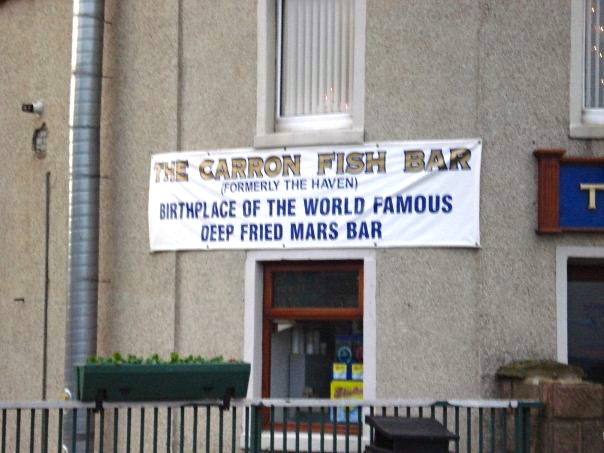
When I mentioned this to various friends, their response was to shrug and to comment that, well, did I expect anything better of Scottish attitudes towards food? This seemed only to have been confirmed by the fact that I had spotted a banner in Stonehaven, proudly proclaiming a local pub as the ‘birthplace’ of the deep-fried Mars bar.

The (alleged) home of the deep-fried Mars bar, in Stonehaven.

The (alleged) home of the deep-fried Mars bar, in Stonehaven.

With its reputation for heavy drinking, and enthusiasm for a cuisine that makes a virtue of the deep-fat fryer, Scotland is not usually held up as a paragon of culinary sophistication. But anyone who visits the country realises that it’s possible to eat well – very well – there: that there are interesting independent food shops, farmers’ markets, local producers of smoked fish, venison, biscuits, and other specialities, and plenty of excellent restaurants.

So why, then, this insistence that Scottish cuisine is best exemplified by White Lightening cider (which sold at around 8% alcohol per volume, before being discontinued by its producer for encouraging heavy drinking) and deep-fried fast food?

The idea of Scotland as a land of clans, tartan, country dancing, and highland games was invented during the late eighteenth and nineteenth centuries. As Hugh Trevor-Roper explains in Eric Hobsbawm and Terence Ranger’s classic The Invention of Tradition (1983), ‘the whole concept of a distinct Highland culture and tradition is a retrospective invention.’* Until the seventeenth and early eighteenth centuries, Scotland was connected, culturally, to Ireland. The construction of the ‘Highland tradition’ was an attempt to create a distinct, unique Scotland. It was adopted in three stages:

First, there was the cultural revolt against Ireland: the usurpation of Irish culture and the re-writing of early Scottish history… Secondly, there was the artificial creation of new Highland traditions, presented as ancient, original and distinctive. Thirdly, there was the process by which these new traditions were offered to, and adopted by, historic Lowland Scotland: the Eastern Scotland of the Picts, the Saxons and the Normans.

This process was consolidated in the early- to mid-nineteenth century, with the popularity of Sir Walter Scott’s novels about an idealised Scotland, and the Victorian ‘discovery’ of the country. As clothing, music, and language were co-opted in this remaking of Scotland, so was food: shortbread, oats, smoked fish, haggis, and neeps and tatties also became emblematic of this new, imagined nation.

Sometimes Scotland does itself no favours - in Edinburgh, near the Grassmarket.

Sometimes Scotland does itself no favours – in Edinburgh, near the Grassmarket.

These dishes and ingredients not only represented Scotland, but Scottish people themselves. Stereotyped as hardy, brave, and prudent, this was the frugal, healthy fare of a nation accustomed to preparing for hard times. Even the national drink – whiskey – was to be drunk slowly, and in small quantities. Advertisements for Scottish produce in the twentieth century urged mothers to buy Scottish oats so that their children would grow up to be as big and strong as Scotsmen wielding the cabers, stones, and hammers of the highland games.

So when, then, did Scotland’s reputation for bad eating originate? As far as I can see, over the course of the twentieth century, reports on Scotland’s bad eating habits have usually accompanied descriptions of poor, urban working-class life, particularly in Glasgow and Edinburgh. In the fiction boom of the late 1980s and early 1990s, best exemplified by Irvine Welsh’s Trainspotting (1993), the rural idyll of the highland myth, or the uptight, anxious middle-class hypocrisy described in Muriel Spark’s 1961 novella The Prime of Miss Jean Brodie, the desperation and dysfunction of Scotland’s junkies and addicts is held up as alternative way of understanding a nation coming to terms with the social and economic implications of the demise of its industries.

But the poking fun at deep-fried Mars Bars and the country’s heavy drinking is part of another set of attitudes to working-class people: as chavs (or ‘neds‘ as they’re called in Scotland) as people who are feckless, stupid, and self-indulgent. Their enthusiasm for deep-fried pizza, sausages, and chocolate is meant to suggest their lack of self-control and unwillingness to take responsibility for their own choices. These are the ‘scroungers’ of Tory legend.

In a review of Rian E. Jones’s new book Clampdown: Pop-cultural Wars on Class and Gender (2013), John Harris comments that the early 1990s saw a shift in British culture where working-class life became characterised – increasingly – in a set of deeply pejorative stereotypes:

The watershed in her story is the moment embodied by so-called Britpop, and lad culture, both of which encouraged a kind of class tourism, whereby many a young bourgeois could fake an interest in such totems of supposed proletarian authenticity as football, dog racing and greasy spoon cafés, all of which defined the tenor of British pop circa 1994-5… As Jones sees it, the way was thus opened for a horror show that arrived just under a decade later, when two former private schoolboys came up with the cheap and nasty cast of the hugely successful sketch show Little Britain, not least Matt Lucas’s Vicky Pollard, every right-wing trope about working-class women brought to life. Jones juxtaposes her with the infamous 1992 speech by the-then Tory minister Peter Lilley, who took aim at a ‘little list’ of ‘benefit offenders’ including ‘young ladies who get pregnant just to jump the housing list’.

Her point is that cultural expression can carry much political weight: as it turned out, the Little Britain worldview dovetailed conveniently with the programme of the current government.

Scotland’s transformation into the land of the deep-fried Mars Bar was part of this process: it was another manifestation of the ‘demonisation’ (not a term I particularly like) of the working class.

At the Edinburgh Farmers' Market.

At the Edinburgh Farmers’ Market.

The current Scottish food revival, including even the enthusiasm for the strictly locavore ‘Fife diet,’ is also part of a process of re-imagining Scotland: one that privileges its landscape, and which positions it as a ‘green’ nation with a healthy respect for its environment, as well as its (invented) food traditions. But – and this is what, I think, prevents this outbreak of Scottish foodie-ism from being irredeemably middle-classScotland has introduced a National Food and Drink Policy, which aims to promote the sustainable production of food in the country, while ensuring that diets improve. (It’s even managed to introduce a minimum pricing law for alcohol.) It’s no use producing wonderful food, if most people can’t afford to eat it. The government in England should take note.

*This is also the Hugh Trevor-Roper who dismissed African history on the grounds that it described ‘the unrewarding gyrations of barbarous tribes in picturesque but irrelevant corners of the globe.’ So there’s that too.

Sources

Hugh Trevor-Roper, ‘The Invention of Tradition: The Highland Tradition of Scotland,’ in The Invention of Tradition, eds. Eric Hobsbawm and Terence Ranger (Cambridge: Cambridge University Press, 1983), pp. 15-41.

Creative Commons License
Tangerine and Cinnamon by Sarah Duff is licensed under a Creative Commons Attribution-ShareAlike 3.0 Unported License.

A farm with a city in it

A few years ago I spent boat race day in London at the first of what has since become a major annual event: the Oxford and Cambridge goat race. Arriving early to size up the relative strengths of the two racing goats, punters placed bets on the likely winner, and then lined the course, waiting for their champions to canter by. Unfortunately, Cambridge – who, when I placed my bet, had seemed friskier as his minder had attached his number to him – lost interest, and ambled part of the course. Smaller, more ambitious, and, frankly, faster, Oxford won the day by more than two lengths. (Which says rather a lot about the relative usefulness of university league tables.)

The purpose of the race was, and is, to raise funds for the Spitalfields City Farm, a wonderful institution just off Brick Lane. It’s one of several city farms in London – the best known probably being the larger, well-established Hackney City Farm – whose purpose is to bring the countryside and the farm into London. There, Londoners can pet farm animals – including goats – and some farms have fruit and vegetable gardens too. All operate projects and events aimed specifically at children.

Cape Town’s first city farm was opened at the end of last year, in the leafy inner city suburb of Oranjezicht. It’s been established on the site of a former bowling green and, as its slogan – From Bowling Green to Bowl of Greens – suggests, its work emphasises food growing. But although the Oranjezicht City Farm (OZCF) will eventually produce organic vegetable boxes, its primary purpose is not, oddly, to produce food. In a suburb where no one goes hungry willingly, and where most properties have gardens large enough to grow vegetables, its aim is to foster community.

OZCF has grown out of the Oranjezicht Neighbourhood Watch. Based on the Rudy Giuliani principle of fixing broken windows, it keeps an eye on parks and open spaces, and helps to ensure that public buildings are well maintained. OZCF is part of an initiative that uses areas which would otherwise become run-down and crime ridden.

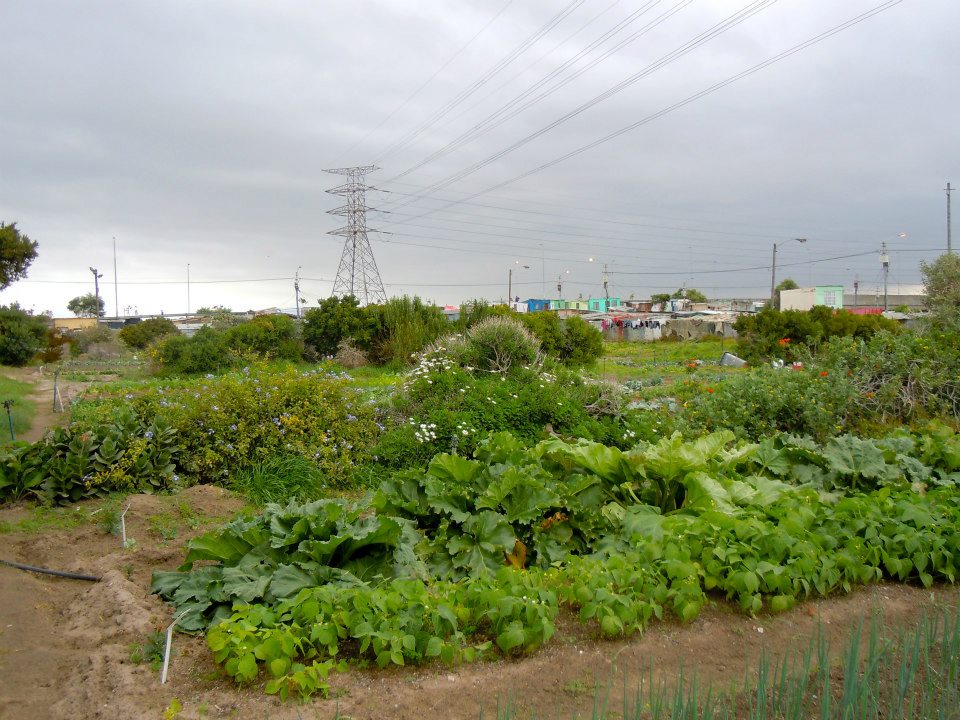
At the community garden adjacent to the Fezeka municipality building in Gugulethu.

At the community garden adjacent to the Fezeka municipality building in Gugulethu.

OZCF isn’t the only food-growing initiative in Cape Town’s middle-class suburbs. Based in Constantia, Soil for Life teaches people from all communities how to establish community gardens along organic lines; the Woodstock Peace Garden aims to bring the community together and to produce food; and Touching the Earth Lightly is pioneering rooftop gardening.

There is a strong link between urban agriculture and economic recessions. The example most frequently cited today of how community gardening can help unemployed, impoverished communities cope with the effects of the recession is Detroit. But this city has a long history of using urban farming to deal with depressions. In the 1893 depression, Detroit donated small lots of vacant land – known as Pingree Potato Patches – to the unemployed, who were able to grow enough to feed themselves, and then sell their surplus produce for cash. The project was so successful that it spread to New York, Philadelphia, Chicago, Boston, and elsewhere.

There were resurgences of interest in urban gardening during the two world wars, the 1930s, and the 1970s, as Laura Lawson explains:

In the 1970s, new interest in community gardening grew as an expression of urban activism and a new environmental ethic. Garden programmes emerged, such as New York’s Green Guerrillas and Boston Urban Gardeners (BUG). In 1976, the USDA sponsored the Urban Gardening Programme that established urban offices to promote vegetable gardening and community gardens in 16, later 23 cities. In 1978, activists from around the country formed the American Community Gardening Association (ACGA) as a non-profit membership organisation.

Guerrilla Gardening – where vacant public land is planted without the permission of the authorities – was a product of the economic downturn of the 1970s.

Contemporary interest in community gardening and urban agriculture stems both from the recession as well as from a set of interconnected concerns about food safety, sustainable food production, the creeping power of Big Food to control every link in the food chain, and slowly rising food prices.

Turnips grown in Gugulethu.

At Harvest of Hope – a vegetable box scheme run by Abalimi Bezekhaya, an urban farming project based in some of Cape Town’s poorest suburbs – this interest in the provenance of food has translated into increased demand for organic produce.

Urban agriculture is nothing new in Cape Town. Abalimi was established in 1982 to provide support to community gardens in Khayelitsha, Nyanga, Gugulethu and surrounds. Today, in exchange for R100 from each gardener, it supplies training, compost, seedlings, and tools to around 2,500 individuals and between 55 to a hundred urban farms every year. These are run overwhelmingly by elderly, female pensioners, most of whom support five to six relatives. Those gardens which produce a surplus of vegetables – after the women have taken what they need and sold some over the fence – can become suppliers of Harvest of Hope. At the moment, between twenty and thirty gardens send vegetables to the project’s packing shed in Philippi.

Cabbages with pest-deterring marigolds.

Cabbages with pest-deterring marigolds.

The genius of the Harvest of Hope model is that it guarantees community gardeners a monthly income of R3,000 for as long as they supply vegetables for the box orders. They aren’t Khayelitsha, Gugulethu, Nyanga, and Langa’s only small farmers, though. Abalimi’s Rob Small reckons that there around three hundred community gardens in these suburbs, of varying size and productivity.

Importantly, what they do is to make vegetables cheaply and readily available in areas where fresh produce is difficult to find: small spaza shops tend not to sell fruit and vegetables. Those wanting to eat varied diets need to stump up the cash to travel further into the city, to large, expensive, supermarkets.

Peas.

Peas.

Most of the vegetables grown in these gardens remain within the communities. But close by – in the Philippi Horticultural Area (PHA) – half of the city’s vegetables are cultivated. Cape Town is unique in South Africa in that such a large proportion of its fresh produce is actually grown within the city. Farmers have grown fruit and vegetables in the sandy soil of the PHA since the late nineteenth century. Today, the area encompasses about 2,370 hectares, and is split between smallholdings and larger commercial farms, which produce around 100,000 tonnes of produce every year. Some of these, like Skye Fehlmann’s Naturally Organic, have embraced sustainable, organic farming.

The area is, though, under threat. In 1988, 3,200 hectares of land were designated to horticultural use. Sand mining, illegal dumping, and encroaching informal settlements are all eating up land which could be used to farm. But all this pales into significance against the proposed development of a 472-hectare area. Heidi Swart explains:

In 2008 a company by the name of Rapicorp 122, in whose name the land is registered, lodged an application with the provincial government to change the land-use designation of the 472 hectares from horticultural to urban. Rapicorp proposed about 172 hectares of 20 000 mixed-density housing units, 41 hectares for industrial use, 26 hectares for mixed use and 157 hectares for open space and conservation.

Although the City of Cape Town turned down the application, in 2011 the Western Cape provincial government approved it. Luckily, though, the Rocklands group, of which Rapicorp is part, is now under curatorship following a Financial Services Board investigation. Only when that is resolved can the development of the PHA take place.

At the Harvest of Hope Packing Shed in Philippi.

At the Harvest of Hope Packing Shed in Philippi.

Preserving – and, indeed, extending – the PHA is important not only to keep the price of fresh produce low in Cape Town, but also because it is surrounded by desperately poor communities which would not usually have access to fruit and vegetables. Although still more expensive than staples like maize meal, white bread, and sugar, it is considerably cheaper to buy vegetables off the back of farmers’ trucks than in supermarkets. In other words, the PHA is absolutely essential to ensuring that these households remain food secure:

According to a survey of 1 060 low-income households [in Cape Town] conducted by the African Food Security Urban Network in 2008, 80% of respondents were food insecure. The study looked at various indicators of food insecurity, such as whether respondents went to sleep hungry, or whether there were times when there was no food in the house.

A 2012 study by Rooftops Canada-Abri International and the African Food Security Network that examined the horticultural area’s significance in sustaining food security within the Cape Town municipality found that without it the city would be ‘place[d] in extreme risk’ of food insecurity, with low-income households suffering the most. A 2009 report commissioned by the city had similar findings.

Cape Town’s official policy on urban farming commits the city to ensuring that urban agriculture will ‘fill form an integral part of future development planning’ and to supporting community groups involved in community gardening. It seems to me that not to protect the PHA contradicts this policy.

Rob Small describes Cape Town as ‘a farm with a city in it.’ Cape Town has a population of about 3.7 million, slightly more than half of whom live in the city’s informal settlements. When people speak of ‘Cape Town’ they tend to mean its older suburbs with their – still – mainly white inhabitants. It strikes me that so much of the city’s problem with urban agriculture is that its community projects maintain the distinction between the historically ‘white’ and wealthy, and ‘black’ and poor parts of the city. Projects based in Constantia, Woodstock, and Oranjezicht ‘reach out’ to ‘educate’ and ‘uplift’ the ‘poor’ (whoever they may be), ignoring the fact that so much of the city’s informal settlements are being farmed – and are exceptionally productive.

It’s old women in Nyanga and farmers in Philippi who are the key to ensuring the city’s future food security. They are the ones who should be deciding Cape Town’s urban agricultural policies.

Creative Commons License
Tangerine and Cinnamon by Sarah Duff is licensed under a Creative Commons Attribution-ShareAlike 3.0 Unported License.
The Cult of Authenticity

Last weekend I went to a wedding in Napier, a village in the rural Overberg, about a two-hour drive from Cape Town. I saw a family of baboons sunbathing on the Akkedisberg mountain pass; went to a church bazaar and bought jam; and saw a shop (alas closed at the time) which sold ‘piesangs, psalmboeke en dinamiet’ (bananas, prayer books, and dynamite).

It was a very good weekend indeed. And made even better by the quantities of excellent food which I ate. I was struck, though, by the numbers of restaurants in Napier which advertised their menus as being particularly ‘authentic’. Napier is experiencing a kind of low-key gentrification at the moment, so this isn’t really all that surprising. But it was amusing how the idea of what is authentic was stretched beyond all recognition.

I had lunch at a place which specialises in ‘authentic tapas’ and was advised to order two items, as tapas are, well, small plates. I doubt that the vat of curried sweet potato soup and mound of salad, which included the best part of a head of butter lettuce and two avocados, I was served bore even the remotest resemblance to the tapas of Barcelona. But they were delicious.

I was wondering why, though, a café in a remote South African village would stake so much on serving authentic tapas. There is, I suppose, a kind of thrill in eating exotic, ‘real’ tapas. Even so, most of its clientele are unlikely to have sampled the real thing or, even, to care about the authenticity of their supper. (I don’t mean this in a patronising way. Travel abroad is expensive.)

This is part of a wider cultural trend, where people who describe themselves as ‘serious’ about food (I’m not entirely sure what that means) claim to be able to distinguish between those dishes which are really authentic – which are absolutely true replicas of the ‘original’ dish  – and those which have been adulterated through adaptation.

For instance, Cape Town’s best Mexican restaurant El Burro advertises itself as ‘authentic’ Mexican cuisine, and local reviewers go out of their way to emphasise just how authentic its menu is: here is no inauthentic Tex- or Cal-Mex cooking, but, instead it is the Real Thing. (How many of them have actually visited Mexico is open to debate.)

There is, really, no such thing as ‘authentic’ Mexican – or Italian, or Spanish, or Greek, or Indian, or Thai, or Norwegian – cuisine. These, and other countries, have a range of cuisines, which differ from region to region, and which have also changed over time. As Jeffrey Pilcher argues in his recent book Planet Taco: A Global History of Mexican Food, it is more accurate to refer to a number of Mexican cuisines which exist simultaneously both within and without the borders of the country.

The problem with trying to identify ‘authentic’ cuisine is that it’s rather like trying to nail jelly to the wall. The same dish will vary from area to area – from household to household – in one country. I have seen recipes for ‘authentic’ risotto which assert, with equal vehemence, that it should be so thick that you can stand a spoon in it or, equally, that it should be liquid and flowing. My mother’s recipe for bobotie – a South African delicacy – contains grated apple. My friend Carina’s mother’s recipe has no apple, but, rather, raisins. Which is the authentic version? Both. Neither.

Food changes over time. In the early twentieth century, the medical doctor, poet, Afrikaner nationalist, and Buddhist C. Louis Leipoldt recorded a recipe for bobotie which, in today’s terms, would be understood as a meatloaf: it was not the dish that, today, we think of as being bobotie – a layer of spiced, slightly sweet minced meat underneath a buttermilk and egg custard. Although according to the European Union, authentic Cornish pasties may contain only beef, swede, and potatoes, there is plenty of evidence to suggest that Cornish miners in the past had a range of ingredients in their pies – and not only this holy pasty trinity.

DSCN8125

There is also the problem of anachronism. Mexico became an independent state in 1810 and its borders changed over the course of the nineteenth century. Should only those dishes which were made within the country’s present boundaries be considered ‘Mexican’? The state of Texas remained part of Mexico until 1836, and significant numbers of Mexicans settled in the United States – particularly in New Mexico, California, and Arizona. Should we consider Texan cuisine to be Mexican? And, surely, it would be churlish somehow to consider the cuisine developed by Mexicans in the United States as somehow being of less value than that prepared by Mexicans in Mexico (whatever we may mean by ‘Mexico’)?

So which version do we accept as being the ‘real’ version of a dish? Which one is ‘authentic’? More often than not, a range of factors not particularly linked to food influence our decisions over what is considered to be properly authentic. There is a connection, for instance, between nationalism and cookery books. During the nineteenth century, middle-class Mexicans living in the United States used food both to maintain links with Mexico, as well as to assert the sophistication of Mexican culture. Encarnación Pinado’s El cocinero español (The Spanish Chef), published in 1898, described a Mexican cuisine made using modern technology, and incorporating dishes from Mexico, European, and the Mexican-American borderlands.

Something similar happened in Italy, as Tim Hayward explains:

‘Authentic’ Italian food has an even odder story. Pellegrino Artusi was a writer with a political desire to unify the regions of Italy into a single country and thought, quite logically, that food might be a way to do it. In La scienza in cucina e l’arte di mangiar bene (The Science of Cooking and the Art of Eating Well), 1891, he combined all the regional recipes he could find and in doing so artificially assembled what we regard today as ‘Italian’ food.

In fact, a lot of what we consider to be ‘real’ Italian food today, was created in a dialogue between Italian immigrants in the United States and Italians at home. Even relatively poor immigrants could afford the tomatoes, dried pasta, olive oil, meat, and dairy products which constituted the feast dishes of the homeland. This invented ‘traditional’ cuisine was used to construct and delineate new immigrant Italian identities. Overseas demand for the products of ‘home’ stimulated the Italian food industry – and the mass production of tinned tomatoes and other products made them more easily available in Italy. This American connection of Italian identity with a particular kind of Italian cooking was also exported back to Italy.

Authentic cuisines are, then, heavily constructed. There is no direct, unmediated way of accessing the food of the past. Indeed, it is also pretty difficult to replicate the cooking of foreign countries at home. Rachel Laudan notes that if she were to write a cookbook on ‘authentic’ Mexican cooking, she would have to take into account the difficulty of finding many ingredients outside of Mexico:

I’d probably leave out the spinal cord soup, the sopa de medulla so popular in Central Mexico (fear of mad cow disease makes that a no-no) and I’d leave out quelites, the mixed wild greens sold already cooked in the markets (too difficult to get hold of in the States). I’d probably also leave out tripe, sugar milk and fruit confections and aroles, the family of thick gruels that warm Mexicans on cold winter mornings (not at all to my conception of Mexican taste).

Also, she argues that she would be constrained by middle-class Americans’ own ideas around what should constitute Mexican cuisine. The cult of authenticity is informed not only by snobbery (being able to identify and cook the ‘real thing’ is a marker of sophistication), but also by a powerful nostalgia for a pre-industrialised food past where all cooking was done from scratch:

I’d include photos of colourful fruit and vegetables stalls but not my neighbourhood supermarket shelves stocked with Danone yogurt and cornflakes.

I’d ignore my friend’s mother’s recipe for lemon Jell-O with evaporated milk. I’d pass over dishes that used Worcestershire sauce, pita bread and Gouda cheese, as well as recipes for Cornish pasties, hot cakes and biscuits, even though all of these are commonplace in Mexico.

This is a nostalgia produced by anxieties around change and a perceived homogenisation of the world’s diets. It is partly as a result of this concern that old ways of cooking and eating are being ‘lost’ that the EU introduced a protected geographical status framework in 1993, which provides legal protection to certain dishes and products in the EU, preventing them from being copied elsewhere. So only sparkling wine produced in Champagne can be called ‘champagne’, and only Prosciuitto Toscano made in Tuscany can be called Prociutto Tascano.

For all that this is an attempt to preserve a food heritage, as the philosopher Julian Baggini makes the point, the EU actually decides what is authentic and what is not:

For instance, ‘traditional stilton was a raw-milk cheese up until the late 80s,’ says Dominic Coyte of Neal’s Yard Dairy. But when the Stilton Cheesemakers’ Association got PDO protection in 1996, they stipulated that it be made with pasteurised milk. Hence the irony that the raw-milk stichelton, first produced by traditional methods in 2006, is arguably the most authentic stilton available, but it cannot carry the name.

Similarly, UNESCO’s recognition of Mexican cuisine, the French ‘gourmet meal’, the Mediterranean diet, and the gingerbread craft of Northern Croatia as the ‘intangible patrimony of humanity’ in 2010, fixed these culinary traditions in aspic. Also, the Mexican application focussed on only one regional cuisine, the ‘Michoacán paradigm,’ which, interestingly, happened to feature the home state of the President, Felipe Calderón

This recognition from UNESCO will boost the region’s tourism, and EU appellations have helped many small producers in Europe to continue to work in difficult economic times. The mania for ‘authenticity’ helps, inadvertently, to force our attention to how people cooked and ate in the past – to look at methods, ingredients, and cultivars which we may have forgotten. We shouldn’t try to return to the past, but we can certainly learn from it.

My problem with the cult of authenticity – other than its tedious pedantry – is that it conflates eating ‘authentically’ with some ability to make a meaningful difference in the world. More often that not, peasant food is labelled authentic food. Even the most passing familiarity with what most poor people eat will demonstrate that people’s diets improve as their disposable income increases. Peasant food in Italy before the mid-twentieth century was nutritionally inadequate: it consisted of bread and polenta with onions oil and, occasionally, cheap fish and vegetables.

There is nothing wrong with eating peasant food, but it is deeply problematic to believe that eating ‘real’ peasant food represents a solidarity with the struggles of the poor. In fact, it’s a distraction from the ways in which food and big agricultural companies exploit labourers and put small and peasant farmers out of business.

Food is political. Particularly if it’s ‘authentic.’

Creative Commons License
Tangerine and Cinnamon by Sarah Duff is licensed under a Creative Commons Attribution-ShareAlike 3.0 Unported License.

A Messy Business

Adventurous readers! Today’s post is over at the excellent Review 31. It’s a review of Jeffrey Pilcher’s new book, Planet Taco: A Global History of Mexican Food.

Back to normal service next week.

One Nation?

One of the oddest features of the transition from apartheid to democracy was the slew of beer advertisements, proclaiming the unity of the nation on the grounds of a shared enthusiasm for Castle Lager or Carling Black Label. There is a generation of South Africans who can chant South African Breweries’ slogan, ‘One Nation, One Soul, One Beer, One Goal,’ based entirely on having watched the 1998 Soccer World Cup on television.

This use of beer as a unifier which cut across boundaries of both race and class – although not, interestingly, gender (these advertisements celebrate a kind of hypermasculinity associated with the mining or construction industries) – was supremely ironic given the apartheid state’s attempts to control Africans’ consumption of alcohol, and particularly beer.

I’ve been thinking about the long, fraught politics of beer in South Africa as a furore has erupted over new attempts to limit alcohol sales, particularly in Gauteng and the Western Cape. Because municipalities and provinces control the terms according to which alcohol can be sold, rules around buying alcohol are complex. In the Western Cape, the new regulations will outlaw the sale of alcohol to be consumed offsite on Sundays and on all days after 18:00. No alcohol may be consumed at school functions, and in vehicles, and no person may buy or possess more than 150 litres of alcohol (that’s around 200 bottles of wine).

In Gauteng, draft legislation will make all sales of alcohol on Sundays illegal. Although these two provinces have received most attention from the media – partly because the country’s national newspapers and broadcasters are based in Cape Town and Johannesburg – there are attempts all over South Africa to limit how South Africans buy booze: the George municipality is considering outlawing the sale of all alcohol after 20:00 on Sundays; KwaZulu-Natal province may ban anyone under the age of eighteen from liquor aisles, and require supermarkets to devote a cashier specifically to alcohol sales. The Minister for Health, Aaron Motsoaledi, has even floated raising the legal age of drinking from eighteen to twenty-one.

This is all very confusing, and some shops have complained that this legislation hinders their business, and it’s doubtful that the police will be able to enforce these regulations. Many South Africans have questioned the efficacy of this legislation in reducing violent crime and road accidents – which is what these new regulations are intended to do. Although provincial governments and municipalities have cited studies which demonstrate the social and health benefits of limiting alcohol sales, there are, equally, others which suggest that higher liquor prices and taxes have little effect on the buying habits of heavy drinkers (meaning that they’re more likely to spend less on food or other essentials). Indeed, it’s probable that a black market may develop for illegal alcohol – causing drinkers inadvertently to consume poisonous liquor.

Beer

This impulse to control how much people drink in the name of preserving order and protecting the vulnerable is nothing new. The global temperance movement which emerged during the final decades of the nineteenth century, lobbied for limiting alcohol sales to men to reduce levels of domestic violence. The Cape Colony’s chapter of the Women’s Christian Temperance Union, established in Wellington, in the heart of the Cape winelands, in 1889, encouraged children, in particular, to take the temperance pledge, opened coffee shops to lure men away from canteens (or bars), and petitioned the colonial government to raise the price of liquor and reduce its availability. The WCTU distributed pamphlets, describing the apparently appalling consequences of the ‘demon drink’ for physical and mental health. People who drank had low morals, the ladies of the WCTU argued, and were at risk of falling into destitution. Members of the Myrtle branch, a temperance society for children in Wellington, were informed in 1896 ‘that strong drink leads to anger, debt, despair, destruction, and death’.

Although the WCTU encouraged middle-class men to become teetotal, its efforts were aimed overwhelmingly at men who were working-class and poor. These men – less ‘civilised’ then their middle-class betters – were characterised as uniquely prone to violence and, thus, in greater need of supervision.

Other than the fact that prohibition has never really stopped people from drinking, I think it’s worth thinking twice about limiting access to liquor because this has usually been the product of wider, social anxieties rather than of any real concern about the effects of alcohol on human bodies.

The 1928 Liquor Act was an attempt to shape how African men would consume alcohol. But, as Anne Mager explains, it was a nightmare to implement:

Exemptions to prohibition were granted in the Cape Province and Natal to African men deemed to have attained a certain ‘standard of civilization’. Permits were conditional on two years of good behaviour under the Liquor Act, a clean criminal record and permanent employment. African permit holders were limited to eight bottles of malt beer, four bottles of natural wine or two fortified wines and one bottle of spirits per month. Nevertheless, the privilege of education, property and professional status did not entitle exempted African men to enter bars and public houses frequented by whites or to drink in a friends’ home. Beyond the Cape and Natal, Africans were restricted to ‘kaffir beer’.

This was legislation driven by fear of ‘subjects perceived as immature and dangerously close to barbarism.’ However, they were also subjects from whom the state could profit. From 1937 onwards, a model of municipal beer production pioneered in Durban in 1908, was adopted around South Africa. Municipal beer halls, which had a monopoly on the sale of beer in these areas, with were established in townships and other informal settlements, providing intense competition for the existing shebeens. The profits raised by the halls went back to the municipality, and this was why so many towns and cities adopted this very lucrative scheme. It not only controlled African consumption of alcohol, but it made municipalities rather a lot of money. By the mid-1960s, more than sixty municipalities were operating beer halls.

These beer halls posed a significant threat to African brewers. CM Rogerson writes:

The introduction of municipal beer monopoly and beer halls occasioned considerable response from the community of shebeeners and home brewers, whose livelihood was threatened by the ending of prohibition and competition from municipal beer. Resistance towards municipal monopoly was manifested in various ways, including mass organised boycotts on new beer halls, rioting and the destruction of beer halls and the spreading of rumours by women shebeeners that municipal beer was making their menfolk sterile. For example, at Welkom in the Orange Free State the opening in 1956 of a municipal brewery and the withdrawal of home brewing permits sparked township rioting and attacks on the new beer hall.

As Rogerson implies, the people who had the most to lose from the municipal beer halls were African women, who controlled much of the production of beer in the ‘locations’ on the edge of towns and cities. Women were at the centre of beer production and selling. They tended to be unmarried, and could become relatively powerful. The figure of the ‘shebeen queen’ recurs in many of the novels depicting life in South African cities during the first half of the twentieth century.

It was women, too, who controlled the flourishing illegal production of alcohol. At the end of 1960, there were 30,000 illegal brewers in the Western Cape, and more than 10,000 shebeens in Soweto. But this was a business carried out in constant threat: women bore the brunt of police crackdowns on the trade. Unsurprisingly, then, women brewers and shebeen owners were often on the forefront of anti-government protest too. Most famously, they had a key role in the Cato Manor Beer Hall riots in 1959. Not only did these women berate men for drinking at municipal beer halls, but they resisted police raids on their shebeens.

Illegal beer brewing became, then, for African women both an act of political resistance, as well as a means of supporting themselves in a heavily patriarchal society.

All of this changed in 1962 when the apartheid state agreed – partly as a result of intense lobbying from industry – to open up sales of alcohol to Africans. However, this sale was still tightly controlled by the state, as Mager writes:

Since they were permitted to purchase but not consume liquor in town, Africans were effectively restricted to buying liquor at outlets (on- and off-consumption) run by the Bantu Areas Administration Boards (BAAB) in prescribed African townships. These outlets were built adjacent to the beer halls that supplied sorghum beer to working men. They comprised bars for women and men and ‘off-sales’ bottle stores. The consolidated infrastructure facilitated government monopoly in the distribution of European liquor. Local BAABs retained 20 per cent of the profits on liquor sales for the development of township amenities; 80 per cent went to the Department of Bantu Administration (BAD) head office for the financing of apartheid.

African alcohol consumption helped to fund the apartheid state. It also swelled the profits of South African Breweries, which supplied both state-run outlets as well as the illegal shebeens.

The sale of alcohol in South Africa has, then, a complex and fraught history. It is intertwined with anxieties about the control of black people in ‘white’ cities: by bringing alcohol provision within the ambit of the state, Africans’ consumption of alcohol could (in theory) be regulated, but they were, unwittingly, contributing to their own continued subordination by the apartheid regime.

Trying to manage people – either as a result of fear or out of a desire to eradicate social ills – through limiting the control of alcohol will never be fully successful. In fact, trying to stop people from drinking on Sundays or in the evenings just prevents them from drinking on Sundays or in the evenings – it doesn’t actually address the problems which cause people to drink in excess, or which cause men to beat up their wives and children.

Sources

Iain Edwards, ‘Shebeen Queens: Illicit Liquor and the Social Structure of Drinking Dens in Cato Manor,’ Agenda, no. 3 (1988), pp. 75-97.

Anne Mager, ‘“One Beer, One Goal, One Nation, One Soul”: South African Breweries, Heritage, Masculinity and Nationalism 1960-1999,’ Past and Present, no. 188 (Aug. 2005), pp. 163-194.

Anne Mager, ‘The First Decade of “European Beer” in Apartheid South Africa: The State, Brewers, and the Drinking Public, 1962-1972,’ Journal of African History, vol. 40 (1999), pp. 367-388.

Gary Minkley, ‘“I Shall Die Married to the Beer”: Gender, “Family” and Space in the East London Locations, c.1923-1952,’ Kronos, no. 23 (Nov. 1996), pp. 135-157.

CM Rogerson, ‘A Strange Case of Beer: The State and Sorghum Beer Manufacture in South Africa,’ Area, vol. 18, no. 1 (1986), pp. 15-24.

Creative Commons License
Tangerine and Cinnamon by Sarah Duff is licensed under a Creative Commons Attribution-ShareAlike 3.0 Unported License.

Sunny South Africanism

If South Africans were congratulating themselves in the wake of the contaminated meat scandal in Europe about the absence of horse – and, indeed, unlabelled pork – in their red meat, then their self-congratulation appeared misplaced. A couple of weeks ago, scientists at Stellenbosch University revealed that certain processed meat products contained donkey, water buffalo, goat, and even kangaroo meat.

It’s perfectly legal to sell these meats in South Africa, as long as they’re labelled correctly. But what is so disquieting about this local scandal is that it suggests a failure – even collapse – of South Africa’s food safety regulators: no South African abattoir is licensed to slaughter any of these animals, and it seems that this meat was trafficked into South Africa by criminal syndicates.

As I wrote last month, as the world’s food chain has been globalised since at least the beginning of the twentieth century, so this link between crime networks, poor regulation, and food adulteration is nothing new. I was also struck by the snobbery of so much of the response to the presence of horse and other meats in fast food and ready meals: that people who bought cheap, processed meat only had themselves to blame for inadvertently consuming horse, or other ‘taboo’ animals.

I have very little patience for the self-satisfied smuggery of middle-class foodies who advise eating less and more expensive meat to people who would never be able to afford even this shift in their eating habits. But I was amused by South African commentators who noted that nobody would notice if they had eaten water buffalo in their boerewors because, well, nobody really knows what goes into it in the first place.

I was thinking about this recently because a few weeks ago I had supper at Gourmet Boerie, a new restaurant which has opened at the bottom of Kloof Street, in the hub of Capetonian cool. There is something profoundly oxymoronic about a gourmet boerewors roll – or boerie – restaurant. If there is one item of fast – or street – food which unites the vast majority of South Africans, it is the boerewors roll.

Boerewors – which translates, literally, as farmer’s sausage – is a kind of coarse, highly-spiced sausage, sold in coils similar to Cumberland sausage. Strongly flavoured with salt, cumin, cloves, allspice and, particularly, dried coriander, it’s usually barbecued over smouldering wood, and then served either in a hotdog roll with All Gold tomato sauce, for preference, or with maize meal porridge and a spicy tomato and onion relish, also known as chakalaka.

The aroma of barbecued boerewors is the smell of suburban summer evenings, but it’s to be found in townships, at weekend football matches, with their largely black crowds, and at mainly white cricket and rugby games. The boerewors roll stand is a fixture of church bazaars, school sports meetings, festivals, local supermarkets over weekends, and even political party rallies. It is the South African hotdog, but, I think, much more delicious.

It’s also reflective of the country’s own complex social and cultural history. Its flavouring is borrowed from the southeast Asian slaves brought to the Cape Colony between the late seventeenth century and 1807, when the slave trade was abolished. But the sausage itself is part of a northern European tradition of meat preservation and sausage making. Indeed, it can be eaten dried as well. (Many a dog has been trained on bits of droëwors.)

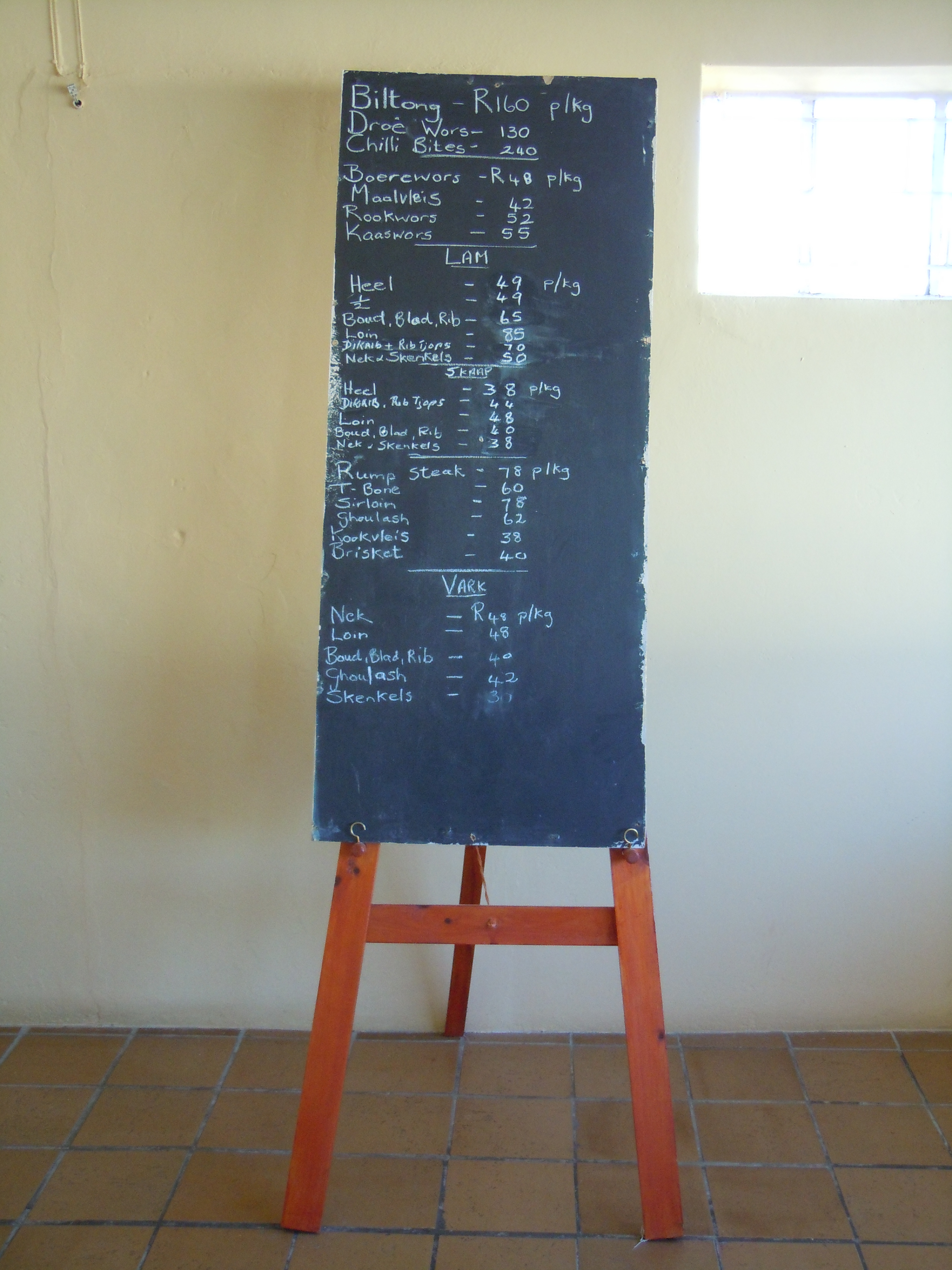
The butcher in Sutherland.

The butcher in Sutherland.

Today, it can be bought in every supermarket, but also at butchers around the countryside. Supermarkets will carry at least two or three different ranges of boerewors, and it also differs from from region to region – the most popular local version being the slightly milder Grabouw sausage. Some of the nicest boerewors I’ve had recently came from a butcher in the Karoo village of Sutherland – best known for its astronomical observatory – but my local Pick ‘n Pay sells perfectly good boerewors too.

And although supermarkets are required to list the ingredients of each pack, there’s always a chance that a local butcher may add fairly unorthodox meats to his particular – usually secret – blend. Curious about what the standard recipe for boerewors is, I turned, inevitably, to my copy of that Mrs Beeton of South African cooking, Kook en Geniet. The recipe recommends a mixture of beef and pork, at a ratio of 5:1. Having marinaded the meat in a mixture of salt, pepper, vinegar, and ground dried coriander, cloves, allspice, and nutmeg, it’s all minced together along with some cubed lard and then stuffed into sausage casings. This is not, admittedly, the most overwhelmingly healthy meal.

Mutton is a frequent addition, and the sausage can vary in thickness and spiciness. The overwhelming flavour, though, is of ground coriander. A few winters ago, I upset a butcher in a farmers’ market held in a Marylebone car park, when I pointed out that his approximation of boerewors was too finely minced and not particularly faithful to the original, being fragrant with cumin and fenugreek.

My point is that although boerewors may vary significantly from region to region, and even from shop to shop, it’s still recognisably the same product because its texture and flavour tend to remain broadly similar.

I was, then, deeply curious about what Gourmet Boerie would do to the boerewors roll to make it ‘gourmet’. I was lucky enough to take Jeffrey Pilcher and Donna Gabaccia – brilliant, US-based historians of food and immigration – with me, and we puzzled over the purpose of the restaurant.

I had the ‘classic’ roll, with traditional boerewors in a hotdog bun with caramelised onions. Despite a softer-than-usual bun, this didn’t differ substantially from similar rolls I have eaten at festivals and friends’ barbecues. In fact, I think I could have eaten as good a boerewors roll at a Boland cricket match.

Jeffrey, though, as befitting a specialist in the history and politics of food and cooking in Mexico, tried the Mexicano roll, which came with tomato salsa, guacamole, sour cream, jalapeños, and fresh coriander. It was interesting – and it’s in the variety of boerewors rolls that the restaurant seems to position its ‘gourmet’ status. Not only can punters choose between different kinds of sausage (traditional, mutton, even vegetarian) and rolls, but they come with a selection of toppings, ranging from a breakfast boerie with bacon and eggs, to a ‘sophistication’ with goats’ cheese and basil pesto.

So the rolls themselves are fine, but not astonishingly, eye-poppingly revelatory. What interested us more was in the way the restaurant reframes South African cooking and, indeed, ‘South African-ness.’ It sells local beers, and versions of traditional puddings. It has proteas arranged in jars on the tables. The lampshades and soft furnishings are covered in fabric designed by Cape Town-based Skinny LaMinx.

Gourmet Boerie in Kloof Street, Cape Town.

Gourmet Boerie in Kloof Street, Cape Town.

Clearly, the owners of Gourmet Boerie are part of an international trend which transforms street foodhamburgers, ramen, Chinese dumplings – into a ‘gourmet’ experience to be eaten in restaurants. There was even, I am told, an episode in the South African series of Masterchef which required contestants to transform the boerewors roll into fine dining. The irony implicit in this refashioning of what was, originally, cheap snacks meant to be cooked and consumed quickly, is that their gourmet incarnations insist upon their ‘authenticity’. That it is, somehow, possible to eat ‘authentic’ Japanese or American street food in a London or Melbourne restaurant.

But what Gourmet Boerie is doing, is not only the recreation of a South African street food into a kind of ‘authentic’ and ‘gourmet’ experience (whatever we may mean by ‘authentic’ and ‘gourmet’), but a refashioning of South Africa itself: Gourmet Boerie is as much about boerewors rolls as it is about being South African. And the South Africa that Gourmet Boerie touts is one which ignores the country’s fractured, contested past and present – it is cool, beautifully designed, and emphasises South Africa’s easily depoliticised natural landscape with the presence of so many indigenous flowers.

But with an overwhelmingly black cooking and serving staff overseen by a white manager, the inequalities of contemporary South African society really can’t be elided in this sunny vision of South Africa.

I don’t argue that Gourmet Boerie should rethink its representation of South Africa – of course not, it’s a restaurant and not a museum – but, rather, that we should pay attention to how it links a version of South African street food to an attempt to create a depoliticised South African-ness. And one that is equally palatable to both locals and the legions of foreign tourists who visit Cape Town every summer.

Creative Commons License
Tangerine and Cinnamon by Sarah Duff is licensed under a Creative Commons Attribution-ShareAlike 3.0 Unported License.

Mind Your Own

My parents moved house last week. They weren’t, though, the only inhabitants of their property to relocate. During their final few days of packing, a swarm of bees took up residence in my sister’s old tree house. Unfortunately for the bees, there was no way that they could safely establish a hive there, so my mother called Gerald the Bee Man, who put her in touch with a couple of local beekeepers. They lulled the bees into submission with smoke, and then coaxed them into a new hive over the course of two days. The queen and her underlings will spend the rest of their lives pollinating fruit trees, far away from the temptations of suburban tree houses.

Deciding to remove, rather than exterminate, errant bee colonies has implications beyond the ethics of killing animals and insects. Bees exist not only to make a cheerful buzzing in our gardens and to provide us with honey. Einstein remarked, famously: ‘if the bee disappeared off the surface of the globe, man would have only four years to live.’ Although this is something of an exaggeration, I can understand his terror at the thought of the disappearance of bees, both culturally and ecologically.

Bees are invoked, frequently, as metaphors for our societies – the way we live, the way we organise ourselves – and for how we should be. One of the most striking features of researching the Victorian period is the number of references to bees and beehives. During a debate on a new Bees Regulation Bill in the Cape Colony’s House of Assembly in July 1894, one MP objected to the legislation which, he believed, would limit beekeeping in the Cape on the grounds that bees provided the poor with an example of hard work and co-operation:

Yesterday they were treated to various dissertations on the abject misery of the poor white population, and yet they were now asked to consent to the second reading of a measure which would deprive the poor white population of the country of one of the most useful object lessons they could possibly be afforded them.

Describing colonial society as a beehive, Henry de Smidt, the Director of the Census in the Cape, argued for the inclusion of ‘idle’ children in the Census because they formed ‘an integral portion of the human hive, drones though they might be.’

Both men echoed Isaac Watts’s tremendously popular poem ‘Against Idleness and Mischief’:

How doth the little busy Bee
Improve each shining Hour,
And gather Honey all the day
From every opening Flower!

How skilfully she builds her Cell!
How neat she spreads the Wax!
And labours hard to store it well
With the sweet Food she makes.

In Works of Labour or of Skill
I would be busy too:
For Satan finds some Mischief still
For idle Hands to do.

In Books, or Work, or healthful Play
Let my first Years be past,
That I may give for every Day
Some good Account at last.

(I prefer Lewis Carroll’s version, ‘How doth the little crocodile?’)

For the Victorians, the appeal of the beehive lay in its tightly organised and maintained social structure, its strict hierarchies, and its efficient productivity. It was at once a metaphor for a harmonious society and a well-run factory.

Bees are also useful for describing our often fraught relationship with nature: I think of the periodic, National Enquirer-esque hysteria around killer African bees invading the United States. I wonder if the horror of Roald Dahl’s story ‘Royal Jelly,’ where a beekeeper accidentally turns both himself and his baby daughter into bees, was reflective of wider anxieties about the implications of human tampering with nature during the early 1980s.

The decline of bees says as much about us, as it does about bees. But other than providing a series of handy, mutable metaphors, bees and, indeed, other pollinators both wild and farmed, are absolutely essential to our food chain. Alison Benjamin and Brian McCallum explain:

honeybees are vital for the pollination of around 90 crops worldwide. In addition to almonds, most fruits, vegetables, nuts and seeds are dependent on honeybees. Crops that are used as cattle and pig feed also rely on honeybee pollination, as does the cotton plant. So if all the honeybees disappeared, we would have to switch our diet to cereals and grain, and give our wardrobes a drastic makeover.

The disappearance of the world’s bees has significant implications for our food security. Ensuring that we have enough to eat is linked to health of our pollinators.

The decline in European bee populations began in the 1960s, but since the late 1990s, this has both accelerated and spread around the globe. Between 1985 and 2005, managed honeybee populations declined by 20 per cent across Europe, and 54% in England. In the United States, four of the main bumblebee populations have diminished by up to 96%. In Britain, three of the region’s 25 bumblebee species are now extinct, and half of the remainder have declined significantly, some by as much as 70% since the 1970s.

A paper published last month in Science

showed more than half the wild bee species were lost in the 20th century in the US. It made use of a remarkable record made of plants and pollinators at Carlinville, Illinois between 1888 and 1891 by entomologist Charles Robertson. Scientists combined that with data from 1971-72 and new data from 2009-10 to discover the changes in pollination seen over the century as widespread forest was reduced to the fragments that remain today.

They found that half of the 109 bee species recorded by Robertson had been lost and there had been a serious degradation of the pollination provided by the remaining wild insects, with their ability to pollinate specific plants falling by more than half. There was an increasing mismatch between when plants flowered and when bees were active, a finding consistent with climate change, according to the researchers.

So it’s not just various species of honeybee which are dying, but bumblebees and wild bees too. So why are they disappearing?

Bees on a wall in Woodstock, Cape Town

Bees on a wall in Woodstock, Cape Town

Scientists all over the world are still trying to answer this question. Initially, the dramatic decline in bee populations from around 2005 were ascribed to a mysterious Colony Collapse Disorder – also called Marie Celeste Syndrome – where whole, apparently healthy, beehives seemed to die overnight. In 2007, a third of beehives in the US were wiped out in this manner. In the same year, ten million bees were reported to have died in just a fortnight in Taiwan. In the winter of 2007/2008, a fifth of British beehives disappeared too.

It’s unlikely that there is a single cause for CCD. A combination of factors arising from climate change, depleted habitats, decreasing biodiversity, and widespread pesticide use, have placed ever more stress on the world’s bee populations. Last year, the varroa mite was linked to the global decline in bee numbers:

Varroa destructor has spread from Asia across the entire world over the past 50 years. It arrived in the UK in 1990 and has been implicated in the halving of bee numbers since then, alongside other factors including the destruction of flowery habitats in which bees feed and the widespread use of pesticides on crops. Bees and other pollinators are vital in the production in up to a third of all the food we eat, but the role the mites played was unclear, as bacteria and fungi are also found in colonies along with the viruses.

But the mite’s arrival in Hawaii in 2007 gave scientists a unique opportunity to track its deadly spread. ‘We were able to watch the emergence of the disease for the first time ever,’ said Stephen Martin, at the University of Sheffield, who led the new research published in the journal Science. Within a year of varroa arrival, 274 of 419 colonies on Oahu island (65%) were wiped out, with the mites going on to wreak destruction across Big Island the following year.

The European Union has proposed a partial, two-year ban on the use of neonicotinoids on flowering crops to limit the decline of European bee populations:

Scientific evidence has mounted rapidly since March 2012, when two high-profile studies found that bees consuming neonicotinoids suffered an 85% loss in the number of queens their nests produced and showed a doubling in ‘disappeared’ bees who got lost while foraging. Neonicotinoids have been fiercely defended by their manufacturers, who claim there is no proof of harm in field conditions and by farming lobbies who say crop yields could fall without pesticide protection. Some neonicotinoid uses have been banned in the past in France, Italy, Slovenia and Germany, but no action has yet been taken in the UK.

The removal of the hive from my parents’ garden made me wonder to what extent CCD has affected South African bee populations. And the answer – I think – is that local bee numbers appear not to have declined as dramatically as those abroad. I’d like to qualify this statement heavily: this is the conclusion I’ve drawn after a morning’s worth of fairly thorough research. I’m not a melittologist (obviously) and I may well have missed a few vital and obvious studies.

Bees are certainly under threat in South Africa. As the South African Bee Industry Organisation notes, habitat loss and the arrival of foreign parasites have taken their toll on bee populations.

Also since 1990 a problem has emerged caused by the movement within South Africa of colonies of the endemic Cape honeybee (Apis mellifera capensis) to regions outside its natural distribution. The interaction between these Cape honeybees and colonies of the other honeybee species in South Africa proved to be disastrous. The so-called Capensis Problem caused extensive damage in the beekeeping industry in South Africa.

Interestingly, though, South Africa’s bees seem to be more resilient to the threat posed by the varroa mite. The mite was first identified in the Western Cape in 1997, having probably entered the country in contaminated hives offloaded at Cape Town harbour. It then spread around the country, even infecting wild bee populations. But only a small minority of bee colonies have collapsed so far.

Why? Well, local bee species may have developed ways of repelling or resisting the mite. Also, South African bees, although under increasing stress, don’t have to contend with the same range of threats as do those abroad. A 2009 survey of the density of bee populations all over the world concluded that ‘Genetic diversity and colony densities were highest in South Africa and lowest in Northern Europe’. The authors of the study suggest that these differences correlate with climate – bees in more temperate regions tend to be healthier than those that are not – but also with the fact that South African bees are able to roam across far bigger wild habitats:

African subspecies disperse via long-distance migratory swarms, leave the nest in response to disturbance or disease (absconding) more readily, and have a faster generation time and smaller colonies than European honeybees. These traits promote population gene flow and high genetic diversity, boosting effective population sizes in Africa.

Agriculture, with its pesticides and low biodiversity, seems, then, to have an impact on the health of European bee populations.

We’re already beginning to feel the impact of the decline in bee populations:

The most dramatic example comes from the apple and pear orchards of south west China, where wild bees have been eradicated by excessive pesticide use and a lack of natural habitat.

In recent years, farmers have been forced to hand-pollinate their trees, carrying pots of pollen and paintbrushes with which to individually pollinate every flower, and using their children to climb up to the highest blossoms. This is clearly just possible for this high-value crop, but there are not enough humans in the world to pollinate all of our crops by hand.

Looking at the comparative good health of South African bees suggests ways in which the global bee population could be increased. Limiting the use of pesticides, increasing habitat for bees by planting wild flowers and leaving areas of uncultivated vegetation on farms, and finding ways of preventing the spread of parasites, will all assist in encouraging healthier bee colonies. All over the world, campaigns and organisations have emerged to lobby for the protection of bees, and the coolness of urban beekeeping is linked, I’m sure, to wider concerns about declining biodiversity.

A world without bees, is a world which will struggle to feed itself.

Further reading

Alison Benjamin and Brian McCallum, A World without Bees (London: Guardian Books, 2008).

Creative Commons License
Tangerine and Cinnamon by Sarah Duff is licensed under a Creative Commons Attribution-ShareAlike 3.0 Unported License.

Closing the Stable Door

About a month ago, the ever-amazing Bill Nighy argued in an interview with the UK’s Sunday Independent that hunger – whatever we may mean by that – could be eradicated by forcing big multinationals to pay their taxes. Nighy, who is a spokesman for the anti-hunger If Campaign, has a point. As a Guardian investigation demonstrates, these global businesses and their subsidiaries go out of their way not to pay their taxes – something which hits developing nations particularly hard:

The Zambian sugar-producing subsidiary of Associated British Foods, a FTSE100 company, contributed virtually no corporation tax to the state’s exchequer between 2007 and 2012, and none at all for two of those years.

The firm, Zambia Sugar, has recently posted record pre-tax profits and its huge plantation is increasing its capacity to produce more sugar for markets in Europe and Africa. Yet it paid less than 0.5% of its $123m pre-tax profits in corporation tax between 2007 and 2012.

The company benefits from generous capital allowance and tax-relief schemes in Zambia, but the investigation also found that it funnels around a third of its pre-tax profits to sister companies in tax havens, including Ireland, Mauritius and the Netherlands. Tax treaties between Zambia and some of those countries mean the state’s revenue authorities are unable to charge their normal tax on money leaving their shores.

If businesses like Associated British Food paid their taxes in countries like Zambia, then, the logic goes, these governments would have enough money to ensure that everyone would have access to enough food.

But tax evasion has implications for everyone’s food supply, and not only those who live in low- to middle-income countries. As the recent horsemeat scandal in Europe shows, the presence of horsemeat in ready meals and fast food products was partly the work of a network of businesses which managed to evade both (admittedly shambolic) regulators and tax by operating through scrutiny-free offshore companies.

Romanian horsemeat entered the European food chain when meat from two abattoirs was sold to Draap Trading Limited, which sold the meat to European food companies, like the meat processor Spanghero – whose licence was suspended earlier this month after being accused of knowingly mislabelling horsemeat as beef in some of its products.

Draap Trading Limited operates in the Netherlands, but is registered in tax-flexible Cyprus. Its sole shareholder is a firm based in the British Virgin Islands, another tax haven. Not only does this arrangement allow Draap to avoid paying tax, but it becomes almost impossible to identify Draap’s shareholder. Investigators suggest that the shareholder may be linked to a collection of Russia-linked offshore companies which have, in the past, been involved in high-profile transactions in Russian industry. Importantly, there are allegations that these businesses are connected to gang activity.

Exciting as these revelations may be, this is certainly not the first time that food adulteration has been linked to organised crime. In Italy, write Anna Sergi and Anita Lavorgna:

The Cosa Nostra, the Camorra and the ’Ndrangheta have long sought to gain a foothold in the fruit and vegetable market, which is one of the most profitable markets in southern Italy. Police investigations over the past two years indicate that mafia families are beginning to have a presence in every stage of the agricultural market – from production to transport. The illegal activities are numerous and market distortion is fundamentally based on the monopoly to transport and distribution in the south, but the phenomenon is widespread across Italy.

The clans have been entering every stage of production – from cultivating products to transporting goods to local markets. It is a business that involves approximately 150 different crimes every day, according to SOS Impresa (an association of Italian business owners created to combat organised crime) and an estimated one third of farmers are affected by this.

Crimes include ‘theft of machinery and tools; extortion; the theft of livestock and cattle; unregulated butchery practices; fraudulent claims for EU funds; and the exploitation of labour.’ These have appalling consequences for the environment, employment practices, and, indeed, food safety – particularly because the clans not only ignore regulations around hygiene and animal welfare, but are also involved in the illegal butchering and trafficking of potentially contaminated meat.

In the US, the Mafia and pizzerias have a long and complicated relationship. Between 1985 and 1987, the Pizza Connection Trial revealed that mobsters had used a collection of pizza parlours as fronts for the sale and collection of heroin and cocaine. Throughout the twentieth century, though, the mob controlled supplies of ingredients to pizzerias. For instance,

Al Capone – who owned a string of dairy farms near Fond du Lac, Wisconsin – forced New York pizzerias to use his rubbery mob cheese, so different from the real mozzarella produced … in New York City since the first immigrants from Naples arrived in Brooklyn around 1900.

As the story goes, the only places permitted to use good mozzarella made locally were the old-fashioned pizza parlours like Lombardi’s, Patsy’s, and John’s, which could continue doing so only if they promised to never serve slices. … Apparently, neighbourhood pizzerias that served slices and refused to use Capone’s cheese would be firebombed.

As the connection between organised crime and food is nothing new, so is the link between food and tax evasion. Nicholas Shaxson begins his excellent Treasure Islands: Tax Havens and the Men Who Stole the World (2011) with an account of the incredible wealth and power of the Vestey brothers. These two men controlled the meat industry during the early twentieth century. Ian Phimister explains:

Prior to 1914, Vesteys had interests in South America, China and Russia, and extensive land holdings in South Africa; it gradually extended its operations to embrace Australia, New Zealand and Madagascar. The company also owned ‘five steamers refrigerated and fitted for the carriage of frozen meat which they use largely for their own trade. Major expansion occurred, however, primarily after the war when in 1922 they absorbed the British and Argentine Meat Company. Vesteys had previously owned over 3,000 butcher shops in England, and the take-over added between 800 and 900 shops to that total. Overall, it was thought that the ‘deal gave Vesteys control over one-quarter of the Argentine export trade.’ On the other side of the world, Vesteys leased 20 million acres in northern Australia where they ran 300,000 cattle. Generally speaking, these were low-grade animals, but their low cost of production gave Vesteys a competitive selling edge, especially during the Great Depression when beef prices collapsed. There were no rail charges because cattle were ‘walked’ to the freezing works, and labour costs were the envy of even South Rhodesia: ‘they employ about 200 aborigines who do not seem to have advanced as far as our natives – at any rate they are only starting to ask for money wages.’

Essentially, Vesteys owned every link in the food chain: from the land on which cattle were farmed, to abattoirs and newly-invented cold storage warehouses, to refrigerated ships and the butchers who sold the meat to shoppers in Britain. But they didn’t limit themselves to beef: they shipped eggs, chicken, ducks, pork, and dairy products from China and Russia, as well as mutton from Australia and New Zealand.

What the example of Vesteys demonstrates – above all – is that big food multinationals have existed since the early twentieth century and have used the same tactics for more than a hundred years. Monsanto and Cargill have the same monopolistic instincts and low regard for labour rights and animal welfare as Vesteys. Moreover, our food supply has been globalised for as long – if not longer – and the myth that once upon a time all butchers were independent and totally ethical is, well, just that – a myth.

But Vesteys also illustrates how food companies dodge taxes. William and Edmund Vestey went out of their way never to pay tax if they could help it. When the British government began to tax British companies on profits earned abroad, to raise funds for the war effort in 1914, the Vestey brothers first lobbied against the measure, and then upped sticks to Chicago and then Buenos Aires, to take advantage of America and Argentina’s less onerous systems of taxation.

They used a range of strategies now commonplace among multinationals to channel their profits away from countries with high tax rates – the countries, in other words, where they did business. Also, in 1921 the Vesteys established a trust based in Paris which the British authorities could not tax (they didn’t even discover it until 1929). Giving evidence to a Royal Commission established to investigate how to tax multinational businesses, William Vestey summed up his attitude towards taxation:

If I kill a beast in the Argentine and sell the product of that beast in Spain, this country can get no tax on that business. You may do what you like, but you cannot have it.

In 1934, Argentinian authorities which had long been uneasy about the brothers’ cutthroat business practices came across a cache of secret documents hidden under a pile of guano on their ship, the Norman Star. The investigation launched after finding this deeply incriminating evidence was blocked and manipulated at every turn by the Vesteys – who were particularly concerned by British authorities’ interest in it. In the end, the man in charge of the committee and with the greatest knowledge of the Vesteys’ tax evasion systems, Senator de la Torre, shot himself in 1939, leaving a suicide note ‘which expressed his disappointment at the general behaviour of mankind.’

The British government never succeeded in making Vesteys pay its full tax bill. In 1980 it was revealed that two years previously, the Vesteys’ Dewhurst chain of butchers had paid only £10 tax on a profit of more than £2.3 million. As one official commented: ‘Trying to come to grips with the Vesteys over tax is like trying to squeeze a rice pudding.’

A poster in Williamsburgh's Spoonbill & Sugartown bookshop

A poster in Williamsburgh’s Spoonbill & Sugartown bookshop

The only way to prevent tax evasion and organised crime is through better policing and enforcement of the law. But when food is involved, it is absolutely crucial for efficient regulatory bodies to be put in place. The publication of Upton Sinclair’s novel The Jungle in 1906, which exposed the appalling conditions under which people worked and cattle were slaughtered in Chicago’s meat packing industry, so appalled readers that momentum behind legislation to enforce standards of animal welfare and hygiene and prevent food adulteration, gathered. The same year, Teddy Roosevelt signed the Pure Food and Drugs Act into law. Even though sustained lobbying from big food had weakened America’s regulatory bodies – and has allowed for an increase in instances of contaminated food being recalled – American food is considerably safer now than it was at the end of the nineteenth century.

Without regulation, disasters like the recent milk scandal in China, can occur. Indeed, in 2011 a study published in the Chinese Journal of Food Hygiene estimated that more than 94 million people in China become sick – and 8,500 die – each year from food poisoning. Other than the discovery of melamine in milk and infant formula, there have also been scandals around ‘meat containing the banned steroid clenbuterol, rice contaminated with cadmium, noodles flavored with ink and paraffin, mushrooms treated with fluorescent bleach and cooking oil recycled from street gutters.’

Rotten peaches pickled in outdoor pools surrounded by garbage are spiked with sodium metabisulfite to keep the fruit looking fresh and with bleaching agents and additives harmful to the human liver and kidneys. The peaches are packed in uncleaned bags that previously held animal feed and then shipped off to big-brands stores.

These discoveries – of deadly infant formula, endemic tax evasion among big food companies, food cartels, forged hygiene certificates, forced labour, and deliberately mislabeled meat – are made only at the end of a series of criminal acts. Trying to fix food systems at the point at which food scandals are discovered – by blaming shoppers for buying cheap meat or for supporting multinational companies – avoids tackling the major, systemic problems which allow for businesses not to pay tax, or for criminals to take over the food chain. It’s like shutting the stable door after the horse has bolted.

Sources

Jennifer Ning Chang, ‘Vertical Integration, Business Diversification, and Firm Architecture: The Case of the China Egg Produce Company in Shanghai, 1923-1950,’ Enterprise and Society, vol. 6, no. 3 (September 2005), pp. 419-451.

Arlene Finger Kantor, ‘Upton Sinclair and the Pure Food and Drugs Act of 1906: “I Aimed at the Public’s Heart and by Accident I Hit It in the Stomach,”’ AJPH, vol. 66, no. 12 (December 1976), pp. 1202-1205.

I. R. Phimister, ‘Meat and Monopolies: Beef Cattle in Southern Rhodesia, 1890-1938,’ Journal of African History, vol. 19, no. 3 (1978), pp. 391-414.

Anna Sergi and Anita Lavorgna, ‘Trade Secrets: Italian Mafia Expands its Illicit Business,’ Jane’s Intelligence Review, September 2012, pp. 44-47.

Nicholas Shaxson, Treasure Islands: Tax Havens and the Men Who Stole the World (London: Vintage, [2011] 2012).

Creative Commons License
Tangerine and Cinnamon by Sarah Duff is licensed under a Creative Commons Attribution-ShareAlike 3.0 Unported License.