Skip to content

Foodie Pseudery (14)

Every now and again, the FT publishes a letter from a bemused reader asking if the paper’s weekend columnist Tyler Brûlé is actually an elaborate hoax. But I’ve seen him on Bloomberg, so he must be real. This is real gem of food-related pseudery from a few months ago, courtesy of my Dad:

Breakfast is a finely tuned, precision operation in our household. While the menu alters slightly depending on where it’s being prepared, it’s almost always assembled by Mats (though my mother occasionally stands in when she’s visiting) and it tends to be a spare, brisk affair. Last weekend in St Moritz breakfast involved cappuccinos served in cosy yellow Dibbern mugs and Gipfeli (German Switzerland’s less buttery and more fluffy answer to the croissant) with apricot jam served on maple plates from the Tokyo retailer Play Mountain. When we’re in Sweden it’s cappuccinos in white Iittala mugs and egg, chive and Kalles kaviar open-face sandwiches on toasted Finnish rye bread served on small rectangular teak plates. With a bit of luck all of this is consumed on the jetty in the morning sun followed by a dip in the Baltic.

On Wednesday the breakfast routine in London started with coffees served in mugs from One Kiln ceramics in Kagoshima but there was a problem in the kitchen. The Poilâne bread that had been purchased the evening before at our local branch of Waitrose was still mushy in the middle and started smoking in the toaster. This caused a minor fuss but Mats and Mom managed to salvage some end pieces and breakfast was saved. As far as I was concerned the episode was over and I headed off to work.

continues ad infinitum ad nauseum

Food Links, 04.01.2012

I’ve an article in the Christmas edition of the amazing Fire and Knives (this is Tim Hayward, its editor, deep-frying a turkey). In Cape Town, Fire and Knives is available at The President.

Flour: surprisingly dangerous.

A very, very long lunch at Noma.

Paintings of American food.

The Canadian Supreme Court rules that cheese must contain milk. Which is nice.

The Thanksgiving meal in pill form. (Thanks Mum!)

Political recipes, including JFK’s waffles.

Occupy Big Food.

Some thoughts on the history of cake.

A food adventure in Detroit.

Supper clubs in Wisconsin.

A chef takes a swipe at restaurant reviewers.

Vintage weight gain advertisements.

Is homemade always better?

How to make mustard at home.

The myth of ‘use-by’ dates.

How safe is silicone bakeware?

Community food enterprises – the model of the future?

is on holiday.

I’m away this week and will be spending the rest of the month eating. Hurrah! But I leave you with some holiday reading:

A ‘Jewnitarian‘ Christmas.

How to bake two perfect Christmas cakes: by Felicity Cloake and Edd Kimber. (This is an interview with him.)

David Lebovitz on Christmas in France.

Seventeenth-century decorations for mince pies.

A frugal Christmas cake for the recession from the Observer.

Yum – panettone.

Eva Wiseman on the Christmas sandwich.

Making Estonian blood sausages for Christmas.

It’s time to make latkes.

Christmas recipes from Nigel Slater, Giorgio Locatelli, Sam Harris, and Jacob Kenedy.

Two of my favourite things: stollen and egg nog.

Christmas in Mexico.

Christmas recipes for those of us sweltering in the southern hemisphere.

Also, the Design Indaba magazine’s theme for its final edition of the year is food and design. Do take a look. (I’ve a piece in its Food Fight section, but don’t let that put you off.)

See you in 2012.

Foodie Pseudery (13)

Kim Severson has Alice Waters over for lunch, and discusses Waters’s latest recipe book:

The book is deceptively simple. As she writes, ‘Good cooking is no mystery.’ Most recipes seem to be built on salt, black pepper, olive oil, fresh herbs and garlic. But they have to be specific kinds, like chunky gray sea salt for boiling water. ‘If you are not buying the right ingredients, this is going to taste like any other food,’ she said.

The attention to detail is maddening and enlightening. She offers lovely notes on cooking eggs, and her passage on serving fruit for dessert is so thoughtful and useful it reads like gospel. She devotes a page and a half to making bread crumbs properly.

Food Links, 30.11.2011

An interview with Michael Pollan.

The surprising potential of breadfruit?

A lending library for kitchen gadgets. What a clever idea.

Slightly bizarre: food landscapes.

The meanings of -vore. (Thanks Mum!)

A week in the life of a competitive eater.

Consider wine cake.

The shifting meanings of ‘artisan‘ food.

Foraging for food in Rome.

The politics of chocolate.

Michael Pollan on the world’s (=America’s) most powerful ‘foodies’.

Why do Americans shoplift meat and cheese?

The Simpsons on foodies.

Possibly the most ill-judged cake in history.

Why not eat insects?

The American local food economy, in two graphs.

A story about one woman’s response to the recession in the US.

Which Formula?

So this is my blog’s thirty-sixth post. And, wow, what a year it’s been. Thank you, dear readers, for staying the course, and I promise more for 2012. This, though, is going to be the last essay for 2011. I’ll be spending December eating, cooking, researching, and teasing the cat. Really, it’s going to be wild. But before the fun begins, I’ll be in the UK for ten days, to present a seminar paper and to do a little research at the amazing Wellcome Library.

My real, live academic research pertains to the history of childhood in the British Empire. My PhD thesis traces the ways in which ideas around childhood and youth changed in the Cape Colony during the second half of the nineteenth century. It pays particular attention to the role and impact of Dutch Reformed evangelicalism in this process. But my postdoctoral project – which is being funded by the National Research Foundation (peace be upon it) – looks at the work of the Mothercraft movement within the British Empire between 1907 and 1945.

Mothercraft was pioneered in New Zealand in 1907 in response to concerns about the very high child mortality rates among the country’s Pākehā population. Dr Truby King devised a twelve-point programme to teach specially-trained nurses – known as Plunket nurses in New Zealand and Athlone nurses in South Africa – how to encourage mothers raise healthy babies. The success of Mothercraft was such that King was invited to establish a Mothercraft Training Centre in Britain in 1917. First called the Babies of the Empire League, it sent its nurses around the Empire: to Canada, Australia, India, east Africa, the Caribbean, and South Africa. My project focuses on the work the South African Mothercraft Centre and League, which were established in the mid-1920s.

But what, I hear you say, does this have to do with food? Well, a surprising amount. One of the main emphases of Mothercraft was on the proper feeding of babies. King was an enthusiastic promoter of breastfeeding.

We have a misconception that most babies were fed by wet nurses during the nineteenth century. It bolsters the view we have of middle-class Victorian ladies who were so terrified of their own bodies that feeding their babies was simply beyond the pale. This wasn’t strictly true, though. To begin with, wet nurses were expensive to hire and only the very wealthiest families could afford them. Most middle class women fed their own babies, as did many working-class women too.

In fact, the majority of women who relied on others to feed their babies were poor. In a time when working hours were yet to be properly defined by law, long days in factories or shops were the norm for female urban workers. Those without relatives, paid ‘baby farms’ – a house run by a woman who would care for babies and young children – to care for their offspring, often for weeks at a time. The quality of the care in these early crèches was variable: some were good, but many neglected the babies kept there. All over the world, baby farms had astonishingly high mortality rates.

Most of the popular childrearing manuals of the 1800s recommended that women breastfeed their babies. Thomas Bull, the author of the very popular Maternal Management of Children, in Health and Disease (1840) recommended breastfeeding on the grounds that it benefitted both mother and baby.

The period of suckling is generally one of the most healthy of a women’s life. But there are exceptions to this as a general rule; and nursing, instead of being accompanied by health, may be the same cause of its being materially, and even fatally, impaired. This may arise out of one of two causes, – either, a parent continuing to suckle too long; or, from the original powers or strength not being equal to the continued drain on the system.

If the mother could not breastfeed, then the best alternative was to hire a wet nurse. Only if this was an impossibility should the child be raised ‘by hand’:

To accomplish this with success requires the most careful attention on the part of the parent, and at all times is attended with risk to the life of the child; for although some children, thus reared, live and have sound health, these are exceptions to the general rule, artificial feeding being in most instances unsuccessful.

Bull acknowledged that the various concoctions fed to babies tended often to undermine, rather than fortify, their health. Popular recipes for baby formulas usually included corn or rice flour mixed to a paste with water or milk. This had little or no nutritional value, and would have been very difficult for immature digestive systems to process. Other popular substitutes were cows’ or goats’ milk, tea, and thin gruel.

It’s little wonder, then, that the Mothercraft programme placed such emphasis on breastfeeding. Many Mothercraft Centres provided beds for new mothers, who could spend up to a fortnight there, learning how to feed their babies.

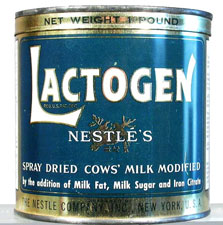
At around the same period, infant formulas were beginning to improve in quality and producers, most notably Nestlé, began to promote them as a healthy – even the healthier – and clean alternative to breast feeding. Nestlé is credited – rightly or wrongly – with the invention of formula milk in 1867. The popularity of powdered baby milk only began to grow during the 1940s and 1950s. Nestlé promoted Lactogen through recipe books, pamphlets, and free samples. Problematically, these were usually distributed at hospitals and clinics – at precisely the places where women would be taught how to breastfeed. By the middle of the twentieth century in the west, it was increasingly the norm for babies to be bottle fed.

I don’t particularly want to address the fraught debate over whether women should breastfeed or not. I am, though, interested in the politics of bottle feeding in the developing world, where big companies – like Nestlé – have promoted formula assiduously since the 1950s. Here, the issue with bottle feeding is not so much the quality of the formula, but the fact that it’s mixed with dirty water or fed to babies in unsterilized bottles. Also, many of the women who use formula can’t afford it, so they water it down, meaning that their children don’t receive adequate nutrition.

In 1974, War against Want published a pamphlet accusing Nestlé of profiting from the deaths of millions of children in poor countries. Three years later, an international boycott of Nestlé began, causing the World Health Organisation to proscribe the promotion of Lactogen and other formulas in its 1981 International Code for the Marketing of Breast Milk Substitutes.

But the Code has been poorly policed, and even in developed nations, compliance has been slow. In Australia, for instance, the advertising of baby milk powders only ended in the mid-1990s. There is much evidence to suggest that Nestlé and others continue the practice, albeit under different guises. In the United States, for instance, the Special Supplemental Nutrition Programme for Women, Infants and Children (WIC) distributes more than half the formula sold in the US every year. Companies provide this formula to the WIC at a discount.

All over the world, governments are endorsing breastfeeding in the first six months of life as the best – the healthiest and the cheapest – way of feeding a baby. Companies like Nestlé are actively undermining this, despite the best intentions of the WHO. The implications of the continued use of formula in the developing world are devastating:

According to Save the Children… infant mortality in Bangladesh alone could be cut by almost a third – saving the lives of 314 children every day – if breastfeeding rates were improved. Globally, the organisation believes, 3,800 lives could be saved each day. Given that world leaders are committed to cutting infant mortality by two thirds by 2015 as one of the Millennium Development Goals, protecting and promoting breastfeeding is almost certainly the biggest single thing that could be done to better child survival rates.

A few weeks ago I wrote a post which criticised the World Food Programme’s decision to go into partnership with a range of exceptionally dodgy multinationals – Cargill, Vodafone, Unilever, Yum!Brands – to reduce world hunger. I really don’t have anything against public/private partnerships, and am an enthusiastic supporter of corporate social responsibility (when it’s done well, though). But it’s deeply concerning that the WFP is providing unwitting PR to a group of particularly nasty businesses.

In a recent article for the Guardian, Felicity Lawrence discusses growing concern about big food companies’ decision to shift their focus to developing markets:

As affluent western markets reach saturation point, global food and drink firms have been opening up new frontiers among people living on $2 a day in low- and middle-income countries. The world’s poor have become their vehicle for growth.

SABMiller, Unilever, and Nestlé have developed campaigns to target poorer markets:

The companies say they are finding innovative ways to give isolated people the kind of choices the rich have enjoyed for years and are providing valuable jobs and incomes to some of the most marginalised. But health campaigners are raising the alarm. They fear the arrival of highly processed food and drink is also a vector for the lifestyle diseases, such as obesity, diabetes, heart disease and alcoholism, which are increasing at unprecedented rates in developing countries.

This is Nestlé’s strategy in Brazil:

Nestlé’s floating supermarket took its maiden voyage on the Amazon last year and has been distributing its products to around 800,000 isolated riverside people each month ever since. Christened Nestlé Até Você, Nestlé comes to you, the boat carries around 300 branded processed lines, including ice creams, and infant milk , but no other foods. The products are in smaller pack sizes to make them more affordable. The boat also acts as a collection point for the network of door-to-door saleswomen Nestlé has recruited to promote its brands. Targeting consumers from socioeconomic classes C, D and E is part of the company’s strategic plan for growth, it says. Nestlé has also set up a network of more than 7,500 resellers and 220 microdistributors to reach those at the bottom of the pyramid in the slums of Rio and São Paulo and other major Brazilian cities.

Even if Nestlé does respect the terms of the International Code for the Marketing of Breast Milk Substitutes, and I hope it does, not only is it selling unhealthy processed non-foods, but it also gains legitimacy via its partnership with…the United Nations. Earlier this year, Nestlé supported the UN’s ‘Every Woman Every Child’ initiative, which aims to improve child and maternal health. So an organisation implicated in contributing to the high rate of child mortality in the developing world, and in facilitating a global obesity epidemic, is working with the UN…to improve child health.

Merry Christmas.

Further Reading

Texts quoted here:

Thomas Bull, The Maternal Management of Children, in Health and Disease (London: Longman, Orme, Brown, Green, and Longmans, 1840).

Christina Hardyment, Dream Babies: Childcare Advice from John Locke to Gina Ford. Revised ed. (London: Frances Lincoln, 2007).

Virginia Thorley, ‘Commercial Interests and Advice on Infant Feeding: Marketing to Mothers in Postwar Queensland,’ Health and History, vol. 5, no. 1 (2003), pp. 65-89.

Other sources:

Linda Bryder, ‘Breastfeeding and Health Professionals in Britain, New Zealand and the United States, 1900-1970,’ Medical History. vol. 49, no. 2 (2005), pp. 179-196.

Linda Bryder, ‘From breast to bottle: a history of modern infant feeding.’ Endeavour, vol. 33, issue 2 (June 2009), pp. 54-59.

Linda Bryder, Not Just Weighing Babies: Plunket in Auckland, 1980-1998 (Pyramid Press, Auckland, 1998).

S.E. Duff, ‘What will this child be? Children, Childhood, and the Dutch Reformed Church in the Cape Colony, 1860-1894’ (PhD thesis, Birkbeck, University of London, 2010).

Nancy Rose Hunt, ‘“Le Bebe en Brousse”: European Women, African Birth Spacing and Colonial Intervention in Breast Feeding in the Belgian Congo,’ The International Journal of African Historical Studies, vol. 21, no. 3 (1988), pp. 401-432.

Creative Commons License Tangerine and Cinnamon by Sarah Duff is licensed under a Creative Commons Attribution-ShareAlike 3.0 Unported License.

Foodie Pseudery (12)

Jeffrey Steingarten is probably best known for his recent sweaty-palmed ode to Gwyneth Paltrow. But as Vogue‘s food writer, he’s a fine figure of a pseud. This is from an article about what he eats in a week:

We had a guest from India. He’s quite old and he’s a very particular eater, so we went to ABC Kitchen for dinner. And he asked me, ‘Obviously the chef didn’t have to do much to the ingredients, so why do you need a good chef?’ I tried to explain how the cooking was not as simple as he thought it was, it just looks simple. We had many dishes: the Jersey tomato on bread, certainly the squash that’s sautéed with Parmesan.

I salute you, elderly, picky Indian guest.

Food Links, 23.11.2011

Food posters from the past.

The Key Sandwich Personalities survey.

How to make sushi.

Beer and butchers in the United States.

A short introduction to the bunny chow.

A retrospective of Sainsbury’s own label food packaging. (Ok, so most of it is food packaging.)

What should you do with invasive plants? Eat them.

The toast sandwich. (Thanks, Melissa!)

A brief history of that most bizarre of American culinary traditions, the sweet potato and marshmallow casserole.

Mark Bittman waxes lyrical on brown rice.

Liverpool opens its first dry bar.

More than three quarters of the honey sold in the United States doesn’t contain…honey.

How to make your own bitters.

Shark fin soup may be removed from menues permanently.

Michael Pollan’s Food Rules has been re-issued, now with beautiful illustrations. (Thanks Ester!)

Eating a traditional Mongolian feast.

Are apps making recipe books obsolete? (With thanks to Dan Kemp.)

A Christmas pudding survives the South African War.

Ultra-processed food.

Harvesting brown sugar in Mauritius.

White Food

Public service announcement: The National Assembly is due to vote on the Protection of State Information Bill on Tuesday, 22 November. Please wear black to show your opposition to the Bill, and join the Right2Know Campaign’s protests against this Draconian piece of legislation. (If you’d like to know more about the Secrecy Bill, check out this post I wrote for FeministsSA.)

One of my favourite places in London is Exmouth Market. It was about a five-minute walk from my amazing hall of residence in Bloomsbury, and its street food – some of the best in the UK, apparently – made a pleasingly delicious lunch from time to time. Its book shop, Clerkenwell Tales, is also excellent.

I think, though, that Exmouth Market is best known as the sometime home of Brindisa, the Spanish delicatessen which is also based in Borough Market, and Moro, the restaurant which more-or-less introduced the cooking of Spain, North Africa, and the eastern Mediterranean to Britain. Having cooked from the first Moro recipe book, and having read a great deal about its founders, Sam and Sam Clark, I was curious about the restaurant itself, but I never went further than a detailed perusal of its menu: the place was simply far too pricey for my student budget.

Like so many of the young chefs who led the revolution in Britain’s eating habits during the 1990s and early 2000s, and this includes Jamie Oliver and Hugh Fearnley-Whittingstall, the Clarks had worked at the River Cafe. Founded by Ruth Rogers and Rose Gray, the restaurant was never intended to be more than a canteen for Rogers Stirk Harbour + Partners, the famous architectural firm run by Ruth’s husband, Richard Rogers. But it evolved into something more: into the first restaurant in Britain to emphasise the heavily regionalised and seasonal nature of Italian cuisine. The River Cafe imported Ligurian olive oil, cavolo nero, and Pecorino Romano to replicate the cooking of Italy in London.

It could be terribly precious and seemed to confuse eating ‘authentic’ Italian cuisine with some kind of food-based morality. The River Cafe recipe books exuded the restaurant’s self-righteousness, as Julian Barnes explains:

When the first River Cafe Cook Book came out – the blue one – it drew high praise followed by a certain raillery. Some felt they were having a lifestyle package thrust at them; some felt the emphasis on just this kind of olive oil and just those kinds of lentils was a little discouraging. As James Fenton put it in the Independent at the time: ‘I’ve been picking it up and putting it down for weeks now. I can’t say I’ve actually cooked anything from it. More, what I’m doing is deciding whether I can live up to its exacting standards.’

As many pointed out, the food served by the River Cafe, Moro, and others, is, essentially, peasant food. There is something deeply – and amusingly – ironic about the lefty middle classes (and the River Cafe had a deserved association with the rise of New Labour) paying through the nose to eat bread and cabbage soup, a range of cheap cuts of meat, and polenta.

Polenta is a staple of northern Italy and for all its association with the sophisticated eating of the 1990s, it’s really only cornmeal – or maize– or mielie meal, as we’d call it in South Africa. Partly because of the endless variety of the maize plant, cornmeal comes in both yellow and white and can be ground as finely or as coarsely as tastes demand. In fact, the difference between the yellow, medium-ground cornmeal used to produce polenta or the finer-textured yellow flour for cornbread from the American south, and the fine, white cornmeal favoured for mielie pap in South Africa is minimal.

People’s preferences for yellow or white cornmeal are, then, culturally determined. A recent article published by the magnificent Mail and Guardian explores South Africa’s taste for whiter, finer maize meal:

In the poorest communities a bag of maize meal is often the only way of satisfying a family’s hunger, and the cost factor plays a role too. An 80kg bag of maize meal is about R400: on a 500g portion a person a day, an extended family of 10 people would consume an 80kg bag in about 16 days. The daily total consumption of maize meal in South Africa is about 10 000 tonnes.

But these maize-meal consumers demand a product that is white – stripped of roughage and nutrients – and manufacturers have remodelled their businesses to serve this demand.

South Africa’s best-selling brand of maize meal is White Star, produced by Pioneer Foods. White Star is whiter and finer than other brands. Premier Foods and Tiger Brands, the country’s other two big producers of maize meal, have also invested in technology which produces this whiter maize meal.

In the pursuit of whiteness, the big millers began installing new-generation degerminators about a decade ago. In the grinding process, the degerminator extracts the greyish germ of the maize, which contains oil and other nutrients. The more of the germ extracted, the whiter and blander the end product.

Maize meal that has the least germ extracted is called ‘unsifted’; moving up the scale it becomes ‘sifted’, ‘special’ and ‘super’. Unsifted and sifted maize-meal products have been discontinued by the bigger millers. ‘Super’ is generally defined by millers as having less than 1% oil and it almost exclusively consists of the starchy endosperm. Degerminators were originally expensive technology used only by large mills, but today even relatively small maize millers have them.

The latest development in the quest for greater whiteness is colour-sorting machines, which examine every grain of maize and remove any discoloured (non-white) grain. …

A manager at Premier Foods’ Kroonstad mill, the largest in the world, said there might nevertheless still be some discoloured specks in the final product, which happened when the seed was white on the outside but had discolouration within.

Removing the germ from the maize meal means that it tastes blander and has a longer shelf life (the germ contains oil which goes off quickly). It also means that the meal is considerably less nutritious – even though South African millers do fortify maize meal and wheat flour with vitamins A, B1, B2, and B6, as well as niacin, folic acid, iron, and zinc. And what happens to the discarded germ? It goes into cattle feed, rendering animal feed more nutritious than human food.
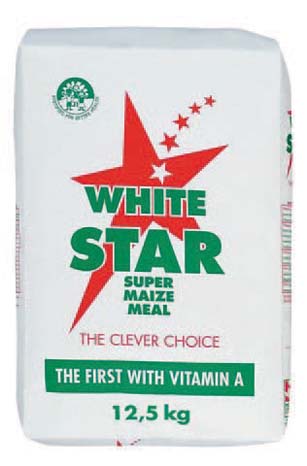
This demand for white food is neither particular to South Africa – there is a similar trend in Mexico, for instance – nor is it a recent phenomenon. Historically, food that is white – white bread, white sugar, white rice, or white maize meal – is more expensive to produce because it needs to be processed in order to rid it of those impurities or elements which cause it to be darker in colour. white food is associated with wealth and luxury.

The coming of industrialised food production caused an increase in the scale of the adulteration of food to make it go further or seem more appealing. As a result of this, whiteness was associated increasingly with purity. Ironically, though, food producers used poisonous additives like caustic lime to make bread and other products whiter.

The production of food in factories also reduced its price, and this was particularly noticeable for highly processed products like white sugar and white flour. Now produced on a mass scale, even the very poor could afford to drink white sugar in their tea. Indeed, white bread and sugar came to be seen as ‘affordable luxuries’ from the end of the nineteenth century and into the twentieth. These were comforting, ‘special’ items which could make an already meagre diet seem more luxurious. George Orwell wrote in The Road to Wigan Pier (1937):

The miner’s family spend only tenpence a week on green vegetables and tenpence half-penny on milk (remember that one of them is a child less than three years old), and nothing on fruit; but they spend one and nine on sugar (about eight pounds of sugar, that is) and a shilling on tea. The half-crown spent on meat might represent a small joint and the materials for a stew; probably as often as not it would represent four or five tins of bully beef. The basis of their diet, therefore, is white bread and margarine, corned beef, sugared tea, and potatoes – an appalling diet. Would it not be better if they spent more money on wholesome things like oranges and wholemeal bread…? Yes, it would, but the point is that no ordinary human being is ever going to do such a thing. The ordinary human being would sooner starve than live on brown bread and raw carrots. And the peculiar evil is this, that the less money you have, the less inclined you feel to spend it on wholesome food. A millionaire may enjoy breakfasting off orange juice and Ryvita biscuits; an unemployed man doesn’t. … When you are unemployed, which is to say when you are underfed, harassed, bored, and miserable, you don’t want to eat dull wholesome food. You want something a little bit ‘tasty’. There is always some cheaply pleasant thing to tempt you. Let’s have three pennorth of chips! Run out and buy us a twopenny ice-cream! Put the kettle on and we’ll all have a nice cup of tea! … White bread-and-marg and sugared tea don’t nourish you to any extent, but they are nicer (at least most people think so) than brown bread-and-dripping and cold water. Unemployment is an endless misery that has got to be constantly palliated, and especially with tea, the English-man’s opium. A cup of tea or even an aspirin is much better as a temporary stimulant than a crust of brown bread.

In the same way, in the midst of rising food prices and a stagnating job market, South Africa’s poor buy white, fine maize meal.

However, there does seem to be a surprising shift in bread sales, as lower-income consumers appear to be buying more brown bread – as opposed to the white bread they usually favour. This, though, is probably due to the fact that brown bread costs less because it’s exempted from value-added tax. This is a change caused by necessity rather than a new set of ideas around white or brown bread.

As Orwell makes the point, it’s the association of comfort with particular kinds of food which renders them more attractive – even if a diet rich in white sugar and white bread is not at all healthy. A combination of education, affluence, and a new set of values which associate unprocessed, ‘whole’ food – wholegrain bread, whole wheat flour, brown or wild rice, and sticky brown sugar – cause the middle classes to favour products which are overwhelmingly more nutritious.

It is infinitely strange that former peasant food – like polenta – should be sold at a premium to the middle classes at restaurants, while those who are poor prefer white maize because of an association with luxury and wealth. If we are to encourage more people to eat better, it’s clear that we need to lower the prices of ‘whole’ foods. But changing people’s buying habits is related more to a set of cultural assumptions about whiteness than to cost or even knowledge about their nutritional value.

Further Reading

Sources cited here:

Julian Barnes, The Pedant in the Kitchen (London: Atlantic, 2003).

Warren Belasco, Meals to Come: A History of the Future of Food (Berkeley: University of California Press, 2006).

Sidney W. Mintz, Sweetness and Power: The Place of Sugar in Modern History (New York: Penguin, 1985).

George Orwell, The Road to Wigan Pier (London: Gollancz, 1937).

Lorine Swainston Goodwin, The Pure Food, Drink, and Drug Crusadors, 1879-1914 (Jefferson: McFarland & Co., 1999).

Other sources:

Joyce Appleby, The Relentless Revolution: A History of Capitalism (New York: WW Norton, [2010] 2011).

Warren Belasco and Philip Scranton (eds.), Food Nations: Selling Taste in Consumer Societies (New York: Routledge, 2002).

Jack Goody, ‘Industrial Food: Towards the Development of a World Cuisine,’ in Cooking, Cuisine, and Class: A Study in Comparative Sociology (Cambridge: Cambridge University Press, 1982), pp. 154-174.

Harvey A. Levenstein, ‘The Rise of the Giant Food Processors,’ Revolution at the Table: The Transformation of the American Diet (New York: Oxford University Press, 1988), pp. 30-87.

Anne EC McCants, ‘Poor consumers as global consumers: The Diffusion of Tea and Coffee Drinking in the Eighteenth Century,’ Economic History Review, vol. 61 (2008), pp. 172-200.

Sidney W. Mintz, ‘Sweet, Salt, and the Language of Love,’ MLN, vol. 106, no. 4, French Issue: Cultural Representations of Food (Sep., 1991), pp. 852-860.

Sidney W. Mintz, Tasting Food, Tasting Freedom (Boston: Beacon Press, 1996).

James Walvin, Fruits of Empire: Exotic Produce and British Taste, 1660-1800 (Basingstoke and London: Macmillan, 1997).

Creative Commons License Tangerine and Cinnamon by Sarah Duff is licensed under a Creative Commons Attribution-ShareAlike 3.0 Unported License.

Foodie Pseudery (11)

The best food writing knows not to take itself too seriously. Calvin Trillin is amazing precisely because he understands that his various food obsessions are just that: personal enthusiasms for food that others may not enjoy as much as he does. He knows and cares a great deal about food, but wears this expertise and enthusiasm lightly.

It’s with great sadness, then, that I must include Michael Pollan, one of my food heroes, in this series. He has written many sane, sensible things about food. But the following is neither sane nor sensible. It’s from an astonishingly humourless article published in the New York Times titled ‘The 36-Hour Dinner Party‘, in which Pollan describes a series of meals cooked in a wood-fired oven kept blazing over a day and a half. It is a pompous and self-important piece of writing: you’d be forgiven for thinking it was about a religious experience.

8:30 a.m. The core group reassembles in the backyard for breakfast. Mike has coaxed the fire in the oven back to life. I’m starting to think of the fire as a creature with its own moods and appetites; now it needs to be fed. Chad has kindled a second fire in the pit and is toasting slices of yesterday’s bread. Melissa, meanwhile, has prepped an unexpectedly intricate yet goat-free breakfast: in individual clay pots, she arranged sautéed porcini on a bed of blanched amaranth greens picked from Mike’s garden. Over that, she cracked an egg and drizzled some cream. The pots go into the oven for several minutes, and when they come out she gives each a dollop of green-tomato chutney and dusts them with dukkah, an Egyptian spice-and-nut blend. … One of the best bites of the weekend, if not of all time, is of a slice of Chad’s toast spread with Mike’s cheese and Jenny’s apricot jam and then liberally sprinkled with dukkah. It takes a village to make some toast, apparently, but this is one sublime piece of toast.

9:38 a.m. We’re still at the breakfast table when Mike starts pouring glasses of Vouvray to mark the 24 hours that have passed since we lighted the fire. By now, having shared so much eating and drinking and cooking, everyone feels comfortable enough not to have to talk; we’ve all entered the same psychological space.