Skip to content

Food Links, 20.04.2011

Annia Ciezaldo investigates what a ‘Mediterranean diet’ really is, and asks if actually exists (particularly in the Mediterranean).

Jay Rayner reviews Gordon Ramsay’s revamped Savoy Grill.

Big food companies lobby the US government in the same way as the tobacco and gun industries. This article exposes the tactics of the American Beverage Association, the lobbying arm of the country’s softdrink companies.

Tom Philpott discusses the recent report by Bon Appetit on the conditions of farm labourers in the US.

Anna Lappe encourages consumers to pressure governments to fund sustainable, climate-friendly agriculture.

I’m fascinated by the American counter-culture movement’s enthusiasm for ‘whole’ food and sustainable agriculture during the 1960s and 1970s. Melissa Coleman has written what sounds like a riveting memoir of growing up on her parents’ pioneering organic farm. (Her father, Eliot Coleman, is something of an organic guru. Yes, I chose ‘guru’ deliberately.)

GOOD provides a useful guide to the best metaphors invented by British restaurant critics.

‘for all its monuments to material consumption, this town is a culinary desert or, perhaps more accurately, parking lot’ – Nic Dawes eviscerates the Joburg restaurant scene.

Food Links, 13.04.2011

Civil Eats has produced another amazing infographic – this time charting how American diets have become progressively more calorific since the 1970s.

Lester Brown writes that we need close to 150 million tons of wheat to restore some semblance of stability in the world grain market.

Michael Bomford suggests that eating heavily processed food is more damaging to the environment than flying or shipping food thousands of kilometers around the world.

How does food reflect Britain’s social divide?

The UN confirms that eco-farming could feed the world.

It would seem that hipsters are moving in to farming too. (I keep imagining goats in skinny jeans.)

Matthew Norman‘s restaurant reviews remain the only reason to read the Telegraph.

The Guardian reports on the most incredible dirt-themed banquet created by ‘jellymongers’, Bompas and Parr.

Be Modern: Worship Food?

On Monday evening I watched the first episode of the latest series of Australian MasterChef to be broadcast in South Africa. The previous series was so wildly popular here that I was interested to see what the fuss was about. Based on the latest incarnation of the MasterChef franchise in the UK, over the course of a few weeks the programme whittles down a group of fifty aspiring cooks to a four or five finalists who are put through a series of challenges – working a shift in a hotel kitchen, recreating a chef’s impossibly complicated signature dish (I hate the term) – until only one contestant emerges triumphant. It’s fun, self-important, and utterly ridiculous.

And then, towards the end of this first episode of season two, an audience of at least sixty intelligent adults applauded a pavlova.

A pudding consisting of egg whites, sugar, vinegar, and vanilla received a round of applause. I mean, I lecture three times a week and I’m never applauded.

Donna Hay's adored pavlova

I love pavlova and the MasterChef version – baked and unveiled by Donna Hay – looked fantastic, and I really don’t have much against reality TV shows (I can’t – I was once badly addicted to the second series of My Restaurant Rules.) And, to be fair, to accuse MasterChef of not being adequately realistic would be to miss the point. The British version is hosted and judged by two middle-aged men who yell things like ‘Cooking doesn’t get tougher than this!’ at the camera. It’s a competition and no attempt to train a new generation of chefs. But the round of applause and the reverence for a pudding struck me as being more than silly. It was, in fact, too serious.

MasterChef is like many other reality shows: it judges contestants on their ability at a particular skill. This skill can be anything – from fashion design to hairdressing – because it’s secondary to the format of the programme. It’s the vehicle for television series which are, essentially, talent shows, but on a more elaborate and glamorous scale. The adulation of the pavlova undermined this format. All of a sudden, the focus of that episode of MasterChef shifted from the contestants to the food.

Am I overreacting? Probably. But not without reason. Earlier that day I had read an article written by Angela Carter in 1984 for the London Review of Books, in which she reviewed The Official Foodie Handbook by Ann Barr and Paul Levy, Elizabeth David’s An Omelette and a Glass of Wine, and Alice Waters’s Chez Panisse Menu Cookbook. While she acknowledged that the Foodie Handbook was meant to lampoon middle-class ‘foodies’, it is was one of a series of guides – like the Sloan Ranger and Yuppie handbooks – to middle-class living which, she felt, walked an uneasy line between guide and satire. Writing about the Preppy Handbook she noted:

The book was an ill-disguised celebration of the snobbery it affected to mock and, under its thinly ironic surface, was nothing more nor less than an etiquette manual for a class newly emergent under Reaganomics. It instructed the nouveaux riches in the habits and manners of the vieux riches so that they could pass undetected amongst them. It sold like hot cakes.

Along with David and Waters, the authors of the Foodie Handbook elevate the preparation and eating of food to a rarefied art form only done ‘properly’ by those educated and sensitive enough truly to understand cooking. The book advised its readership: ‘Be modern: worship food!’ Carter was, like Jay Rayner and Anthony Bourdain, particularly scathing of Alice Waters:

Alice Waters [serves] a Franco-Californian cuisine of almost ludicrous refinement, in which the simplest item is turned into an object of mystification. A ripe melon, for example, is sought for as if it were a piece of the True Cross. Ms Waters applauds herself on serving one. ‘Anyone could have chosen a perfect melon, but unfortunately most people don’t take the time or make an effort to choose carefully and understand what that potentially sublime fruit should be.’ She talks as if selecting a melon were an existential choice of a kind to leave Jean-Paul Sartre stumped.

She concludes, gloriously:

Ms Waters has clearly lost her marbles through too great a concern with grub, so much so that occasionally ‘Alice Waters’ sounds like a pseudonym for S.J. Perelman. ‘I do think best while holding a tomato or a leg of lamb,’ she confides. For a person of my generation, there is also the teasing question: could she be the Alice, and ‘Chez Panisse’ the real Alice’s Restaurant, of the song by Arlo Guthrie? And if this is so, what does it prove?

Carter bases much of her criticism of the Foodie Handbook, Waters, and Elizabeth David on the grounds of insensitivity: how is it possible to be so precious about food, she asks, when so many people go without? I agree that there is something profoundly wrong with a world where some populations have so much food that they feel that they should spend a day searching for the perfect watermelon, while others starve or are reliant on the tender mercies of aid organisations.

We have, though, always imbued food with meaning. Food provides nourishment, but it also carries with it a range of assumptions, symbols, and signs which are occasionally as important as its primary function. When Spanish missionaries in sixteenth-century Mexico refused to celebrate communion using maize, instead of wheat, wafers, they did so purely on the grounds that wheat, an imported crop, represented Europe and, thus, civilisation. Similarly, when well-meaning lady food reformers attempted to ‘Americanise’ the cuisine of recent immigrants to the United States during the 1920s, they did so because the cooking of Italy, Poland, and Ireland was seen as less ‘civilised’ than that prepared by white, Protestant Americans.

Pears' Soap - The White Man's Burden

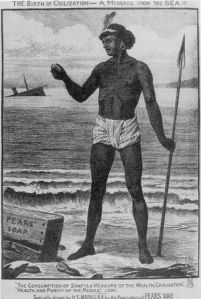
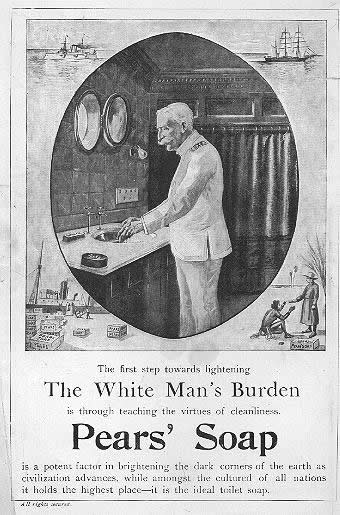
There is a difference, though, between the association of food with civilisation and cultural superiority and giving a round of applause to a pavlova – or, indeed, to a melon. In Imperial Leather: Race, Gender, and Sexuality in the Colonial Context (1995), Anne McClintock examines the ways in which Victorian advertisers used images of empire to sell their products. Pears, the soap manufacturers, produced a series of advertisements which implied that soap was somehow connected to the success of British imperialism. In one of their best known ads from the early 1890s, a sea captain – surrounded by images of travel and conquest – is depicted washing his hands in his ship. It’s captioned: ‘The first step towards lightening the white man’s burden is through teaching the virtues of cleanliness.’ Another titled ‘The Birth of Civilisation’ is of an African man holding aloft a bar of soap which has floated ashore after a shipwreck.

This campaign crudely linked cleanliness – long associated with being ‘civilised’ – with the civilising mission. Colonised people, suggested Pears, could be made European by a bath with Pears soap. In the first volume of Capital (1867), Karl Marx began to develop the idea of ‘commodity fetishism’ to explain the kind of ‘magical’ attraction and meaning which commodities – ordinary, manufactured objects – seem to exude. He argued that a range of meanings – which are socially and culturally inflected and which change over time – are attached to commodities. Capitalism encourages people to confuse the utility of the object and social meanings – this is what Marx called ‘commodity fetishism’. In other words, objects take on meanings to the extent that they assume a kind of independence from their utility. The purpose of soap was no longer to clean bodies and clothes, but, rather, to civilise.
Pears' Soap - the Birth of Civilisation

A similar process occurred with the pavlova on MasterChef: it was no longer simply a pudding, but, rather, representative of success and good taste. When one of the contestants in the final round produced what she thought would be a bad pavlova, she collapsed in tears and refused to continue. It was as if it was she – rather than her ability to bake a pudding – who was being tested. When Alice Waters hunted for the perfect melon, she was not only seeking out a fruit, but also an object which embodied what she believed to be her goodness and moral superiority.

I wouldn’t be writing this post if I thought that this strange affliction was limited to Californian chefs and anxious Australians. Look at food magazines and food programmes: aimed at middle-class audiences, they conflate being able to cook well and to eat good – whole, organic, humanely reared – food with being good, successful, and environmentally and socially responsible. I have absolutely nothing against farmers’ markets, artisan bakers, small-scale farmers, co-operative supermarkets, and organic grocers – in fact, I think that they’re helping to create new ways of thinking about food – but I am deeply concerned when their produce is no longer thought of simply as food, but becomes a marker of middle-class morality.

This form of commodity fetishism is limiting: it associates good food with class and wealth. It encourages those who consume this food to think only about the product which they buy, and not to consider the complex processes which brought that piece of cheese or that steak to their deli or supermarket. It also mystifies the production, preparation, and eating of food. If we are to become more careful eaters – and more aware of how our eating habits impact on the world around us – we need to see food as food: as a product which is fundamental to life and which all people have a right to eat.

Further Reading

Texts quoted here:

Donna R. Gabaccia, We are what we eat: Ethnic food and the making of Americans (Cambridge MA: Harvard University Press, 1998).

Karl Marx, Capital: Capital: A Critique of Political Economy, vol. I, trans. Ben Fowkes (New York: Penguin, [1867] 1990).

Anne McClintock, Imperial Leather: Race, Gender and Sexuality in the Colonial Context (New York and London: Routledge, 1995).

Jeffrey M. Pilcher, ¡Que vivan los tamales! Food and the Making of Mexican Identity (Albuquerque: University of New Mexico Press, 1998).

Other sources:

Timothy Burke, Lifebuoy Men, Lux Women: Commodification, Consumption, and Cleanliness in Modern Zimbabwe (London: Leicester University Press, 1996).

Hasia Diner, Hungering for America: Italian, Irish, and Jewish Foodways in the Age of Migration (Cambridge: Harvard University Press, 2001).

Yves Péhaut, ‘The Invasion of Foreign Foods,’ in Food: A Culinary History from Antiquity to the Present, eds. Jean-Louis Flandrin and Massimo Montanari, English ed. by Albert Sonnenfeld (New York: Columbia University Press, 1999), pp. 457-470.

<a rel=”license” href=”http://creativecommons.org/licenses/by-sa/3.0/”><img style=”border-width: 0;” src=”http://i.creativecommons.org/l/by-sa/3.0/88×31.png&#8221; alt=”Creative Commons License” /></a>
Tangerine and Cinnamon by <a rel=”cc:attributionURL” href=”https://tangerineandcinnamon.wordpress.com/”>Sarah Duff</a> is licensed under a <a rel=”license” href=”http://creativecommons.org/licenses/by-sa/3.0/”>Creative Commons Attribution-ShareAlike 3.0 Unported License</a>.

Creative Commons License
Tangerine and Cinnamon by Sarah Duff is licensed under a Creative Commons Attribution-ShareAlike 3.0 Unported License.


Food Links, 06.04.2011

Starting today, I’m going to post a weekly collection of interesting, food-related links. There’s simply so much around that I hope you’ll find this a useful digest. (So to speak.)

Robert Paarlberg disagrees that farm subsidies are connected to low food prices in the US, and argues that they’re not responsible for the country’s obesity crisis.

Civil Eats published this fantastic infographic mapping how much of its income the population of each country spends on food. (I discuss this post here too.)

It seems that Jamie Oliver’s excellent school dinners campaign is coming unstuck. I really, really don’t understand why spending money on feeding children good, nutritious food should be controversial.

After the Guardian‘s prank, this is my favourite April Fools Day post for 2011.

Mark Bittman fasts for four days.

Jay Rayner reviews Modernist Cooking by Nathan Myhrvold and Chris Young, and weighs up the usefulness of cooking sous vide.

The evidence that sustainable farming will be able to feed the world continues to grow.

And because this blog has developed something of a sheep fixation, lambing season has begun in the UK.

When Abundance is Too Much

I was in London last week and bought myself a copy of Marion Nestle’s Food Politics (2007), a fantastic account of how America’s powerful food industry shapes the ways in which Americans eat and think about food. She argues that the food industry uses a range of strategies systematically to confuse the public into thinking that the processed offerings produced by Heinz, Unilever, and Kellogg are healthy, sensible things to eat. Of course, every food company does this – from the smallest, most down-homey organic business to the biggest, nastiest multinational – but in the US, the food lobby, which works along the same lines as the tobacco and gun lobbies in Washington DC, influences food policy to such an extent that the state has become complicit in encouraging Americans to eat fatty, sugary foods.

Serendipitously, I also came across this infographic which shows what proportion of their incomes people all over the world spend on food per year. It reveals a very strong correlation between development and food prices: populations of wealthier countries spend a smaller percentage of their wages on food than do those in poorer nations. In Western Europe, for example, the Irish spend the least (7.2%) and the Portuguese the most (15.8%) on food. This rises to 20.3% in Poland – slightly more than South Africa at 19.8%. The populations of middle-income countries – like South Africa, Brazil, Mexico, Turkey – tend to spend between twenty and thirty per cent of their budgets on food. Indonesians (43%), Algerians (43.8%), and Belarusians (43.2%) spend the most – although the map doesn’t include information for most of Africa. And the population which spends the least on food? Americans, at 6.9% of their incomes.

America has such low food prices because of the strength of its food industry. Controlling every aspect of the food chain – from the farms that produce meat and plants for consumption, to the provision of transport and packaging – the size and efficiency of food companies have driven down food prices, resulting in an overabundance of cheap food. In what Harvey Levenstein has dubbed the ‘paradox of plenty’, this variety and cheapness of food has led to less, not more, healthy patterns of consumption: Americans now eat more meat and dairy products than ever before – food which is labour- and resource-intensive to produce and which, until recently, was expensive to buy.

The association of meat and dairy with prosperity has led to concerns about China and India’s increasing consumption of these foods in the context of rising food prices globally. (Myself, I think that rocketing food prices have more to do with the oil price, climate change, and the deregulation of commodity derivatives markets than with greater meat consumption in the East. I wonder to what extent this is part of a ‘blame China’ trend?) But all over the world, experts agree that one way of improving food security is for us to eat less meat and fewer dairy products. As Michael Pollan put it in his food mantra: ‘Eat. Mostly plants. Not too much. Not too little.’

Much of the debate around what we should eat seems to imply a return to healthier, more sustainable eating patterns. While it’s certainly true that populations in the West consume more calories now than they did even thirty or forty years ago, and that eating less meat would be better both for us and the planet, I’m not entirely sure if looking to the past is always helpful. After all, my mongrel collection of ancestors scattered around seventeenth- and eighteenth-century Europe and southern Africa were physically smaller than I am and lived shorter lives partly because their diets were less varied, less plentiful, and, importantly, less protein-filled than mine.

I think we could, though, take a closer look at the menus of the nineteenth and twentieth centuries. If we need to cut down on our consumption of meat and dairy, it’s surprising to read that the teachers and pupils at the Huguenot Seminary in Wellington ate ‘mutton every day’ (as I noted a fortnight ago). The American headmistresses longed for the steak they had grown up eating in New England, but agreed that beef was far too expensive in South Africa. Instead, they ate mutton, the meat of choice in the nineteenth-century Cape Colony: ‘We have roast mutton, mutton chops, mutton cutlets, mutton broth, mutton soup, and mutton frigadelle [sic], that is mutton chopped and mixed with bread crumbs and eggs and baked.’

Although meat-heavy, this was a menu organised around using leftovers: the Seminary bought whole sheep carcasses from the butcher and the school’s cook broke them down herself. She would serve roast mutton on Sunday, and then use up that which wasn’t eaten by transforming it into soup, broth, and rissoles. If needs be, she could supplement their diet with smaller cuts – like cutlets. This was a typical middle-class Victorian practice. Writing about Victorian recipe books, Judith Flanders notes:

Most weekly menu plans listed entirely new dinners only three days a week; the other four were made up of reheated food from previous days. … Mrs Beeton gave numerous recipes for recooking food, usually meat: her Scotch collops were reheated veal in a white sauce; her Indian Fowl was reheated chicken covered with a curry sauce; Monday’s Pudding was made with the remains of Sunday’s plum pudding; not to mention the recipes she gave for endless types of patty, potted meat and minced meat, all of which used cooked meat as their base.

This was both an economical way of ensuring that some meat – usually the sole form of protein – was served during each main meal, as well as relatively healthy: it reduced the amount of meat eaten by each person. Recipe books from the mid-twentieth century have a similar attitude towards menu-planning, providing recipes for ‘made-over meat dishes’.

In a time of plenty when we don’t need to transform last night’s leftovers into tonight’s supper, the idea of ‘made-over’ food may seem a little quaint. But I think that these Victorian menus can help us to rethink how we eat meat. I don’t suggest that we adopt the pattern of roast on Sunday and then reheated meat for the rest of the week (I think this would become pretty boring), but, rather, that we change our thinking about the place of meat in our meals. If we see it as only one component alongside starch and greens, then we’ll eat less of it and more of that which is really good for us. Also, it’s a sensible way of ensuring that even those who can’t afford to buy expensive cuts can include some meat in their cooking. I don’t agree that an entirely meat-free diet will save the planet. If we eat as we should farm – with most land given over to the cultivation of plants and only a small portion devoted to animals – then we’ll adopt a menu that’s as healthy for the planet as it is for us.

Further Reading

Texts quoted here:

S.E. Duff, ‘Head, Heart, and Hand: The Huguenot Seminary and College and the Construction of Middle-Class Afrikaner Femininity, 1873-1910’ (MA thesis, Stellenbosch University, 2006).

Judith Flanders, The Victorian House (London: Harper Perennial, 2003).

Harvey A. Levenstein, ‘The Perils of Abundance: Food, Health, and Morality in American History,’ in Food: A Culinary History from Antiquity to the Present, eds. Jean-Louis Flandrin and Massimo Montanari, English ed. by Albert Sonnenfeld (New York: Columbia University Press, 1999), pp. 516-529.

Marion Nestle, Food Politics: How the Food Industry Influences Nutrition and Health, revised ed. (Berkeley: University of California Press, 2007).

Other sources:

Warren Belasco and Philip Scranton (eds.), Food Nations: Selling Taste in Consumer Societies (New York: Routledge, 2002).

Roger Horowitz, Meat in America: Technology, Taste, Transformation (Baltimore: Johns Hopkins University Press, 2005).

Harvey A. Levenstein, Revolution at the Table: The Transformation of the American Diet (New York: Oxford University Press, 1988).

Michael Pollan, The Omnivore’s Dilemma (London: Bloomsbury, 2006).

Colin Spencer, The Heretic’s Feast: A History of Vegetarianism (Lebanon: University Press of New England, 1996).

Tristram Stuart, The Bloodless Revolution: Radical Vegetarians and the Discovery of India (London: Harper Press, 2006).

Creative Commons License
Tangerine and Cinnamon by Sarah Duff is licensed under a Creative Commons Attribution-ShareAlike 3.0 Unported License.
is away.

I’m away for this week, so I leave you with:

A fantastic post on identity, heritage and food from the Archival Platform.

A recipe for cinnamon buns from the amazing Nordic Bakery.

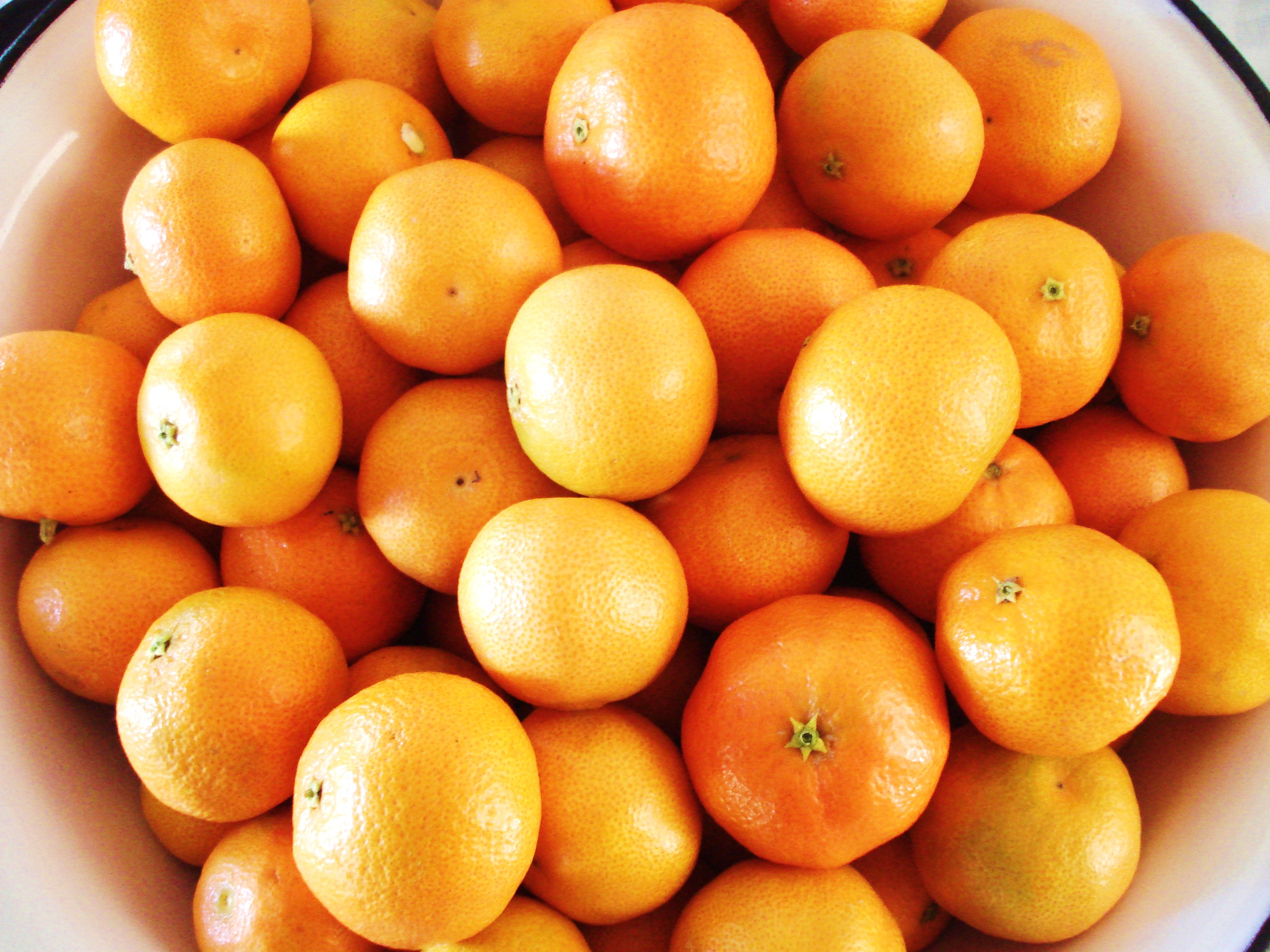
This picture:

And this song:

Creative Commons License
Tangerine and Cinnamon by Sarah Duff is licensed under a Creative Commons Attribution-ShareAlike 3.0 Unported License.

Mutton Every Day

In 1873, two American teachers, Abbie Ferguson and Anna Bliss, set out on a steamer from New York for the long journey to Cape Town. They had been hired as the joint founders and headmistresses of the Huguenot Seminary, a new girls’ school in Wellington. They settled in to the Boland Dutch-Afrikaans community – whose daughters were sent to Huguenot – easily, but found the diet trying. Writing to her family in Connecticut, Ferguson complained:

We live on mutton here. We have had beef here once since school commenced, but every other day mutton. We have roast mutton, mutton chops, mutton cutlets, mutton broth, mutton soup, and mutton frigadelle [sic], that is mutton chopped and mixed with bread crumbs and eggs and baked. You see we manage to get some variety…Still with so much fruit we do not mind the meat so much.

She and Bliss were amazed by the quality and variety of the Cape’s fruit, but Ferguson still longed for the steak and oysters of New England eating.

The most striking feature of this menu for contemporary readers is the predominance of meat, and particularly mutton. I’ll return to mutton and meat-eating (and the Seminary) in the future, but for now would like to consider, firstly, the significance of mutton in Cape cuisine, and, secondly, the Seminary pupils’ diet in the context of broader views on gender and food during the nineteenth century.

This was a diet closely linked to local produce. The Khoikhoi had kept fat-tailed sheep and traded these with European settlers since the seventeenth century. When the British took control of the Cape in 1806, there were about 1.5 million fat-tailed, non-woolled sheep in the colony. Merino sheep were introduced in the 1830s: there were 5 million sheep in 1855, 10 million in 1875, and 12 million in 1891.

Cattle stocks were lower and beef and cows’ milk more expensive as a result. The meat of choice in the Cape remained mutton: during the 1860 economic depression and drought people complained that ‘mutton was dear’. Travellers to the colony in the nineteenth century commented on the frequency with which they were served mutton at rural homesteads. Several commented on the toughness and fattiness of the meat, suggesting a link between the lack of sophistication of their meal and that of their hosts.

Beef was considerably more costly than mutton, and the pupils preferred the latter anyway. Dairy produce from cows was also prohibitively expensive: as in other households, the Seminary made its own vet (or sheep fat) by boiling the fat from sheep tails with a little salt, allowing the mixture to cool, and then shaping it into large cubes. The American teachers disliked vet and in 1874 bought a cow to supply milk – and by 1898, besides for a vegetable garden, a ‘large family of pigs’ and ‘200 fowls’, possessed ‘six or eight’ cows.

Eating mutton every day was not, then, unusual in the colony. The Seminary was a boarding school, and Ferguson and Bliss deliberately replicated the menus which their pupils would have had at home: at breakfast and supper, the girls drank tea and coffee, ate fruit, and, instead of butter, smeared sheep fat and moskonfyt on their bread; a typical lunch – the main meal of the day – consisted of soup, roasted, stewed, curried, or fried meat (usually mutton), three or four vegetables, rice, and pudding.

Their decision to fit into local eating customs rather than impose American habits was done partly to mitigate the effects of their pupils’ homesickness, but also because they believed this diet to be healthy. Both teachers noted how infrequently their pupils fell ill and their general strength and good health. I think most nutritionists – although concerned about the quantity of red meat and fat – would probably agree with Ferguson and Bliss. But – viewed in the context of international thinking on health and eating – this diet was deeply unusual for the period.

In Britain, most middle-class children and young women were fed a diet rich in bland carbohydrates, and very little else. Breakfast consisted mainly of porridge or bread and butter, and potatoes were served at all other meals. The novelist Compton Mackenzie remembered:

Nor did the diet my old nurse believed to be good for children encourage biliousness, bread and heavily watered milk alternating with porridge and heavily watered milk. Eggs were rigorously forbidden, and the top of one’s father’s or mother’s boiled egg in which we were indulged when we were with them exceeded in luxurious tastiness any caviar or pate de foie gras of the future. No jam was allowed except raspberry and currant, and that was spread so thinly that it seemed merely to add sweetish seeds to the bread.

While serving carbohydrates was cheaper than cooking protein and vegetables, this menu was also the product of Victorian thinking about fruit, vegetables and meat: vegetables were unwholesome unless well cooked, and fruit was ‘rather dangerous’ and only to be eaten occasionally, and particularly to relieve constipation. Meat also ‘disrupted’ delicate feminine digestive systems.

This was a view of food still strongly influenced by the ancient humoral system, which conceptualised the body as consisting of four ‘humours’ (blood, phlegm, and black and yellow bile) which needed to be kept in balance, and partly by diet. Some foods were believed to have particular influence over the humours: meat, spices, and highly-flavoured food for example, were supposed to ‘inflame’ the blood. The Victorians felt that easily ‘upset’ female bodies – and particularly young female bodies – should not be disturbed by too much meat and rich, flavourful food.

Of course, not all doctors and cooks advocated this, and not every Victorian family followed this advice. The Seminary’s pupils ate precisely the kind of food which some Victorian doctors deplored: it was meat- and fruit-heavy and characterised by spicy, tasty dishes. Huguenot’s menu – which met with the approval of the pupils’ parents – seems to indicate either that this thinking about food, gender, and health was limited to Britain, or that it was simply one diet promoted among many.

I think that this very brief analysis of Huguenot’s weekly menus demonstrates two things: firstly, the extent to which nineteenth-century diets were linked closely to local produce, and, secondly, that dietary fads were as much of a feature then as they are now.

Further Reading

Texts quoted here:

S.E. Duff, ‘Head, Heart, and Hand: The Huguenot Seminary and College and the Construction of Middle-Class Afrikaner Femininity, 1873-1910’ (MA thesis, Stellenbosch University, 2006).

Judith Flanders, The Victorian House (London: Harper Perennial, 2003).

William Beinart, ‘Counting Sheep,’ in The Rise of Conservation in South Africa: Settlers, Livestock, and the Environment 1770-1950 (Oxford: Oxford University Press, 2003), pp. 9-17.

Other sources:

William Beinart and JoAnn McGregor (eds.), Social History and African Environments (Oxford: James Currey, 2003).

Alfred W. Crosby, The Columbian Exchange: Biological and Cultural Consequences of 1492 (Westport: Greenwood Press, 1972).

S.E. Duff, ‘“Every Hope of a South African New Woman?”: From New Women to College Girls at the Huguenot Seminary and College, 1895-1910,’ in Girlhood: A Global History, eds. Jennifer Helgren and Colleen Vasconcellos (New Brunswick: Rutgers University Press, 2010).

S.E. Duff, ‘From New Women to College Girls at the Huguenot Seminary and College, 1895-1910,’ Historia, vol. 51, no. 1, May 2006, pp. 1-27.

S.E. Duff, ‘“Oh! for a blessing on Africa and America”: The Mount Holyoke System and the Huguenot Seminary, 1874-1885,’ New Contree, vol. 50, November 2005.

Elinor G.K. Melville, A Plague of Sheep: Environmental Consequences of the Conquest of Mexico (Cambridge: Cambridge University Press, 1997).

Creative Commons License
Tangerine and Cinnamon by Sarah Duff is licensed under a Creative Commons Attribution-ShareAlike 3.0 Unported License.
Inaugural Suppers

Last week’s post on feasting, thanksgiving, and national identities made me think about inaugural dinners. In the United States they’ve become not only a statement on the kind of administration the new president hopes to usher in, but also a reflection of the country’s concerns and preoccupations at that moment. They’re a kind of culinary state of the nation address. In an excellent article on inaugural suppers, Andrew F. Smith describes Franklin Roosevelt’s decision to choose a menu in keeping with wartime austerity. His cook

offered an austere, ration-conscious ‘ladies’ lunch’ of cold chicken salad, rolls (no butter), cake (no frosting) and coffee (no sugar). To make matters worse, some of the chicken had spoiled and had to be thrown out. George Jessel, the luncheon’s toastmaster, posed the question, ‘How is it humanly possible to make chicken salad with so much celery and so little chicken?’

With a nod to his folksy appeal to American voters, Bill Clinton’s menu was described as a ‘cross between a state dinner at the White House and a traditional Arkansas Raccoon Supper’. Barak Obama’s menu deliberately paid homage to Abraham Lincoln, whose reputation as a conciliator Obama hoped to emulate, and in commemoration of the bicentenary of Lincoln’s birth. Presumably, though, Obama didn’t intend to replicate the shambles of Lincoln’s own inaugural dinner.

Lincoln’s inaugural committee had planned a lavish midnight buffet for the inaugural ball: terrapin stew, leg of veal, beef a l’anglais, foie gras, pate, cream candies, fruit ices, tarts, cakes and more. The venue was the Patent Office, which had two spacious halls for dancing and dining. The buffet was set out in a corridor where patent models were displayed. When the grand supper was announced, after several hours of dancing, the crowd rushed the table and people began grabbing, pushing and stuffing themselves shamelessly. In a matter of minutes, the sumptuous buffet was a shambles – as were several of the patent exhibits.

Oh dear. We know that Obama’s lunch went well, but I’m more interested in the fuss that it caused. The menu was printed in newspapers and generated huge amounts of discussion – the Guardian even usefully provided recipes for the lunch.

It opens with a stew of sea scallops, shrimp, lobster and black cod in a cream sauce, baked in a terrine covered with a puff pastry…. Following that, the 230 guests will be served a winter veg medley of asparagus, carrots, brussels sprouts and wax beans, and a ‘brace of American birds,’ duck and pheasant…. For dessert, they’ll have a quintessentially American flavour, a cinnamon apple sponge cake.

I imagine that branches of Waitrose in north London were sure to stock up on scallops, lobster, cod, duck, pheasant, and heirloom apples before being inundated by enthusiastic Guardianistas recreating the President’s first lunch. This menu, with its emphasis on simple, unprocessed food harking back to homely, ‘honest’ meals based on seasonal, ‘whole’ produce suggests a presidency aware of the country’s economic crisis, and committed to responding to the concerns of ‘ordinary’ Americans.

A very quick internet search has revealed very little about South African inaugural dinners. Considering that since 1994, presidential inaugurations here are imbued with an incredibly strong symbolism, it’s odd that the only menu I could find was for Jacob Zuma’s inauguration in 2008. I wasn’t in the country at the time, but I can’t remember much fuss about his choice of dinner – and the same goes for the inaugurations of Nelson Mandela and Thabo Mbeki.

So this is what Zuma served:

Canapés

Cucumber topped with smoked snoek pate and lemon caviar.

Entree

Dullstroom trout wrapped in lettuce, citrus segments, lemon aioli, and dill served with an avocado salsa.

Palate Cleanser

Prickly-pear and fresh-ginger sorbet,

Main Course

A trio of meats: Peppered beef fillet, lamb cutlet, chicken breast stuffed with Peppadew, served with African dumplings and a thyme and berry sauce, spinach and steamed root vegetables.

Dessert

Mini malva pudding served with a chocolate potjie filled with tropical fruit, accompanied by slices of milk tart, finished off with a berry compote.

Well, ho hum. Putting together a menu for an occasion such as this, where the chef has to cater for a variety of dietary requirements is always tricky. Here, the caterers have played safe: the only recognisably South African dishes on the menu – malva pudding, milk tart, and snoek pate – are guaranteed crowd pleasers, and they’ve emphasised South African produce – Dullstroom trout, avocadoes, prickly pear, and Peppadews – rather than South African cuisines. The dumplings and spinach hint at traditional African cooking, and there are gestures towards Cape cuisine in the snoek pate and puddings. Otherwise, this is a menu that could be found in any half-decent restaurant anywhere in the world.

Fyndraai Restaurant at Solms Delta

I wonder if this hesitancy to embrace South African cooking – and we have lots of it – is connected to the fact that we’ve only recently begun to see local cuisines popping up in good restaurants. In the Cape, ‘traditional’ cooking remains the preserve of restaurants like the Volkskombuis in Stellenbosch and Cass Abrahams’s De Waterblommetjie at the Castle (now sadly closed). I like these restaurants and they’re really good at what they do (or did), but their cooking is of a time: it’s the heavy, relatively simple cooking of guidebooks to the Cape, and old-fashioned recipe books on Cape delicacies. And until around about now, we’ve seen local cooking as an ‘experience’ had at these kinds of restaurants.

But things are changing: the amazing Marianna’s in Stanford, as well as Fyndraai Restaurant at Solms Delta and, to a lesser extent, Babylonstoren, know Cape cooking well, and incorporate it into the menus. Why, though, should we care? These are all relatively – and in the case of Babylonstoren, nose-bleedingly – expensive restaurants which only a tiny number of South Africans and tourists will ever visit. So, no, there’s no overwhelming moral imperative to cook Cape (or South African).

I think, though, that it’s worth thinking about how we used to cook as a guide for eating seasonally and locally. A knowledge of these cuisines draws our attention to what grows – and lives – most easily in the regions in which we live. It makes us think more closely about the connection between what we put on our plates, and the farmers who produce our food. In a sense, it helps us to reinsert ourselves into a food chain.

Creative Commons License
Tangerine and Cinnamon by Sarah Duff is licensed under a Creative Commons Attribution-ShareAlike 3.0 Unported License.

First Feasts

I have a long association with Canadian delicacies: I was once locked in a basement with a fellow South African and made to make poutine for a gathering of homesick Canadians. (In due course, I’ll claim Canadian citizenship on the grounds of this experience.) In fact, the only Thanksgiving dinner I’ve ever eaten was a Canadian Thanksgiving meal at the Maple Leaf pub in London. Although held on the second Monday of October and seen as more of a harvest festival than a celebration of the founding of a nation, it’s fairly similar to the American Thanksgiving: it features turkey, pumpkin pie, and contact sport, although ice hockey rather than American football.

My Canadian friends were surprised to hear that South Africans don’t have a similar celebration, and given that this country has never lacked for nationalist movements, this does seem a strange omission. Particularly during the 1930s, Afrikaner culture brokers invented an Afrikaner history and tradition – transforming the Great Trek into a defining moment in Afrikaner history, for example. Jan van Riebeeck described the first formal dinner held by Dutch East India Company (DEIC) officials in the Cape in 1652, and it strikes me as odd that this ‘first feast’ was not turned into an annual event, celebrating the arrival of European settlement in South Africa. C. Louis Leipoldt, a key figure in Afrikaner cultural politics during the 1930s, was certainly interested in the history of Cape cookery, publishing on the subject and assembling a vast collection of sources on colonial cuisine. (The collection is now held by the South African Library in Cape Town.) I’ll devote more space to Afrikaner nationalism and South African food and cooking in the future, but I think that this is a good moment to begin thinking about the absence of a South African thanksgiving.

In October 1652, nearly six months after landing in Table Bay, the employees of the DEIC stationed at the Cape held a farewell dinner for a group of visiting Company officials, and Jan van Riebeeck, the Company’s first commander at the Cape was at pains to describe the menu:

Everything on the table was produced at the Cape: the fowls were reared here, new green peas, spinach, chervil, pot-herbs, asparagus (a finger’s thickness) and lettuce as hard as cabbage and weighing at least 1¼ lbs each.

Van Riebeek didn’t go on to explain how these ingredients were prepared, but it’s reasonable to assume that his cook did his best to replicate the cooking of the Netherlands. Considering that these European settlers had eaten – and liked – hippopotamus and had had some contact with the indigenous population, it wouldn’t be unreasonable to expect them to include some more obviously African ingredients in their feast. However, this feast was more than a meal: its purpose exceeded simply providing a group of DEIC employees with dinner.

Jeffrey Pilcher describes the first – and considerably more elaborate – feast held by the Spanish in Mexico in 1538: ‘the food was strictly European. …tables loaded with salads, hams, roasted kid, marinated partridge, stuffed chickens, quail pies, torta real, and for the servants, a whole roasted oxen stuffed with chicken, quail, and doves.’ The occasion commemorated a peace treaty signed between the kings of Spain and France, and the feast celebrated this union of European power: it was a manifestation of Europe’s wealth and, in the views of the conquistadores, cultural superiority.

Similarly, the inclusion of local ingredients or aspects of Khoikhoi cuisine would have been seen to undermine the authority of European settlement in the Cape. Indeed, Van Riebeeck referred frequently to the apparent Khoikhoi enthusiasm for bread, and suggested that bread could be used in exchange for cattle. As in colonial Mexico where the Spanish attempted to replace maize tortillas with wheat bread, for the Dutch in the Cape, bread represented civilised European values. It was, in their view, inevitable that the Khoikhoi should like it.

In contrast, American Thanksgiving features a combination of European and North American ingredients, with an emphasis on the latter. The feast is supposed to commemorate a dinner in 1621 held by the Pilgrims to thank a group of Native Americans who gave them pumpkins and turkeys to ward off starvation over the course of a harsh winter. This almost certainly never occurred: Thanksgiving was an invention of the nineteenth century. Annual thanksgiving, harvest, and homecoming feasts had been a feature of life in the northeastern parts of the United States since the seventeenth century. These local celebrations became the national Thanksgiving largely as a result of the campaigning efforts of the novelist and magazine editor Sarah Josepha Hale (1788-1879), who had described a thanksgiving feast featuring Pilgrims and Native Americans in her novel Northwood (1827). From 1846 onwards, she used her wildly popular women’s magazines to popularise the idea of Thanksgiving as a ‘Great American Festival’. Realising its capacity to draw Americans together in the midst of the Civil War, Abraham Lincoln declared Thanksgiving a national holiday in 1863.

Jean Leon Gerome Ferris, 'The First Thanksgiving, 1621' (1919)

Thanksgiving’s enduring popularity is partly due to the fact that it celebrates a rather nebulous ‘Americanness’: it can be a festival celebrating American power, family values, multiculturalism, and egalitarianism. Its evolving menu is reflective of this: alongside turkey and pumpkin pie are dishes which originate from the American south, like pecan pie and sweet potatoes with marshmallows (yes, really), and green bean casserole, which is the product of the dominance of processed food in American cooking. It can be all things to most people – it’s also been declared a day of national mourning by some Native American groups.

I think that Afrikaner nationalism’s failure to create a similar thanksgiving festival stems from a variety of reasons, but chief among them is the fact that this was an exclusive nationalism which celebrated the triumph of Afrikaners over South Africa’s indigenous populations. A feast which included elements of African – or even Indian or Malay – cuisine would undermine this. Also, Afrikaner nationalism featured a strong streak of cultural insecurity, and tended to look to Europe for a guide to all things ‘civilised’. Nationalist cookery books provided recipes for vetkoek, boerewors, biltong and other delicacies, but within the context of a cuisine which grounded itself in European food traditions.

Further Reading

Texts quoted here:

Jeffrey M. Pilcher, ¡Que vivan los tamales! Food and the Making of Mexican Identity (Albuquerque: University of New Mexico Press, 1998).

Journal of Jan van Riebeeck, vol. I, ed. H.B. Thom (Cape Town: A.A. Balkema, 1952).

Other sources:

Matthew Dennis, Red, White, and Blue Letter Days: An American Calendar (Ithaca: Cornell University Press, 2002).

Hermann Giliomee, The Afrikaners: Biography of a People (Cape Town: Tafelberg, 2003).

Eric Hobsbawm and Terence Ranger (eds.), The Invention of Tradition (Cambridge: Cambridge University Press, 1983).

Godfrey Hodgson, A Great and Godly Adventure: The Pilgrims and the Myth of the First Thanksgiving (New York: Public Affairs, 2006).

Isabel Hofmeyr, ‘Building a Nation from Words: Afrikaans Language, Literature, and Ethnic Identity, 1902-1924,’ in The Politics of Race, Class, and Nationalism in Twentieth-Century South Africa, eds. Shula Marks and Stanley Trapido (London: Longman, 1987), pp. 95-123.

C. Louis Leipoldt, Leipoldt’s Food and Wine, eds. T.S. Emslie and P.L. Murray (Cape Town: Stonewall Books, 2003).

Harvey A. Levenstein, Revolution at the Table: The Transformation of the American Diet (New York: Oxford University Press, 1988).

Elizabeth Pleck, ‘The Making of the Domestic Occasion: The History of Thanksgiving in the United States,’ Journal of Social History, vol. 32, no. 4 (Summer, 1999), pp. 773-789.

Andrew F. Smith, ‘The First Thanksgiving,’ Gastronomica, vol. 3, no. 4 (Autumn 2003), pp. 79-85.

Anne Blue Wills, ‘Pilgrims and Progress: How Magazines Made Thanksgiving,’ Church History, vol. 72, no. 1 (March 2003), pp. 138-158.

Creative Commons License
Tangerine and Cinnamon by Sarah Duff is licensed under a Creative Commons Attribution-ShareAlike 3.0 Unported License.

The Columbian Exchange in Africa

Two years ago, I attended a conference organised by the British Academy on the current vogue for global history. It ended with a discussion on the pitfalls of the field and one of the panellists – a distinguished historian of African history – made the important point that much of which goes under the name of ‘global history’ is simply European or North American history spiced up with a few references to India or China. Africa, and to a lesser extent, South America and Australia tend not to get much of a look in. During the discussion, an economic historian managed to earn himself the hatred of every Africanist in the room by remarking that Africa is indeed deeply important to global history. How else, he asked, would historians write prehistory?

This is such a daft remark that I really don’t want to devote any space to disproving it, but, unfortunately, it does provide at least some explanation for the neglect of Africa in global history: most European and North American historians tend to know very little about African history, and, if they do, it’s only through the prisms of the Atlantic slave trade and imperial conquest. Food history – which is usually seen as an offshoot of global history – is as guilty in this regard.

One of the reasons for the absence of Africa in food history – other than the fact that only a very small handful of African historians write about food – is that Africa is not seen as having been part of that founding moment of food history, the Columbian Exchange. Although not directly implicated in it, Africa did certainly experience the effects of the exchange. I think that taking a closer look at the place of food in African colonial encounter – and food, as I argued here, played a similar role in Africa as it did in South America – sheds some light on the nature of the Columbian Exchange.

Jan van Riebeeck, the Dutch East India Company’s first commander of its outpost in the Cape, noted carefully the seeds which he brought with him from Europe and planted in the Cape: radishes, peas, chickpeas, cabbages, lettuce, beans, watercress, wheat, melons, barley, carrots, chervil, parsley, beetroot, spinach, cauliflower, turnips, fennel, cucumbers, quince, and pumpkins. He hoped to import more fruit trees, and contemplated the chances of introducing rice. Despite planting the crops in the middle of winter and forgetting to fence them in – meaning that baboons and other animals feasted on the seedlings – the employees of the DEIC managed to supplement the bread, rice, and salted meat which they had brought with them to the Cape with fresh produce. They even had enough of a surplus to provide some passing ships with vegetables.

In terms of the Columbian Exchange, the choice of plants which Van Riebeeck and his crew brought to the Cape are interesting. They were almost identical to those which Columbus took to the Americas during his second voyage in 1494: wheat, chickpeas, melons, onions, radishes, lettuce, grapevines, and sugar cane. These crops flourished selectively, though. Olives and grapevines took root only in Chile and Peru, for example. In Mexico, wine and wheat didn’t prove to be popular, but Mexica women added European salad ingredients to the small gardens they cultivated to supplement their families’ diets and to sell at market.

With around seventy years separating Columbus and Van Riebeeck’s voyages, the similarity of their crops is striking. With the sole exception of beans and pumpkins, Van Riebeeck took exclusively the crops of the Old World to the Cape. For the modern reader, the absence of potatoes and maize are particularly inexplicable. Corn and potatoes are nutritious, good sources of energy, and grow relatively well in adverse conditions. Both crops demonstrate, though, the extent to which the uptake of new foodstuffs during and after the Columbian Exchange was an uneven one.

Jeffrey Pilcher notes that ‘Although a global process, the Columbian Exchange was nevertheless negotiated at the local level.’ By this he means that the popularity of the foods taken to and from South America was determined by a range of factors, from the ecological to the cultural. Squash and beans – which were similar to more familiar foodstuffs – were quickly incorporated into European diets. In contrast, potatoes and maize were first fed to animals. Potatoes, in particular, came to be associated with famine. Potatoes were only cultivated in Britain on a large scale from the late eighteenth century onwards as a result of bad grain harvests and population growth. Economists and agriculturalists urged the government to order farmers to plant potatoes alongside wheat to ensure a food supply when the harvest failed. Thomas Malthus railed against this, arguing that potatoes fuelled unsustainable population growth which would, in the end, result in more famine. (England proved him wrong. Ireland didn’t.)

In France, the connection between potatoes and famine was broken shortly before the French Revolution. One of the vegetable’s greatest proponents, the scientist Antoine-Augustin Parmentier (yes, as in pommes and potage parmentier), presented a bouquet of potato flowers to Louis XVI, who then placed one of the purple blooms on Marie Antoinette’s wig. This was a signal that potatoes were now high fashion. The leaves and flowers of the potato plant are actually highly poisonous, so who knows how French history would have turned out had Louis or Marie Antoinette, neither of them the sharpest knife in the picnic basket, decided to nibble one of Parmentier’s plants…. The various revolutionary governments maintained this enthusiasm for potatoes, which isn’t surprising considering that France, along with the rest of Europe, experienced a series of food shortages and famines during the late 1700s. The Committee of Public Safety had the flowerbeds of the Tuileries gardens ploughed and planted with potatoes in 1794.

Maize was cultivated more quickly in Europe. It was grown in Spain and Portugal by 1524, and in the form of polenta soon became part of the southern European peasant diet. It was this association with peasants that prevented maize from spreading more widely. But the crop proved to be incredibly popular outside of Europe: it was taken up rapidly throughout the Middle East, arriving in Lebanon and Syria in the 1520s where it helped spur population growth. From here it moved to northern India and the Chinese provinces of Sichuan and Yunnan by the seventeenth century. Seen as a cheap foodstuff ideal for feeding slaves, maize was introduced to West Africa by Portuguese traders in the 1500s and spread rapidly throughout the continent. This was not the only New World product to find favour in Africa: peanuts, chillies, and sweet potatoes were also assimilated into local cuisines.

As far as I can see, maize seems to have arrived in what is now South Africa during the eighteenth century, and given European food trends, it seems likely that potatoes were first planted then in the Cape as well. The African experience of the Exchange demonstrates the extent to which it was dependent not only on ecology and patterns of human migration, but also on cultural assumptions about race and class.

Further Reading

Texts quoted here:

Jeffrey M. Pilcher, Food in World History (New York and London: Routledge, 2006).

Jeffrey M. Pilcher, iQue vivan los tamales! Food and the Making of Mexican Identity (Albuquerque: University of New Mexico Press, 1998).

Other sources:

Alfred W. Crosby, The Columbian Exchange: Biological and Cultural Consequences of 1492 (Westport: Greenwood Press, 1972).

James Walvin, ‘Feeding the People: The Potato,’ in Fruits of Empire: Exotic Produce and British Taste, 1660-1800 (Basingstoke and London: Macmillan, 1997).

Redcliffe Salaman, The History and Social Influence of the Potato, revised ed. (Cambridge: Cambridge University Press, 1985).

Arturo Warman, Corn and Capitalism: How a Botanical Bastard Grew to Global Dominance, trans. Nancy L. Westrate (Chapel Hill: University of North Carolina Press, 2003).

Creative Commons License
Tangerine and Cinnamon by Sarah Duff is licensed under a Creative Commons Attribution-ShareAlike 3.0 Unported License.