
Sweetness and Light
This weekend some friends and I cooked a Lusophone world-themed dinner. I contributed pudding: an updated version of bebinca – a Goan dessert consisting of layers of coconut pancakes – and brigadeiros, a Brazilian interpretation of chocolate truffles made of condensed milk and cocoa. The recipe for the latter is incredibly easy:
1 tin sweetened condensed milk
½ cup cocoa (not drinking chocolate)
2 Tblsp butter
Silver balls, hundreds and thousands, or more cocoa, for coating
1. Combine the condensed milk, cocoa, and butter in a heavy-based saucepan.
2. Stirring continuously (preferably with a rubber spatula), cook over a low-to-medium heat until the mixture is so thick it’s possible to draw the spatula across the bottom of the pot, leaving a wide gap.
3. Pour the mixture into a well-greased 20cm square cake tin, and allow to cool.
4. Pinch off pieces of the mixture and roll into small balls – about halfway in size between a hazelnut and a walnut. Roll in the extra cocoa or decorations. Allow to set in the fridge.
This is an unbelievably sticky procedure: oil everything (utensils, crockery, yourself) before attempting to roll the mixture because otherwise there may be, frankly, quite a lot of swearing. Also, clean up thoroughly. The ants which attempt periodically to invade my kitchen had a short-lived fiesta on my counter tops before being swiftly washed away.
As I was looking for recipes, I was struck by how frequently particular ingredients and dishes recurred within Brazilian, Mozambican, Goan, and Macauan cuisines: limes, chillies, coconut, spicy chicken (sometimes called piri piri, or similar), and custards. These continuities are not particularly surprising. In the circulation of people and things around the Lusophone world – from Portugal to Brazil, to Angola and Mozambique, to Goa, and parts of southeast Asia – recipes, plants, and animals were exchanged and traded.
Another, more unexpected, similarity between these cuisines is sweetened condensed milk. It appears in beverages, cakes, and other puddings, be they Brazilian or Goan. For cultures unused to cooking with dairy products – in India, for instance, or parts of southeast Asia – condensed milk is more easily incorporated into dishes as a sweetener. Also, tins of milk keep far more easily than bottles of fresh milk in warm climates.
The person who patented the recipe for condensed milk was the American inventor, adventurer, and politician Gail Borden. Having initially devoted himself to coming up with a recipe for ‘meat biscuits’ (high protein bars to be supplied to soldiers), he turned his attention to preserving milk. He was not the only person interested in extending the shelf-life of milk: evaporated and dried milk products were being experimented with at the same time. The process that Borden used – adding sugar and then condensing milk via a vacuum process – created a product which tasted delicious and had a long shelf life. In 1858, he and Jeremiah Milbank founded the New York Condensed Milk Company. Their fortunes were assured when, from 1861, the Company supplied the Union Army with condensed milk throughout the Civil War.
The first overseas condensed milk factory opened in Switzerland in 1866. Owned by two Americans – George and Charles Page, the latter being the US Consul at Zurich – the Anglo-Swiss Condensed Milk Company eventually merged with Nestle, another manufacturer of condensed milk, in 1904. Sweetened condensed milk spread around the world after the First World War. It arrived in Brazil in 1921, and was almost immediately incorporated into the cuisine.
Borden’s interest in milk and meat stemmed partly from anxieties about the cleanliness and purity of processed food. His Eagle Brand of condensed milk was advertised on the grounds that it was produced in hygienic conditions and could safely be fed to the very young and the very old. Indeed, sweetened condensed milk was regarded as having potentially healthy properties. The earliest incarnation of bircher muesli – fed to patients at Maximilian Bircher-Benner’s sanatorium in Switzerland – consisted of condensed milk, fruit, and oats. And it was seen as a decent substitute for breastmilk.
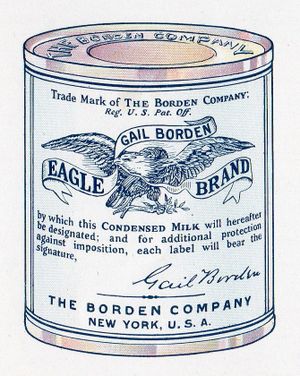
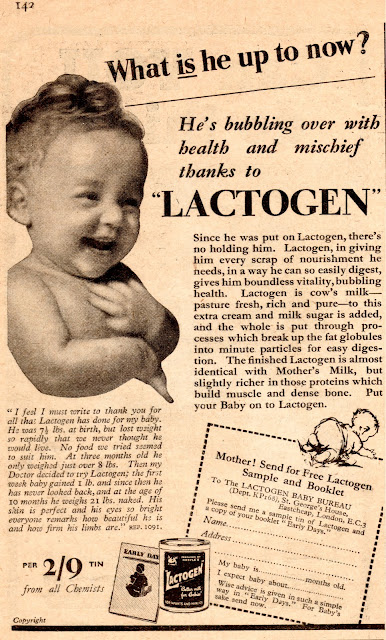
The marketing of condensed milk coincided with heightened concerns about high rates of infant mortality in industrialising cities all over the world. Having noticed that exclusively breastfed babies tended to be healthier than those who were not, by the end of the nineteenth century, scientists had established that the leading cause of death in early infancy – diarrhoea – was caused by ingesting dirty and rotting food, mainly milk products. For instance, in 1895 and 1896, Dr EB Fuller, Cape Town’s Medical Officer for Health, conducted a survey into the causes of infant diarrhoea in the city and discovered, as Peter Buirski explains:
Of the 140 deaths examined, the survey revealed that 97 were stated not to have had any breastfeeding, but to have been entirely dependent on the bottle and other sources, whilst 16 were said to have been fed on both breast and bottle. As Fuller noted, ‘we have…very clear evidence of the fact that it is the hand fed children who succumb most extensively to the disease in question.’
Public health officials and infant welfare campaigners not only doubled their attempts to persuade mothers to breastfeed for as long as possible, but also established depots where they could receive clean, pasteurised fresh milk and, importantly, healthy preserved milk products too – mainly dried or evaporated milk.
But some paediatrians had been pointing out since at least the 1890s that even if sweetened condensed milk was a useful dietary supplement for particularly malnourished children, it was hardly health food. The doctor and public health campaigner Cicely Williams – who identified the disease kwashiorkor – had noticed as early as 1933 that adults in parts of West Africa were adding sweetened condensed milk to their diets. Soon she connected widespread malnutrition in babies and young children with the use of sweetened condensed milk in the place of more nutritious products – including, worryingly, breast milk. Writing about Singapore in the early 1940s, she explained:
there is the misguided popularity of sweetened condensed milk. The palatable sweetness of this, when it is once started as a supplementary or as a complementary feed, often results in the baby refusing to take the breast, or taking the breast with no enthusiasm and finally in the drying up of the milk. With wearisome and deadly frequency one hears ‘the baby would not suck,’ ‘the breast milk disappeared in three weeks,’ and in every case it is proved that sweetened condensed milk had been given.
Although recognizing that doctors and clinics could do more to inform mothers about breastfeeding, Williams argued for the better control of milk companies:
The advertisements of the milk firms are responsible for a certain amount of misguided propaganda. The people they employ are not always wise in their methods and it may be found that artificial feeding and infant mortality are higher in those areas where milk firms have their ‘nurses’ working than in those where they do not.
In 1939 she published the pamphlet ‘Milk and Murder’ in which she blamed the advertising strategies of companies like Nestle for causing mothers to give up breastfeeding – contributing, thus, to high rates of infant mortality in regions such as West Africa and South Asia. That pamphlet formed the basis for War on Want’s 1974 report The Baby Killer – the manifesto for the Nestle boycott which resulted, eventually, in the adoption of the 1981 International Code of Marketing of Breast-Milk Substitutes by the World Health Organisation.
Even if its advertising of artificial baby food had been largely constrained, Nestle still seeks out ways of selling its products – including sweetened condensed milk – to new, unsuspecting markets. Four years ago it was particularly sharply criticised for sending ‘floating supermarkets’ down tributaries of the Amazon, aimed specifically at potential shoppers unaccustomed to processed food.
My point is not that we should all abandon sweetened condensed milk. Far from it. What an understanding of the fraught history of sweetened condensed milk demonstrates is a continuity in the ways in which ingredients and foodstuffs are circulated around the world. As chillies and limes and coconuts were carried around the Portuguese empire, shaping and remaking local cuisines, so Nestle has added sweetened condensed milk to an increasing number of Brazilian and Indian kitchens during the twentieth and twenty-first centuries. The difference, obviously, is that Nestle could advertise its products as the healthy, responsible choice for nursing mothers – piggy-backing, effectively, on to public health concerns about infant mortality. The question then, is should we control or limit the sale of sweetened condensed milk and other, less-than-healthy processed foods, in poor areas unaccustomed to the wiles of Big Food?
Sources
Rima D. Apple, Mothers and Medicine: A Social History of Infant Feeding, 1890-1950 (Madison, WI: University of Wisconsin Press, 1987).
PJ Atkins, ‘White Poison? The Social Consequences of Milk Consumption, 1850-1930,’ Social History of Medicine, vol. 5 (1992), pp. 207-227.
Peter Buirski, ‘Mortality Rates in Cape Town 1895-1980: A Broad Outline,’ Studies in the History of Cape Town, vol. 5, ed. Christopher Saunders, Howard Phillips, Elizabeth van Heyningen, and Vivian Bickford-Smith (History Department and the Centre for African Studies, University of Cape Town, 1983).
M. Hickey, ‘Current Legislation on Concentrated and Dried Milk Products,’ in Dairy Powders and Concentrated Products, ed. AY Tamime (Wiley-Blackwell, 2009).
Harvey Levenstein, ‘“Best for Babies” or “Preventable Infanticide”? The Controversy over Artificial Feeding of Infants in America, 1880-1920,’ The Journal of American History, vol. 70, no 1 (June 1983), pp. 75-94.
Cicely D. Williams, ‘A Nutritional Disease of Childhood Associated with a Maize Diet,’ Archives of Diseases in Childhood, vol. 8, no. 48 (1933), pp. 423-433.
—. ‘Rickets in Singapore,’ Archives of Diseases in Childhood, vol. 21, no. 37 (1946), pp. 37-51.

Tangerine and Cinnamon by Sarah Duff is licensed under a Creative Commons Attribution-ShareAlike 3.0 Unported License.


 Tangerine and Cinnamon
Aug 16
Starved Out
Two years ago today, police opened fire on a group of striking mineworkers encamped on a koppie outside of Marikana. Mainly rock drill operators doing some of the most basic and difficult work on the mine, these men demanded that Lonmin – in whose platinum mine they worked – raise their salary to match that of literate, better skilled miners, to about R12,500 per month.
After weeks of sporadic violence on both sides – during which policemen, shop stewards, and workers were injured and killed – mine bosses urged the police to end the standoff. Jack Shenker writes:
Police opened fire as workers approached them. In the end, thirty-four were killed, seventeen of them at a nearby koppie where it appears that they were shot at close range. The Marikana massacre has been described as post-apartheid South Africa’s Sharpeville. As the inquiry into the events near the mine has revealed, police arrived not to keep order, but, rather, to end the strike through any means possible.
The poster for Rehad Desai’s documentary on the Marikana massacre, Miners Shot Down.
The killings were followed by a strike – the longest in South African history – until May. Of all the details to emerge in the coverage of life in the platinum belt, the one that seemed to encapsulate the desperation of striking miners and their families was in a 2006 report commissioned by Lonmin: researchers had discovered children suffering from kwashiorkor near the mine.
Although already identified in 1908, kwashiorkor was named by Dr Cicely Williams, a Colonial Medical Officer, in the Gold Cost during the 1930s. Tom Scott-Smith explains:
Williams diagnosed kwashiorkor as a from of inadequate nutrition – similar to pellagra, which is caused by a diet insufficient in vitamin B3 – related specifically to an intake of too little protein. Williams had noticed that newly weaned babies and young children – the ‘deposed’ children referred to by the word kwashiorkor – were particularly vulnerable to the condition, and surmised that longer breastfeeding or a diet rich in the nutrients non-breastfed children lacked – protein especially – would eradicate kwashiorkor.
By the 1970s, though, doctors argued that this emphasis on protein supplements – which had driven United Nations and other organisations’ efforts to address kwashiorkor – was incorrect. Kwashiorkor, they argued, was the product of under nutrition: of not consuming enough energy. Scott-Smith writes:
Had scientists paid closer attention to the name ‘kwashiorkor’ they may have come to this realisation sooner. It is a disease of poverty where adults are unable to provide weaned children with adequate nutrition. As a result, its solution is distressingly simple: better and more food.
If there is any indicator of the extent of poverty in the platinum belt, then it is the fact that children suffer from kwashiorkor. While Lonmin has ploughed some of its profits back into communities surrounding the mines – opening schools and running feeding schemes, for example – it remains the case that mineworkers and their families are still desperately poor.
Keith Breckenridge argues that the wealth generated by workers operating in exceptionally dangerous conditions is channelled largely to a small group of beneficiaries. He adds:
Where once miners were coralled into the prison-like conditions of single-sex hostels where their food, accommodation, and other expenses were covered by mining companies, now meagre housing allowances are meant to support these workers and their families in the otherwise badly provisioned and serviced towns and villages in the platinum belt. Salaries tend to go straight to pay interest on loans granted by micro lenders, charging exorbitant interest rates.
As the incidences of kwashiorkor reported to Lonmin suggest, these men were not earning enough to feed themselves and their children. While under cross examination at the Farlam Commission of Inquiry into the Marikana massacre, Cyril Ramaphosa – current Deputy President and Lonmin board member who had emailed the then-Police Minister, demanding an end to the workers’ strike – remarked:
I dispute the ‘we,’ Mr Deputy President.
Further Reading
Keith Breckenridge, ‘Marikana and the Limits of Biopolitics: Themes in the Recent Scholarship of South African Mining,’ Africa, vol. 84 (2014), pp. 151-161.
Keith Breckenridge, ‘Revenge of the Commons: The Crisis in the South African Mining Industry,’ History Workshop Journal Blog, 5 November 2012.
Tangerine and Cinnamon by Sarah Duff is licensed under a Creative Commons Attribution-ShareAlike 3.0 Unported License.