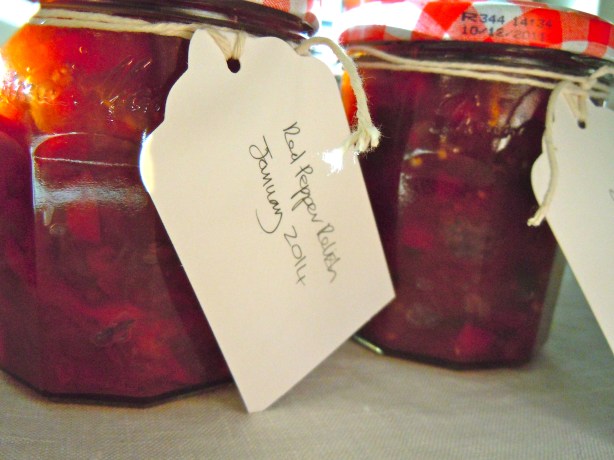
Every summer my mother and I make preserves. We have two staples – Christmas chutney and red pepper relish – which, occasionally, we’ve augmented with piccalilli, boerenjongens (currants in brandy), and pickled pears. When we started this more than a decade ago, chutney- and jam-making was seen as the sort of thing that grandmothers did, and this despite the long tradition of preserving and pickling in South Africa’s fruit growing regions.
More recently, though, preserving has become fashionable. Recipes for chutneys abound on hipster blogs and cooler recipe sites; Punk Domestics has an enormous following; and even Girls features a maker of ‘artisanal mustard’ (Charlie’s profoundly irritating girlfriend, Audrey). This, though, is part of a wider trend: a rediscovery of domesticity, particularly – although not exclusively – among young women in their 20s and 30s. The existence of a café specialising in crafts – Drink, Shop, Do – in London’s Kings Cross, points to the numbers of people who are part of this trend.

Their enthusiasm for cooking-from-scratch, sewing, knitting, gardening, and other domestic activities is the product of a range of factors (many of them explored in Emily Matchar’s Homeward Bound: Why Women are Embracing the New Domesticity (2013)). These include the evolution of feminism to reclaim work once dismissed as feminine and, thus, unimportant; a shift in values as Generation Y attempts to carve out new, meaningful forms of employment; and the 2008 financial crash. Austerity has played out culturally: in a new interest in mending and making-do.
Most obviously, a willingness to make ketchup and bread and mayonnaise is part of a backlash against Big Food: as revelations around, among other things, food contamination, the exploitation of workers, and cruelty to animals continue to emerge, there has been a gradual turning-away from processed food. This, though, is nothing new (there was a similar whole food movement in the 1970s), nor particularly prevalent beyond the affluent middle classes.
Unsurprisingly, this backlash against the readymade has been accompanied by a fascination for the post-war cooking which relied heavily on processed food. The Internet abounds with lists of appalling recipes containing instant jelly, fizzy soft drinks, and canned meat. Nigella Lawson devoted a section to ‘trashy’ food in Nigella Bites, explaining that she defines ‘trashy’ as any food relying on at least one readymade ingredient: Maryland cookies in her chocolate and lime cheesecake, for instance.
There is some justification for this ridicule – so many of these dishes range from the bizarre to the mildly pornographic. Adding lime jelly to tinned tuna, or turning Vienna sausages into fondue, suggests that some home economists employed by food companies in the 1950s and 1960s really did have cloth palates.
But it’s worth taking enthusiasm for the readymade seriously. In his excellent – and deeply funny – blog Caker Cooking, Brian Francis cooks his way through the community, school, and church recipe books constituted of the kind of everyday dishes made by, largely, middle-class families. (And although his blog is Canadian, I’ve encountered similar pamphlets and recipes in South Africa and Australia.) This is his definition of caker cooking (and he is being satirical, so his third point is not meant to offend):
1. A ‘magic’ ingredient. We cakers love to think we’ve discovered some sort of short cut. Usually, this short cut requires a can opener.
2. Ease. The recipe has to have as few steps and as few ingredients as possible.
3. Frugality. There’s nothing more wasteful than spending good money on food.
Indeed, it is for these reasons that processed food held such appeal to women – many of them entering the workplace in greater numbers – from the middle of the twentieth century to the present: that this food is quick and easy to prepare, and it’s cheap. It’s difficult to imagine, now, the amount of labour that used to go into the preparation of food. And, as the food writer and anti-poverty campaigner Jack Monroe has noted over and over again, tinned food is considerably cheaper than fresh.
Calvin Trillin is one of the few food writers who recognises that the only way of describing honestly about how people eat is to acknowledge that processed food is integral to the way most of us cook. (Try cooking through a winter without tinned tomatoes.) That cream of mushroom soup is a vital ingredient in so many distinctive regional dishes; that Texas barbeque is served with cheap, white processed bread and that’s ok.
My point is that however wonderful it is that there has been a rediscovery and re-embrace of old-fashioned forms of cookery – and as one who makes her own granola, bakes her own bread, and who has dried her own tomatoes, I am part of this too – this movement is small, and one limited to those who have the time and resources to spend hours making pickles or fruit leather. Instead of arguing for a wholesale rejection of all forms of processed food, what we should focus on is ensuring that it is better: that it is healthier, properly labelled, and produced in humane, fair conditions.

Tangerine and Cinnamon by Sarah Duff is licensed under a Creative Commons Attribution-ShareAlike 3.0 Unported License.


 Tangerine and Cinnamon
Jan 13
Readymade
Every summer my mother and I make preserves. We have two staples – Christmas chutney and red pepper relish – which, occasionally, we’ve augmented with piccalilli, boerenjongens (currants in brandy), and pickled pears. When we started this more than a decade ago, chutney- and jam-making was seen as the sort of thing that grandmothers did, and this despite the long tradition of preserving and pickling in South Africa’s fruit growing regions.
More recently, though, preserving has become fashionable. Recipes for chutneys abound on hipster blogs and cooler recipe sites; Punk Domestics has an enormous following; and even Girls features a maker of ‘artisanal mustard’ (Charlie’s profoundly irritating girlfriend, Audrey). This, though, is part of a wider trend: a rediscovery of domesticity, particularly – although not exclusively – among young women in their 20s and 30s. The existence of a café specialising in crafts – Drink, Shop, Do – in London’s Kings Cross, points to the numbers of people who are part of this trend.
Their enthusiasm for cooking-from-scratch, sewing, knitting, gardening, and other domestic activities is the product of a range of factors (many of them explored in Emily Matchar’s Homeward Bound: Why Women are Embracing the New Domesticity (2013)). These include the evolution of feminism to reclaim work once dismissed as feminine and, thus, unimportant; a shift in values as Generation Y attempts to carve out new, meaningful forms of employment; and the 2008 financial crash. Austerity has played out culturally: in a new interest in mending and making-do.
Most obviously, a willingness to make ketchup and bread and mayonnaise is part of a backlash against Big Food: as revelations around, among other things, food contamination, the exploitation of workers, and cruelty to animals continue to emerge, there has been a gradual turning-away from processed food. This, though, is nothing new (there was a similar whole food movement in the 1970s), nor particularly prevalent beyond the affluent middle classes.
Unsurprisingly, this backlash against the readymade has been accompanied by a fascination for the post-war cooking which relied heavily on processed food. The Internet abounds with lists of appalling recipes containing instant jelly, fizzy soft drinks, and canned meat. Nigella Lawson devoted a section to ‘trashy’ food in Nigella Bites, explaining that she defines ‘trashy’ as any food relying on at least one readymade ingredient: Maryland cookies in her chocolate and lime cheesecake, for instance.
There is some justification for this ridicule – so many of these dishes range from the bizarre to the mildly pornographic. Adding lime jelly to tinned tuna, or turning Vienna sausages into fondue, suggests that some home economists employed by food companies in the 1950s and 1960s really did have cloth palates.
But it’s worth taking enthusiasm for the readymade seriously. In his excellent – and deeply funny – blog Caker Cooking, Brian Francis cooks his way through the community, school, and church recipe books constituted of the kind of everyday dishes made by, largely, middle-class families. (And although his blog is Canadian, I’ve encountered similar pamphlets and recipes in South Africa and Australia.) This is his definition of caker cooking (and he is being satirical, so his third point is not meant to offend):
Indeed, it is for these reasons that processed food held such appeal to women – many of them entering the workplace in greater numbers – from the middle of the twentieth century to the present: that this food is quick and easy to prepare, and it’s cheap. It’s difficult to imagine, now, the amount of labour that used to go into the preparation of food. And, as the food writer and anti-poverty campaigner Jack Monroe has noted over and over again, tinned food is considerably cheaper than fresh.
Calvin Trillin is one of the few food writers who recognises that the only way of describing honestly about how people eat is to acknowledge that processed food is integral to the way most of us cook. (Try cooking through a winter without tinned tomatoes.) That cream of mushroom soup is a vital ingredient in so many distinctive regional dishes; that Texas barbeque is served with cheap, white processed bread and that’s ok.
My point is that however wonderful it is that there has been a rediscovery and re-embrace of old-fashioned forms of cookery – and as one who makes her own granola, bakes her own bread, and who has dried her own tomatoes, I am part of this too – this movement is small, and one limited to those who have the time and resources to spend hours making pickles or fruit leather. Instead of arguing for a wholesale rejection of all forms of processed food, what we should focus on is ensuring that it is better: that it is healthier, properly labelled, and produced in humane, fair conditions.
Tangerine and Cinnamon by Sarah Duff is licensed under a Creative Commons Attribution-ShareAlike 3.0 Unported License.