Skip to content

Posts tagged ‘South Africa’

A Cup of Coffee

One of the best articles explaining the context in which the recent Western Cape farm workers’ strike occurred, notes that even the new minimum wage introduced as a result of the action is

not enough to make ends meet, some Western Cape farmworkers subsist on little else but black coffee during the last few days of each month.

This piece in the Mail and Guardian drew my attention because it resonates with another description of poverty in rural South Africa. During the early decades of the twentieth century, C. Louis Leipoldt – medical doctor, eugenicist, food anthropologist, proto-Afrikaner nationalist, writer, Buddhist, and poet – worked as the Medical Inspector for Schools in the Transvaal province of the newly created Union of South Africa. He described his experiences of working in the lowveld – the hot, humid and, formerly, malaria-infested region in present day Mpumalanga – in Bushveld Doctor (1937).

Much of the focus of this collection of essays is a description of the everyday life, beliefs, and struggles of a population of impoverished whites scratching a miserable existence in a disease-riddled area. He ascribed the poor health of the children to endemic malaria and bilharzia, and also malnutrition. Leipoldt described one nine year-old patient:

When he left home in the morning his father gave him an inch of twist tobacco which he put into his mouth and chewed on his way to school. That and a cup of coffee (made from the root of a Bushveld tree) constituted his breakfast. There were other lads in the school who did the same to stay the pangs of incipient hunger.

Leipoldt observed that these Bushveld children were shorter than their better-fed and altogether healthier urban contemporaries. The problem was that good, nutritious food was in short supply. These subsistence farmers simply could not afford to eat well:

Malnutrition is prevalent because food is scarce in the Bushveld, where fresh fruit and vegetables are difficult to obtain, and because the children exist on an unbalanced diet. Their staple food is mielie meal, which has a low nutritive value. Milk and fresh meat are scarce. Wheaten bread is common enough, and of fair quality when obtainable, but it is not a staple article of diet. Fats are rarely included in the diet, and fresh butter is a comparative rarity.

In today’s language, these families were food insecure. Indeed, as are the farm workers described by the Mail and Guardian:

many farmworkers … are dependent on on-the-farm stores for food. Many farmworkers and NGOs accuse farmers of pricing foodstuffs higher than commercial shops.

This, compounded with low wages, further promotes food insecurity. ‘Prices in rural areas are always slightly higher than they are in urban areas. So if farmers are charging more than the market price, which is already high, farmworkers just can’t afford food,’ says [Colette Solomon, of the NGO Women on Farms], and explains that average household income is R1 500 a month. ‘Many farmworkers buy on credit, but the prices are so high that … when they get paid, they have to pay their debts back and basically don’t have money left.’

As a result of this

Stunted growth is not unusual: a study done by the University of Cape Town in the 1990s showed that farmworkers in the province are, on average, an inch (2.5cm) shorter than city dwellers.

In November last year, grape pickers in the Hex River Valley went on strike. Demanding higher wages – R150 an hour, rather than the minimum wage of R70 – the strike spread from De Doorns to Robertson, Wolesley, Ceres, Prince Alfred Hamlet, and elsewhere. Hundreds of strikers marched, gathered, and erected barricades. In some townships, the stand-off between strikers and police turned violent, as protestors pelted cops with rocks, and the police used rubber bullets, tear gas, and water canons to disperse the crowds. Shops were looted, and vines set alight. Two people were killed. There were allegations of police brutality.

The strike was called off in December and then resumed in January this year. In the meanwhile, efforts to mediate between farm workers, farmers, and the Department of Agriculture, Forestry, and Fisheries were not productive. The Department’s decision to raise the minimum wage to R105 – thus ending the strike – was met with a lukewarm reaction from nearly everyone connected to the strike, with some farmers arguing that higher wages will force them to retrench workers.

What was so surprising about the strike was that it happened at all. Alongside domestic workers, farm labourers have one of the lowest rates of union membership in South Africa. When the strike began, both the African National Congress and the Democratic Alliance – which controls the Western Cape – accused each other of organising the workers. The union alliance Cosatu was caught unwares and scrambled to take control of the strike, but with limited success. The strike in January was more formally organised by both Cosatu and the more radical Bawsi Agricultural Workers Union of South Africa led by Nosey Pieterse, but, even so, these two organisations’ mandate for representing the strikers is shaky. (Pieterse is currently under investigation for intimidating non-striking workers. He is also suing the Cape Times for describing him as a member of the ‘lumpenproletariat.’)

This is a very cursory overview of the strike. As Rebecca Davis’s excellent reporting for the Daily Maverick shows, workers went on strike for a range of reasons – from genuine anger at low wages, to disputes around municipal politics.

It’s partly because of the complexity of the strike that I’ve avoided writing about it. Also, I’ve been concerned that I am too close to the issue to view it dispassionately. I grew up in Paarl and Stellenbosch, two towns in the Boland’s wine-producing area. I went to school with the daughters of farmers and, later, farm workers. (Our primary school opened to all races in 1992.) On Saturday mornings in the early- and mid-1990s, my father used to take my sister and I around local wine estates. We fed oak leaves to the goats at Fairview, and chatted to old Mrs Back in the cheese shop.

As daughters of politically aware and active parents, we knew how to identify ‘good’ from ‘bad’ farmers. We could spot which farms allowed labourers to live in damp, tumbledown cottages without running water and electricity.  We saw which farms had legions of children not in school. It’s likely that those farmers may still have paid their workers in the form of alcohol, usually cheap brandy. The ‘dop’ (or ‘tot’) system originated during the nineteenth century on wine farms in the Boland as a means both of paying workers, as well as ensuring their dependency on farmers: alcoholic labourers would be less likely to move to Cape Town in search of better-paid work in the Cape Colony’s burgeoning industry.

Since 1994, the dop system has been banned, legislation restricting child labour introduced, and a minimum wage – now raised as a result of the strike – enforced. But these new laws have had a limited impact on farm workers: they have not reduced astronomically high rates of alcoholism which have caused the region to have one of the highest incidences of Foetal Alcohol Syndrome (FAS) in the world; they have not compensated families for the loss of income brought in by children; they have not ended the cycle of domestic violence which disproportionately effects women on farms; many workers still live in appalling conditions, often with no access to electricity and running water. NGOs like Women on Farms have collected horrific testimony of women raped by their employers; of families being turned out of houses without warning and for, apparently, no reason; and of labourers overworked and maimed by machinery.

I began by drawing attention to two examples of South African rural poverty – one from the beginning of the twentieth century, another a hundred years later – to demonstrate the relative usefulness of understanding contemporary events in historical context. I don’t pretend to know enough about the wine and fruit industries in the Western Cape to be able to account for the strike itself, but I was struck by how often journalists, strikers, politicians, and others referred to slavery and apartheid when trying to understand the strike and the unique relationship between farmers and their labourers in this region.

The South African wine industry was profitable during the twentieth century partly because it could rely on a steady supply of cheap – even free – labour. Farmers could justify labourers’ exceptionally low wages on the grounds of the paternalistic system of employment which existed – and still exists, to some extent – on the farms:

The relationships between farm-owners and workers have not been simply exploitative, but were shaped by the discourses of paternalism. The notion of themselves as benevolent but firm protectors and disciplinarians of a grateful and appreciative population of on-farm servants has been an important part of the self-conception of farmers in the Western Cape and elsewhere in South Africa since the eighteenth century. Ultimately, however, it was a hierarchical relationship, marginalising and silencing the voices of those whose labour helped create the wealth of the sector.

Although it’s debatable if the Cape Colony’s system of slavery could accurately be described as ‘paternalistic’ (and this is still the subject of some debate among historians), it was certainly the case that an inherently unequal, dependent relationship developed over time between farmers and farmworkers. Although paid and treated appallingly badly, farmworkers were usually provided with (rudimentary) housing, some food, and other basics.
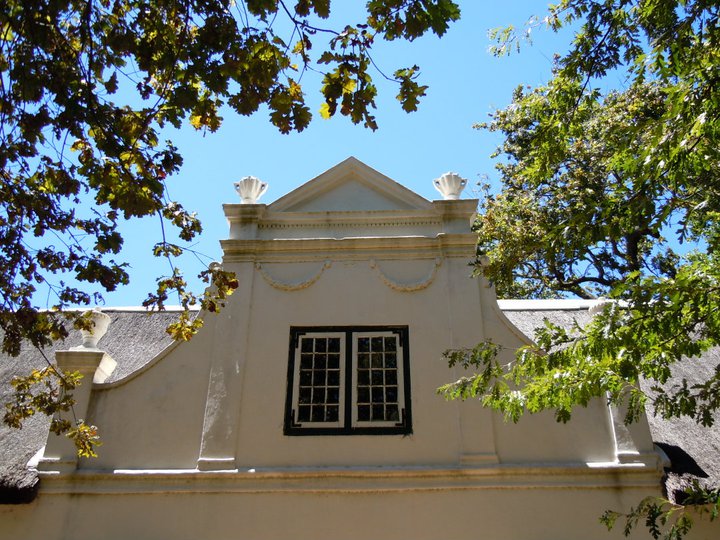
Boschendal, Stellenbosch

Boschendal, Stellenbosch

My point is that however terrible the circumstances in which farmers may work and live – and Human Rights Watch released a damning report into them in 2011 – to argue that we need to understand the relationship between farmers and their workers in the context of nineteenth- or, even, early twentieth-century labour politics is mistaken. We need to look at the more recent past.

The South African wine industry has changed significantly since the mid-90s, from selling what was, often, so-so plonk to the locals, to a massive tourism concern and export business. As Joachim Ewert and Andries du Toit have demonstrated, since the beginning of the deregulation of the industry in the early 1980s, South African producers have become subject to the vagaries of the international export market, new estates have emerged as new wine growing regions have been planted, yields have increased, and previously powerful co-operatives have amalgamated and disappeared.

Although there were efforts to reform labour relations during the 1980s, led largely by the Rural Foundation, and in response to changes in the wine industry, it was only after 1994 that there was adequate political will radically to do away with the old paternalism:

A paternalist state has stepped in to push back the paternalist authority of the farmer, and has created new limits to farmers’ control over workers’ lives. These changes seriously challenge the legal and formal underpinnings of traditional farm paternalism.

But challenging paternalism is not the same as replacing it. There is considerable evidence that many farmers are reluctant to comply with labour legislation, if not downright hostile to it.

There has been a major change in how wine, and also fruit, farmers employ labour since the end of the 1990s. This is partly the result of mechanisation and more efficient farming methods, but it is also the product of farmers’ resistance to legislation which raises the wages and living standards of workers:

Facing a sustained challenge to their power as employers and feeling increasing competitive pressures, many farmers seem to be opting for the one measure sill within their power: restructuring their businesses. Many are resorting to casualization, externalisation, and contractualisation, deepening an already segmented labour market and further deepening the divide between ‘winners’ and ‘losers.’

Johan Fourie has shown that the numbers of workers employed on farms in the Cape Winelands District Municipality has declined dramatically since 1995:

even while output has increased by 1.4% annually over the entire period …, employment has fallen from more than 120 000 jobs to fewer than 50 000 today.

Loss of permanent jobs on farms also means eviction, and over the past decade or so, the numbers of employed former farm workers living in desperate poverty in shacks or overcrowded homes on the fringes of picturesque winelands towns and villages, have swelled. They are dependent on seasonal work and on social grants. Alcoholism, drug addiction, domestic violence, and child abuse are rife.

The recent, horrific rape and murder of Anene Booysen in Bredasdorp – one of these pretty rural towns – has drawn attention to the social implications of this change in rural employment.

There are many progressive wine farmers who have established crèches and primary schools, founded organisations to eradicate FAS, provided transport and bursaries to get farm children to school, and attempted to find ways of reducing alcoholism and domestic violence.

For instance, the Fair Valley Association was founded by Fairview workers in 1997, with the assistance of Charles Back, the owner of the wine farm. It helps labourers to buy land and build houses, and includes these workers in the day-to-day running of the estate. Similarly, at Solms Delta in Franschhoek, neuroscientist Mark Solms

organise[d] a loan, with his land as collateral, that allowed the 180 workers connected to his farm to buy 30 hectares connected to Solms’s land. Solms, along with his neighbour Richard Astor, joined forces with the farm workers, each a one-third partner in the Solms-Delta wine venture.

Through the Wijn de Caab Trust established in the workers’ names, Solms-Delta provides comfortable housing, health and dental benefits, plus Internet access, a full-time social worker and an afterschool teacher to help kids with their homework. One of Solms-Delta’s most successful ventures beyond the vines has been their music program: There are four bands on the farm, including an 80-person marching band. ‘A friend of mine likes to joke,’ says Solms, ‘that we don’t only farm wine, we farm music.’

The single biggest allocation from the workers’ trust has gone towards improving education.

Solms Delta is, truly, a beacon for other wine farms in the region. Its transformation is grounded in Solms’s realisation that he had no more claim to owning the farm than the generations of workers who have lived on it. The estate has acknowledged its slave past in an excellent museum, and workers’ pride in their involvement in the farm is palpable. (Do go, if you can.)

But the trouble with these – and other – laudable efforts is that they are aimed largely at those workers who remain on farms – and not the legion of unemployed, and potentially unemployable, labourers who have been pushed off farms since the late 1990s. These casual labourers constituted a significant portion of the strikers in November and January.

This returns to my original point about using the past to illuminate the present. Although slave pasts don’t really help to understand contemporary systems of employment, I think it’s worth thinking about rural poverty in the twenty-first century to that a hundred years earlier.

The emergence of a substantial population of ‘poor whites’ – like the people documented by Leipoldt – occurred as a result of many factors, including the transformation of agriculture into a capitalist enterprise. Poor white tenant and small farmers moved into towns and cities in search of work, while others lived in poverty in the countryside.

By the end of the 1920s, it was estimated that out of a total of 1,800,000 whites, 300,000 were ‘very poor’, and nearly all of these were Afrikaans. The Carnegie Commission of Investigation on the Poor White Question (1929-1932) concluded that an inability to adapt to a changing economic climate, outdated farming methods, and poor education were to blame for the existence of such a large population of impoverished whites.

In 1929, the South African government devoted 13 per cent of its budget to the eradication of white poverty. Much of this went to education, social welfare, and housing. The introduction of more stringent segregationist legislation progressively disenfranchised blacks, and reserved skilled work for whites.

I don’t want to draw glib parallels between the 1920s and 1930s and the 2010s – after all, white poverty was eliminated by the 1960s because of the systematic marginalisation of black workers. But I think that it’s worth noting that South Africa managed to eradicate one form of rural poverty during the twentieth century. By historicising poverty, we understand that it is not the fault of the impoverished – that poverty is the product of massive social, political, and economic change. More importantly, we see that with political will, it is not impossible to do away with it. It is eminently possible to stop people from having to live on black coffee.

Sources

Joachim Ewert and Andries du Toit, ‘A Deepening Divide in the Countryside: Restructuring and Rural Livelihoods in the South African Wine Industry,’ Journal of Southern African Studies, vol. 31, no. 2 (June 2005), pp. 315-332.

Bill Freund, ‘The Poor Whites: A Social Force and a Social Problem in South Africa,’ in White but Poor: Essays on the History of Poor Whites in Southern Africa 1880-1940, ed. Robert Morrell (Pretoria: Unisa Press, 1992), pp. xiii-xxiii.

C. Louis Leipoldt, Bushveld Doctor (Cape Town: Human & Rousseau, [1937] 1980).

Robert Ross, ‘Paternalism, Patriarchy, and Afrikaans,’ South African Historical Journal, vol. 32 (May 1995), pp. 34-47.

Creative Commons License
Tangerine and Cinnamon by Sarah Duff is licensed under a Creative Commons Attribution-ShareAlike 3.0 Unported License.

Food Links, 16.01.2013

A world map of organic agriculture.

How to make farming more sustainable in India.

The incredible value of Meals on Wheels.

Americans are drinking less milk.

The problem with taking dietary supplements.

Foods with the greatest pesticide residue.

How much should bread cost?

The astonishing amount of food wasted by Americans.

Cooking like a man.

A brief history of ersatz ingredients.

Drink as much coffee as you like.

In pursuit of snackability.

Sausage and haddock. (Thanks, Mum!)

South Africa’s Come Dine with Me as a form of social commentary.

Fuchsia Dunlop’s guide to the food of Taipei.

Novelists who’ve sobered up.

Celebrations at the end of Prohibition in the US.

Why drinking tea was once considered a reckless pursuit for women.

Havana‘s new restaurant scene. (Thanks, Ricardo!)

A review of the French version of Great British Bake Off.

Apples as art.

Öküzgözü. Boğazkere. Xynomavro. Zalagyöngye.

The Pudding Club.

Why grapefruit is appalling. And why it’s amazing.

A newish way of cooking pasta.

How to make your own extracts.

On Lesley Blanch’s Around the World in Eighty Dishes.

Brock Davis’s food art.

Marks and Spencer’s Head of Cake.

Fifteen revolting recipes.

Bread Lines

Most of my friends went slightly mad as they finished their PhD dissertations; some cried compulsively, another forgot to eat, and I knew a couple who never wore anything other than pyjamas for months on end. My lowest ebb came when I developed a mild addiction to The Archers, a daily, fifteen-minute soap on Radio 4, featuring the activities of a large, extended family in the fictional village of Ambridge.

Described by Sandi Toksvig as ‘a memorable theme tune, followed by fifteen minutes of ambient farm noise and sighing,’ The Archers was created in 1950 as a kind of public information service: the BBC collaborated with the Ministry of Agriculture, Fisheries, and Food to broadcast information about new technologies and methods to farmers during a period when Britain was trying to increase agricultural productivity.

The series still has an agricultural story editor, and there’s at least one fairly awkward moment in each episode when Ruth Archer discusses milking machines, or Adam Macy mulls over the relative benefits of crop rotation. But its appeal lies now in its human drama. It’s been criticised – rightly – for avoiding complex or uncomfortable social issues, but, recently, it’s featured an excellent storyline involving the series’ poorest family, the Grundys.

Struggling with cuts in benefits and reduced wages, Emma Grundy runs out of money and takes refuge in a food bank, where she and her daughter are given a free lunch. In a sense, this thread dramatizes the Guardian’s excellent Breadline Britain Project, which tracks the ‘impact and consequences of recession on families and individuals across the UK.’ The project has demonstrated convincingly that British people are eating worse as they become less financially secure.

One of its most arresting reports argues that Britain is in a ‘nutrition recession’:

Detailed data compiled for the Guardian, which analysed the grocery buying habits of thousands of UK citizens, shows that consumption of fat, sugar and saturates has soared since 2010, particularly among the poorest households, despite the overall volume of food bought remaining almost static. Food experts and campaigners called for government action to address concerns the UK faces a sustained nutritional crisis triggered by food poverty, which is in turn storing up public health problems that threaten to widen inequalities between rich and poor households.

The data show consumption of high-fat and processed foods such as instant noodles, coated chicken, meat balls, tinned pies, baked beans, pizza and fried food has grown among households with an income of less than £25,000 a year as hard-pressed consumers increasingly choose products perceived to be cheaper and more ‘filling’.

Over the same period, fruit and vegetable consumption has dropped in all but the most well-off UK households, and most starkly among the poorest consumers, according to the data.

It’s no wonder that so many columnists have evoked George Orwell’s description of the very poor eating habits of Wigan’s most impoverished residents during the Great Depression in The Road to Wigan Pier (1937). But the use of the term ‘breadline’ harks back to an earlier, and arguably more influential study, Seebohm Rowntree’s Poverty: A Study in Town Life (1901). Rowntree (1871-1954), the son of the philanthropist and chocolate tycoon Joseph (1836-1925), had studied chemistry in Manchester before beginning work as a scientist in the family business in York.

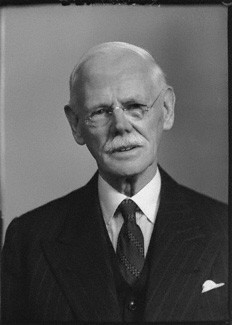
Benjamin Seebohm Rowntree*

But like his father – whose awareness of poverty had been awakened, apparently, by a trip to Ireland during the potato famineRowntree’s encounters with York’s poor led to the first of three studies which he undertook into poverty in York. Inspired partly by Charles Booth’s The Life and Labour of the People (1886), which analysed the lives of London’s poor, in 1899 Rowntree conducted a survey of the working-class population of York. His findings caused a national outcry, as Ian Packer explains:

Poverty: A Study of Town Life (1901)…became an important subject of debate because of its assertion that not only were 28 percent of the total households in York in poverty but nearly 10 percent had incomes so low that they could not keep the members of the family in what Seebohm termed ‘physical efficiency,’ that is, provided with sufficient nutritional food to maintain health.

Rowntree used access to food as a means of gauging poverty, and it is here that he originated the idea of the ‘breadline’. Diana Wylie writes:

Rowntree latched on to food, or, more precisely, its lack, as a convenient and revealing means of measuring socially unacceptable levels of deprivation. He drew an absolute poverty line; below it, people did not earn enough to buy the ‘minimum necessities for the maintenance of merely physical efficiency.’ If working men did not consume 3,500 calories of food energy daily, and women four-fifths that amount, their intelligence became dulled and their stature stunted. This quite pragmatic definition of hunger, the ‘underfeeding’ that would destroy a person’s stamina, served for Rowntree as the index for judging Britain’s social progress.

This and Rowntree’s subsequent two studies of poverty in York, published in 1936 and 1951, became some of the most significant evidence on which arguments for the creation of a British welfare state, were based. Rowntree’s point was that unemployment and low wages – and not bad eating or spending habits – were at the root of working-class poverty. It became, then, the ethical duty of the state to provide the means of freeing the population from the threat of hunger.

There is a direct line between Poverty: A Study in Town Life and the 1942 Beveridge Report, one of the most important documents of the twentieth century, which provided the foundation for Britain’s welfare state. But the influence of Rowntree’s work was felt beyond Yorkshire and the UK. In Starving on a Full Stomach (2001), Diana Wylie demonstrates the impact of the idea of the breadline on social scientists in South Africa during the early twentieth century.

In 1935, Edward Batson, a graduate of the London School of Economics, Beveridge enthusiast, and professor of social science at the University of Cape Town, arrived in South Africa and began work on ‘the first systematic survey of black urban poverty in sub-Saharan Africa.’

By 1938, Batson had surveyed 808 Cape Town households to discover how much they spent on six essential food groups, and compared their diet with the…minimum daily standard recommended in 1933 by the British Medical Association. His figures revealed that half of Cape Town’s Coloured people lived below the poverty datum line.

Like Rowntree

Batson refuted some common social scientific assumptions such as that ignorance determined the poor diets of poor Capetonians, a perspective that, he said, had recently become ‘fashionable.’ … On the contrary, Batson wrote, most people simply could not afford to eat better.

Batson’s research was undertaken in the midst of widespread debates around the founding of a South African welfare state, the underpinnings of which were put in place during the 1920s and 1930s with legislation such as the 1928 Old Age Pensions Act, and the 1937 Children’s Act. But although his work concentrated on black people, the South African welfare state was established largely to benefit whites. Indeed, Jeremy Seekings makes the point that pensions legislation in the 1920s emerged out of concerns about protecting the white (and, to some extent, coloured) ‘deserving’ poor from a perceived black ‘threat.’ This meant that evidence of significant hunger among black people was not a force in the formulation of South African welfare policy, at least before the Second World War.

So whereas Rowntree’s research contributed to the creation of a universal welfare state in Britain, where all people qualified for assistance from the state through the provision of social security payments, and free healthcare and education, in South Africa, welfare was raced: the welfare state was created to protect and to maintain white power, and to entrench racial segregation.

Understanding the origins of the term ‘breadline’ helps us to see the extent to which attitudes towards, and efforts to eradicate, hunger have changed over time, and the ways in which they’re influenced by thinking about race, as well as class. That being hungry and white meant – and means – something different to being hungry and black.

This photograph is from the National Portrait Gallery‘s collection.

Sources

William Beinart, Twentieth-Century South Africa, new ed. (Oxford: Oxford University Press, 2001).

Timothy J. Hatton and Roy E. Bailey, ‘Seebohm Rowntree and the Postwar Poverty Puzzle,’ The Economic History Review, vol. 53, no. 2 (Aug. 2000), pp. 517-543).

Ian Packer, ‘Religion and the New Liberalism: The Rowntree Family, Quakerism, and Social Reform,’ Journal of British Studies, vol. 42, no2 (April 2003), pp. 236-257.

Jeremy Seekings, ‘“Not a Single White Person Should be Allowed to Go Under”: Swartgevaar and the Origins of South Africa’s Welfare State, 1924-1929,’ Journal of African History, vol. 48, no. 3 (Nov. 2000), pp. 375-394.

Diana Wylie, Starving on a Full Stomach: Hunger and the Triumph of Cultural Racism in Modern South Africa (Charlottesville and London: University Press of Virginia, 2001).

Creative Commons License
Tangerine and Cinnamon by Sarah Duff is licensed under a Creative Commons Attribution-ShareAlike 3.0 Unported License.
The President’s Vegetable Garden

There are very few countries, I think, where a satirical news site is frequently mistaken for being entirely serious. Hayibo – the South African equivalent of the Daily Mash or the Onion – must, occasionally, point out to its readers that its stories are made up, rather than real.

Readers can be forgiven for wondering if a report about striking Marikana mineworkers being charged for the Helderberg plane crash is true, when the ANC announces an official policy on the serving of cake at party celebrations. Or if Cosatu officials really did believe they could move into Cape Town stadium, after the ANC Women’s League decided to march against a rude painting of Jacob Zuma, rather than protest the circumstances which allowed for the serial abuse and gang rape of a seventeen year-old mentally incapacitated girl.

A Hayibo post from this week suggests that the ANC’s national conference to be held in December in Manguang, will be replaced by an episode of Come Dine with Me. Instead of conference delegates voting to choose the new leader of the party – and, thus, by default, the next president of South Africa – four contestants will compete in a series of dinner parties:

The cookery show…will feature President Jacob Zuma take on rival Kgalema Motlanthe, former ANC Youth League leader Julius Malema and Proteas batsman Hashim Amla.

When asked why Amla, a cricketer, was suddenly a contender for the top leadership position in the ANC, BBC producer Cokey McLush shrugged and said ‘Everyone loves that geezer, yeah?’

The four will each host a dinner party on successive nights, and after each dinner will rate the host on his evening. ‘The winner walks away with Pick ‘n Pay vouchers worth R5000, as well as obviously the complete control of South Africa’s political space, so there’s a lot to play for,’ explained McLush.

It would all be much more amusing were it not so very, very serious. I was thinking about food and South African politics this week, after the Mail and Guardian produced a handy interactive guide to the development of Nkandla, the village in which Zuma’s private residence is based.

The Nkandla scandal has rocked South African politics and civil society over the past few weeks, as the City Press revealed that the Department of Public Works has committed to spending R203 million – about US$23 million or £14 million – of public money, not only in developing this village in rural KwaZulu-Natal, but in building Zuma’s increasingly elaborate home.

South African Wonder Woman-incarnate Thuli Madonsela, the Public Protector, has announced an investigation into the development. Despite her interest and increasing public outrage, the government remains unrepentant: it has declared Nklandla a ‘national key point’, meaning that it comes under security legislation and can’t be reported on; the Minister for Public Works, Thulas Nxesi, declared at a press conference that ‘questioning the need for spending hundreds of millions of rands in Nkandla showed insensitivity to the cultural diversity of South Africa’; and the state has launched an investigation into how the City Press got hold of the documents which revealed the scale of the spending at Nklandla.

Not for nothing has Nkandla been nicknamed ‘Zumaville’. The M&G’s guide reveals how the village will be transformed with new roads, housing, and a shopping centre. Zuma’s own residence will have two helicopter landing pads, a football pitch, tennis court, and underground bunkers. (Remembering, of course, that he has two official houses, one in Pretoria and the other in Cape Town.) I was intrigued by the fact that a vegetable garden has also been included in the development.

The M&G explains:

The vegetable garden is outside the main security zone, but still inside the outer fence, making it accessible for the people who tend it without a need for them to use the front entrance of the compound. The public works department says food security was identified as a potential security threat for President Jacob Zuma and visiting dignitaries, which means the establishment of the garden may have been state-funded.

I am all for heads of state planting vegetable gardens: I think it’s an excellent idea, particularly as a means of encouraging people to grow their own food. I wish more presidents and prime ministers would plant vegetables to show their commitment to feeding their families healthily and relatively cheaply. But I have a couple of reservations about this garden.

Firstly, the Department of Public Works justifies funding the garden on the grounds that food insecurity could pose a threat to Zuma and his guests. What do we mean by ‘food security’? As a paper published in the Bulletin of the World Health Organisation, and cited by the M&G, explains:

Food security as an umbrella term includes: (i) the availability of food that is nutritious and safe; (ii) an assured ability to procure and acquire food of good quality in a socially acceptable way (e.g. without resorting to emergency food supplies, scavenging, stealing or similar coping strategies). In contrast, food insecurity exists when food is not easily accessible and households have difficulty securing adequate food.

The authors of the paper argue that although food insecurity declined in South Africa between 1995 and 2008 – due partly to the social grants system and the work of the National School Nutrition Programme – one third of South African children do not eat an adequately varied diet, and 18% of them are malnourished:

Our findings show that the nutrient density of the diet consumed by South African children is insufficient to meet their nutrient requirements. Similarly, they have shown alarmingly low food variety and household dietary diversity scores, both of which have been positively related to children’s nutritional status. … Hence, stunting still affects a large proportion of children.

One of the main reasons for food insecurity in South Africa is poverty and, partly as a result of this, the country’s population is at risk of becoming even more insecure. A 2009 report on food security published by the Human Sciences Research Council notes:

Rising food prices, particularly of maize and wheat which are the staple diet of the poor in South Africa, pose serious problems for the urban and rural poor as most are net buyers of food. Recent information from the Food and Agriculture Organisation…suggest that food prices will increase steadily over the next decade even if there are some fluctuations and the occasional drop in prices. Given increasingly strong linkages between the local level and national and international commodity chains and economic networks, even remote rural households in South Africa are affected by changes in these networks. Unless there are new policy directions, poor households will increasingly be forced to allocate a greater proportion of their expenditure to food, with the result that diets will become less diverse, lower in quality, and energy intake (calories consumed) will drop as people try to cope with the situation. Most severely affected will be the chronically urban and rural poor, the landless and female headed households.

Although the government deserves praise for reducing levels of hunger in South Africa, far too many people, particularly children, don’t have adequate access to food. Indeed, it would appear that with rising food prices internationally, there is a risk that the country may become more food insecure.

To justify the public funding of a vegetable garden for the president’s private residence on the grounds of ‘food security’ is deeply offensive to the numbers of South Africans who can’t afford to feed themselves and their families properly. If the president and the Department of Public Works were genuinely interested in reducing food insecurity in the region, it would make far better sense for them to plant a larger, communal garden for all of Nkandla’s residents.

My second problem with Zuma’s vegetable garden is the very dubious way in which it’s been funded. There is a link between poor governance and food insecurity. One of the best recent examples of how corruption impedes food distribution occurred in Uttar Pradesh. Throughout India, only 41 per cent of the food intended for the very poor by the Food Corporation of India – the government agency established in 1965 to ensure India’s food supply – reaches households. This is due partly to wastage, but also to corruption.

In Uttar Pradesh, though, nearly all food aid was stolen by corrupt officials over the course of three years, as Bloomberg reports:

The scam itself was simple. So much so, that by 2007 corrupt politicians and officials in at least 30 of Uttar Pradesh’s 71 districts had learned to copy it…. All they had to do was pay the government the subsidized rates for the food. Then instead of selling it on to villagers at the lower prices, they sold to traders at market rates.

The irony is that India’s food reserves are full – and there’s more than enough food to go around:

While the Food Corporation of India is required to keep about 32 million metric tons of rice and wheat, bumper harvests have left the country with a stockpile of more than 80 million tonnes, according to the corporation. Stacked in 50-kilogram sacks, the food would reach from Sitapur to the moon, with at least 270,000 bags to spare.

To stop food rotting, the central government lifted a four- year ban on exports of wheat last year. In June, India donated 250,000 tons of wheat to Afghanistan.

But with corrupt officials, there’s no way of guaranteeing that this food will reach the poor. When distribution systems fail, people go hungry – and more than half of India’s children, and 21 per cent of adults, suffer from malnutrition.

This is, admittedly, an extreme example of the implications of corruption for food security, but it demonstrates particularly well how poor governance can impact the lives of the very poor. Given the rising levels of corruption in South Africa, it’s not too much of a stretch to conclude that the government’s good work on reducing hunger has the potential to be reversed if systems are corrupted through bribery, theft, and mismanagement.

It’s an obvious point, but the R203 million set aside for Zumaville could have been used to build roads, railways, food silos, and other infrastructure to improve the distribution of food to rural areas.

Six years ago, Lonmin commissioned a report into the health of the communities in seven villages – including Marikana – around its platinum mines. One of the main findings was that malnutrition was a major problem, and that children had been discovered suffering from kwashiorkor:

an easily prevented condition that occurs when there is insufficient protein in the diet. Kwashiorkor is more common in countries in a state of political unrest, or where there has been a drought or natural disaster.

Why the president feels that he and his guests deserve a state-funded vegetable garden when South African children are suffering from a condition associated with failed states, is utterly beyond me.

Further Reading

Miriam Altman, Tim Hart, and Peter Jacobs, Food Security in South Africa (Human Sciences Research Council, 2009).

Creative Commons License
Tangerine and Cinnamon by Sarah Duff is licensed under a Creative Commons Attribution-ShareAlike 3.0 Unported License.

Whose Heritage?

On 24 September, South Africans celebrate Heritage Day, during which they’re supposed to commemorate the rich and diverse cultural inheritance of the Rainbow Nation. That, at least, was the intention in 1996. Now, Heritage Day is a day of rallies and speeches organised by the government, or National Braai (Barbecue) Day – an initiative launched in 2007 to unite the nation in its shared enthusiasm for incinerating meat over wood fires.

Although there is something deeply ridiculous about a National Braai Day, there’s a logic in recasting Heritage Day into an uncomplicated, fun event which includes just about every South African. Not only did the then-Department of Arts, Culture, Science, and Technology include food as part of South Africa’s cultural heritage, but most South African cuisines include some form of barbecue. Everyone – from the middle classes in leafy suburbs, to township dwellers – can, and does, braai.

The originators of National Braai Day manage – probably unwittingly – to solve, or to negotiate, the deeply troubling question at the heart of Heritage Day: what on earth do we mean by ‘heritage’?

Like most historians, I find the idea of ‘heritage’ problematic – and particularly in societies, like South Africa, with long histories of nationalist politics. ‘Heritage’ is constructed: it’s what we – the state, and other institutions – select from the past, and what we choose to remember. Usually, we decide to remember those events and people who are useful for the construction of national identities. What we leave out of these narratives of national becoming is almost as important as what we decide to include.

Under apartheid, European explorers like Vasco da Gama, various early Dutch officials, Voortrekkers (pioneer farmers), Boer generals from the South African War, and nationalist politicians were immortalised on bank notes, in statues and monuments, and in thousands of street names. These white men – and some women – represented what the apartheid state defined as South Africa’s heritage – alongside events such as the Battle of Blood River, the songs in the FAK Sangbundel, volkspele (‘folk-games’), and some kinds of Afrikaans literature.

Those aspects of South African history which could not be mobilised in the construction of a narrative of the triumph of white, Afrikanerdom, were ignored. So there was no room for the miners’ strikes of the early decades of the twentieth century; the histories of the ‘hendsoppers’ and ‘joiners’ – Boers who surrendered to, or joined, the British army during the South African War; the implications of the 1913 Land Act for Africans; and the Bulhoek Massacre, for example.

Perhaps inevitably, the ANC has engaged in its own process of myth-making in post-apartheid South Africa, having claimed the 1976 Soweto uprising as its own event (in fact, the exiled ANC was completely taken by surprise by these student protests); interred Sara Baartman – a Khoi woman who toured Europe in various freak shows between 1810 and 1815, and who is now seen as an emblem of African suffering and exploitation under colonial rule – in a grave in the Eastern Cape, a region she probably never visited, but which is the heartland of the ANC; and has renamed airports, cities, and streets.

A couple of weeks ago I attended the annual Steve Biko Memorial Lecture at the University of Cape Town, presented this year by Ben Okri. Biko exemplifies what happens to difficult figures during processes of national myth-creation: as the originator of the Black Consciousness Movement and often critical of the ANC, Biko stands outside of the traditions, events, and movements which the ANC has used to create its version of a South African history. It’s telling that the ANC did not – to my knowledge – release a press statement on 12 September, the thirty-fifth anniversary of Biko’s death, and has done very little to transform him into a hero of the liberation struggle – as they’ve done with Sol Plaatje, for instance.

Although much of Okri’s speech was very, very bad – a woolly, rambling call for a national and nationalist renewal – I liked his opening point that we need to hold on to Biko’s ‘incisive’ questioning, and ‘forensic’ thought. It’s this kind of critical thinking which holds governments to account – particularly when they harness the past in the name of ‘heritage’ to prop up their claims to legitimacy.

One of the best examples of a thoughtful engagement with the pasts that we choose to remember is Jacob Dlamini’s Native Nostalgia (2009). In this memoir-cum-essay, Dlamini makes the – potentially uncomfortable – point that for all the viciousness of life in a township in apartheid South Africa during the 1970s and 1980s, black South Africans found ways of living – occasionally happily – under an oppressive regime.

He argues for remembering the strategies that people used to cope with the violence and discrimination of apartheid South Africa, suggesting that as we commemorate acts of resistance to the apartheid state, we should also remember the complex, ordinary lived experiences of the majority of South Africans.

As an historian and as someone who lived through the transition, I think that this is such an important point. Having been raised in a very politically aware household – both my parents were at various times engaged in anti-apartheid activities, and my mother was a Black Sash activist when I was little – I remember watching on television Nelson Mandela’s release from Victor Verster prison just a few kilometres from our house; shouting ‘vote yes!’ during the 1992 referendum; the riots after Chris Hani’s assassination in 1993; the bomb drills at school; frightening white men dressed in AWB uniforms driving through Paarl, where we lived until 1995 ; listening to radio announcers enumerating the numbers of people killed overnight in the Vaal Triangle, KwaZulu-Natal, and other flashpoints; and the alternating terror and euphoria of the 1994 election.

But it was when ordinary, everyday things began to change, that I realised the implications of the transition to democracy.

It’s difficult to describe the experience of being so isolated from the rest of the world as sanctions were introduced against South Africa during the 1970s and 1980s. As English-speaking opponents of apartheid, our family was doubly isolated – we didn’t have a large social circle in the small, conservative town where we lived.

One of the ways my parents coped with this isolation was through books and, particularly, magazines ordered from abroad. Our meals demonstrated particularly well how different we were from the conservative, white society around us, but also how isolated we were from the rest of the world. My mother cooked from Elizabeth David’s books, and also from Robert Carrier, the Supercook series, Good Housekeeping, and Katie Stewart’s recipes in Country Living. When my friends from school were eating lamb chops, rice, potatoes, and overcooked cabbage, we had paella, coq au vin, pasta in various forms, moussaka, and kofte. We drank proper coffee. We didn’t add Aromat to our food.

Making these dishes required some inventiveness: Arborio rice for risotto was almost impossible to find, and I can remember the first time I saw red peppers, mascarpone, ricotta, watercress, and couscous in the shops. My mother became adept at finding substitutes for the ingredients we couldn’t buy.

We have two thick recipe files at home – one for cakes and puddings, and the other for everything else. They comprise clippings from magazines and newspapers – Fairlady, the Financial Times – as well as recipes from friends, including my great-aunt’s amazing vinegar pudding, and, more recently, print-outs from blogs. Some of the recipes are older than I am, and we keep adding recipe cards, torn-out pages from magazines, and bits and pieces from the internet. These files – eccentrically categorised by my sister – are a record of my family’s experience of the past thirty or forty years: they’re a catalogue of our heritage.

They don’t, though, fit into the narratives of national becoming pedalled by the government and, even, the organisers of National Braai Day. What’s missing – among many things – in our Heritage Day celebrations is an acknowledgement of ordinary, lived experience under apartheid – of the multiple ways South Africans adjusted to living under an oppressive regime.

Creative Commons License
Tangerine and Cinnamon by Sarah Duff is licensed under a Creative Commons Attribution-ShareAlike 3.0 Unported License.

Not in my trolley

This has not been a particularly edifying week for white South Africans. After an angry blog post about Woolworths’s hiring policies went viral, a surprisingly large group of white people have threatened to boycott the supermarket. Woolies – an upmarket food-and-clothing store similar to Marks and Spencer in the UK – notes in some of its job advertisements that certain positions are available only to black candidates.

Pierre de Vos, Professor of constitutional law, points out that this is ‘neither illegal nor unconstitutional.’ The purpose of the measure is to address the absence of black South Africans in particular categories of jobs. The company has not introduced a moratorium on hiring whites, and whites may still apply for jobs advertised as being aimed specifically at black candidates.

In a magnificent riposte to the white loons threatening never to shop again at Woolworths – in the strange belief that other supermarkets don’t have similar hiring policies (they do) – Ferial Haffajee, editor of the City Press, explained:

Without affirmative action, I would likely be a retrenched clothing factory worker or a low-level banking clerk. That was the expected, the planned outcome for people like me. The system was called apartheid. We needed help to escape our destiny and millions of South Africans still need that help.

It is not reverse racism, but a Constitutional imperative to fix our society. …those of you who spammed the Woolies CEO for applying the law are wrong. You discount, completely, the role of inter-generational privilege in your life.

To make a good future society demands we have make-right policies for the old one. It doesn’t fix itself.

I doubt that the boycott will have any effect on Woolies’ sales this year. The satirical site Hayibo summed up middle-class South Africans’ relationship with the store particularly well:

‘I will never shop at Woolies again, until later this afternoon when I will go and get salmon and malva pudding,’ said one irate shopper.

Indeed.

As this was a lost opportunity to have a constructive discussion about affirmative action and economic empowerment in post-apartheid South Africa – two issues always worth thinking about – this also represents a moment to think about the nature and effects of consumer boycotts.

I was particularly amused by this threatened whites-only boycott because of the impact that international boycotts had on apartheid South Africa. The country’s economy was brought to its knees after the 1986 Comprehensive Anti-Apartheid Act became law in the US, preventing American businesses and banks from exporting and importing some commodities to and from South Africa, and investing in, and extending loans to, the country. Sport and cultural boycotts accompanied these sanctions.

The Anti-Apartheid Movement in Britain originated as a boycott campaign against South African produce in 1959. It organised boycotts of Cape Fruit, Outspan oranges, and a range of other products, as well as of businesses like Barclays and Total which operated in South Africa. Even if this campaign – and others around the world – didn’t pose as much as a threat to the apartheid state as the sanctions of the 1980s, what they achieved was to make ordinary people aware of apartheid by appealing to them not to support the South African economy.

There seems to have been an increase in this kind of political consumer boycott since the 1980s, and probably as a result of a heightened awareness of the connection between the exercise of political power and the emergence of global corporations. One of the best – and most successful – examples of these was the Nestle Boycott organised by War on Want and other groups in 1977, to draw attention to the link between the marketing of infant formula and high rates of child mortality in the developing world.

But political consumerism and consumer boycotts have existed long before then. In fact, the abolitionist movement has been described as one of the first examples of concerted consumer activism in support of a political cause. Not only could early opponents to slavery buy abolitionist-themed crockery from Wedgwood, but, particularly during the nineteenth century, abolitionists all over the world refused to buy American sugar or cotton.

Lawrence B. Glickman writes:

consumer activism – the attempt to mobilise consumers for political purposes – has been important to American political culture at least since the Boston Tea Party. Indeed…American national identity was forged in no small part through collective acts of consumption. Central to African American claims for political and economic inclusion have been demands for…‘consumer entitlement,’ ranging from boycotting Jim Crow street cars to taking advantage of the ‘autonomy and anonymity’ of catalogue shopping as a way of avoiding mistreatment by merchants, to boycotting tourism in South Carolina as a way of protesting the Confederate flag that until recently flew over the state house. Similarly…among many women in the Progressive Era ‘consumer consciousness built political consciousness’ as they boycotted unsafe and costly food and campaigned for minimum wages and decent labour standards for those who produced what they bought.

It’s striking how frequently consumer boycotts have been used by those who are politically and socially marginalised, to demand equal treatment and an end to discrimination. They were a key strategy in the American Civil Rights movement, and featured to some extent in the Defiance Campaign against apartheid legislation in the early 1950s, and, later, during the township rebellion in the 1980s.

Some of the earliest consumer boycotts in the United States and Britain were organised by women, and usually in response to sudden increases in the price of staple foods. For instance, in 1902, immigrant Jewish women in New York organised a boycott after the price of Kosher beef increased by half. By withdrawing their support from local butchers – and, admittedly, rioting in lower Manhattan – they managed to reduce prices.

In 1924 and 1933, Jewish women in Toronto – many of them members of communist groups – also organised boycotts of Kosher butchers to protest rising prices of meat. On both occasions, significant numbers of women were mobilised not only to stop shopping for meat, but to picket butchers.

Indeed, there were widespread boycotts organised by women during the Great Depression. These ‘housewives’ protests’ were part of a broader movement in which women sought to mitigate the effects of the Depression by lobbying government, planting community gardens, establishing bartering systems for food and other goods, and even engaging in acts of civil disobedience. In Cleveland, for instance, black mothers protested a power company’s decision to switch off electricity as a result of non-payment of bills, by hanging wet washing over the power lines. The electricity was switched on the next day.

In 1946, the Washington Committee for Consumer Protection was formed by a group of women – including some who had been active in union politics during the 1930s – to organise boycotts of red meat and other products to protest the increase in food prices at the end of the Second World War. (The American government had kept them artificially low during the conflict.) Other committees organised boycotts of milk and dairy products for similar reasons.

Boycotts demonstrate particularly well that buying power – and the exercise or withholding of this power – seems to function as a replacement of real access to political power for those who are socially marginalised.

I don’t want to suggest for a moment that there’s an equivalence between the heroic housewives of 1930s America and the white nitwits who are trying – and probably failing – to organise a boycott of Woolworths. But I do think that the rage which has propelled this boycott suggests that there is a section of South Africa’s white population which feels – with some justification – that its interests are not being represented by mainstream political parties. And this is worth taking seriously.

Further Reading

Monroe Friedman, ‘American Consumer Boycotts in Response to Rising Food Prices: Housewives’ Protests at the Grassroots Level,’ Journal of Consumer Policy, vol. 18 (1995), pp. 55-72.

Lawrence B. Glickman, ‘“Buy for the Sake of the Slave”: Abolitionism and the Origins of American Consumer Activism,’ American Quarterly, vol. 56, no. 4 (Dec., 2004), pp. 889-912.

Lawrence B. Glickman, ‘The Strike in the Temple of Consumption: Consumer Activism and Twentieth-Century American Political Culture,’ The Journal of American History, vol. 88, no. 1 (Jun., 2001), pp. 99-128.

Matthew Hilton, ‘The Female Consumer and the Politics of Consumption in Twentieth-Century Britain,’ The Historical Journal, vol. 45, no. 1 (Mar., 2002), pp. 103-128.

Stacy Kinlock Sewell, ‘The “Not-Buying Power” of the Black Community: Urban Boycotts and Equal Employment Opportunity, 1960-1964,’ The Journal of African American History, vol. 89, no. 2, African Americans and the Urban Landscape (Spring, 2004), pp. 135-151.

Annelise Orleck, ‘“We Are That Mythical Thing Called the Public”: Militant Housewives during the Great Depression,’ Feminist Studies, vol. 19, no. 1 (Spring, 1993), pp. 147-172.

Kathleen C. Schwartzman, ‘Can International Boycotts Transform Political Systems? The Cases of Cuba and South Africa,’ Latin American Politics and Society, vol. 43, no. 2 (Summer, 2001), pp. 115-146.

Andor Skotnes, ‘“Buy Where You Can Work”: Boycotting for Jobs in African-American Baltimore, 1933-1934,’ Journal of Social History, vol. 27, no. 4 (Summer, 1994), pp. 735-761.

Dietlind Stolle, Marc Hooghe, and Michele Micheletti, ‘Politics in the Supermarket: Political Consumerism as a Form of Political Participation,’ International Political Science Review, vol. 26, no. 3 (Jul., 2005), pp. 245-269.

Lynne Taylor, ‘Food Riots Revisited,’ Journal of Social History, vol. 30, no. 2 (Winter, 1996), pp. 483-496.

Creative Commons License
Tangerine and Cinnamon by Sarah Duff is licensed under a Creative Commons Attribution-ShareAlike 3.0 Unported License.

Food Links, 05.09.2012

Trish Deseine on food in Ireland.

A wet British summer pushes up the price of salad ingredients.

Why meatless Monday is a good thing.

The corn complex.

The goat slaughter.

In Colombia, chocolate cultivation gives way to cocaine.

One of the side-effects of the US drought is sweeter fruit.

Fast-food preferences and politics.

Obama loves beer.

Possibly the most hilarious menu ever. (Thanks, Mum!)

Kate Bush talks to Delia Smith about vegetarianism.

A day in the life of a Mumbai sandwichwallah.

A meditation on hot dogs.

The life and work of a melissopalynologist.

Is tripe over-rated? (Thanks, Ester!)

A cookbook about cookbooks.

So what is the future of beer?

Cafe Riche and the Egyptian revolution.

The shifting price of steak.

A new English-Xhosa-Afrikaans dictionary of wine.

The perfect custard tart.

On stracciatella.

Kiefer Sutherland bakes cupcakes.

The daftness of the paleo diet.

Why luxury foods aren’t worth it.

Julia Child’s correspondence with Avis DeVoto.

What are the origins of the Brazil nut groves in the Amazon?

A history of oven temperatures.

Preserving green beans in oil.

Sculptures made out of food.

How to dismantle a chicken.

The original House of Pies.

Robert Penn Warren’s birthday cocktail.

Which British delicacies should be awarded protected status? (With thanks to David Worth.)

A short history of the gin and tonic.

The best water bottle ever.

The Department of Coffee in Khayelitsha.

The art of the British picnic.

Food and Roald Dahl.

The New York Times on South African craft beer.

Bizarre: emasculated manly food. (Thanks, Jane-Anne!)

An interview with the glorious Mary Berry.

Children’s Food

I’m writing this post while listening to this week’s podcast of BBC Radio 4’s Food Programme. The episode is about nine year-old food writer Martha Payne, whose blog about the dinners served at her school became the cause of a strange and troubling controversy a month ago.

Martha uses her blog, NeverSeconds, to review the food she eats at school. As Jay Rayner points out, although she may criticise – rightly – much of which the school provides for lunch, NeverSeconds is not intended as a kind of school dinners hatchet job. She rates her meals according to a Food-o-Meter, taking into account how healthy, but also how delicious, they are.

As her blog has grown in popularity, children from all over the world have contributed photographs and reviews, and it’s partly this which makes Never Seconds so wonderful: it’s a space in which children can discuss and debate food.

NeverSeconds came to wider – global – notice when the Argyll and Bute Council tried to shut it down in June, after the Daily Record published an article featuring Martha cooking with the chef Nick Nairn, headlined ‘Time to fire the dinner ladies.’ The blog’s honest descriptions and pictures of some of the food served to schoolchildren can’t have pleased councillors either.

As Private Eye (no. 1317) makes the point, the council’s bizarre – and futile – attempts to silence a blog probably had as much to do with internal politicking and minor corruption as anything else, but the furore which erupted after the ban also said a great deal about attitudes towards food and children.

What is really scandalous about the blog is that it reveals how bad – how unhealthy, how heavily processed – school meals can be. When Jamie Oliver launched a campaign in 2005 to improve the quality of school dinners in the UK, his most shocking revelations were not, I think, that children were being fed Turkey Twizzlers and chips for lunch, but, rather, that the British government is willing to spend so little on what children eat at school. Last year, the state spent an average of 67p per primary school pupil per meal, per day. This rose to 88p for those in high school.

Michael Gove has recently announced another inquiry into the quality of school meals – this time headed up by the altogether posher-than-Jamie Henry Dimbleby, the founder of the Leon chain of restaurants, who also seems to spend the odd holiday with the Education Secretary in Marrakech. It’s a tough life.

But as Sheila Dillon comments during this episode of the Food Programme:

Martha Payne, a nine year-old who seems to understand better than many adults, that dinner ladies, or even individual school kitchens, are not the source of the school dinner problem. It has far deeper roots.

When did it become acceptable to serve schoolchildren junk food for lunch? The way we feed children tells us a great deal about how we conceptualise childhood. Or, put another way, what we define as ‘children’s food’ says as much about our attitudes towards food as it does about children.

The idea that children should be fed separately to adults has a relatively long pedigree. The Victorians argued that children – and women – should be fed bland, carbohydrate-heavy meals to prevent their delicate digestive systems from being exerted. Fruit, meat, spices, and fresh vegetables should be eaten only in strict moderation.

There is, of course, a disconnect between what experts – medical professionals, childrearing specialists – recommend, and what people actually eat. In the late nineteenth-century Cape Colony, for instance, the pupils at an elite girls’ school near Cape Town were fed a diet rich in red meat and fresh fruit and vegetables.

But the belief that children’s bodies are delicate and potentially vulnerable to disruption was an indicator of shifts in thinking about childhood during the mid and late nineteenth century. The notion that children need to be protected – from work, hunger, poverty, and exploitation and abuse from adults – emerged at around the same time. As children were to be shielded from potential danger, so they were to eat food which, it was believed, was ideally suited to digestive systems more susceptible to upset and illness than those of adults.

But as scientists became interested in the relationship between food and health – in nutrition, in other words – towards the end of the 1800s, paediatricians, demographers, and others concerned about high rates of child mortality during the early twentieth century began to look more closely at what children were being fed. For instance, in the 1920s and 1930s, scientists in Britain and the United States drew a connection between the consumption of unhealthy or diseased food – particularly rotten milk – and high rates of diarrhoea, then almost always fatal, among children in these countries.

They were also interested in what should constitute a healthy diet for a child. As childhood became increasingly medicalised in the early twentieth century – as pregnancy, infancy, and childhood became seen as periods of development which should be overseen and monitored by medical professionals – so children’s diets became the purview of doctors as well. As RJ Blackman, the Honorary Surgeon to the Viceroy of India (no, me neither), wrote in 1925:

Food, though it is no panacea for the multitudinous ills of mankind, can do much, both to make or mar the human body. This is particularly so with the young growing child. All the material from which his body is developed has to come from the food he eats. Seeing that he doubles or trebles his weight in the first year of life, and increases it twenty-fold by the time he reaches adult stature, it will be seen that food has much to accomplish. Naturally, if the food be poor, the growth and physique will be poor; and if good, the results will be good.

Informed by recent research into dietetics, doctors advised parents to feed their children varied diets which included as much fresh, vitamin-containing produce as possible. In a popular guide to feeding young children, The Nursery Cook Book (1929), the former nurse Mrs K. Jameson noted:

Many years ago, I knew a child who was taken ill at the age of eight years, and it was thought that one of her lungs was affected. She was taken to a children’s specialist in London. He could find nothing radically wrong, but wrote out a diet sheet. By following this…the child became well in a month or two. This shows how greatly the health is influenced by diet.

This diet, she believed, should be designed along scientific principles:

Since starting to write this book I have come across an excellent book on vitamins called ‘Food and Health’ (Professor Plimmer), and I have found it very helpful. I have endeavoured to arrange the meals to contain the necessary vitamins, as shown in the diagram of ‘A Square Meal’ at the beginning of the book.

Indeed, she went on to explain that children who were properly fed would never need medicine.

In 1925, advising mothers on how to wean their babies in the periodical Child Welfare, Dr J. Alexander Mitchell, the Secretary for Public Health in the Union of South Africa, counselled against boiling foodstuffs for too long as it ‘destroys most of the vitamins.’ He argued that children’s diets ‘should include a good proportion of proteins or fleshy foods and fats’, as well as plenty of fruit, fresh vegetables, milk, and ‘porridge…eggs, meat, juice, soups’.

What is so striking about the diets described by Mitchell, Jameson, and others is how similar they were to what adults would have eaten. Children were to eat the same as their parents, but in smaller quantities and in different proportions. For example, some doctors counselled again children being allowed coffee, while others believed that they should limit their intake of rich foods.

So what is the origin of the idea that children should be cajoled into eating healthily by making food ‘fun’? Mrs Jameson’s recipes might have cute names – she calls a baked apple ‘Mr Brownie with his coat on’ – but they’re the same food as would be served to adults. Now, our idea of ‘children’s food’ differs from that of the 1920s and 1930s. When we think of children’s food, we imagine sweets, soft white sandwich bread, pizza, hotdogs, and brightly coloured and oddly shaped foodstuffs designed to appeal to children.

As Steven Mintz argues in his excellent history of American childhood, Huck’s Raft (2004), the 1950s and 1960s were child-oriented decades. Not only were there more children as a result of the post-war baby boom, but with the growing prosperity of late twentieth-century America, more money was spent on children than ever before. Families tended to be smaller, and increasing pocket money transformed children into mini-consumers.

Children either bought, or had their parents buy for them, a range of consumer goods aimed at them: from clothes and toys, to ‘child-oriented convenience foods… – “Sugar Frosted Flakes (introduced in 1951), Sugar Smacks (in 1953), Tater Tots (in 1958), and Jiffy Pop, the stovetop popcorn (also in 1958).’

The same period witnessed a shift in attitudes towards childrearing. Families became increasingly child-centred, with meals and routines designed around the needs of children, rather than parents. In many ways, this was a reaction against the orthodoxies of the pre-War period, which tended to emphasise raising children to be obedient, well-behaved, and self-disciplined.

So the definition of children’s food changed again. For the parents of Baby Boomers, food was made to be appealing to children. Fussiness was to be accommodated and negotiated, rather than ignored. And children’s desire for food products advertised on television was to be indulged.

I am exaggerating to make a point – in the US and the UK children during the 1960s and 1970s certainly ate less junk than they do now, and this new understanding of children’s food emerged in different ways and at different times in other parts of the world – but this change represented a bonanza for the burgeoning food industry. Although the industry’s attempts to advertise to children are coming under greater scrutiny and regulation (and rightly so), it does have a vested interest in encouraging children and their parents to believe that that is what constitutes good food for children.

I think that it’s partly this shift in thinking about children’s relationship with food – that they should eat only that which they find appealing, and that children will only eat food which is ‘fun’, brightly coloured, oddly shaped, and not particularly tasty – that allowed for the tolerance of such poor school food for so long in Britain.

Martha’s blog is a powerful corrective to this: she, her classmates, and contributors all have strong opinions about what they eat, and they like a huge variety of food – some of it sweets, but most of it is pretty healthy. The irony is that in – apparently – pandering to what children are supposed to like, politicians and policy makers seem to find listening to what a child has to say, fairly difficult. If we’re to persuade children to eat well, then not only should we encourage them to talk and to think about food, but we need to listen to what they have to say about it.

Further Reading

Linda Bryder, A Voice for Mothers: The Plunket Society and Infant Welfare, 1907-2000 (Auckland: Auckland University Press, 2003).

Deborah Dwork, War is Good for Babies and Other Young Children: A History of the Infant and Child Welfare Movement in England 1898-1918 (London and New York: Tavistock Publications, 1987).

Steven Mintz, Huck’s Raft: A History of American Childhood (Cambridge, Mass.: Belknap Press, 2004).

Creative Commons License
Tangerine and Cinnamon by Sarah Duff is licensed under a Creative Commons Attribution-ShareAlike 3.0 Unported License.

Aussie Rules?

A month ago I had the pleasing experience of packing for Perth. In South African slang, ‘packing for Perth’ means immigrating to Australia. In the decade that followed the transition to democracy, around 800,000 mainly white South Africans left – some for New Zealand, Britain, and the United States, but the bulk went to Australia.

Australia’s appeal to these South Africans was based on its political and economic stability, its relatively low crime rate, and also on its familiarity. Its landscape and cities feel similar to some parts of South Africa, and white, middle-class South Africans seemed have little difficulty assimilating into life in white, middle-class Australia.

Shortly after beginning university, my best friend’s family moved to Tasmania; and we knew of others who settled in Perth, where the majority of South Africans seeking permanent residence were directed. At the time, I was mystified about this enthusiasm for a country about which I knew relatively little. Neighbours and Home and Away having passed me by, when I thought of Australia I imagined the worlds of Picnic at Hanging Rock and My Brilliant Career – and also of The Castle and Strictly Ballroom. It was a rather confusing picture.

Then more recently, I became aware of Australia as a country with an enthusiasm for good food: in television series like My Restaurant Rules and MasterChef, and in the recipes books and magazines of people like Maggie Beer, Stephanie Alexander, Bill Granger, and Donna Hay. Particularly on MasterChef, Australian cooks and chefs speak often – and approvingly – of something called ‘modern Australian cooking’. I went to Australia in the hope of identifying this new cuisine. But I returned none the wiser.

I ate extremely well in Australia. I am very lucky to have friends who not only let me stay with them, but who are also amazingly good cooks. The meals I had at cafes and restaurants were excellent, and even the conference food was the best I have ever eaten. (There were spring rolls for lunch and lamingtons for tea. Enough said.)

Yet in all this, I struggled to find something that was uniquely, and particularly ‘modern Australian’ about the food I ate. I did go out of my way to consume those delicacies and dishes which either originated there or have come to be associated with the country: lamingtons and Anzac biscuits (a revelation), friands (I ate my weight’s worth in them), burgers with beetroot (up to a point), and litres and litres of flat whites, especially in Melbourne. Fruit bread is a fantastic invention. I tried Vegemite in London and decided that once was enough. And, alas, I forgot to eat a pavlova, but given the amount I did manage to consume, it was probably just as well.

A flat white in Fremantle.

I also ate an incredible omelette at a Vietnamese restaurant in Marrickville in Sydney, and a pleasingly thin-crusted pizza at an Italian joint in Melbourne’s Yarraville. Australian food is also immigrant food: it’s comprised of the cuisines of the Greeks, Italians, Vietnamese, Chinese, and others who settled in the country over the past century or so.

But ‘modern Australian’? I’m not sure that I ate that – possibly it’s only to be found in high-end restaurants, none of which I could afford. One culinary tradition which I did not see – at restaurants or in the cookery sections of bookshops – was Aboriginal cooking. Although Colin Bannerman identifies a small resurgence of interest in ‘bush tucker’, it’s telling that this cuisine is not included in mainstream Australian recipe books or cookery programmes. It isn’t modern Australian.

I don’t want to draw the obvious – glib – conclusion that this is suggestive of how Aboriginals have been ostracised from Australian society. Aboriginals are socially and economically marginalised, and suffer disproportionately from appallingly high rates of alcoholism, domestic violence, drug abuse, and other social problems, but I don’t think that Australian cooks and chefs ignore their cuisine out of a desire to exclude them further (unless I’m being stunningly naïve).

I think that this unwillingness to explore Aboriginal cooking stems from ignorance and a wariness of the complicated politics of engaging with a different society’s culinary traditions. More importantly, it’s also the product of how a twenty-first century Australianness is being constructed in relation to food and cooking. It’s for this reason that I’m interested in this idea of modern Australian cuisine.

Australian cooking queen Maggie Beer is fulsome in her praise of Australia. In her recipe books, which tend to focus on her farm in South Australia’s Barossa Valley, she argues that fresh Australian produce is key to the success of not only her recipes, but also her restaurant and food business. Her understanding of an Australian culinary tradition does not include Aboriginal cuisine, but is, rather, rooted in an appreciation for the country’s landscape and agriculture.

Organic potatoes in Melbourne’s Victoria Market.

Although she may use ingredients which are unique to Australia – like yabbies – or which grow there in abundance – such as quinces – her cooking is overwhelmingly European in nature: it draws its inspiration from the culinary traditions of France and Italy. Adrian Peace sums up this rethinking of an Australian food heritage particularly well in an article about the Slow Food Movement’s popularity in the Barossa Valley:

Both ‘tradition’ and ‘heritage’ became intrinsic to Barossa Slow’s discourse: ‘The Barossa is the heart of Australian wine and home to the country’s oldest and richest food traditions. The combination of this rich European heritage and the fresh vitality of Australia is embodied in its lifestyle and landscape.’ Aboriginal settlement and indigenous food were thus instantly erased in favour of a historical perspective in which nothing of cultural consequence preceded the arrival of Europeans and their imported foodstuffs. With this historical baseline in place, an avalanche of terms and phrases could be unleashed to drive home the idea of a historically encompassing regional culture in which food had played a prominent part. ‘Oldest food traditions,’ ‘rich in food traditions,’ ‘the heritage of food,’ ‘rich European heritage,’ and (of particular note) ‘the preservation of culinary authenticity’ were some of the phrases that entered into circulation.

Younger, city-based food writers like Donna Hay and Bill Granger place as much emphasis on buying local Australian produce, even if their recipes draw inspiration from more recent immigrant cuisines, primarily those of southeast Asia – Melbourne and Sydney have substantial Chinatowns – and the southern Mediterranean.

All of these writers claim that their cooking, which is drawn from the cuisines of the immigrants who’ve settled in Australia, is ‘authentically’ Australian partly because they use local produce and advocate seasonal eating.

Australian garlic at Victoria Market.

Ironically, if this is modern Australian cooking, then it is very similar to the Australian cuisine of the early twentieth century, during a period in which Australia was formulating a new, united identity after federation in 1901. The Anzac biscuit – a delicious combination of oats, golden syrup, butter, and desiccated coconut – can be seen as symbolic of this early Australian identity. Baked by the wives, sisters, and mothers of the members of the Australian and New Zealand Army Corps during the first world war, the biscuits became closely associated with the disaster at Gallipoli in 1915, when 8,141 Australian troops were killed in what was, in retrospect, a pointless battle. Sian Supski explains:

The biscuits have come to represent the courage of the soldiers at Gallipoli and to signify the importance of the role women played on the homefront. However, within this narrative is also a sleight of hand: Anzac biscuits link Australians to a time past, to a time that is regarded as ‘the birth of our nation’. In this sense, Anzac biscuits link Australians powerfully and instantly to a time and place that is regarded as the heart of Australian national identity. In the words of Graham Seal, ‘Anzac resonates of those things that most Australians have continued to hold dear about their communal sense of self.’

Anzac biscuits are a kind of culinary symbol of Australia – a foodstuff connected to the forging of the Australian nation. But for all their Australianness, they are also strongly suggestive of Australia’s immigrant roots and global connections: there is some evidence to suggest that they were based on Scottish recipes, and they were sent to soldiers fighting what was, in many ways, an imperial conflict.

Australian cooking during the nineteenth and early twentieth centuries emphasized the country’s position within the Empire: the country cooking described in early recipe books was British cuisine adapted, to some extent, for Australian circumstances. Publications like Mina Rawson’s Queensland Cookery and Poultry Book (1878) did acknowledge the quality of local produce, and even included recipes for jams made from indigenous berries. Although, like elites all over the world, the Australian upper middle-classes aspired to eat a rarefied French cuisine, everyone else cooked an approximation of what they ate at ‘home’ (or ‘Home’). The Sunday roast remained the highlight of the week’s eating; heavy puddings featured even in summer; and teatime was a significant moment in the day.

At the same time, Australia’s economy was becoming increasingly dependent on the export of food: innovations in refrigeration meant that fresh produce could be shipped around the world. Australia sent meat, fruit, and vegetables to Britain. The posters of the Empire Marketing Board – which was established in 1926 to promote trade within the British Empire – portrayed Australia as a land of abundance. The British children sent to Australia between the second world war and 1967 were told that they were going to a land of ‘oranges and sunshine’.

So this earlier Australian culinary tradition also mingled Australian produce with a foreign – this time British – culinary tradition in the name of producing something ‘authentically’ Australian.

In Sydney’s Chinatown.

For all its attempts to associate a modern Australianness with a cosmopolitan and sophisticated liking for, and knowledge of, the cooking of southeast Asia and other regions, modern Australian cooking is very similar to that of the Australian cuisine of the early twentieth century – of an Australia anxious to assert its position within the Empire and to prove its status as a ‘civilised’ nation through ‘civilised’ eating.

Both of these traditions ground themselves in an appreciation for an empty landscape: one that is devoid of human – particularly Aboriginal – life, but that is bursting with good quality fresh produce, most of which was, ironically, introduced from abroad.

Further Reading

I am very grateful to Alex Robinson who recommends two particularly good histories of food and cooking in Australia:

Barbara Santich, Bold Palates: Australia’s Gastronomic Heritage (Adelaide: Wakefield Press 2012).

Michael Symons, One Continuous Picnic: A Gastronomic History of Australia (Melbourne: Melbourne University Press, 2007).

Sources cited here:

Colin Bannerman, ‘Indigenous Food and Cookery Books: Redefining Aboriginal Cuisine,’ Journal of Australian Studies, vol. 30, no. 87 (2006), pp. 19-36.

Adrian Peace, ‘Barossa Slow: The Representation and Rhetoric of Slow Food’s Regional Cooking,’ Gastronomica: The Journal of Food and Culture, vol. 16, no. 1 (Winter 2006), pp. 51-59.

Barbara Santich, ‘The High and the Low: Australian Cuisine in the Late Nineteenth and Early Twentieth Centuries,’ Journal of Australian Studies, vol. 30, no. 87 (2006), pp. 37-49.

Sian Supski, ‘Anzac Biscuits – A Culinary Memorial,’ Journal of Australian Studies, vol. 30, no. 87 (2006), pp. 51-59.

Creative Commons License
Tangerine and Cinnamon by Sarah Duff is licensed under a Creative Commons Attribution-ShareAlike 3.0 Unported License.

Breast is Best?

On a cold morning in early December last year, I found myself sitting in the Highgate Literary and Scientific Institution in London, looking at pages and pages of breasts.

Pausing occasionally to wonder at the collection of life choices which had led to this moment, I scanned these black and white photographs of lactating women from the 1920s and 1930s, attempting to understand the set of criteria according to which they were categorised into ‘good’ and ‘bad’ breasts.

The pictures were taken and kept by the Mothercraft Training Centre in London, and were intended for nurses and other healthcare practitioners working with mothers and young babies. Informed by the programme of scientific childrearing developed by the New Zealand doctor Truby King during the first decade of the twentieth century, the Centre’s staff promoted breastfeeding as the best way of providing babies with adequate nutrition.

In King’s view, breastfeeding needed to be approached scientifically. Mothers should not feed on demand but, rather, according to a strict schedule, depending on the age of the infant. This feeding by the clock was a technique aimed as much at mothers as it was at shaping obedient and self-reliant babies and young children.

Like other specialists in the relatively new field of paediatrics, King believed that mothers were irrational and emotional, and inclined to follow what he characterised as the unscientific and unsanitary advice provided by their female relatives. By breastfeeding in King’s ‘scientific’ manner, mothers could learn to be rational creatures.

In King’s view, not only were there right and wrong ways of breastfeeding, but also good and bad breasts. The photographs in the Mothercraft Training Centre’s collection were meant to help nurses identify the link between the shape of women’s breasts and the ways they would feed their babies.

I was reminded of these photographs this week by the most recent cover of Time magazine, which features 26 year-old Jamie Lynn Grumet breastfeeding her son. She is young, slim, and wears a skimpy top, and her child is a sturdy three year-old.

The debate which erupted around the cover focussed on the age of the boy: wasn’t it weird, asked some, for a mother to be feeding so old a child? The picture – deliberately, I think – provoked this controversy by upsetting contemporary notions of what nurturing motherhood should look like.

But what interested me is that Time chose this particular photograph for its cover. The edition’s focus is not, in fact, on breastfeeding. It’s about a popular childrearing guide The Baby Book (1992) written by William Sears, which advocates that mothers and babies remain as close together as possible for as long as possible. Kate Pickert explains:

While the concept sounds simple, the practicalities of attachment parenting ask a great deal of mothers. The three basic tenets are breast-feeding (sometimes into toddlerhood), co-sleeping (inviting babies into the parental bed or pulling a bassinet alongside it) and ‘baby wearing,’ in which infants are literally attached to their mothers via slings. Attachment-parenting dogma also says that every baby’s whimper is a plea for help and that no infant should ever be left to cry.

Hilariously lampooned by Maggie Gyllenhaal in Away We Go, attachment parenting has been the subject of extensive and frequently ferocious debate. Breastfeeding, though, is only one feature of this particular mode of parenting. So why the cover on Time? It’s partly because photographs of breastfeeding women still – depressingly – provoke argument. As Jill Lepore writes, there’s a long history of banning magazines which print pictures of breastfeeding women:

Like its historical antecedents – a centrefold in a 1938 issue of Life called ‘The Birth of a Baby,’ and another, in 1965, called ‘The Drama of Life’ – it has gotten a great deal of attention. Sales have been brisk. Interest has been prurient. Outrage is all the rage.

Lifes ‘Birth of a Baby’ issue was banned all over the country (but not before selling seventeen million copies). Overnight, Gallup conducted a nationwide poll, asking: ‘In your opinion, do these pictures violate the law against publication of material which is obscene, filthy or indecent?’ (Twenty-four per cent of respondents said yes; seventy-six per cent no.) A generation later, the photographs on the 1965 cover, ‘The Drama of Life’ were shipped into outer space on board the Voyager (but not before selling eight million copies in four days). Each gave rise to criticism, some of it quite wonderful. The week after Life published ‘The Birth of a Baby,’ The New Yorker published a parody, called ‘The Birth of an Adult,’ written by EB White. ‘The Birth of an Adult is presented with no particular regard for good taste,’ White wrote. ‘The editors feel that adults are so rare, no question of taste is involved.’

‘Respectable’ news magazines often print photographs of women with semi-covered breasts. If these usually sexualised images of women are tolerated, why do pictures of breastfeeding women provoke such disgust? Given that the World Health Organisation and many governments advise mothers to breastfeed their babies exclusively for the first six months of life, it seems strange that breastfeeding women should be regarded as a kind of social embarrassment.

Indeed, Facebook’s decision to treat photographs of women breastfeeding as pornography, and women’s experiences of being forced out of public spaces when breastfeeding, seem to suggest that the issue is connected to how women’s bodies are understood socially.

Our bodies are socially and culturally constructed. As South Africa has seen over the past fortnight, the portrayal of the President’s penis in Brett Murray’s painting ‘The Spear’ has provoked outrage partly because it defies taboos around nudity in some South African communities and is seen as being part of a long history of white exploitation of black bodies.

Depictions of breastfeeding women are relatively common in art before the early twentieth century. These were meant to celebrate women as mothers – in a role which most believed celebrated women’s God-given and ‘natural’ role on earth. The photographs of lactating breasts in the Mothercraft Training Centre collection were intended for medical purposes – as were the pictures of breastfeeding mothers in mothercraft publications. I wonder if it’s possible to link the worldwide decline in breastfeeding during the 1940s and 1950s to the decreasing tolerance for the portrayal of breastfeeding women in popular publications? As breasts have become increasingly sexualised in advertising and the media, has this accompanied a discomfort with the idea that they can also be used to nourish and to nurture?

Although decades apart, there are similarities between the attitudes which informed mothercraft and those behind the Time cover: that women’s bodies are not their own to control. The Time cover suggests, firstly, that breastfeeding in public is not only worthy of comment, but also freakish – that it should be done within the secluded confines of the home. And, secondly, it implies that when women are in charge of raising their children, they behave irrationally: that they embrace ‘gurus’ and are ‘driven to extremes’. There is nothing on this cover to suggest that this mother chose – calmly and carefully – to feed and to care for her child in this way.

Further Reading

Marilyn Yalom, A History of the Breast (New York: Ballantine Books, 1997).

Creative Commons License
Tangerine and Cinnamon by Sarah Duff is licensed under a Creative Commons Attribution-ShareAlike 3.0 Unported License.