There has been some fuss recently around the publication of Charles Murray’s new book, Coming Apart: The State of White America, 1960-2010. Murray, who co-authored The Bell Curve: Intelligence and Class Structure in American Life in 1994, has a reputation for annoying left-leaning academics and public policy makers. His description of the Bell Curve was accused of being blind to cultural and social influences on learning and childhood development, and his most recent polemic has been criticised for its rose-tinted view of the American white working class during the mid-twentieth century.
One of the best criticisms of the book which I’ve come across is Nell Irvin Painter’s article for the New York Times, ‘When Poverty was White.’ Painter, whose History of White People (2010) I urge you to read, makes the point that America has a well-hidden and very recent history of white poverty. She accuses Murray of ‘historical blindness’ caused by his
narrow focus on the cultural and policy changes of the 1960s as the root of white America’s decline. The story of white poverty…is much longer and more complex than he and his admirers realise or want to admit.
Her point is that to understand the nature of poverty – why some families seem incapable of escaping it, why certain members of society seem to be particularly susceptible to it – we need to historicise it.
There is a similar argument to be made about white poverty in South Africa. One of the reasons why photographs of poor whites in South Africa draw such attention is because South Africans tend to think of poverty as being black. Poor whites are a strange anomaly in the economic and racial politics of post-1994 South Africa.
But ‘poor whiteism’ as a social and political phenomenon only disappeared during the economic boom of the early 1960s. Since at least the 1920s, South African governments were preoccupied by the ‘poor white problem’ – by the existence of a substantial group of people who, as the popular author Sarah Gertrude Millin wrote in 1926, could not support themselves ‘according to a European standard of civilisation’ and who could not ‘keep clear the line of demarcation between black and white.’
South Africa’s earliest soup kitchens were not for black, but, rather, for white children. The first child welfare organisations aimed their work not at black families, but, rather, at white families who were poor. South Africa’s attempts to introduce compulsory elementary education in the 1910s and 1920s pertained only to white, not to black, children. This isn’t to suggest that black poverty was somehow less acute or widespread than white poverty. Far from it. State concern about poor whiteism was borne out of a eugenicist belief that, as Millin suggested, white poverty signalled a decline in white power.
The first attempts to eradicate white poverty were directed at families and children. Although we tend to associate the poor white problem with the 1920s and 1930s, there had been a large group of impoverished white farmers in the country’s rural interior since at least the middle of the nineteenth century. By the 1880s and 1890s, colonial politicians, and particularly those in the Cape, were increasingly anxious about this class of whites. This was partly because the numbers of impoverished whites – both in rural and urban areas – had increased during the region’s industrialisation after the discovery of diamonds and gold, but it was also the result of decades of poor education which had produced at least two generations of unemployable whites.
Both in South Africa and in the rest of the world, poverty was racialised during the 1880s and 1890s. The existence of unemployed and unemployable poor whites challenged the association of ‘natural’ supremacy and the exercise of power with whiteness. The term ‘poor white’ no longer simply referred to white people who lived in poverty, but, rather, invoked a set of fears around racial mixing and white superiority.
Impoverished white adults were believed to be beyond saving, as one Cape industrialist argued in 1895: ‘the adults are irreclaimable. You must let them die off, and teach the young ones to work.’ The Cape government poured money into schools for poor white children. In 1905, education became compulsory for all white children in the Cape between the ages of seven and fourteen. Politicians also passed legislation to allow these children to be removed from parents deemed to be unable to care for them appropriately. After the declaration of the Union of South Africa in 1910, government spending on education grew from 14 per cent of the national budget to 28 per cent in 1930.

But the problem did not go away. Industrialisation and economic expansion, as well as the effects of the Great War, two depressions, and urbanisation in the 1920s and 1930s increased the numbers of impoverished whites. By the end of the 1920s, it was estimated that out of a total of 1,800,000 whites, 300,000 were ‘very poor’, and nearly all of these were Afrikaans. The Carnegie Commission of Investigation on the Poor White Question (1929-1932) concluded that an inability to adapt to a changing economic climate, outdated farming methods, and poor education were to blame for the existence of such a large population of impoverished whites.
In 1929, the South African government devoted 13 per cent of its budget to the eradication of white poverty. Much of this went to education, social welfare, and housing. The introduction of more stringent segregationist legislation progressively disenfranchised blacks, and reserved skilled work for whites.
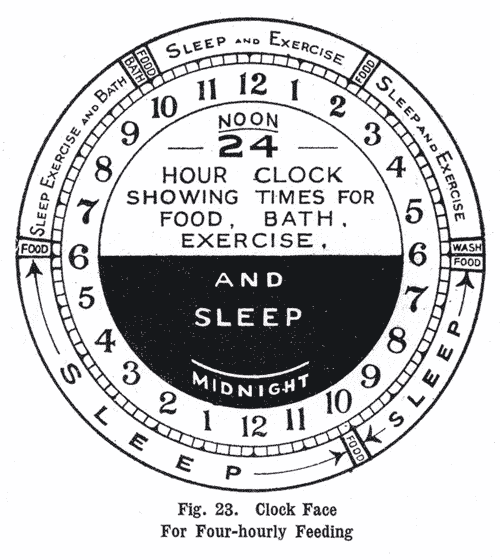
There was also a shift in emphasis in how child welfare societies – the numbers of which had mushroomed during the 1920s – dealt with poor white children. No longer did they only work to ensure that white children were sent to school and adequately cared for by their parents, but they began to focus on how these children were fed.
I’m still trying to account for this new concern about the effects of malnutrition on white children. I think that it was due largely to an international scientific debate about the significance of nutrition in raising both physically and intellectually strong children. Louis Leipoldt – Medical Inspector for Schools in the Transvaal, food writer, Buddhist, poet, and Afrikaner culture broker – was particularly aware of this new thinking about childhood development and nutrition, and wrote about it extensively in publications on child health and welfare in South Africa.
In a report of a survey of the health of children in the Cape published in 1922, the province’s Medical Inspector of Schools, Elsie Chubb, argued that malnutrition was widespread in the Cape’s schools for white children. In most schools, around 10% of the pupils were malnourished. In one school in the rural Karoo, 79% of children were found to be severely malnourished.
Chubb recognised that malnutrition was not purely the result of an inadequate supply of food – although it was certainly the case that many poor parents simply couldn’t afford to buy enough food to feed their children – but of poor diet. Some child welfare volunteers wrote of children sent to school on coffee and biltong, and who returned home at the end of the day for a basic supper of maize meal and cheap meat. Chubb wrote that far too many children were fed on a diet heavy in carbohydrates and animal protein. Children did not eat enough fresh fruit and vegetables, and milk. She recommended that feeding schemes be established to supplement children’s diets with these foodstuffs.
Helen Murray, the headmistress of a girls’ school in Graaff Reinet and active member of the town’s child welfare society explained the contemporary understanding of the link between malnutrition and poor whiteism particularly well in 1925:
In the winter of 1918 our schools had regular medical inspection for the first time. The doctor who inspected told some of us that he had found some fifty children in our poor school suffering from malnutrition and spoke strongly of the results of such a condition. The children were not in danger of dying of starvation, they had dry bread and black coffee enough to prevent that, but they were in danger of growing up to be ‘poor whites’ of the most hopeless type. The body insufficiently nourished during the years of growth would develop physically weak, and the brain as a result would be unfit for real mental effort. The child suffering from years of wrong feeding could not be expected to grow into the strong, healthy, clearheaded man or woman our country needs today, and will need ten and twenty years hence. To see that the underfed child is well fed is not a matter of charity, but must be undertaken in self-defence.
As a result of the inspection, the child welfare society found a room in the town where between fifty and ninety children could be provided with ‘a good, hot meal’ on every school day:
We had been told that these children could be saved from growing up weaklings if they could have one good meal of fat meat, vegetables or fruit, on every school day of the year….
We have the satisfaction of knowing that there has been a marked improvement in the health of the children and of hearing from a Medical Inspector that she has found the condition of the children here better than in many other schools of the same class.
Murray’s experience in Graaff Reinet was not unique. As child welfare societies were established in the towns and villages of South Africa’s vast interior, their first work was usually to establish soup kitchens, either in schools or in a central locations where schoolchildren could be sent before the school day – for porridge and milk – and at lunchtime, for soup or a more substantial meal, depending on the resources of the local society.
In Pietersburg (now Polokwane), to eliminate the stigma of free meals for poor children, all white children were provided with a mug of soup at lunchtime. Better-off parents paid for the soup, thus subsidising those children whose parents could not contribute. In Reitz, local farmers, butchers, and grocers donated meat and vegetables to the soup kitchen, and in Oudtshoorn children were encouraged to bring a contribution – onions, carrots, or cabbage – to their daily meal.
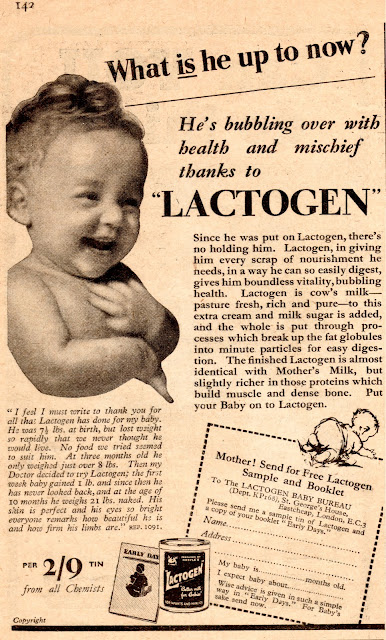
The National Council for Child Welfare, the umbrella body established in 1924 which oversaw the activities of local child welfare societies, liked to emphasise the fact that it was concerned for the welfare of all children, regardless of class or race. Some welfare societies, and particularly those in areas which had large ‘locations’ for black residents, did establish clinics and crèches for black children. But most of the NCCW’s work was aimed at white children in the 1920s and 1930s, and the same was true of the South African state. By the 1920s, most municipalities in towns and cities made free milk available to poor white mothers with babies and very young children.
Increasing state involvement in child welfare, alongside the work of independent societies, had a significant impact on the health of white children in South Africa during the early twentieth century. But it was only because of the growing prosperity and better education of the majority of white South Africans after World War II that white poverty and malnutrition were gradually eradicated in the 1950s and 1960s.
By historicising poverty – by understanding that white prosperity in South Africa is a relatively recent phenomenon – we can understand it as a phenomenon which is not only eradicable, but which is also the product of a range of social, economic, and political forces. As South African governments and welfare organisations were able to reduce white poverty and malnutrition dramatically during the early twentieth century, so it is possible for contemporary governments to do the same.
But charity and soup kitchens were not the sole cause of the disappearance of white poverty and malnutrition. Jobs, education, and better living conditions were as – if not more – significant in ensuring that white children no longer went hungry.
Further Reading
Texts cited here:
SE Duff, ‘“Education for Every Son and Daughter of South Africa”: Race, Class, and the Compulsory Education Debate in the Cape Colony,’ in Citizenship, Modernisation, and Nationhood: The Cultural Role of Mass Education, 1870-1930, eds. Lawrence Brockliss and Nicola Sheldon (Basingstoke: Palgrave Macmillan, 2011).
E.G. Malherbe, Education in South Africa, vol. I (Cape Town: Juta, 1925).
E.G. Malherbe, Education in South Africa, vol. II (Cape Town: Juta, 1977).
E.G. Malherbe, Report of the Carnegie Commission of Investigation on the Poor White Question in South Africa, vol. III (Stellenbosch: Pro Ecclesia-Drukkery, 1932).
Sarah Gertrude Millin, The South Africans (London: Constable, 1926).
Jennifer Muirhead, ‘“The children of today make the nation of tomorrow”: A Social History of Child Welfare in Twentieth Century South Africa’ (MA thesis, Stellenbosch University, 2012).
Other sources:
Vivian Bickford-Smith, Ethnic Pride and Racial Prejudice in Victorian Cape Town (Johannesburg: Wits University Press, 1995).
Colin Bundy, ‘Vagabond Hollanders and Runaway Englishmen: White Poverty in the Cape Before Poor Whitesim,’ in Putting a Plough to the Ground: Accumulation and Dispossession in Rural South Africa 1880-1930, eds. William Beinart, Peter Delius, and Stanley Trapido (Johannesburg: Ravan Press, 1986).
J.M. Coetzee, White Writing: On the Culture of Letters in South Africa (New Haven: Yale University Press, 1988).
Saul Dubow, A Commonwealth of Knowledge: Science, Sensibility and White South Africa 1820-2000 (Oxford: Oxford University Press, 2006).
Marijke du Toit, ‘Women, Welfare and the Nurturing of Afrikaner Nationalism: A Social History of the Afrikaanse Christelike Vroue Vereniging, c.1870-1939’ (D.Phil. thesis, University of Cape Town, 1996).
Hermann Giliomee, The Afrikaners: Biography of a People (Cape Town: Tafelberg, 2003).
Isabel Hofmeyr, ‘Building a Nation from Words: Afrikaans Language, Literature and Ethnic Identity, 1902-1924,’ in The Politics of Race, Class and Nationalism in Twentieth-Century South Africa, eds. Shula Marks and Stanley Trapido (London: Longman, 1987).

Tangerine and Cinnamon by Sarah Duff is licensed under a Creative Commons Attribution-ShareAlike 3.0 Unported License.








 Tangerine and Cinnamon
May 21
National Kitchens
It was my birthday a couple of weeks ago and my parents gave me a copy of the new revised English edition of that Bible of Afrikaans cooking, Cook and Enjoy. It’s testimony to the ubiquity of the book that I find myself referring to it by its Afrikaans title Kook en Geniet, rather than its English name.
Kook en Geniet is the Afrikaans Mrs Beeton’s Book of Household Management. Published as a guide to housekeeping and cooking for young brides in 1951 by Ina de Villiers, a Stellenbosch-based home economist, it has never been out of print. There are very few Afrikaans households which do not possess at least one copy of the book – and, like Mrs Beeton, its success lies partly in the fact that it is regularly updated.
De Villiers herself was responsible for testing and re-testing recipes, and for producing new editions of Kook en Geniet. Her long-standing association with the book helped Kook en Geniet to gain its reputation for being a fail-proof authority on Afrikaans cooking. Since her death in 2010, her daughter, Eunice van der Berg, who also happens to be a home economist, has taken over responsibility for it.
There is no single version of Kook en Geniet. Each edition retains a core of essential recipes, but methods and ingredients change as new products appear. Dishes are added and, less frequently, subtracted as culinary fashions evolve. De Villiers wrote in the preface to the 1992 edition:
My edition contains recipes for moussaka and lasagne. But it’s not for these that I use Kook en Geniet: it’s for staples of Afrikaans cuisine, like buttermilk rusks, Hertzoggies, quince chutney, vinegar pudding, and prickly pear jam. It’s a supremely practical recipe book. Helping out at the pancake stall which seems to accompany every major event – from agricultural shows to local government elections – in small town life? There’s a recipe to make enough batter for a hundred pancakes. Need to make bobotie for fifty at the church fete? Serving sosaties to eighty people at a barbeque? Kook en Geniet will come to the rescue with sensible, authoritative advice.
For anthropologists and historians interested in food, the value of Kook en Geniet lies in the fact that it changed as tastes evolved. It does not present readers with a static, inflexible view of ‘Afrikaner cuisine’. It acknowledges – tacitly – that cooking alters over time.
It’s not, though, the only source on what I’ve called Afrikaans or Afrikaner cuisine – more frequently referred to as boerekos, which translates literally as ‘farmers’ food’, but signifies considerably more than that. Boerekos is the homely, comfort cooking associated particularly with rural Afrikaans living. A wildly popular new series on the Afrikaans cable channel Kyknet, titled simply Boerekos, interviews a collection of Afrikaans women cooking their favourite, old-fashioned boerekos, from mosbolletjies to pie.
Programmes like this one, as well as other books on boerekos, seek to frame it as an unchanging cuisine: as a form of cooking which has remained reassuringly the same during a century of tumultuous change. For Afrikaner nationalists before and during apartheid, food was a useful way of forging a new, unified and distinct Afrikaner identity. As they codified and regularised Afrikaans, so they sought to create a unique Afrikaner cuisine.
C. Louis Leipoldt, culture broker, poet, journalist, doctor, Buddhist, and eugenicist, filled several journals with recipes he collected from friends, acquaintances, and people whom he came across while working during the 1920s and 1930s. (These are now held by the National Library in Cape Town.) He wrote about these recipes and rural cooking for Die Huisgenoot, a popular magazine with a distinct enthusiasm for nationalism, between 1942 and 1947. In 1933, at the height of the Afrikaner nationalist revival, he published Kos vie die Kenner (Food for the Expert), a collection of a more than a thousand recipes. Polfyntjies vir die Proe, Three Hundred Years of Cape Wine, and Leipoldt’s Cape Cookery appeared posthumously.
One of the ironies of boerekos is that so much of it is derived from the cooking of the slaves who were transported to the Cape from southeast Asia during the seventeenth, eighteenth, and early nineteenth centuries. The sambals, atchars, and chutneys of Afrikaner cooking are a particularly obvious debt to the food traditions imported to South Africa from present-day Indonesia and Malaysia.
Although Leipoldt, an unusually thoughtful nationalist, acknowledge that many of the recipes he found were cooked and invented by ‘Malay’ women – a term which he used to describe the largely Muslim and Afrikaans-speaking descendants of slaves who lived in the Cape –their presence gradually disappeared in other, later boerekos recipe books.
There is no neat boundary between Afrikaner cuisine and what most South Africans dub ‘Cape Malay’ cooking: there are recipes for bredie (mutton stew), bobotie, and sosaties (kebabs) in both boerekos and Malay recipe books. But in order to use food to construct distinct, discrete national or group identities, the differences between these two cuisines had to be emphasised over their similarities.
Nationalisms have long co-opted food and cooking to construct national identities. Leipoldt’s recipe books are the first in an extensive literature which seeks – both overtly and inadvertently – to construct an Afrikaner cuisine. It’s telling that the Afrikaanse Taal en Kultuur Vereeniging (Afrikaans Language and Culture Organisation), once strongly allied to the National Party but now a society which works towards the promotion of Afrikaans as a language, bestowed Ina de Villiers with its Afrikoon prize in 2010 for furthering the cause of Afrikaans.
But minority groups use food and recipes in similar ways – to construct, maintain, and assert identities, often in the face of discrimination and social and political marginalisation. Cass Abrahams as well as other Cape-based women have created a rich literature on ‘Cape Malay’ cooking, often basing their writing on recipes collected from, and donated by, local women. These are as much social histories as they are cookery books.
Similarly, one of my favourite South African recipe books, Indian Delights, was compiled by a community organisation, the Women’s Culture Group in Durban. First published in 1961, the book has been revised several times. My mother’s copy – which I covet – is the 1982 ‘Enlarged Super Edition.’ As the editor, Zuleikha Mayat, writes in the introduction, the recipes were
The book is as much an assertion of a distinct form of South African Indian cooking as it is a record of how a group of women cooked for their families in Natal during the second half of the twentieth century. But it is also an attempt to preserve a culinary tradition at risk of being forgotten as family life changed:
As a result of this ‘a good reliable cookery book has become essential’.
It’s partly because of this extensive collection of recipe books – from Indian Delights to Kook en Geniet – that it’s particularly obvious that there is no, single homogenous South African cuisine. One of the best collections of South African recipes, African Salad demonstrates this particularly well: it’s a series of photographs and short interviews with of a more-or-less random selection of South Africans on their favourite meals. The recipes are as varied as the interviewees.
I’ve been struck while watching the South African version of the MasterChef franchise by the absence of references to the African cuisines of South Africa. During one episode in which the contestants were required to barbeque, one (black) Twitter user commented jokingly that the black contestants would struggle because they would prefer over- rather than underdone meat.
So far the dominant cuisine (the meta-cuisine?) of the show has been broadly western. It is this which is most closely associated with ‘fine dining’ (hateful phrase). Indeed, I was annoyed when a black contestant was criticised for cooking a steak too well: a liking for pink, lightly cooked meat is both a relatively recent phenomenon and culturally specific. Why should someone be penalised if she has cooked meat according to the dictates of another cuisine?
A couple of contestants have cooked African dishes and I’ve watched those with the most curiosity: as a white South African raised in the Western Cape, I feel that I have a fairly good grasp of Afrikaans and Malay cooking, but African cuisine still eludes me. I know of certain dishes and have seen sheep heads and walkie talkies (chicken heads and feet) being sold, but this is as far as my knowledge goes.
I know that there probably isn’t a single ‘African cuisine’ or African culinary tradition in South Africa – that it must differ between regions and has changed over time. There are, to my knowledge, no substantial recipe books dedicated to this country’s African cuisines – although do please feel free to enlighten me if there are.
With the current wave of enthusiasm for local producers, it’s striking that the various markets which have sprung up around South Africa have tended to model themselves on a foreign – mainly European – model. They are Borough Markets in miniature. These new ingredients – these cheeses, sausages, and free-range duck and chicken – are sold to be used in cassoulet, poule au pot, and arrosto di maiale al latte. We use local products for overseas cuisines.
I’m not some mad nationalist loon who advocates that we only eat local cuisines, but as South African society changes during the early twenty-first century – as urbanisation increases and as our middle class expands – we are, as in the case of any rapidly evolving society, in danger of losing a lot of culinary knowledge. This is a pity: not only do food and cooking provide useful ways of understanding how societies function, but it also strikes me as deeply strange that the white, middle-class customers of the Neighbourgoods Market in Cape Town know more about the cooking of northern Italy than they do of the Eastern Cape. Or Langa, which is right next door.
Tangerine and Cinnamon by Sarah Duff is licensed under a Creative Commons Attribution-ShareAlike 3.0 Unported License.