Skip to content

Posts from the ‘history’ Category

Fragments

On Sunday I went on a guided tour of Sophiatown, presented by the area’s cultural and heritage centre. It was the 59th anniversary – to the day – that police entered the suburb to clear it of its residents. Sophiatown tends to represent two things to South Africans: on the one hand, the vibrancy of life in multiracial and multicultural suburbs in early twentieth-century South Africa. Sophiatown attracted writers, musicians, and activists to a socially mixed suburb – one where Dr AB Xuma, President of the ANC during the 1940s, could buy a grand, wooden floored and high ceilinged house with ample garden, but where poor families squeezed into dank, dirty, and often crime ridden slums.

At the Sophiatown Heritage and Cultural Centre

At the Sophiatown Heritage and Cultural Centre

And on the other, it represents the forced removal of people partly as a result of the Group Areas Act (1950), which segregated all residential areas according to race. As a ‘mixed’ suburb, Sophiatown – alongside District Six in Cape Town, for instance – was deemed to be in contravention of this legislation. Over the course of eight years, Sophiatown’s residents were moved to areas on the edges of Johannesburg: Africans to Meadowlands, Asians to Lenasia, and coloured people to Eldorado Park. The area itself was bulldozed, rebuilt, and rezoned as white. It was renamed Triomf (or ‘triumph’). (And was the subject of a harrowing and damning 1994 novel by Marlene van Niekerk.)

In 2006, the Johannesburg City Council restored the suburb’s name to Sophiatown, and there have been several attempts to excavate the area’s complex – even hidden – past. The Sophiatown Heritage and Cultural Centre has an exhibition of photographs of Sophiatown before the bulldozers arrived, and attempts to provide some sense of what it was like to live there. One of its most successful exhibits is a large, rectangular Perspex box filled with sand and what appears to be, on first glance, rubbish.

The 'ghost house' - one of the three buildings to survive the bulldozing of Sophiatown.

The ‘ghost house’ – one of the three buildings to survive the bulldozing of Sophiatown.

But the objects partially hidden by brown dirt are things dug up by Sophiatown’s new residents – those who moved into Triomf – since the early 1960s: frying pans, children’s toys, cutlery, combs, and even sewing machines which families had to leave behind in the chaos of forced removal. What makes the display so poignant – other than the way it demonstrates how apartheid legislation was worked out on a domestic, personal level – is that it connects the suburb’s past and present residents in a shared remembrance of a profoundly violent episode.

It also resonates during the Centre’s guided walk around Sophiatown. Only three buildings survived the bulldozing: Xuma’s house (currently the site of the Centre), a decrepit building now renamed the ‘ghost house’, and the Church of Christ the King – in some ways the epicentre of resistance to the removals. The tour moves between these buildings, making detours to the remains of the oak tree in Bertha Street, and to part of a wall – once part of the Odin Cinema – which miraculously was not torn down during the late 1950s.

The memorial to Father Trevor Huddleston.

The memorial to Father Trevor Huddleston.

Today, Sophiatown looks much the same as any working-class South African suburb, and, despite the valiant efforts of the tour guide, it was difficult to imagine how bustling and full of people – and energy – it must once have been. What did help was the presence two former residents, both of them anti-apartheid activists, whose memories were able to evoke the suburb before and during its destruction.

Over the course of the afternoon, I was reminded powerfully of Antoinette Burton’s remarks about the archive, and historians’ relationship with the archive:

The history of the archive is a history of loss…. I would argue … that it is the archive itself which should be subject to continuous suspicion and radical doubt, serving as it often does to normalise, through classification and re-representation, what are invariably ‘fragmented, fractured and disassembled’ strands of historical evidence and experience. If we fail to recognise how historical practice (or, indeed, any practice of looking) is in danger of reassembling and recalcifying what counts as evidence … we miss a valuable opportunity to interrogate our own investments in those domains.

The few fragments that remain of Sophiatown – the objects unearthed in residents’ gardens, the two houses, the wall, the tree, the church, photographs, newsreels, and people’s memories – draw attention to the incomplete, piecemeal nature of the archive. We have access to the past only through the bits and pieces – the papers, objects – which have managed to survive bulldozers, fire, water, decay, and archivists’ best intentions.

As a result of this, argues Burton, historians need to be acutely aware of how they assemble these fragments into portraits – interpretations, narratives – of the past. There has been a tendency to romanticise Sophiatown in its heyday, not only to ignore the crime and poverty endemic to the suburb, but also to erase histories of anti-apartheid groups other than the ANC which were active in the area. Writing a more complicated, nuanced social history of Sophiatown is a useful way of demonstrating how historians, themselves, are complicit in remaking the past, and that the past is being constantly remade and reinterpreted.

Sources

Antoinette Burton, ‘Thinking beyond the Boundaries: Empire, Feminism and the Domains of History,’ Social History, vol. 26, no. 1 (Jan., 2001), pp. 60-71.

Creative Commons License
Tangerine and Cinnamon by Sarah Duff is licensed under a Creative Commons Attribution-ShareAlike 3.0 Unported License.

Readymade

Every summer my mother and I make preserves. We have two staples – Christmas chutney and red pepper relish – which, occasionally, we’ve augmented with piccalilli, boerenjongens (currants in brandy), and pickled pears. When we started this more than a decade ago, chutney- and jam-making was seen as the sort of thing that grandmothers did, and this despite the long tradition of preserving and pickling in South Africa’s fruit growing regions.

More recently, though, preserving has become fashionable. Recipes for chutneys abound on hipster blogs and cooler recipe sites; Punk Domestics has an enormous following; and even Girls features a maker of ‘artisanal mustard’ (Charlie’s profoundly irritating girlfriend, Audrey). This, though, is part of a wider trend: a rediscovery of domesticity, particularly – although not exclusively – among young women in their 20s and 30s. The existence of a café specialising in crafts – Drink, Shop, Do – in London’s Kings Cross, points to the numbers of people who are part of this trend.

DSCN9575

Their enthusiasm for cooking-from-scratch, sewing, knitting, gardening, and other domestic activities is the product of a range of factors (many of them explored in Emily Matchar’s Homeward Bound: Why Women are Embracing the New Domesticity (2013)). These include the evolution of feminism to reclaim work once dismissed as feminine and, thus, unimportant; a shift in values as Generation Y attempts to carve out new, meaningful forms of employment; and the 2008 financial crash. Austerity has played out culturally: in a new interest in mending and making-do.

Most obviously, a willingness to make ketchup and bread and mayonnaise is part of a backlash against Big Food: as revelations around, among other things, food contamination, the exploitation of workers, and cruelty to animals continue to emerge, there has been a gradual turning-away from processed food. This, though, is nothing new (there was a similar whole food movement in the 1970s), nor particularly prevalent beyond the affluent middle classes.

Unsurprisingly, this backlash against the readymade has been accompanied by a fascination for the post-war cooking which relied heavily on processed food. The Internet abounds with lists of appalling recipes containing instant jelly, fizzy soft drinks, and canned meat. Nigella Lawson devoted a section to ‘trashy’ food in Nigella Bites, explaining that she defines ‘trashy’ as any food relying on at least one readymade ingredient: Maryland cookies in her chocolate and lime cheesecake, for instance.

DSCN9578

There is some justification for this ridicule – so many of these dishes range from the bizarre to the mildly pornographic. Adding lime jelly to tinned tuna, or turning Vienna sausages into fondue, suggests that some home economists employed by food companies in the 1950s and 1960s really did have cloth palates.

But it’s worth taking enthusiasm for the readymade seriously. In his excellent – and deeply funny – blog Caker Cooking, Brian Francis cooks his way through the community, school, and church recipe books constituted of the kind of everyday dishes made by, largely, middle-class families. (And although his blog is Canadian, I’ve encountered similar pamphlets and recipes in South Africa and Australia.) This is his definition of caker cooking (and he is being satirical, so his third point is not meant to offend):

1. A ‘magic’ ingredient. We cakers love to think we’ve discovered some sort of short cut. Usually, this short cut requires a can opener.
2. Ease. The recipe has to have as few steps and as few ingredients as possible.
3. Frugality. There’s nothing more wasteful than spending good money on food.

Indeed, it is for these reasons that processed food held such appeal to women – many of them entering the workplace in greater numbers – from the middle of the twentieth century to the present: that this food is quick and easy to prepare, and it’s cheap. It’s difficult to imagine, now, the amount of labour that used to go into the preparation of food. And, as the food writer and anti-poverty campaigner Jack Monroe has noted over and over again, tinned food is considerably cheaper than fresh.

Calvin Trillin is one of the few food writers who recognises that the only way of describing honestly about how people eat is to acknowledge that processed food is integral to the way most of us cook. (Try cooking through a winter without tinned tomatoes.) That cream of mushroom soup is a vital ingredient in so many distinctive regional dishes; that Texas barbeque is served with cheap, white processed bread and that’s ok.

My point is that however wonderful it is that there has been a rediscovery and re-embrace of old-fashioned forms of cookery – and as one who makes her own granola, bakes her own bread, and who has dried her own tomatoes, I am part of this too – this movement is small, and one limited to those who have the time and resources to spend hours making pickles or fruit leather. Instead of arguing for a wholesale rejection of all forms of processed food, what we should focus on is ensuring that it is better: that it is healthier, properly labelled, and produced in humane, fair conditions.

Creative Commons License
Tangerine and Cinnamon by Sarah Duff is licensed under a Creative Commons Attribution-ShareAlike 3.0 Unported License.
Christmas in a Camp

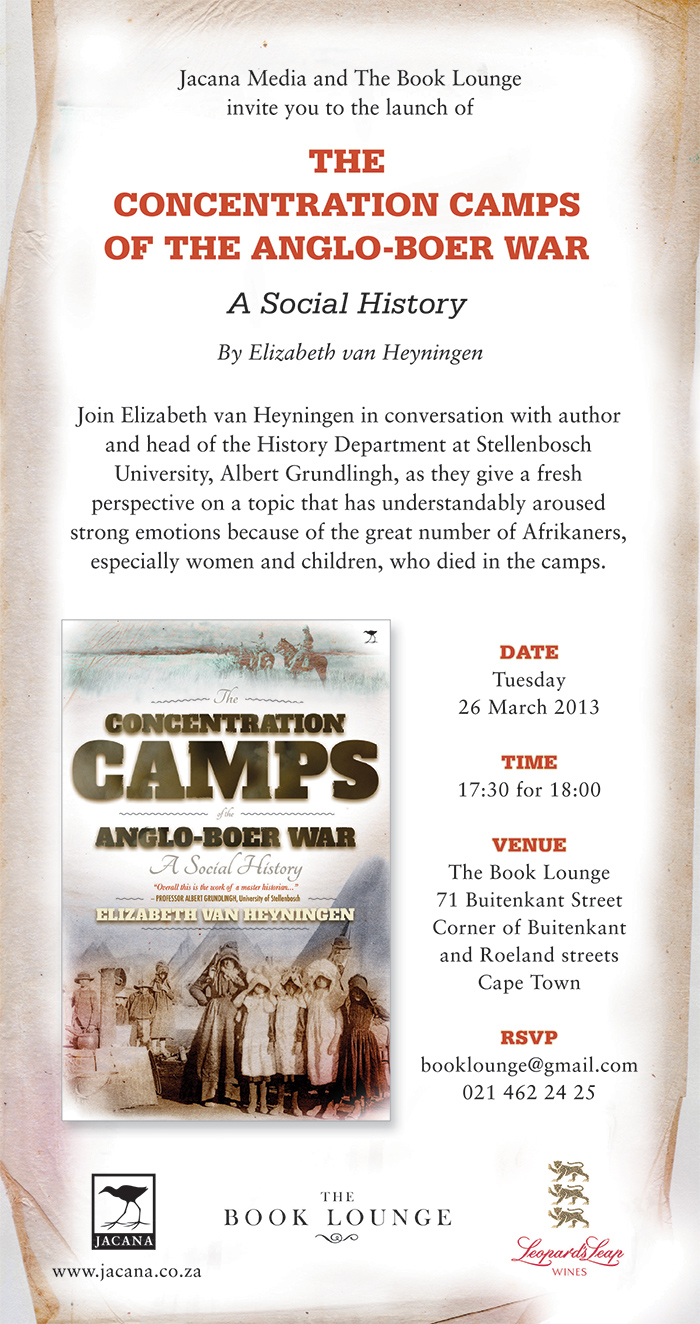
Earlier this year I went to the launch of Elizabeth van Heyningen’s The Concentration Camps of the Anglo-Boer War: A Social History at the Book Lounge in central Cape Town. The result of years of hard work in archives scattered around South Africa and Europe, this book has become – and will remain for some time – the standard history of the camps established for Boer and black civilians during the South African War (1899-1902).

Instead of the usual collection of hipsters in search of free food, academics in need of free wine, and people from the publishing world, this was attended by a largely elderly, white and Afrikaans audience. (I was easily the youngest person there. I am 31.) When Elizabeth and Albert Grundlingh, who hosted the event, opened the floor to questions, she received question after question about why she does not describe the deaths of so many Boer women and children in the camps as genocide.

There were 14,154 officially recorded deaths in the camps for black civilians, but it is likely that the number was closer to 20,000. Estimates of deaths in Boer camps range from 25,000 to 34,000. In these camps, 81 per cent of deaths were children. Despite these incredibly high numbers, as Van Heyningen explained, the camps were not part of a deliberate British policy to exterminate the Boer population. (In contrast, for example, to the genocide of the Herero in German South West Africa between 1905 and 1906.)

The tragedy of the camps was that people died as a result of chaotic and negligent mismanagement and poor provisioning. Inmates arrived usually in poor health, and were victims of the epidemics of measles and typhoid, for instance, which swept the camps. In fact – and this is one of the most important arguments in Van Heyningen’s scholarship on the camps – the British saw them as a means of transforming the white populations of the two Boer Republics into the future subjects of a united South Africa firmly under British rule.

Concentration-Camps

This interpretation of the camps almost caused a riot in the Book Lounge. I was almost, but not entirely, surprised. Firstly, because it underscored – again – the gulf between debates among guild historians and the reading public. And, secondly, because Boer suffering in the concentration camps was one of the most powerful strands within a historiography constructed in the 1920s and 1930s to bolster Afrikaner nationalism.

The point is not to deny that people – both black and white – suffered both physically and psychologically in the camps, but, rather, to argue that camps deserve more detailed and nuanced study as a result of the fact that British authorities saw them as being crucial to the making of a modern South Africa. Hospitals and schools, in particular, were used to pull Boer families into what Alfred, Lord Milner, and other officials believed to be the light of British rationality, order, and civilisation.

Which brings me to Christmas parties. In December 1901, around a year after the first camps for civilians were established and when mortality rates had begun to stabilise and decline in response to a raft of reforms, camp superintendents were ordered, and were provided with the means, to organise treats and celebrations for the inmates of the Boer camps. During the weeks leading up to Christmas, at the Belfast Camp, women in sewing circles and schoolchildren were encouraged to make ‘toys and useful articles’ for presents. On the 25th:

the tree was erected in a large room, and, after partaking of refreshments, the little ones were filed through the room containing the Tree and each drew a number from a bag on entering and received small garment or toy – and on leaving each got in addition a bag containing cake, sweets and dates.

At the Heidelberg Camp, ‘all children in the Camp under the age of 12’ were given ‘1 small jam-tart, 1 parcel sweets dates and biscuits.’ There were sports days with prizes, and lots and lots to eat – in contrast to the usually monotonous rations of camp living. The Irene Camp’s Christmas picnic – held for the schoolchildren – was particularly lavish:

On the day fixed, that is Friday the 20th December, all the Teachers and all the children assembled on the School grounds at 5.30 in the morning and the roll was called, when 900 answered their names. All the wagons in Camp has been requisitioned and every available ox, mule and donkey was inspanned and these wagons with their respective teams conveyed all the School children with their Teachers to the spot where several large Store tents had been pitched the day before, and where 100 men and women helpers were waiting in readiness at the 6 large Army Camp boilers and various numbers of large pots and kettles etc. to do the necessary waiting and cooking. A huge supply of bread and cakes had been baked… An ox had been killed by me the day before and the whole of it was cooked during the day on the spot. The children were served three meals during the day, exclusive of sweets and fruit and coffee, tea etc. and enjoyed themselves by playing games of all kinds and competitive sports amongst themselves.

In other camps, there were full Christmas dinners, with roast chicken, plum puddings, and fruit.

So how to interpret these Christmas parties? All superintendents reported (unsurprisingly) that children appreciated the parties and presents, and games and sports days were well attended. It also appears that some officials went out of their way to provide dinners and picnics which inmates would enjoy and remember. But interpreting these Christmas parties as a moment of happy wartime friendship across enemy lines – as a kind of South African version of the 1914 Christmas truce – would be glib. Although not denying the genuine altruism of some superintendents, these Christmas parties had a series of political and cultural functions.

Funded handsomely by the British administration, the parties were an attempt to foster goodwill: to demonstrate to Boer civilians that the camps were being run in their best interests by a benevolent administration. They were also intended to show to an international media – and newspapers did report on the parties – that the camps for Boers had improved since the outcry abroad earlier that year over the high mortality rates.

Perhaps more subtly, these parties also introduced Boer civilians to a tradition which officials believed to be entirely British: to a Christmas with a tree, a roast dinner, plum puddings, and games. Ironically, though, the Christmas traditions replicated in the camps had been invented as recently as the 1840s. Decorated Christmas trees, crackers, and cards had all become popular during the middle of the century, helped along by the increasing buying power of the British middle classes. Carol singing was revived; the Christmas dinner as we know it today emerged in this period. Although some of these rituals were already present in the British religious calendar – gift giving, for instance – they were moved closer to Christmas, and were augmented with borrowed traditions, most notably the tree, from Germany. Christmas was associated with the Victorian cult of domesticity: it was the moment of the year which celebrated the closeness of the family.

This supremely invented tradition was introduced to the camps for Boer civilians as one strategy – among many – for remaking them British. There were no such parties in camps for black civilians – or, at least, there are no records of them. Most of the reports on these camps were destroyed shortly after the war, but it is probable that British authorities balked at the thought of spending more money on black camps, which were already run on the cheap. Their inmates were made to grow their own food, for instance. Whereas Boer children were sent to school, to be educated to be future subjects of the British Empire, black children were to be taught how to work – and performed manual labour alongside their parents, while some were hired out as domestic servants in towns and cities. In this way, Christmas parties assisted in the moulding of white, imperial identities.

Creative Commons License
Tangerine and Cinnamon by Sarah Duff is licensed under a Creative Commons Attribution-ShareAlike 3.0 Unported License.

Fairytales

I have an odd enthusiasm for Iceland. I think it stems partly from the fact that in Brave New World, troublesome and insubordinate academics are exiled there. Although when Aldous Huxley published the novel in 1932, the Iceland he imagined was one of the least technologically advanced nations in Europe – and not the socially and politically progressive place it is imagined to be today. In fact, much of the current interest in Iceland stems from its response to the 2008 crash: Icelanders did what so many in the West wanted to do. Laurie Penny writes:

What most of the world appears to believe is that, some time between 2008 and 2009, the country refused to bail out its banks when the global economy crashed and that instead it jailed all of its bankers, overthrew the government, wrote a new constitution on the internet and elected a lesbian prime minister who solved all the nation’s problems with a flick of her magic wand.

Iceland became, seemingly, a Guardian reader’s paradise. But the reality is more complex, and, possibly, less attractive:

Although it is true that the three largest banks – Glitnir, Kaupthing and Landsbanki – were allowed to go bust in 2008, this was hardly a political choice: Iceland could do nothing else, because their debts were ten times the size of its GDP.

Popular protest did force the writing of a new constitution, but this has never been implemented. Earlier this year – for all the promise of Iceland being lead by a Pirate Party – Icelanders re-elected the centre-right coalition which was in power before the recession. And Iceland is no feminist paradise either.

But it remains a compellingly fascinating place. I think Penny sums this up particularly well:

Iceland has always been a land self-authored in myth and legend. Its lava fields and glacial plains are supposedly populated by elves, trolls and huldufólk – hidden folk – in whom 80 per cent of the population believes. At least, that’s what the PR for Icelandair wants you to think… In fact, it turns out that only 30 per cent of the population believes that fairies exist, although that third is prepared to agitate for roads to be diverted around their supposed homes. This is remarkable enough that one wonders why the tourist board bothered to exaggerate.

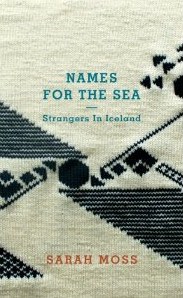
A few months ago, while visiting another city on the same latitude as Scandinavia – Edinburgh – I bought a copy of Sarah Moss’s memoir Names for the Sea: Strangers in Iceland (2012). It’s an account of a British family’s year in Reykjavik, during which Moss taught English literature at the University of Iceland.

Interested in histories of eating and cooking, some of Moss’s most evocative passages are concerned with how she comes to terms with Iceland through food. The availability of a variety of – occasionally rotting, often seriously under-ripe – exceptionally expensive fresh produce imported from all over the world, suggested the enthusiasm with which Icelanders embraced consumerism during the boom. (Another potent example of this was the stigma attached to buying second-hand goods and clothes. Her efforts to buy a used washing machine were greeted with appalled horror by many of her colleagues and friends.) In fact, she and her family packed with them the foods of home – ‘the manifestations of English metropolitan middle-class identity’:

We have five litres of olive oil, a dozen tins of anchovies and a dozen jars of capers, miso paste, pomegranate syrup, cocoa nibs, seeds for growing coriander, basil and mint. Smoked chillies, sumac, allspice, dried dill, cumin. Preserved lemons, three kinds of paprika, dried lime leaves.

On a quick trip back to Kent, they bought and smuggled into Iceland

two whole salamis, a wheel of Kentish cheese … approximately three kilogrammes of chocolate, from Cadbury to Valrhona, two Christmas cakes and a stollen, half a dozen russet apples, a bag of unwaxed lemons and a couple of dozen tins of anchovies, capers and vine leaves.

Anxious about being caught by immigration officials, she hurries her husband and children through the airport. Max, her eldest son, ‘looks anxiously into [her] face. He’d make a lousy chorizo mule.’

namesforthesea

Moss is not unaware of the irony of importing what are, essentially, the ingredients of Mediterranean peasant food to Iceland, a nation apparently with a close relationship with the natural world. However, she sympathises with the taste that Icelanders’ developed for imported food, given the relative monotony of diets until, at least, the mid-twentieth century. These were heavy in smoked and dried fish, and meat often preserved in whey, blood pudding and liver sausage, potatoes, and plenty of dairy products. Grains and green vegetables were a luxury.

These high-fat diets seemed, though, to sustain farmers through long winters. Matthew, a colleague also from Britain, remembered his introduction to rural cuisine in the 1960s:

the worst imaginable kind of food I could ever think of was put on the table, steaming salted fish with a terrifying smell to it, and hot sheep fat, and potatoes. That’s all there was. And I knew I was going to be there for six weeks, and I would have to eat it or starve. I told myself, you wanted to come to Iceland, you wanted to find out what it’s like here, you bloody well eat their food, and I forced myself to eat it. And it was delicious, absolutely glorious. It’s one of my favourite dishes today.

Matthew’s answer to why they didn’t fall ill – in the absence of fruit and vegetables – was that they ate a lot of fish:

And Iceland moss, swede, and white cabbage. A lot of white cabbage. … And of course a lot of milk, and skyr [curd cheese].

Why didn’t they get scurvy?

People drank a lot of Iceland moss tea, and they were probably using many more grasses and herbs than is recorded. That knowledge has gone.

I think his point about forgetting what people used to eat is an important one. I was reminded of Moss’s book a little while ago when – for various reasons – I attended a lecture presented by Tim Noakes. Once best known for his deep knowledge of sports science, Noakes has recently developed a reputation for his almost evangelical faith in the carbohydrate-free, meat-heavy Paleo diet.

I was struck by Noakes’s use of eighteenth- and nineteenth-century texts which recommended excluding carbohydrates from diets, to bolster his arguments. And by his insistence that because people – like Icelanders – in the past were able to live healthily off diets consisting mainly of red meat and animal fat we should attempt to replicate them in the twenty-first century.

There are many problems with Noakes’s arguments – not least his dubious methodology in a recent paper – but I’d like to focus on his use of history to argue for a return to what our ancestors (allegedly) ate. As Moss’s friend Matthew makes the point, our knowledge of how eating habits changed over time is patchy, at best. Peasants did not painstakingly record every slurp of nettle tea. Also (and this is taken from a satirical piece, but it’s accurate):

You simply do not see specific, trans-regional trends in human subsistence in the archaeological record. People can live off everything from whale blubber to seeds and grasses. You want to know what the ideal human diet consists of? Everything. Humans can and will eat everything, and we are remarkably successful not in spite of this fact, but because of it. Our adaptability is the hallmark of the human species. We’re not called omnivores for nothing.

Noakes’s reliance on an idealised vision of the past is a significant weakness in his argument. It ignores the fact that we have a tendency to eat as wide a variety of foods as possible: when vegetables and fruit became more easily available, Icelanders happily included them in their diets.

The current obesity ‘crisis’ cannot, in other words, be fixed by returning to the mythical diets of the past. It is caused by such a myriad range of factors – ranging from poverty to urban planning – that to blame a taste for carbohydrates is to demonstrate a very narrow understanding of the problem.

Creative Commons License
Tangerine and Cinnamon by Sarah Duff is licensed under a Creative Commons Attribution-ShareAlike 3.0 Unported License.

Ice Cream in Mandela Square

This morning I went to re-register in time for next year’s elections. My voting station is at the Ridge School, an elite primary school for boys perched at the top of the startlingly rich suburb of Westcliff. It is one of the oldest parts of Johannesburg, with its Arts and Crafts mansions and streets lined with old, well-established trees. It is where industrialists, whose fortunes were made on the mines, settled to live in the comfort that a city with cheap land and even cheaper labour could provide.

In some ways, it feels that Westcliff has changed very little since the early twentieth century. There were two black domestic workers, in uniforms and aprons, waiting to check if they were registered to vote. And there was a huddle of affluent white people gathered around the stall operated by the opposition Democratic Alliance. Unsurprisingly, the ANC was nowhere to be seen.

Old is a relative term, though, and particularly for Johannesburg, a city founded only in the mid-1880s. For all that its northern suburbs give the appearance of static, solid, prosperity, it is a city which continues to evolve at a frantic pace: it grows, is torn down and rebuilt, has been run down, and is being gentrified. In fact, the urban forest of Joburg’s affluent areas is a pointed example of the constructedness of this city: planted to provide timber to the city’s mines, the canopy of green and purple which covers old Johannesburg in the summer has created a new ecosystem, replacing the original grassland of the Highveld.

A while ago, some lovely friends took me to dinner and pudding in two parts of the city which also show particularly well how South Africa’s shifting demographics – its growing middle class, in particular – are helping to change the city.

One of the oddest spaces to contemplate this transformation is Mandela Square in Sandton, a suburb in the north of the city which has, since the 1990s and especially after the Johannesburg Stock Exchange moved there in 2000, become an alternative city centre to the old CBD. The middle of Sandton is dominated by shiny corporate headquarters and a collection of high-end shopping malls – one of which is Nelson Mandela Square. Known until 2004 as Sandton Square, the mall was renamed after the installation of a massive, six-metre statue of Nelson Mandela.

The statue – which is slightly out of proportion – is to one side of the piazza at the centre of the mall, and overlooks a fountain. To its left and right are restaurants, some of them branches of popular, but pricier, franchises. We had excellent ice creams at an Italian place, and watched as tourists posed in front of Madiba, and took photographs of the water feature.

Mandela Square – and, indeed, Sandton – is often held up as an example of the crass materialism which has accompanied – and has been produced by – South Africa’s transition to democracy after 1994. Uncomfortably, and ridiculously, it links a depoliticised Mandela – Madiba-as-friendly-giant – to a celebration of post-apartheid consumerism. It is true that Sandton is, to some extent, an unpleasant example of the city-as-anodyne shopping mall. Architecturally, Mandela Square – and Sandton City, and the Sandton Convention Centre, and Michelangelo Towers, and the Da Vinci Hotel – could be just about anywhere, and that, really, is part of the point.

My friends and I began our evening, though, at a wonderful, and in some ways equally incongruous, Thai restaurant in Edenvale, a suburb on the border of Johannesburg and the East Rand. It is one of a collection of towns and settlements established to the east of Joburg as result of mining (for gold and coal) and manufacturing. Recently, though, its low property prices and new malls have drawn the city’s new middle classes. It is, in some ways, the epitome of big city suburbia. And yet, down a not-particularly-lovely street, is a place which serves delicious Thai food.

In some ways, the South African taste for Thai has been driven by the fact that Thailand is one of the few countries to which South Africans may travel without visas, and, even with the current weakness of the Rand, remains relatively inexpensive. Thai restaurants – some of them part of the Wang Thai chain – have popped up in middle-class suburbs, alongside pubs and steak ranches.

Rising above the noise and bustle of Johannesburg – and with a clear view of the Sandton skyscrapers – Westcliff, secure in its incredible wealth, seems to be immune from the change happening around it. But Westcliff is as entangled in Johannesburg’s making as are Sandton and Edenvale: it was shaped and produced by the mineral revolution at the end of the nineteenth century. It was modelled on similar, upper middle-class suburbs in Britain. It is as much a construct as Sandton and Edenvale.

Creative Commons License
Tangerine and Cinnamon by Sarah Duff is licensed under a Creative Commons Attribution-ShareAlike 3.0 Unported License.

Chop Suey in Barberton

A few weeks ago I was accepted on a writing retreat held periodically at Pullen Farm, a facility owned by Wits University about five hours’ drive northeast of Johannesburg. One afternoon we made the short journey to Barberton, a small town whose chief attraction is that there was a short-lived gold rush there more than a century ago.

Like other countries with vast, sparsely populated interiors – I think of Australia and the US – South Africa does weird towns very well. I’d visited Barberton once before, on an epic family road trip in the late-1990s, and we’ve all since remembered it as epitomising rural South African strangeness.  In some ways we’d been primed to look out for the odd, having seen a newspaper headline which screamed ‘Vampire Mermaid Strikes Again!’ in nearby White River. (It’s the ‘again’ which I find so intriguing.)

It’s difficult to pin down exactly what made Barberton so strange: the quiet, deserted town centre in the middle of the day; the old-fashioned shops selling unusual combinations of things (kitchen utensils with shoes, for instance); or the unfriendly townspeople.  It has some magnificent, deserted, Victorian buildings, which sit side-by-side with Art Deco and 1970s brutalist municipal offices.

Now, Barberton has a new shopping centre which seems to be pulling people away from the rather dilapidated main road. But there is still a general dealer there that buys everything ‘from teaspoons to your mother-in-law.’ I found a copy of Die Volkome Huwelik (The Complete Marriage), the Dutch Reformed Church-endorsed sex manual of the 1970s, for R5 at a junk shop also selling mannequins, a till, and a couple of washing machines.

A Barberton junk shop.

A Barberton junk shop.

Barberton seems to be trying harder to make something of its brief moment of international significance in the 1880s, with a collection of museums relating to the gold rush. We had lunch at the Phoenix Hotel, established in 1886 to provide accommodation to visiting mine magnates and better-off prospectors hoping to find their fortunes in the newly discovered gold deposits near the town. With the opening up of richer gold seams on the Witwatersrand, these wealthy investors packed up and moved to Johannesburg.

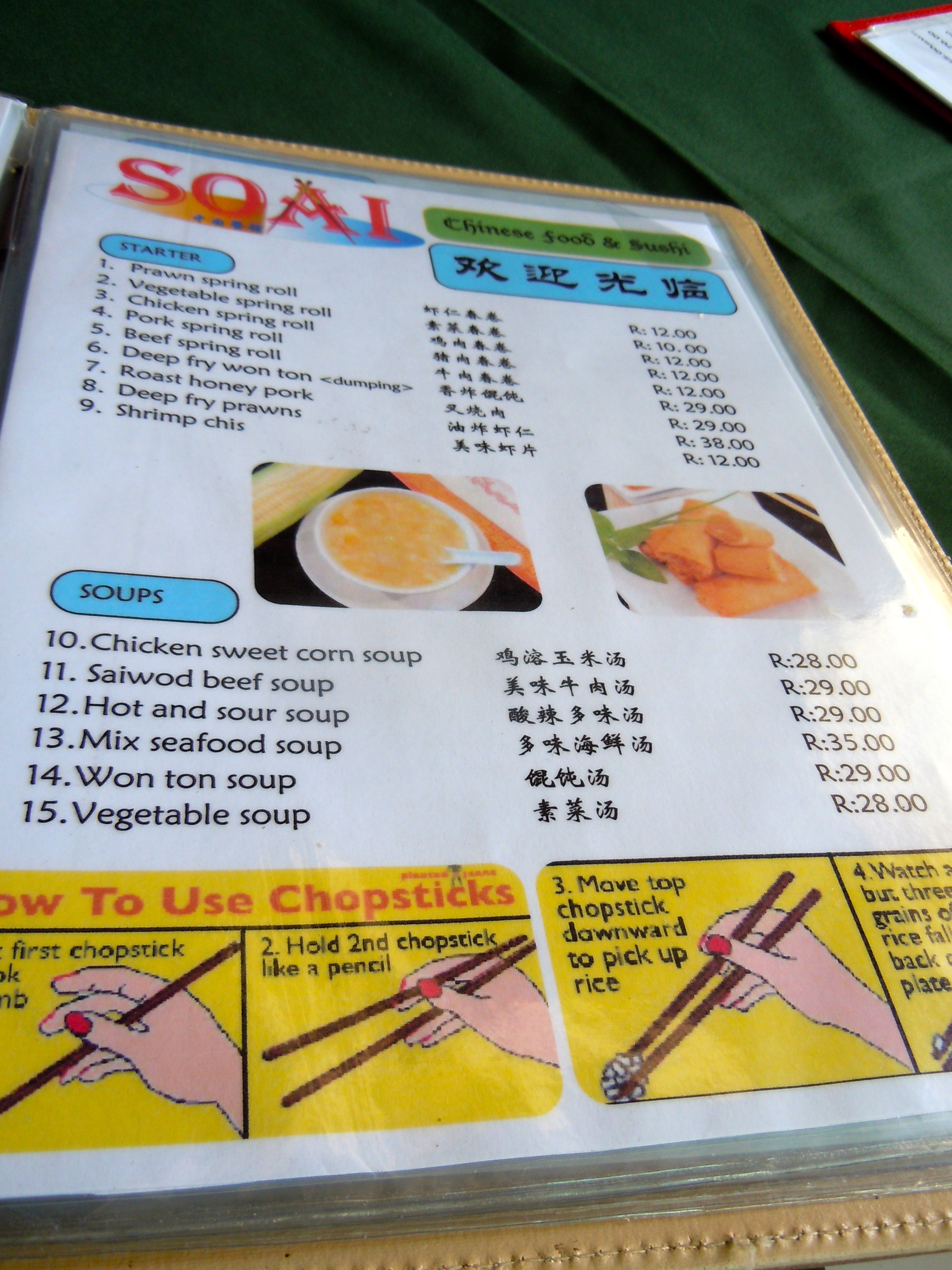
It is now a Chinese restaurant and sushi bar. The menu – which is extensive, and split between the staples of mid-market South African dining and some ‘Chinese’ dishes and sushi – provides diners with a handy guide to using chopsticks. There are lanterns and banners with shiny lettering draped around the restaurant, which was mainly empty.

DSCN9043

I had vegetables and stir-fired noodles, and others had Szechuan beef, prawns with rice, spring rolls, and sushi. I’ve certainly eaten more interesting Chinese food elsewhere, but this certainly counts as one of the most unexpected Chinese meals I’ve ever had.

In some ways, though, the presence of a Chinese restaurant – and one run by a Chinese family – in Barberton should not be at all surprising. In the light of China’s growing investment in Africa, recent immigrants from China have settled across the country, mostly opening small businesses. Along with the inevitable Pep Stores, Sasko bread truck, and branch of Absa bank, the Chinese shop is becoming a feature of rural towns and villages.

DSCN9045

Johannesburg now has two Chinatowns. There has been a small Chinese-South African population, based mainly in the country’s larger cities, since at least the nineteenth century. Between 1904 and 1907, around 63,000 Chinese indentured labourers were brought to the Witwatersrand to work on the mines, but the vast majority of these men returned home afterwards.  Under apartheid, there was an influx of people from Taiwan after it was recognised by the National Party over mainland China.

In 2008 the Chinese Association of South Africa succeeded in compelling the government to reclassify Chinese South Africans as ‘black’ so that they, too, can benefit from post-apartheid black economic empowerment and affirmative action policies. This was in recognition of the fact that Chinese people also were discriminated against on the grounds of their race before 1994.

DSCN9044

There are around 200,000 Chinese people living in South Africa at the moment. The increase in this small population – since the early 2000s, around 24,000 Chinese have settled in South Africa (and I’m not absolutely certain of that figure) – has given rise to warnings of a ‘yellow peril’. Chinese people have been victims of xenophobic attacks, and last year the investigative magazine Noseweek published a disgraceful article alleging that, among other things, Chinese shopkeepers deliberately drive South African businesses into the ground.

This suspicion of recent Chinese immigrants would be interesting were it not quite so old. Similar allegations were levelled against the Chinese in early twentieth-century California and New York, for instance, and particularly on the grounds that Chinese refused, apparently, to integrate socially and culturally.

Ironically, though, the food served so successfully by Chinese cooks to Californian gold diggers or New York construction workers was a kind of hybrid of Chinese – and given the heavily regionalised nature of China’s cooking, there isn’t really a single ‘Chinese’ cuisine – and American cooking. Chop suey and other dishes were invented to use ingredients Chinese chefs could find in the US, as well as to appeal to American tastes.

Having become increasingly accustomed to the more sophisticated Chinese food now fairly easily available outside of China, the menu at the Phoenix Hotel, along with the dragons and fans of the décor, felt strangely retro. It listed the amalgam, ‘Western-Chinese’ dishes – including chop suey – which can be found just about wherever Chinese cooks have set up shop.

Sitting in this small, depressed mining town – there is still a gold mine and a prison, but unemployment is very high – despite the incongruity of eating Chinese food in the Phoenix Hotel, I was struck by the continuities of this situation. The family running the restaurant are part of yet another wave of immigrants – following on from the prospectors and diggers of the late nineteenth century – drawn to a country which seems to offer them a better chance, and certainly more political freedom, than does their homeland. And they continue to serve a cuisine which attempts to be both exotically enticing and comfortably familiar to their customers.

Creative Commons License
Tangerine and Cinnamon by Sarah Duff is licensed under a Creative Commons Attribution-ShareAlike 3.0 Unported License.
The Food Writer as Culture Broker

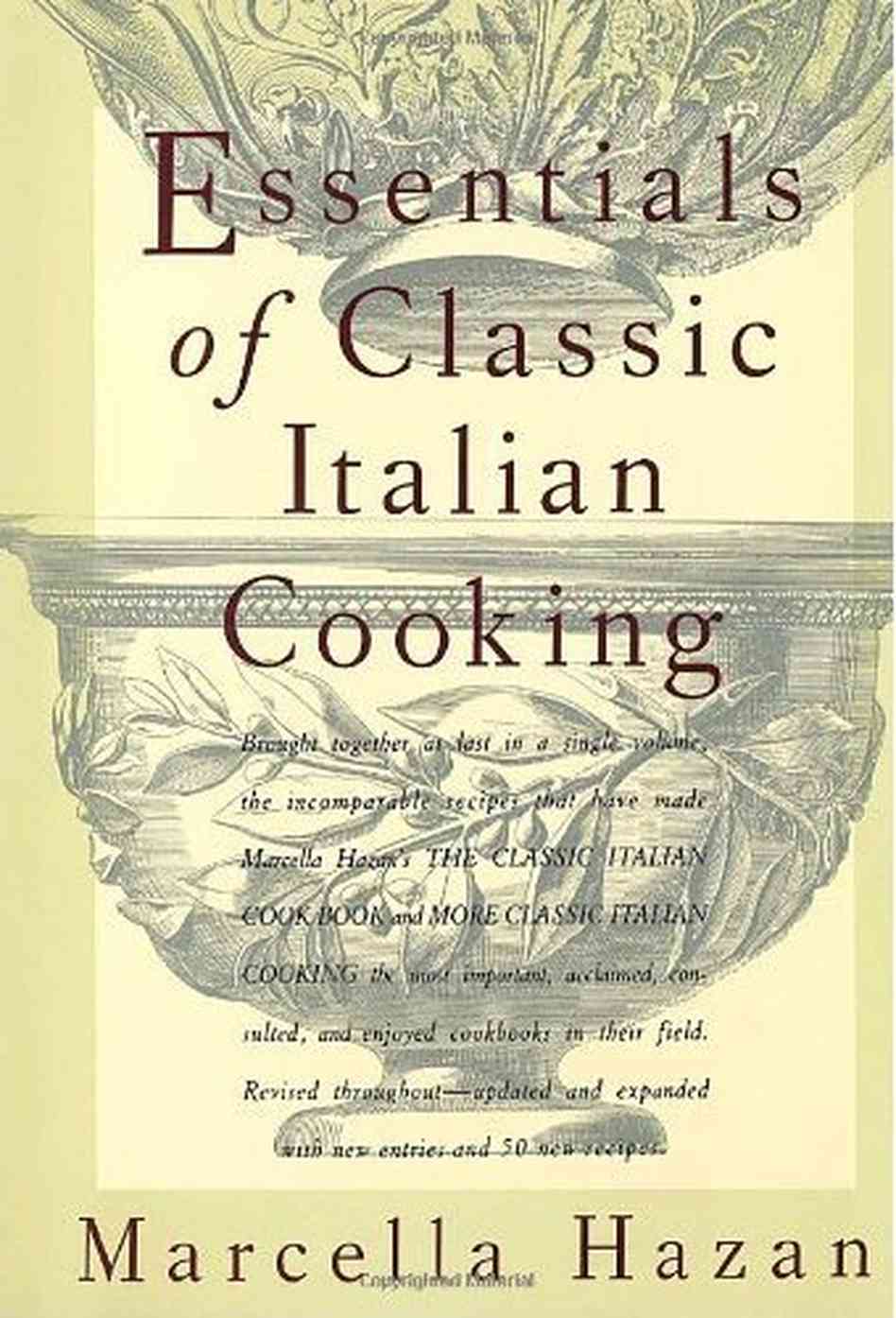
I first came across Marcella Hazan’s tomato and onion pasta sauce on Molly Wizenberg’s blog Orangette. I remembered it – like so many people, I imagine – because of its odd method: simmer a large tin of plum tomatoes in a pan with a peeled, halved onion, and five tablespoons of butter. This sounded so unlikely – so unlike any other recipe I’d ever read for tomato-based pasta sauce – that I was sceptical as to whether it would work. And since then I’ve found the same recipe on nearly every other decent food blog I tend to visit.

I got round to making it last week, after reading so much about Hazan’s life in the incredible number of respectful, and even loving, obituaries and articles written after her death a week ago. The sauce is unbelievably good: it is rich without being sickly, fresh without being too sharp. My only suggestion is that you make it with very, very good tinned, or slightly overripe fresh, tomatoes.

Probably because my knowledge of Italian cooking comes through British sources, Marcella Hazan never featured for me in the same way as did Anna del Conte. The most I’d read about her was in The Pedant in the Kitchen by Julian Barnes:

The writer I find most reassuring … is Marcella Hazan. This came as a surprise when I first started cooking from her. I had always imagined that since Italian cuisine, of all the major European styles, depends on pure and often speedy handling of the freshest ingredients, there was little room for manoeuvre.

Hazan freely lists plausible alternatives; is indulgent about dried herbs; actively recommends tinned tomatoes as tasting better than most fresh; often prefers dried porcini and bottled clams to their fresh equivalents. She spares you suffering by noting which dishes can be cooked to which stage ahead of time.

He concludes:

Marcella Hazan was beatified. Her recipes not only give the anxious Pedant as much latitude as possible, they also produce, in my experience, a higher percentage of successes, and a truer authenticity of taste, than any I know.

High praise indeed.

What struck me in so much of what I read about her – other than her two doctorates, one in biology and natural sciences – is how often she was described as translating Italian cooking for American kitchens.

When she moved to the United States with her husband in 1955, Hazan not only needed to learn how to cook, but she had to find ways of recreating the dishes of her native Italy in a country which didn’t sell the ingredients she needed. Combined with formidable teaching skills and a deeply practical attitude towards cooking, the knowledge she acquired while teaching herself to make familiar foods in an unfamiliar culture, transformed her into an authority on Italian cooking for American audiences.

The reason for her success – which began with the publication of The Classic Italian Cook Book: The Art of Italian Cooking and the Italian Art of Eating in 1973 – was not that she wrote down recipes as she would have cooked them in Italy, but that she adapted them for how Americans shopped and cooked. It is this which Barnes praises: her willingness to use a range of processed or not-particularly-Italian foods which, she felt, recreated the ‘authentic’ (whatever we may mean by that) taste of home.

ecic_custom-s6-c30

Cooks have long been involved in making national identities. Encarnación Pinado’s El cocinero español (The Spanish Chef), published in 1898, was an attempt to establish an ‘authentic’ Mexican cuisine. Similarly, shortly after Italian union, Pellegrino Artusi manufactured a ‘real’ Italian food culture in his 1891 book La scienza in cucian e l’arte di mangier bene (The Science of Cooking and the Art of Eating Well).

These recipe books were intended partly to explain to Mexicans and Italians what constituted their national cuisines. Food is a potent means of uniting a nation, particularly if that nation happens to have been recently made. As obvious as it sounds, it’s worth paying attention, too, to those food writers who translate their cuisines mainly for foreign audiences.

In a way, food writers become culture brokers: the people who mediate between different cultures, who explain and translate one group to another.  Although Hazan found an enthusiastic audience of Italians at home, she is remembered for having introduced America to ‘real’ Italian cooking.

I think, though, that she mediated far more than food. As Elizabeth David and Julia Child did for France, Claudia Roden did for the Middle East and Mediterranean, Madhur Jaffrey did for India, and Ken Hom did for China, she introduced Americans to a version – to her version – of Italy. When they read her books or watched her on television, they also learned something about Italy.

So when we think of the complicated ways in which national identities are created – and these are made in a tension between internal and external perceptions of a particular country or political entity – we need also to include those food and recipe book writers who translate and mediate the cooking of one group of people to another. How do they represent one nation to another? Why do they emphasise some aspects of a nation’s cooking, and not others? And to what extent do they tailor their writing to fit or complement pre-existing stereotypes about other countries?

Creative Commons License
Tangerine and Cinnamon by Sarah Duff is licensed under a Creative Commons Attribution-ShareAlike 3.0 Unported License.
Whose Heritage, Again

Today is Heritage Day and I tried to visit a museum. The museum was closed, so I took photographs of its façade and the surrounding suburb instead. Or, rather, the museum was open, but not to members of the public. Its opening ceremony was limited to members of the community and officials from the Department of Arts and Culture.

At the Fietas Museum.

At the Fietas Museum.

I’ll return at some stage in the future, but I think that this museum in Fietas – a working-class suburb near the Johannesburg CBD – says a great deal about the complicated ways in which South Africans are reflecting on their past.

The Fietas Museum

The front of the Fietas Museum.

I have very mixed feelings about Heritage Day. A lot of the debate about this public holiday on social media and local radio stations circles around – although never really articulates – its most problematic and unresolved feature: ‘heritage’ is a construct. Put simply, heritage is constituted of whatever parts of our past we choose to remember.

Partly because it is so difficult to define what exactly a South African heritage is, there have been various attempts to recast this holiday in ways which make it easier and less controversial to celebrate. The campaign to reinvent Heritage Day as a depoliticised National Braai Day emphasises most South Africans’ shared enthusiasm for barbecue.

In Fietas/Pageview/Vrededorp.

In Fietas/Pageview/Vrededorp.

On the other end of the scale, the recent launch of Freedom Fridays by LeadSA – a fairly socially conservative campaign led by media outlets to encourage South Africans to be better citizens (whatever they may mean by that) – and the Department of Arts and Culture exhorts South Africans to wear something every Friday that symbolises their love for the country.

Both Braai Day and Freedom Day are problematic. Whatever the good intentions of its founders, Braai Day transforms Heritage Day into yet another opportunity for supermarkets to make quite a lot of money (in much the same way that Women’s Day has become another version of Mothers’ Day). And Freedom Friday promotes an unthinking patriotism which ignores South Africa’s far-from-uncomplicated political and social trajectory post-1994. The fact that it was launched six months before a general election can’t be harmful either.

Indeed, both elide South Africa’s deeply conflicted past: for all their enthusiasm for ‘heritage’, there’s very little history in how these two initiatives explore and redefine what it is to be South African.

One of the remaining shops in Fietas.

One of the remaining shops in Fietas.

What discomforts me about Heritage Day is that it attempts to use South Africa’s past in much the same way as did the National Party during apartheid. In fact, Heritage Day is a renamed Shaka Day (instituted to pay homage to Shaka kaSenzangakhona, the most significant leader of the Zulu kingdom) which was co-opted by the apartheid state in an effort to invent a separate, distinct heritage for each of the race groups into which South Africans were divided.

Buying food in Fietas.

Buying food in Fietas.

Over the weekend I visited another apartheid-era attempt to construct a discrete ethnic identity, and partly in the service of segregated city planning: the Oriental Plaza. Based in Fordsburg – a predominantly Indian suburb – the Plaza was created by the state in the mid-1970s as a kind of shopping mall for Indian traders. As the Plaza’s domes, décor, and palm trees suggest, it was designed with a kind of stereotyped Arab bazaar in mind – its architecture owes more to The Thief of Baghdad than to any knowledge of Middle Eastern or south Asian architecture.

Many of the shop owners were there because they had been forced out of various Johannesburg suburbs. One of these was Fietas – consisting of Pageview and Vrededorp – an inner-city area of Johannesburg which had been settled by Indians since at least the beginning of the twentieth century. Fourteenth Avenue – where the Fietas Museum is now situated – was the area’s main shopping street, and was dominated by Indian-owned shops. In 1968, Vrededorp was rezoned as ‘white’ under the Group Areas Act, and in 1975, Indian shop owners were given notice that they had to leave – and many of them to the Oriental Plaza.

DSCN8836

The Plaza was an attempt to contain Indian traders within a part of the city designated as ‘Indian’, and in a space which evoked a particular interpretation of their ‘Indian-ness’. My point here is not to criticise the shopkeepers and shoppers who chose – and still choose – to work and shop there. But, rather, to make the point that Johannesburg’s landscape is constituted of various attempts to define people’s heritage for them.

In the Oriental Plaza.

In the Oriental Plaza.

It’s for this reason that I find the Fietas museum so interesting: I hope that it will retrieve the profoundly traumatic history of the destruction of the suburb: of the people forced to move, of the lives and livelihoods destroyed, and of the homes and businesses bulldozed in an effort to make Fietas ‘white’.

In fact, I hope it will begin to answer a question that Teju Cole posed last week at a talk at the Troyeville Hotel. Referring to the ways in which we write about cities, he asked:

Cities are built on people’s bones. How, then, do we tell stories about cities so that those who have died, do not die a double death through forgetting? Below us, on street corners, are people’s dreams.

The problem with any attempt to define a specific South African heritage is that it tends to be a triumphalist retelling of the country’s past. It has, then, the potential to ignore ordinary struggles and ordinary lived realities: the lives of people who just got by under extraordinarily difficult conditions.

We need to tell those stories too.

Creative Commons License
Tangerine and Cinnamon by Sarah Duff is licensed under a Creative Commons Attribution-ShareAlike 3.0 Unported License.

Truth and Vegetarianism

Despite not being at all religious, I seem to have spent quite a lot of time reading and writing about very religious people. I wrote my PhD – which I’m turning into a book at the moment – on Dutch Reformed evangelicals and their interest in childhood in the late-nineteenth-century Cape Colony. Want to know about the surprisingly complicated theological battles that raged, viciously, between warring factions of Dutch Reformed ministers in the 1850s and 1860s? Then I’m your woman.

One of the most interesting diaries I came across during my research was written by Caroline Molteno (1853-1937), the daughter of the Cape Colony’s first Prime Minister. (The Cape was granted responsible government in 1872, and John Molteno served as Prime Minister until 1878). Caroline was not a member of the DRC, but her journals written during her early- and mid-teens opened up the world of white, middle-class girls and young women in Cape Town in the 1860s and 1870s.

Caroline’s diary was useful because she was deeply conventional. She worked hard at school, left when it was socially appropriate to do so (shortly before her seventeenth birthday), travelled to Europe with her father, and attended the round of balls, parties, teas, and cricket matches which helped her to find an eligible husband. She married Charles Murray – the future president of the South African Medical Association – in 1876, and they had eight children. She devoted herself to her family and good works.

Caroline wanted desperately to fit in to white, middle-class Capetonian society. Her older sister Betty (1852-1927), though, did not. Betty was as prolific a diary- and letter-writer, but fought against the life path that her sisters followed, apparently, so meekly. (Alongside Caroline there was another sister, Maria, and seven brothers, three of whom followed their father into politics.)

Betty refused to leave school, choosing to board at their girls’ institution in the city centre, rather than returning to the Molteno home in the leafy, prosperous suburb of Claremont. She trained as a teacher and, after some opposition from her family, travelled to Britain, where she studied at Newnham College, Cambridge. On her return to South Africa she met her partner Alice Greene (a relative of the better known Graham Greene), and the two spent a long, shared life in teaching – they worked at Collegiate School in Port Elizabeth – and activism. They were friends with Olive Schreiner, knew Emily Hobhouse, and were close associates of Gandhi.

These two peripatetic feminists – they returned, eventually, to the UK and are buried side-by-side in Cornwall – were also members of the Theosophical Society. Founded in New York in 1875 by the Russian-born spiritualist Helena Blavatsky, Theosophy was, in many ways, part of the broader Victorian interest in the occult. But its interests extended beyond séances and efforts to contact the other side. Mark Bevir explains:

The theosophists adopted three basic aims: to promote the brotherhood of man, to investigate the hidden powers of life and matter, and to encourage the study of comparative religion.

So for all its interest in belief and the unseen, Theosophy encourages greater contact and understanding between people of all faiths. Its maxim, ‘There is no religion higher than truth,’ captures, I think, the path it walks between the spiritual and the temporal.

The Melbourne Theosophical Society.

The Melbourne Theosophical Society.

Perhaps unsurprisingly, Theosophy was attractive to a disparate group of nineteenth-century radicals, the best-known being Rudolf Steiner and Annie Besant, both of whom held prominent positions within the organisation. Besant led Theosophy after Blavatsky’s death in 1891. In fact, Besant is a prime example of how, as Sheila Rowbotham writes in her biography of Edward Carpenter, ‘left politics and lifestyle were inclined to fuse.’ These ‘alternate lifers – socialists, anarchists, Theosophists, vegetarians’ – clustered together, joining one another’s societies and supporting one another’s causes.

Besant, like GB Shaw, was a member of the Vegetarian Society and a suffragette. Leah Leneman has written about the surprisingly high numbers of vegetarians in the British women’s suffrage movement. She argues that feminists’ interest in vegetarianism stemmed partly from their opposition to animal cruelty and vivisection, but was also the product of the Theosophical Society’s influence over so many late-Victorian women. Theosophy’s willingness to countenance sexual equality and to allow women to occupy important positions within the movement, made it attractive to educated, politically left-leaning women.

Although vegetarianism is not a prerequisite for membership of the Theosophical Society, it certainly promotes vegetarianism – and this is partly a result of Blavatsky’s interest in Hinduism. Indeed, one particularly prominent member of the London Vegetarian Society was Gandhi, who joined while a student in the UK between 1888 and 1891. He also became interested in Theosophy. Stephen Hay explains:

After a year or so in London the young Hindu made the acquaintance of a number of Europeans deeply interested in the culture of ancient India. The first two were members of the newly founded Theosophical Society… [and they] took Gandhi to meet Madame Blatavsky and her recent convert from atheism, Annie Besant. He subsequently read Blavatsky’s Key to Theosophy which ‘stimulated in me the desire to read a book on Hinduism and disabused me of the notion fostered by the [Christian] missionaries … that Hinduisim was rife with superstition.’

These British theosophists and members of the Vegetarian Society were, through their interest in Indian society and religion, early supporters of Indian nationalism. Besant had a long and complicated relationship with this movement: she founded the Indian Home Rule League in 1916 and was a member of the Indian National Congress.

What she and her fellow vegetarians and theosophists opened up to Gandhi and other western-educated Indians was a new way of understanding India: one that embraced Hinduism as a sophisticated set of beliefs, and which celebrated India’s rich and ancient history.

As Theosophy drew on a range of belief systems, it spread outwards from the United States and Britain. Theosophical Societies were established in South African cities too. As far as I can see, there were branches in Cape Town, Pretoria, and Johannesburg by the early years of the twentieth century – and they are still in existence.

Betty Molteno and Alice Greene – feminists, vegetarians, political radicals – were early South African Theosophists too. When Gandhi lived in South Africa (1893-1914), he seems to have been involved in the Johannesburg Lodge’s activities, reading occasionally from the Bhagavad Gita – a text which he had first read in translation while in England.

Theosophical Society, Cape Town.

The Cape Town Theosophical Society.

Theosophy helped, then, to reframe Gandhi’s understanding of India – not as a place needing reform from civilised foreigners, but, rather, as a nation which could draw on its own histories and traditions. (Of course, this new idea of India was as heavily constructed as that taught to Gandhi and other western-educated Indians.) Vegetarianism did something similar: associated with self-control, purity, and a profoundly ethical relationship with the world, vegetarianism became symbolic of Gandhi’s own form of political struggle and vision for a free India.

What understanding the origins of the vegetarian movement and other, related organisations – like Theosophy – demonstrates, is that choices around what we eat have long been political: they are connected with the ways in which we choose to think about and wield power.

Sources

Mark Bevir, ‘Theosophy and the Origins of the Indian National Congress,’ International Journal of Hindu Studies, vol. 7, nos. 1-3 (2003), pp. 99-115.

Stephen Hay, ‘The Making of a Late-Victorian Hindu: MK Gandhi in London, 1888-1891,’ Victorian Studies, vol. 33, no. 1 (Sept. 1989), pp. 75-98.

Baruch Hirson, The Cape Town Intellectuals: Ruth Schechter and her Circle, 1907-1934 (Johannesburg: Witwatersrand University Press, 2001).

Isabel Hofmeyr, Gandhi’s Printing Press: Experiments in Slow Reading (Cambridge, Mass.: Harvard University Press, 2013).

Leah Leneman, ‘The Awakened Instinct: Vegetarianism and the Women’s Suffrage Movement in Britain,’ Women’s History Review, vol. 6, no. 2 (1997), pp. 271-287.

Sheila Rowbotham, Edward Carpenter: A Life f Liberty and Love (London: Verso, [2008] 2009).

Creative Commons License
Tangerine and Cinnamon by Sarah Duff is licensed under a Creative Commons Attribution-ShareAlike 3.0 Unported License.

Body Knowledge

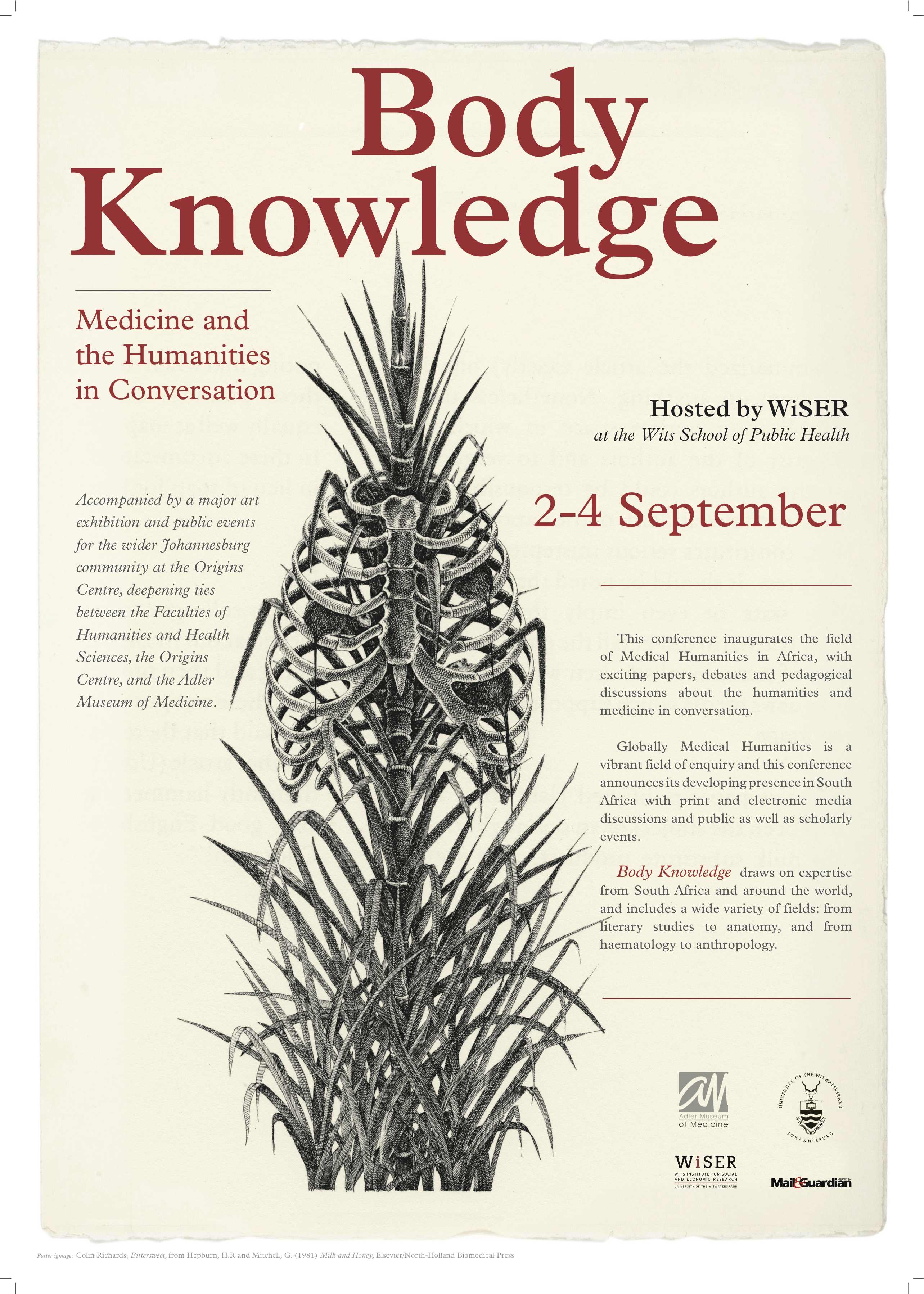
Over the past month I’ve helped to organise the first major conference on the medical humanities in southern Africa. Titled Body Knowledge, and hosted by the Wits Institute of Social and Economic Research earlier this week, the conference brought together a disparate group of academics from all over the world, and specialising in a variety of disciplines: from anthropology to nursing, and from epidemiology to cultural studies.

I think we pulled it off too. It was certainly a fun conference: the food was excellent, I learned a great deal – about my own area of specialisation and others – and was surprised by how frequently papers presented from wildly different disciplines spoke to each other in interesting and quite thought-provoking ways. We’re keen for this new field of the medical humanities not only to encourage collaboration and contact between the arts, humanities, social sciences, and natural and medical sciences, but also to be communicated to those outside of the academy. The Mail and Guardian has published a collection of articles drawn from the conference:

Catherine Burns and Ashlee Masterson discuss art, science, the medical humanities and the Body Knowledge conference.

Susan Levine and Steve Reid argue for the significance of the arts in the practice of medicine.

Jane Taylor looks at the long history of collaboration between the arts and medical sciences.

Patrick Randolph-Quinney describes how art has enriched anatomy.

Raimi Gbadamosi examines the social and cultural construction of albinism.

Because I was part of the group keeping the conference running, I didn’t attend many sessions, but I did get to the two on medicine and nutrition (partly because I chaired one of them). The first included two papers: Kristen Ehrenberger (who’s enrolled for both a medical degree and a PhD in History at the University of Illinois) discussed how Germans’ ideas around ‘healthy’ food shifted during the Allied blockade of the First World War; and Thomas Cousins, an anthropologist at Stellenbosch University, argued for the necessity of a cultural and social study of the gut.

In the second session, Louise Vincent and Chantelle Malan from Rhodes University questioned the ways in which the obesity ‘crisis’ has been framed by both medical professionals and organisations with a vested interest in controlling people’s weight. Similarly, Michelle Pentecost – a medical doctor who’s completing an MA in anthropology at Oxford – pointed out that obesity is caused less by individual sloth and lack of self-control, than is the outcome of a complex set of social, political, and economic processes which shape people’s health over long periods of time.

Catherine Burns, my colleague at WiSER, spoke about the need to write histories of breastfeeding in South Africa (she’s written about histories of sex in South Africa too), and Vashna Jagarnath, also of Rhodes, presented a fascinating paper on Gandhi’s shifting attitudes towards diet after his move to London in 1881. She made the point that his embrace of vegetarianism was the product of an association with the Vegetarian Society and with the social and political radicals, many of them early supporters of Indian nationalism, who were part of the Society (people like Annie Besant, for instance). He went on to publish extensively on how best to eat, and, as Vashna noted, his views on diet were increasingly tangled with his politics.

Body Knowledge Poster HR copy

Although on a wide range of subjects, these papers made a few key points: people’s decisions what and how to eat are shaped by a variety of factors, only some of which they are aware; food and nutrition are always political (they are implicated in the ways in which power functions); and our ideas about what is ‘good’ to eat have changed – and are changing – over time and place. In other words, there was no particular moment, or there is no specific place, where people ate, or are eating, a ‘perfect’ diet (whatever we may mean by that).

Although histories of food and nutrition have attracted scant attention from southern African scholars, the field is growing, both in size and prominence, internationally. I think the best indicator of its growing academic respectability is the fact that the theme of this year’s Anglo-American Conference at the Institute of Historical Research in London, was Food in History.

Histories of food have the potential to descend into a kind of pedantic, irritating antiquarianism, but they are also crucial to understanding histories of consumerism, agriculture, the body, and medicine. Indeed, anyone interested in medical histories of childhood has to focus on the significance of nutrition in efforts to improve children’s health during the early twentieth century.

We are – and have been for a very long time – what, how, and why we eat.

Creative Commons License
Tangerine and Cinnamon by Sarah Duff is licensed under a Creative Commons Attribution-ShareAlike 3.0 Unported License.