Skip to content

Food Links, 15.05.2013

Mali is braced for more food shortages.

American food production is moving north.

The home economics movement in the United States.

Climate change is transforming British wine.

The sexism of the food movement.

The Western Cape feeds 91% of the province’s schoolchildren breakfast.

Why so many people die of food poisoning in Bangladesh.

The moral bankruptcy of foodie-ism.

How instability in Sudan is upsetting Coca Cola.

Cannibalism is no aberration in human history.

Tom Philpott reviews Michael Pollan’s Cooked.

A Syrian ice cream shop opens in Jordan.

Why do foodies ignore the abuse of restaurant workers?

How to shut down a restaurant in Mexico.

Rescuing rare salad leaves in London.

The new Belfast dining scene.

Ice cream bread.

Food has never been more fashionable.

How to speed-age bourbon.

Jeffrey Pilcher on the origins of Cinco de Mayo.

Where to find interesting ice cream.

What to eat on Cinco de Mayo.

A bicycle-powered ice cream churn.

Michael Pollan on barbeque in North Carolina.

How to make shrimp etouffe.

The World’s Best Restaurant is in Catalonia, again.

Making baklava in Istanbul.

Sourdough Danish pastries.

Fridges are Very, Very Dangerous Indeed.

Foodie Pseudery (42)

Some of the battiest lines in Gwyneth Paltrow’s new recipe book:

You’ll also see striped bass called for in a lot of the fish recipes — that’s because it swims in the waters close to Gwyneth’s summer home [in Martha’s Vineyard], where we do a lot of cooking.

My old assistant, Cleo, insisted we include her secret afternoon shake.

Our dear friend Cameron [Diaz] is a master popcorn maker — and this is one of the many reasons she is Apple and Mosey’s favorite house guest.

I once overnighted a batch [of almond butter cookies] from London to my manager in Los Angeles who was doing the clean program and was dying for a cookie! They did not disappoint.

I know that Paltrow is – like Ruth Reichl, I suppose – an easy target. But a lot of what this recipe book of hers recommends, is dangerous nonsense. I want to draw attention to the fact that Paltrow is not a nutritionist. She’s an actress. With a deeply odd relationship with food.

Food Links, 08.05.2013

More Britons than ever before are dependent on food banks.

The $1 McDonald’s meal has failed to lift sales.

Bananas and oil in Ecuador.

How safe is American meat?

Tesco pulls out of the US.

A history of United Farm Workers.

A fat-fuelled power station.

Cheddar cheese is to be used as security for a pension fund.

David Chan, who has eaten at 6,297 Chinese restaurants.

Rogue sugar shacks in Quebec had best be on their guard.

The Ghanaian food revolution.

Cook it Raw.

Cooked is only half-cooked, at best.’

Where to have afternoon tea in Cape Town.

Has the cupcake boom gone bust?

The 1961 Artists’ and Writers’ Cookbook.

Lessons from a month of being vegan.

The new wave of London street food.

The day coffee stopped working.

A scratch-and-sniff food magazine.

Romain Jimenez, toasted cheese seller.

Tea and flies with Kermit the Frog.

Pantone for chocolate lovers.

A 15,000 year-old pot for making fish soup.

How do you pronounce ‘scone‘?

A beer drinker’s guide to Bratislava.

Almond pudding.

Rediscovering Russian food and produce.

A cafe built out of recycled cardboard.

Literary beers.

The man who invented the thermos flask.

Book cakes.

Elaborate latte art.

A brief history of sausage rolls.

Hipster Meals.

New York Times‘s correspondents describe their favourite watering holes.

The cake that looks like a Mondrian painting.

Eighteenth-century sugar cakes.

Avocado buttercream.

How to make a sweet souffle.

Skeleton sushi.

Twenty strange things to eat.

A Russian TV chef has apologised for comparing chopping herbs to the slaughter of Ukrainian villagers. As you do.

A farm with a city in it

A few years ago I spent boat race day in London at the first of what has since become a major annual event: the Oxford and Cambridge goat race. Arriving early to size up the relative strengths of the two racing goats, punters placed bets on the likely winner, and then lined the course, waiting for their champions to canter by. Unfortunately, Cambridge – who, when I placed my bet, had seemed friskier as his minder had attached his number to him – lost interest, and ambled part of the course. Smaller, more ambitious, and, frankly, faster, Oxford won the day by more than two lengths. (Which says rather a lot about the relative usefulness of university league tables.)

The purpose of the race was, and is, to raise funds for the Spitalfields City Farm, a wonderful institution just off Brick Lane. It’s one of several city farms in London – the best known probably being the larger, well-established Hackney City Farm – whose purpose is to bring the countryside and the farm into London. There, Londoners can pet farm animals – including goats – and some farms have fruit and vegetable gardens too. All operate projects and events aimed specifically at children.

Cape Town’s first city farm was opened at the end of last year, in the leafy inner city suburb of Oranjezicht. It’s been established on the site of a former bowling green and, as its slogan – From Bowling Green to Bowl of Greens – suggests, its work emphasises food growing. But although the Oranjezicht City Farm (OZCF) will eventually produce organic vegetable boxes, its primary purpose is not, oddly, to produce food. In a suburb where no one goes hungry willingly, and where most properties have gardens large enough to grow vegetables, its aim is to foster community.

OZCF has grown out of the Oranjezicht Neighbourhood Watch. Based on the Rudy Giuliani principle of fixing broken windows, it keeps an eye on parks and open spaces, and helps to ensure that public buildings are well maintained. OZCF is part of an initiative that uses areas which would otherwise become run-down and crime ridden.

At the community garden adjacent to the Fezeka municipality building in Gugulethu.

At the community garden adjacent to the Fezeka municipality building in Gugulethu.

OZCF isn’t the only food-growing initiative in Cape Town’s middle-class suburbs. Based in Constantia, Soil for Life teaches people from all communities how to establish community gardens along organic lines; the Woodstock Peace Garden aims to bring the community together and to produce food; and Touching the Earth Lightly is pioneering rooftop gardening.

There is a strong link between urban agriculture and economic recessions. The example most frequently cited today of how community gardening can help unemployed, impoverished communities cope with the effects of the recession is Detroit. But this city has a long history of using urban farming to deal with depressions. In the 1893 depression, Detroit donated small lots of vacant land – known as Pingree Potato Patches – to the unemployed, who were able to grow enough to feed themselves, and then sell their surplus produce for cash. The project was so successful that it spread to New York, Philadelphia, Chicago, Boston, and elsewhere.

There were resurgences of interest in urban gardening during the two world wars, the 1930s, and the 1970s, as Laura Lawson explains:

In the 1970s, new interest in community gardening grew as an expression of urban activism and a new environmental ethic. Garden programmes emerged, such as New York’s Green Guerrillas and Boston Urban Gardeners (BUG). In 1976, the USDA sponsored the Urban Gardening Programme that established urban offices to promote vegetable gardening and community gardens in 16, later 23 cities. In 1978, activists from around the country formed the American Community Gardening Association (ACGA) as a non-profit membership organisation.

Guerrilla Gardening – where vacant public land is planted without the permission of the authorities – was a product of the economic downturn of the 1970s.

Contemporary interest in community gardening and urban agriculture stems both from the recession as well as from a set of interconnected concerns about food safety, sustainable food production, the creeping power of Big Food to control every link in the food chain, and slowly rising food prices.

Turnips grown in Gugulethu.

At Harvest of Hope – a vegetable box scheme run by Abalimi Bezekhaya, an urban farming project based in some of Cape Town’s poorest suburbs – this interest in the provenance of food has translated into increased demand for organic produce.

Urban agriculture is nothing new in Cape Town. Abalimi was established in 1982 to provide support to community gardens in Khayelitsha, Nyanga, Gugulethu and surrounds. Today, in exchange for R100 from each gardener, it supplies training, compost, seedlings, and tools to around 2,500 individuals and between 55 to a hundred urban farms every year. These are run overwhelmingly by elderly, female pensioners, most of whom support five to six relatives. Those gardens which produce a surplus of vegetables – after the women have taken what they need and sold some over the fence – can become suppliers of Harvest of Hope. At the moment, between twenty and thirty gardens send vegetables to the project’s packing shed in Philippi.

Cabbages with pest-deterring marigolds.

Cabbages with pest-deterring marigolds.

The genius of the Harvest of Hope model is that it guarantees community gardeners a monthly income of R3,000 for as long as they supply vegetables for the box orders. They aren’t Khayelitsha, Gugulethu, Nyanga, and Langa’s only small farmers, though. Abalimi’s Rob Small reckons that there around three hundred community gardens in these suburbs, of varying size and productivity.

Importantly, what they do is to make vegetables cheaply and readily available in areas where fresh produce is difficult to find: small spaza shops tend not to sell fruit and vegetables. Those wanting to eat varied diets need to stump up the cash to travel further into the city, to large, expensive, supermarkets.

Peas.

Peas.

Most of the vegetables grown in these gardens remain within the communities. But close by – in the Philippi Horticultural Area (PHA) – half of the city’s vegetables are cultivated. Cape Town is unique in South Africa in that such a large proportion of its fresh produce is actually grown within the city. Farmers have grown fruit and vegetables in the sandy soil of the PHA since the late nineteenth century. Today, the area encompasses about 2,370 hectares, and is split between smallholdings and larger commercial farms, which produce around 100,000 tonnes of produce every year. Some of these, like Skye Fehlmann’s Naturally Organic, have embraced sustainable, organic farming.

The area is, though, under threat. In 1988, 3,200 hectares of land were designated to horticultural use. Sand mining, illegal dumping, and encroaching informal settlements are all eating up land which could be used to farm. But all this pales into significance against the proposed development of a 472-hectare area. Heidi Swart explains:

In 2008 a company by the name of Rapicorp 122, in whose name the land is registered, lodged an application with the provincial government to change the land-use designation of the 472 hectares from horticultural to urban. Rapicorp proposed about 172 hectares of 20 000 mixed-density housing units, 41 hectares for industrial use, 26 hectares for mixed use and 157 hectares for open space and conservation.

Although the City of Cape Town turned down the application, in 2011 the Western Cape provincial government approved it. Luckily, though, the Rocklands group, of which Rapicorp is part, is now under curatorship following a Financial Services Board investigation. Only when that is resolved can the development of the PHA take place.

At the Harvest of Hope Packing Shed in Philippi.

At the Harvest of Hope Packing Shed in Philippi.

Preserving – and, indeed, extending – the PHA is important not only to keep the price of fresh produce low in Cape Town, but also because it is surrounded by desperately poor communities which would not usually have access to fruit and vegetables. Although still more expensive than staples like maize meal, white bread, and sugar, it is considerably cheaper to buy vegetables off the back of farmers’ trucks than in supermarkets. In other words, the PHA is absolutely essential to ensuring that these households remain food secure:

According to a survey of 1 060 low-income households [in Cape Town] conducted by the African Food Security Urban Network in 2008, 80% of respondents were food insecure. The study looked at various indicators of food insecurity, such as whether respondents went to sleep hungry, or whether there were times when there was no food in the house.

A 2012 study by Rooftops Canada-Abri International and the African Food Security Network that examined the horticultural area’s significance in sustaining food security within the Cape Town municipality found that without it the city would be ‘place[d] in extreme risk’ of food insecurity, with low-income households suffering the most. A 2009 report commissioned by the city had similar findings.

Cape Town’s official policy on urban farming commits the city to ensuring that urban agriculture will ‘fill form an integral part of future development planning’ and to supporting community groups involved in community gardening. It seems to me that not to protect the PHA contradicts this policy.

Rob Small describes Cape Town as ‘a farm with a city in it.’ Cape Town has a population of about 3.7 million, slightly more than half of whom live in the city’s informal settlements. When people speak of ‘Cape Town’ they tend to mean its older suburbs with their – still – mainly white inhabitants. It strikes me that so much of the city’s problem with urban agriculture is that its community projects maintain the distinction between the historically ‘white’ and wealthy, and ‘black’ and poor parts of the city. Projects based in Constantia, Woodstock, and Oranjezicht ‘reach out’ to ‘educate’ and ‘uplift’ the ‘poor’ (whoever they may be), ignoring the fact that so much of the city’s informal settlements are being farmed – and are exceptionally productive.

It’s old women in Nyanga and farmers in Philippi who are the key to ensuring the city’s future food security. They are the ones who should be deciding Cape Town’s urban agricultural policies.

Creative Commons License
Tangerine and Cinnamon by Sarah Duff is licensed under a Creative Commons Attribution-ShareAlike 3.0 Unported License.

Food Links, 01.05.2013

Ending obesity means addressing poverty as well.

More money is needed for nutrition aid.

Eat red meat rather than processed meat.

Is hunger the real reason for the North Korea crisis?

Why modern chicken tastes of nothing.

The non-degrading McDonald’s burger.

The reason for the collapse of the soda ban in New York.

Mark Lynas on GM food.

The GM salmon farms of … Panama.

How much people in different countries spend on food.

Tesco buys Giraffe.

The poor treatment of waiters and waitresses.

A map of food deserts in the US.

How bad is steak for you?

Why meat was political in Poland in the 1980s and 1990s.

The Paleo Diet is nonsense.

The prosperity burger.

The rising popularity of hummus in the US.

Europe’s surprisingly long history of cannibalism.

Close reading a slogan for crisps.

The edible spoon.

A day in the life of Alidoro’s, a deli in New York.

Supper on the farm, in Sicily.

A colour guide to beers.

The vertical kitchen.

How to reverse engineer the McDonald’s Fillet-o-Fish.

Douglas Adams on cookies.

The nanobrewery.

Animals eating doughnuts.

Memorable meals, in chronological orders.

Pantone food pairings.

Mean cuisine.

Save the world – don’t use chopsticks.

A world map of flavours.

Fourteen taco recipes.

Fifty favourite food things from the Observer.

Illustrated chickpeas.

The story behind Sriracha.

A portable watermelon fridge.

Weird wine pairings.

Why cannibalism was a sensible choice.

Peanut butter soup from Ghana.

Beet the System

Omnivorous readers! This week’s blog post is over at Eat Out magazine, and it’s on urban farming in Cape Town.

Part two – longer, in greater detail – follows next week.

Foodie Pseudery (41)

The lament of the woman with two kitchens…

I have two kitchens. For most of the year, I cook in an Upper West Side apartment, in Manhattan. It was designed in the eighteen-nineties and is probably best described as a landlord’s misguided attempt to lure tenants with horizontal evocations of the upstairs-downstairs life. The ‘public’ rooms, meant to be seen and admired, were large and well proportioned. The ‘private’ rooms, out of sight off a long back hall, were for the most part awkward and cramped, and perhaps the lowliest room on this totem pole of domestic status was the kitchen, where your cook, emerging each morning through the door of a tiny bedroom—in my apartment, it opened between the icebox and the sink—was expected to spend her waking hours.

… there was no way to expand my kitchen to accommodate my own moment …

… I am consoled, however, by my other kitchen. It is the ‘please come in’ room of the Umbrian farmhouse where I work, and cook, in the summer—a much more satisfying image of the way I like to live.

Food Links, 24.04.2013

Why 20,000 pigs turned up in a Chinese river.

The implications of Britain’s long winter for farmers.

Should China consume less pork?

The migrant labourers who grow America’s vegetables.

Why America is experiencing a food stamp boom.

The coming Weetabix shortage.

The return of mutton.

On Big Soda in the US.

Mexico City’s anti-salt campaign.

Rehabilitating prisoners through…chocolate.

A tribute to Jocasta Innes.

A food tour of Japan.

Jeremy Bentham’s apple pudding.

David Foster Wallace’s ‘Consider the Lobster.’

Thoughts on A Taste of Dubai.

On flexitarianism.

Sam Clark of Moro’s favourite restaurant.

Shakespeare, illegal food hoarder.

The growing appeal of guinea pig meat.

Sylvia Plath‘s favourite cake.

A croissant-shaped handbag.

Bacon-flavoured mouthwash.

Food in Quentin Tarantino‘s films.

A brief history of the tin can.

Are twenty-first-century cookbooks socially conservative?

A guide to the Mexican pantry.

Will Self on Byron‘s burgers.

Candy floss art.

The rise of gourmet tea.

A walking tour of Paris, with food.

The rise of gourmet chocolate.

Grammar, food, photography.

A fruit- and vegetable-growing building.

A recipe for scones.

Trinidad’s Chinese cuisine.

On Darjeeling tea.

Cuisine de Meuh.

Ramen hunters.

Maple sugaring.

The origins of gefilte fish.

Rice sculpture.

Biscuits should always be dunked.

The Cult of Authenticity

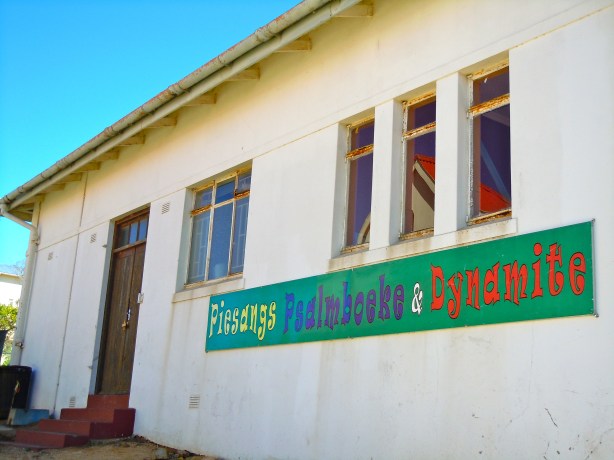
Last weekend I went to a wedding in Napier, a village in the rural Overberg, about a two-hour drive from Cape Town. I saw a family of baboons sunbathing on the Akkedisberg mountain pass; went to a church bazaar and bought jam; and saw a shop (alas closed at the time) which sold ‘piesangs, psalmboeke en dinamiet’ (bananas, prayer books, and dynamite).

It was a very good weekend indeed. And made even better by the quantities of excellent food which I ate. I was struck, though, by the numbers of restaurants in Napier which advertised their menus as being particularly ‘authentic’. Napier is experiencing a kind of low-key gentrification at the moment, so this isn’t really all that surprising. But it was amusing how the idea of what is authentic was stretched beyond all recognition.

I had lunch at a place which specialises in ‘authentic tapas’ and was advised to order two items, as tapas are, well, small plates. I doubt that the vat of curried sweet potato soup and mound of salad, which included the best part of a head of butter lettuce and two avocados, I was served bore even the remotest resemblance to the tapas of Barcelona. But they were delicious.

I was wondering why, though, a café in a remote South African village would stake so much on serving authentic tapas. There is, I suppose, a kind of thrill in eating exotic, ‘real’ tapas. Even so, most of its clientele are unlikely to have sampled the real thing or, even, to care about the authenticity of their supper. (I don’t mean this in a patronising way. Travel abroad is expensive.)

This is part of a wider cultural trend, where people who describe themselves as ‘serious’ about food (I’m not entirely sure what that means) claim to be able to distinguish between those dishes which are really authentic – which are absolutely true replicas of the ‘original’ dish  – and those which have been adulterated through adaptation.

For instance, Cape Town’s best Mexican restaurant El Burro advertises itself as ‘authentic’ Mexican cuisine, and local reviewers go out of their way to emphasise just how authentic its menu is: here is no inauthentic Tex- or Cal-Mex cooking, but, instead it is the Real Thing. (How many of them have actually visited Mexico is open to debate.)

There is, really, no such thing as ‘authentic’ Mexican – or Italian, or Spanish, or Greek, or Indian, or Thai, or Norwegian – cuisine. These, and other countries, have a range of cuisines, which differ from region to region, and which have also changed over time. As Jeffrey Pilcher argues in his recent book Planet Taco: A Global History of Mexican Food, it is more accurate to refer to a number of Mexican cuisines which exist simultaneously both within and without the borders of the country.

The problem with trying to identify ‘authentic’ cuisine is that it’s rather like trying to nail jelly to the wall. The same dish will vary from area to area – from household to household – in one country. I have seen recipes for ‘authentic’ risotto which assert, with equal vehemence, that it should be so thick that you can stand a spoon in it or, equally, that it should be liquid and flowing. My mother’s recipe for bobotie – a South African delicacy – contains grated apple. My friend Carina’s mother’s recipe has no apple, but, rather, raisins. Which is the authentic version? Both. Neither.

Food changes over time. In the early twentieth century, the medical doctor, poet, Afrikaner nationalist, and Buddhist C. Louis Leipoldt recorded a recipe for bobotie which, in today’s terms, would be understood as a meatloaf: it was not the dish that, today, we think of as being bobotie – a layer of spiced, slightly sweet minced meat underneath a buttermilk and egg custard. Although according to the European Union, authentic Cornish pasties may contain only beef, swede, and potatoes, there is plenty of evidence to suggest that Cornish miners in the past had a range of ingredients in their pies – and not only this holy pasty trinity.
DSCN8125

There is also the problem of anachronism. Mexico became an independent state in 1810 and its borders changed over the course of the nineteenth century. Should only those dishes which were made within the country’s present boundaries be considered ‘Mexican’? The state of Texas remained part of Mexico until 1836, and significant numbers of Mexicans settled in the United States – particularly in New Mexico, California, and Arizona. Should we consider Texan cuisine to be Mexican? And, surely, it would be churlish somehow to consider the cuisine developed by Mexicans in the United States as somehow being of less value than that prepared by Mexicans in Mexico (whatever we may mean by ‘Mexico’)?

So which version do we accept as being the ‘real’ version of a dish? Which one is ‘authentic’? More often than not, a range of factors not particularly linked to food influence our decisions over what is considered to be properly authentic. There is a connection, for instance, between nationalism and cookery books. During the nineteenth century, middle-class Mexicans living in the United States used food both to maintain links with Mexico, as well as to assert the sophistication of Mexican culture. Encarnación Pinado’s El cocinero español (The Spanish Chef), published in 1898, described a Mexican cuisine made using modern technology, and incorporating dishes from Mexico, European, and the Mexican-American borderlands.

Something similar happened in Italy, as Tim Hayward explains:

‘Authentic’ Italian food has an even odder story. Pellegrino Artusi was a writer with a political desire to unify the regions of Italy into a single country and thought, quite logically, that food might be a way to do it. In La scienza in cucina e l’arte di mangiar bene (The Science of Cooking and the Art of Eating Well), 1891, he combined all the regional recipes he could find and in doing so artificially assembled what we regard today as ‘Italian’ food.

In fact, a lot of what we consider to be ‘real’ Italian food today, was created in a dialogue between Italian immigrants in the United States and Italians at home. Even relatively poor immigrants could afford the tomatoes, dried pasta, olive oil, meat, and dairy products which constituted the feast dishes of the homeland. This invented ‘traditional’ cuisine was used to construct and delineate new immigrant Italian identities. Overseas demand for the products of ‘home’ stimulated the Italian food industry – and the mass production of tinned tomatoes and other products made them more easily available in Italy. This American connection of Italian identity with a particular kind of Italian cooking was also exported back to Italy.

Authentic cuisines are, then, heavily constructed. There is no direct, unmediated way of accessing the food of the past. Indeed, it is also pretty difficult to replicate the cooking of foreign countries at home. Rachel Laudan notes that if she were to write a cookbook on ‘authentic’ Mexican cooking, she would have to take into account the difficulty of finding many ingredients outside of Mexico:

I’d probably leave out the spinal cord soup, the sopa de medulla so popular in Central Mexico (fear of mad cow disease makes that a no-no) and I’d leave out quelites, the mixed wild greens sold already cooked in the markets (too difficult to get hold of in the States). I’d probably also leave out tripe, sugar milk and fruit confections and aroles, the family of thick gruels that warm Mexicans on cold winter mornings (not at all to my conception of Mexican taste).

Also, she argues that she would be constrained by middle-class Americans’ own ideas around what should constitute Mexican cuisine. The cult of authenticity is informed not only by snobbery (being able to identify and cook the ‘real thing’ is a marker of sophistication), but also by a powerful nostalgia for a pre-industrialised food past where all cooking was done from scratch:

I’d include photos of colourful fruit and vegetables stalls but not my neighbourhood supermarket shelves stocked with Danone yogurt and cornflakes.

I’d ignore my friend’s mother’s recipe for lemon Jell-O with evaporated milk. I’d pass over dishes that used Worcestershire sauce, pita bread and Gouda cheese, as well as recipes for Cornish pasties, hot cakes and biscuits, even though all of these are commonplace in Mexico.

This is a nostalgia produced by anxieties around change and a perceived homogenisation of the world’s diets. It is partly as a result of this concern that old ways of cooking and eating are being ‘lost’ that the EU introduced a protected geographical status framework in 1993, which provides legal protection to certain dishes and products in the EU, preventing them from being copied elsewhere. So only sparkling wine produced in Champagne can be called ‘champagne’, and only Prosciuitto Toscano made in Tuscany can be called Prociutto Tascano.

For all that this is an attempt to preserve a food heritage, as the philosopher Julian Baggini makes the point, the EU actually decides what is authentic and what is not:

For instance, ‘traditional stilton was a raw-milk cheese up until the late 80s,’ says Dominic Coyte of Neal’s Yard Dairy. But when the Stilton Cheesemakers’ Association got PDO protection in 1996, they stipulated that it be made with pasteurised milk. Hence the irony that the raw-milk stichelton, first produced by traditional methods in 2006, is arguably the most authentic stilton available, but it cannot carry the name.

Similarly, UNESCO’s recognition of Mexican cuisine, the French ‘gourmet meal’, the Mediterranean diet, and the gingerbread craft of Northern Croatia as the ‘intangible patrimony of humanity’ in 2010, fixed these culinary traditions in aspic. Also, the Mexican application focussed on only one regional cuisine, the ‘Michoacán paradigm,’ which, interestingly, happened to feature the home state of the President, Felipe Calderón

This recognition from UNESCO will boost the region’s tourism, and EU appellations have helped many small producers in Europe to continue to work in difficult economic times. The mania for ‘authenticity’ helps, inadvertently, to force our attention to how people cooked and ate in the past – to look at methods, ingredients, and cultivars which we may have forgotten. We shouldn’t try to return to the past, but we can certainly learn from it.

My problem with the cult of authenticity – other than its tedious pedantry – is that it conflates eating ‘authentically’ with some ability to make a meaningful difference in the world. More often that not, peasant food is labelled authentic food. Even the most passing familiarity with what most poor people eat will demonstrate that people’s diets improve as their disposable income increases. Peasant food in Italy before the mid-twentieth century was nutritionally inadequate: it consisted of bread and polenta with onions oil and, occasionally, cheap fish and vegetables.

There is nothing wrong with eating peasant food, but it is deeply problematic to believe that eating ‘real’ peasant food represents a solidarity with the struggles of the poor. In fact, it’s a distraction from the ways in which food and big agricultural companies exploit labourers and put small and peasant farmers out of business.

Food is political. Particularly if it’s ‘authentic.’

Creative Commons License
Tangerine and Cinnamon by Sarah Duff is licensed under a Creative Commons Attribution-ShareAlike 3.0 Unported License.

Food Links, 17.04.2013

Oxfam’s ‘Behind the Brandsreport.

What to eat.

Why Michelle Obama’s Let’s Move tour may not succeed.

The right-wing agenda of Eden Foods.

How America gained weight between 1985 and 2010.

Whither the American food movement?

Insects: food of the future.

Gwyneth Paltrow’s faddy diet is very, very dangerous. (And why she’s an evil genius. Possibly.)

A short film about New York’s ‘canners‘.

Sustainable pig farming is possible.

Generational attitudes towards sushi and gay marriage.

Why we should eat wonky fruit and vegetables.

The rise of China’s tomato industry. And Asda’s ‘Italian‘ tomato puree comes from…China.

Surprising facts about fast food.

Concrete-filled walnuts.

The rediscovery of home bread making in Italy.

An attempt to remove Italian words from a menu in a Quebec restaurant.

The joy of cauliflower.

What causes beef rainbows?

Sales of golden ale increase.

Making little cakes with Martha Washington.

In praise of lentils.

Africa is a Country launches a new series on African cooking.

Where to buy the best toasted cheese in London.

Seb Emina on breakfasts in literature. (Thanks, Sarang!)

Different McNugget shapes have names.

The best TV shows.

Human-shaped gummi bears.

Madeleine, or biscotte?

Bread- and pastry-making in Lebanon.

On congee.

How to make your own mozzarella.

Improvising cake.

The Vaportini.

Aging wine in the sea.

Literary cakes.

A review of The Art of the Tart.

The food and drink of Pompeii and Herculaneum.

The Adria brothers’ new restaurant.

The fad for cereal milk.

The resignation cake.

These are courtesy of my Mum:

The self-stirring saucepan.

On strawberries and cream.

Goblin-Proofing One’s Chicken Coop.

On Fanny Cradock.