Palate Cleanser
I’m away this week, so I leave you with:
This picture:
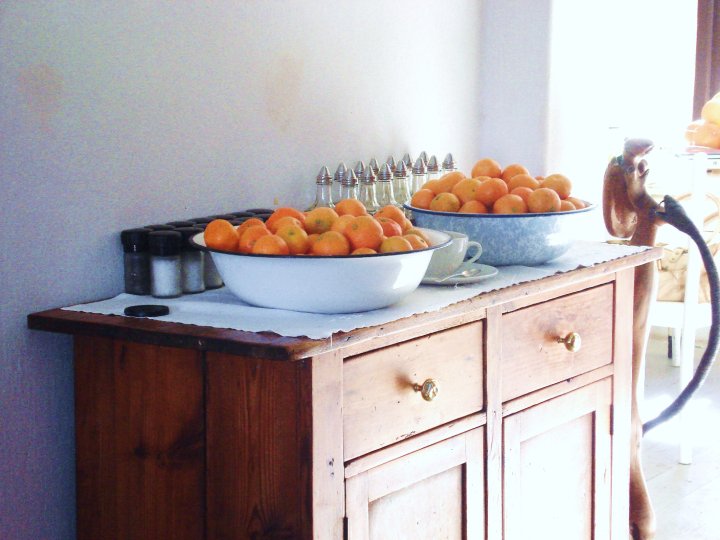
This small opinion piece on cupcakes which I wrote for Food24.
This recipe for cinnamon buns by Dan Lepard.
And this video:

Jun 25
I’m away this week, so I leave you with:
This picture:
This small opinion piece on cupcakes which I wrote for Food24.
This recipe for cinnamon buns by Dan Lepard.
And this video:
Four ideas to make agriculture more sustainable and improve food security in South Africa.
Feminism + the food movement = femivorism?
Another reason to avoid sugar-laden drinks.
Why India’s food policy ‘reforms’ have done little to reduce hunger and malnutrition.
Tom Philpott surveys recent research and writing on the food crisis.
The food movement in the US has something of an identity crisis.
Consider the milkshake.
On the use of cellulose in processing food.
A celebration of salt.
The effects of climate change on agriculture have driven up commodity prices by around 20%.
‘The reality of America’s food post is far more complicated, and troubling, than is suggested by the romantic image at the heart of our foodie nostalgia.’ This is an excellent article.
The Ecologist provides a very handy guide to food speculation (in case you should ever have to argue against it with a banker).
Conservation International recommends fish farming to feed the world – when it seems that industrial aquaculture is monumentally harmful to the environment.
Lester Brown discusses food and water security in North Africa and the Middle East after the Arab Spring.
Jun 18
This week, Oxfam released a report on the world’s favourite food. Based on a survey of 16,000 people in Australia, Brazil, Germany, Ghana, Guatemala, India, Kenya, Mexico, the Netherlands, Pakistan, the Philippines, Russia, South Africa, Spain, Tanzania, the UK and the USA, it tabulates the top three meals in each of these countries. In South Africa, pasta, pizza, and steak are favourites, while it’s chicken, pizza, and Chinese (whatever that may be) in Guatemala. Pasta rules supreme as the world’s favourite food.
Although fun, I think that the conclusions drawn by the survey, which is part of Oxfam’s Grow campaign, are pretty dubious. I don’t think that the likes and dislikes of sixteen thousand people – of a global population of six billion – count for terribly much. I am very surprised that Oxfam reports that most South Africans list pasta as their favourite food. Pasta isn’t included in the Medical Research Council’s list of the most widely foods consumed in South Africa – the top five of which are maize meal, white sugar, tea, bread, and milk. It seems to me that the people included in this survey were mainly middle-class urban dwellers – precisely the people who would list pizza, pasta, and steak as their favourite food.
But the purpose of the survey, flawed as it may be, is to demonstrate
the spread of Western diets across the world. Although national dishes are still popular – such as paella in Spain, schnitzel in Germany and biryani in India – pizza and pasta are now the favourite foods of many, with more than half of the countries (nine out of 17) listing one or both in their top three foods.
I doubt that, as Oxfam suggests, all ‘people’s diets are actually changing, with many not eating the same foods as they did just two years ago.’ Diets change slowly over time. It’s more accurate to suggest that food preferences are changing. It’s only the affluent who can afford to change what they eat. As in Western Europe after 1945, the Chinese and Indian middle classes are eating more animal protein than ever before. In South Africa, pasta remains prohibitively expensive for most people – who still base their diets around maize meal.
It’s worth considering how the meanings of particular food stuffs change over time and space. Particular dishes may mean one thing in the region in which they originate and something quite different in the countries to which they are taken by immigrants, fashion, or supermarkets and restaurants. We tend to assume that this ‘globalisation’ of food or taste is a relatively recent and pernicious phenomenon. But it’s far more complicated than that.
In response to last week’s post on cupcakes, feminism, and gentrification, our woman in Bangladesh comments:
I am also thinking about the term ‘gentrification’ in Dhaka‘s context. We have cakeshops here but they didn’t pop up as precursors to gentrification. They tended to set up shop near urban dwellings (lots of birthday cakes to be sold?) and later on they became common near office areas, since cakeshops in Dhaka these days also sell fried chicken and chicken patties (pronounced chicken petis) that office people love to eat, along with pastries (pronounced pess tree). Given that, what does gentrification connote in Dhaka and what are the precursors to it?
Shahpar had noted previously:
I was with Bangladeshi friends while chasing cupcakes. We noted how different cupcakes were in NYC than in Dhaka. Here they are made with the cheapest quality ingredients and sold in roadside shops. No frosting. Just a chunk of cake in marigold yellow, sitting in a greasy pleated paper skirt. We used to get them in our school canteens and kids in Bengali medium schools like the one I went to probably still eat cupcakes. It’s the food to go with roadside tea and is a quick snack for the blue collar workers. Rickshaw wallahs and bus ticket sellers and garment factory workers all eat it. Nothing girly about it.
In Dhaka, cupcakes and cake shops mean very different things than they do in Cape Town. Can you imagine a more heavenly combination than cake and fried chicken?

A cupcake in Dhaka
Cupcakes, cake, and pastries are the, now entirely assimilated, products of the long British presence in Bengal. As I wrote a few weeks ago, colonialism gave rise to imperial cuisines – the fusion of foreign and domesticated cooking – all over the world. It also caused a range of British or European foodstuffs to take on new meanings once exported to the colonies.
Set in Rhodesia in the 1960s, Tsitsi Dangarembga’s novel Nervous Conditions (1988) is a bildungsroman which focuses on Tambudzai, a little girl sent from her parents’ impoverished homestead to be educated by her middle-class, town-dwelling aunt and uncle. Upon her arrival at her new home, she has afternoon tea with her aunt, Maiguru:
There was food too, lots of it. Lots of biscuits and cakes and jam sandwiches. Maiguru was offering me the food, but it was difficult to decide what to take because everything looked so appetising. We did not often have cake at home. In fact, I remembered having cake only at Christmas time or at Easter. At those times Babamukuru [her father] brought a great Zambezi slab home with home and cut it up in front of our eager eyes, all the children waiting for him to distribute it. This he did one piece each at a time so that for days on end, long after the confectionery had lost its freshness, we would be enraptured. We would spend many blissful moments picking off and nibbling, first the white coconut and then the pink icing and last the delicious golden cake itself…. Biscuits were as much of a treat as cake, especially when they were dainty, dessert biscuits with cream in the middle or chocolate on top.
For Tambudzai, cheap cake and biscuits were part of annual celebrations. But for her wealthier, well educated aunt who had lived abroad, afternoon tea is indicative of her sophisticated, middle-class status. It’s also a marker of her assimilation of ‘western’ (or ‘civilised’) values and patterns of living.
One of the most striking features of the diets of British officials and expats living in southern Africa and southeast Asia during the late nineteenth and twentieth centuries was their rigid adherence to the menus and diets of ‘Home’. In publications like the Kenya Settlers’ Cookery Book and Guide, readers were urged not to go native. Eating roast beef, porridge, custard, and dumplings was a way of demonstrating civilised, European status. Local cooks were taught how to cook British staples. In White Mischief James Fox describes the eating habits of Kenya’s aristocratic expats during the 1930s:
The astonishing African talent for cooking European food, in particular hot English puddings, provided undreamed-of comfort. For their part, the Africans were astonished at the number of meals required by Europeans every day, and the quantity of food consumed. Europeans seemed always to be eating.
These attitudes towards food persisted even as – or possibly because – imperial rule came to an end in Africa in the 1960s. My father was a little boy in Olifantsfontein – then a mining village between Johannesburg and Pretoria – during this period. His mother, whose interest in food, cooking, and eating was minimal, employed a Malawian cook to take care of the kitchen. The strange set of cultural and racist prejudices of the time decreed that Malawians were particularly good cooks. Luckily for my grandmother, Frank Nyama conformed to stereotype. (In a pleasing coincidence, ‘nyama’ means meat in Swahili.)
For my father and his friends in the village, Nyama achieved minor celebrity status on the grounds that his brother had been eaten by a crocodile. (A pointless way to go, as Dad notes.) He cooked the ‘British’ food demanded by my grandparents. In fact, the Cornish pasties that we make at home are from his recipe. Yes, Cornish pasties – from Cornwall – made from a recipe written by a Malawian chef. And they’re fantastic – they’re as good as the (excellent) pasty I ate in Cornwall. Nyama cooked local dishes for himself, sharing them occasionally with Dad and his brothers. For my grandparents, Cornish pasties and other ‘European’ food was the cooking of civilisation, of ‘whiteness’, and of cultural superiority. To eat Nyama’s regional faire would have been, in their view, to admit a kind of racial defeat.
The point is that food has been globalised for as long as human beings have travelled around the world. It has been used to bolster and construct colonial, local, and foreign identities, and as a result of this, the meanings which we attach to particular dishes and food stuffs have changed over time. There is nothing inherently wrong with the globalisation of food. Food is adapted to suit local tastes and to fit into existing attitudes towards cooking and eating.
The change in contemporary diets and food preferences identified by Oxfam is not, then, anything new. I think it’s worth remembering this as we rethink the ways in which we grow and consume food: that there’s no mythical and ‘authentic’ regional food past for us to return to, and that there’s very little point in stopping people from borrowing cuisines and tastes from other countries.
Further Reading
Texts quoted here:
Tsitsi Dangarembga, Nervous Conditions (London: The Women’s Press, [1988] 2001).
James Fox, White Mischief (London: Vintage: [1982] 1988).
The Kenya Settlers’ Cookery Book and Household Guide, seventh ed. (Nairobi: Church of Scotland Women’s Guild, no date).
Other sources:
Janet M. Bujra, ‘Men at Work in the Tanzanian Home: How Did They Ever Learn?’ in African Encounters with Domesticity, ed. Karen Tranberg Hansen (New Brunswick, New Jersey: Rutgers University Press, 1992).
Timothy Burke, ‘“Fork Up and Smile”: Marketing, Colonial Knowledge and the Female Subject in Zimbabwe,’ in Gendered Colonialisms in African History, eds. Nancy Rose Hunt, Tessie P Liu, and Jean Quataert (Oxford: Blackwell, 1997).
Helen Callaway, Gender, Culture and Empire: European Women in the Colonial Nigeria (London: Macmillan, 1987).
Jean and John L. Comaroff, ‘Home-Made Hegemony: Modernity, Domesticity, and Colonialism in South Africa,’ in African Encounters with Domesticity, ed. Karen Tranberg Hansen (New Brunswick, New Jersey: Rutgers University Press, 1992).
LeRay Denzer, ‘Domestic Science Training in Colonial Yorubaland, Nigeria,’ in African Encounters with Domesticity, ed. Karen Tranberg Hansen (New Brunswick, New Jersey: Rutgers University Press, 1992).
Nancy Rose Hunt, ‘Colonial Fairy Tales and the Knife and Fork Doctrine in the Heart of Africa,’ in African Encounters with Domesticity, ed. Karen Tranberg Hansen (New Brunswick, New Jersey: Rutgers University Press, 1992).
Elizabeth Schmidt, ‘Race, Sex, and Domestic Labour: The Question of African Female Servants in Southern Rhodesia, 1900-1939,’ in African Encounters with Domesticity, ed. Karen Tranberg Hansen (New Brunswick, New Jersey: Rutgers University Press, 1992).
Karen Tranberg Hansen, ‘White Women in a Changing World: Employment, Voluntary Work, and Sex in Post-World War II Northern Rhodesia,’ in Western Women and Imperialism: Complicity and Resistance, eds. Nupur Chaudhuri and Margaret Strobel (London and New York: Routledge, 1992).
 Tangerine and Cinnamon by Sarah Duff is licensed under a Creative Commons Attribution-ShareAlike 3.0 Unported License.
Tim Lang argues that twentieth-century attitudes towards food cannot solve our global food crisis (and makes the point that Walmart’s presence in South Africa is a Very Bad Thing indeed).
The Carbon Brief provides a useful overview of recent research on food, hunger, and climate change.
A ‘food desert’ is a region with limited access to healthy food – usually because supermarkets, accessible only by car, have been replaced by convenience stores selling mainly processed food. This map plots food deserts in the US.
Eric Schlosser, author of Fast Food Nation, argues that the food movement is not elitist.
Tom Philpott discusses Walmart’s ‘commitment’ to Michelle Obama’s Let’s Move programme.
Life for the very poor in Guatemala shows how screwed up the world’s food system is.
The World Health Organisation takes on non-communicable, lifestyle-related diseases (and shows how bad big food companies are for our health).
On gluttony.
Consider honey.
The Great Trek 2.0 – South Africa’s white farmers move north.
In praise of asparagus.
The New York Times reports that farming tilapia on an industrial scale is a bad idea. How very surprising.
Jun 12
Life in post-1994 South Africa can be very strange. Yesterday morning my friend Ester and I went to the National Gallery’s retrospective on…Tretchikoff. Yes, apartheid South Africa’s favourite producer of kitsch, bad, and, occasionally, bizarre artwork has earned himself a serious exhibition and re-evaluation. As far as I can see, his sole redeeming feature was his consistency: Vladimir Tretchikoff was never mediocre, but always uniformly, consistently, bad.
But on our way into the Gallery, we came across Cape Town’s first experiment in yarn bombing. This is a form of graffiti or street art where knitting and other needlework is used to decorate public spaces. Statues get scarves; railings are covered in woolly tubes; and trees are festooned with crafty baubles.

A yarn-bombed lamp in Hay-on-Wye
Yarn bombing is now a global phenomenon, and it’s part of a broader craft movement which seeks to celebrate, promote, and often re-learn hobbies like knitting, crotchet, and tatting. Stitch and Bitch societies – founded originally in the United States – can be found now in nearly every major city, and knitting is particularly hip. Much of this is given a feminist spin. It’s an attempt to reclaim activities once derided as unimportant because they were performed largely by women. Some craftivists make the – legitimate – point that suffragettes used embroidery, tapestry, and quilting to create banners and to raise funds for their cause.
Baking has undergone a similar transformation. At the Hay Festival a fortnight ago, Nigella Lawson argued:
Baking is the less applauded of the cooking arts, whereas restaurants are a male province to be celebrated. There’s something intrinsically misogynistic about decrying a tradition because it has always been female.
I agree.
She added that How to be a Domestic Goddess (2000), the recipe book which kick started both her career and the British enthusiasm for cupcakes, is an ‘important feminist tract’. Now if this is the case – and I write this as one whose copy is scuffed, stained, and torn from extensive use – then I am a three-toed sloth. But her point that baking is seen as a particularly feminine, and, as a result of this, frivolous, pursuit is worth considering. In fact, professional cake-baking seems to be dominated by women: most pastry chefs are female. Restaurant cooking and bread baking are largely a male preserve, and are seen as more serious, complex, and creative activities.

The yarn-bombed National Gallery in Cape Town
But feminists are not the first women to celebrate baking and home cooking as part of the construction of particular femininities. However much money suffragettes may have raised with their needlework, even larger numbers of women organised tea parties and sold cakes, cookies, and delicately embroidered goods at fetes and bazaars to support missionary work and other more conservative causes. In 1881, the Huguenot Seminary, an elite girls’ school near Cape Town in the Cape Colony, organised a bazaar selling cake and embroidery and raised enough to fund a year’s rent and living expenses for a woman missionary working on a Dutch Reformed mission station in the Transvaal.
Baking has been used by different women at different times to mean many things. What is so interesting about the recent rediscovery of baking (and knitting too, for that matter) is that it’s been embraced enthusiastically by young, educated, middle-class women. I think that this is the product of a variety of factors: the impact of a resurgent green movement and the global economic recession have encouraged a rediscovery of craft and cooking both to save money and to reduce our impact on the environment; young fashion designers and cooks’ interest in knitting and baking have made these fashionable pursuits and rendered ‘make-do-and-mend’ cool; the impact of television series like Mad Men have prompted a (hopefully ironic) re-embrace of domesticity; and this is also a reaction to the feminism of the 1970s which rejected traditionally feminine pursuits because of their connection to women’s subordination.
And here is a crucial point: middle-class women now have no need to bake or to knit. These are leisure activities, to be done in the evenings and over weekends. We forget that until relatively recently in the West, most women baked and sewed not out of choice, but because they had to: because shop-bought cakes and clothes were expensive. One of my maternal great-grandmothers was a seamstress because that was deemed to be an appropriate trade for a white, lower middle-class adolescent in pre-War Cape Town. But my very bourgeois paternal grandmother employed a cook, nanny, and maidservant to do her domestic work for her – as indeed her mother had done too.
I don’t know what my great grandmother would have made of yarn bombing, nor of the slow gentrification of the Cape Town suburb in which she lived for most of her life. Woodstock, recently dubbed ‘Cape Town’s Manhattan’ by the New York Times, is being gradually transformed into a hip, middle-class enclave. And baking is an aspect of this transformation.
This map drawn by UC Berkeley student Danya Al-Saleh plots the gentrification of San Francisco’s Mission District through bakeries. (See here for a bigger version.)

She’s not the first to do this. Kathe Newman has argued that ‘cupcake shops can provide a more accurate and timely guide to the frontiers of urban gentrification than traditional demographic and real estate data sets.’ This is certainly true for Cape Town. The very traumatic gentrification of parts of the Bo-Kaap or Malay Quarter – where families were forced to move out of houses which they had rented for generations – was signalled by the arrival of upscale bakeries. In Woodstock, where gentrification seems to be proceeding at a slower pace and without the fracturing of existing communities, bakeries and cafes have begun to appear along the main road and near the Neighbourgoods Market, that ultimate expression of Capetonian cool.
In the city’s eastern precinct – the district which stretches from Parliament at the top of Roeland Street and all the way to the Cape Archives – people have been lured out of their cars and onto pavements first by Charly’s Bakery, and then by Mugged on Roeland Street (ho ho), and the coffee- and cupcake-selling Book Lounge. When I first started working at the Archives in 2005 for my MA thesis, the furthest I would go for lunch was to dash across the parking lot to a slightly dodgy sandwich shop. I returned in 2008 while researching my PhD, and could choose between at least five different places to eat – and felt safe to walk to all them.
As one commentator notes, it’s because cupcakes and cake shops are fashionable at the moment that we can use them as an indicator of gentrification:
In the 1990s, it might have been the proliferation of Starbucks coffee houses that indicated gentrifying neighbourhoods, and in the 1980s, perhaps gourmet yoghurt shops moving into an area, etc. I don’t know about other cities, but in NYC where I live, right now it would be the new doggie day care centres that are springing up in many places that appear to designate a change to a more affluent, up-and-coming hipster-ish nabe.
The point remains that cupcakes have been embraced with enthusiasm by middle-class women and have been implicated in the creation of contemporary middle class femininities. Activities once performed by women out of necessity have been transformed into hobbies – and because of middle-class buying power, cake shops and cupcake bakeries are now involved in the gentrification of poor, often crime-ridden neighbourhoods.

More yarn bombing at the National Gallery in Cape Town
I am not suggesting, to paraphrase Cyril Connolly on George Orwell, that I can’t eat a cupcake without commenting on the appalling working conditions in the icing sugar industry. I understand how fraught and disruptive processes of gentrification can be, but I really enjoy being able to walk down main road Woodstock to buy coffee and cake at The Kitchen. And I think that it’s fantastic that so many cake shops and cafes are run by women, and I’m so pleased that the craft movement is reviving and remembering skills which were at risk of being forgotten.
But I do think we need some perspective. Our enthusiasm for cupcakes and cakes is helping to fuel gentrification of poor neighbourhoods – and we need to think carefully about the implications of this. As my friend Shahpar pointed out a few weeks ago, cupcakes are snack food for Dhaka’s busy street vendors. In other words, cakes and baking mean different things all over the world. Cakes, cupcakes, and baking can only be associated with feminism for white, affluent middle-class women. Baking a tray of cupcakes may be a subversive, feminist act for me, but it’s a well nigh impossible one for a woman living in Gugulethu.
Tangerine and Cinnamon by Sarah Duff is licensed under a Creative Commons Attribution-ShareAlike 3.0 Unported License.
Hayibo covers the recent tension over vegetable exports in Europe.
Foreign Policy‘s theme for its May/June edition is food, and it’s fascinating. Lester Brown writes about the new geopolitics of food, and this amazing article shows how food explains the world.
Why are food prices at the mercy of bankers?
The Guardian has an excellent guide to the global food crisis.
Should the US government subsidise the growing of sweeteners?
The French government has banned the riot police from drinking alchohol with their meals. Daft.
On the origins of measuring the calorie content of food.
This fascinating infographic from the World Resources Institute charts global greenhouse gas emissions – agriculture is responsible for 13.8% of them, and loads of nitrous oxide and methane.
Penguin has just released its Great Food series: a collection of twenty short books each dedicated to the writing of great food writers.
‘The fact that half of the most costly food pathogens are found in meat suggests that food safety laws at the USDA need an overhaul’. Nice.
Can you feed a family of four on £50 a week? I would have thought so.
Jun 5
Public service announcement: if you’re in Cape Town and would like to know more about the Protection of Information Bill and what YOU can do about it, come to Right2Know‘s public meeting on Tuesday, 7 June, at 18:00 at Idasa, 6 Spin Street. Judith February will be joined by Pregs Govender, Zapiro, Pierre de Vos, and others.
This week Oxfam published a report on the state of the world’s food systems. Titled ‘Growing a Better Future,’ the study argues that by 2030 the world will be in a state of permanent food crisis. Staples will cost twice as much in twenty years time, with the price of maize increasing by as much as 180%. The world’s poorest will be the worst affected by the crisis. As demand for food outstrips supply and places pressure on existing food distribution systems, more than a billion people will go hungry every day.
Already, the average growth rate in agricultural yields has halved since 1990, and this is set to decline even further. A combination of factors have converged to produce this crisis. Climate change, increasingly limited natural resources, commodity speculation, the demand for biofuels, population growth, and changing, more meat- and dairy-heavy diets are working to destabilise our food system.
The result of the food crisis is not only hunger, but poverty and increasing political upheaval:
we have entered an age of growing crisis, of shock piled upon shock: vertiginous food price spikes and oil price hikes, devastating weather events, financial meltdowns, and global contagion. Behind each of these, slow-burn crises continue to smoulder: creeping and insidious climate change, growing inequality, chronic hunger and vulnerability, the erosion of our natural resources. The broken food system is at once a driver of this fragility and highly vulnerable to it.
Alongside this report, Oxfam has launched a campaign, ‘Grow’, to publicise its set of solutions to the food crisis. It’s attempting to mobilise opposition to land grabs and commodity speculation, to promote small-scale agriculture, and also to highlight awareness of the links between climate change and food prices.
In his analysis of the report, Mark Lynas makes the point that one of its most interesting features is its pragmaticism. The report notes (rightly):
The romanticisation of ‘the peasant’ and rejection of new technologies and trade have the potential to lock farmers into poverty. International trade and new technologies are not magic bullets, but each has a major contribution to make, one which can be increased massively if governments direct them towards delivering public goods.
It even adds:
Large-scale agriculture also has a role to play in meeting the sustainable production challenge. It is better able to meet the exacting standards that have come to characterize the food supply chains that feed burgeoning cities. Moreover, as economic development takes place, and labour costs rise relative to capital costs, larger, more mechanized modes of production become more viable, in turn providing an exit from agriculture for poor rural people as long as sufficient jobs are created in industry.
Has Oxfam lost its marbles? Of course not. This report is a tacit rejection of the idea that industrialisation is itself the cause of the instability of the food system. It makes the point that while technology may have caused incredible damage to ecosystems and even reduced yields, it has the potential to get us out of this crisis as well. The issue isn’t the technology itself, but, rather, the way in which it is used.

I am concerned that Oxfam will have an uphill battle over this point. So many organisations seem to have swallowed whole the concept that we need to return to the farming, cooking, and eating of the past in order to eat better in the present, and future. The Oxfam report demonstrates that our food crisis is so complex that this simplistic way of thinking about food simply won’t do.
As I wrote last week, the Slow Food Movement has long described itself as offering an alternative way of thinking about food. I think that despite the good that Slow Food has done in the world, its views on food and the past are not only deeply troubling, but actively harmful. Its Manifesto on the Future of Food argues for a wholesale rejection of all forms of technology and a ‘transition to a more decentralized, democratic and cooperative, non-corporate, small-scale organic farming as practiced by traditional farming communities, agroecologists, and indigenous peoples for millennia.’
The Slow Food Manifesto (and Slow Food seems to like nothing more than a manifesto) states:
Our defence should begin at the table with Slow Food. Let us rediscover the flavours and savours of regional cooking and banish the degrading effects of Fast Food. In the name of productivity, Fast Life has changed our way of being and threatens our environment and our landscapes. So Slow Food is now the only truly progressive answer. … Slow Food guarantees a better future.
It is partly this enthusiasm for the regional, the local, the ‘indigenous’, and the ‘traditional’ which makes me question that Slow Food does guarantee a ‘better future’. To which ‘tradition’ do we return?
It’s particularly interesting that Slow Food originated in Italy. This is a country with a heavily invented notion of its own food traditions, and a suitably bad memory of what Italians really did eat in the recent past.
Up until the end of the First World War, Italian diets were very poor – which, given Italy’s climate, terrain, and precarious political situation throughout the nineteenth century, isn’t terribly surprising. Most main meals consisted either of bread or polenta with onions, oil, and whatever cheap fish and vegetables were available. The components of what we now believe to be the age-old Italian or Mediterranean diet – pasta, tomatoes, wine, dairy products, and other fresh produce – were eaten only during festivals. Carol Helstosky writes in Garlic & Oil: Food and Politics in Italy:
Although few people starved or fell seriously ill from malnutrition in the nineteenth and twentieth centuries, the majority of the Italian population did not consume a nutritionally adequate diet because of economic and political constraints on their behaviour as consumers and eaters. Subsistence farming and local markets characterized Italian agriculture while a weak national economy limited consumer options, even for urban workers and members of the middle class. … Italian consumers remained trapped in a post-subsistence economy for multiple reasons, unable to make the transition to a more varied and nutritious diet.
The change came in 1919. During the Great War, state control over food distribution systems meant that the diets of ordinary Italians actually improved. (Something similar happened in Britain during the Second World War.) Diets were increasingly more homogenous, and wheat flour began to replace maize and other carbohydrates.
In addition to this, Italian immigrants in the United States began to shape a new kind of national cuisine. Even relatively poor, newly-arrived Italians could afford a greater variety of food in America than they could at home. They were able to buy the tomatoes, pasta, and olive oil which they couldn’t afford in Italy. Helstosky adds:
as Italians began to leave the peninsula for greater economic opportunities in the Americas and elsewhere, they sought to recreate familiar dishes. This led to a growing body of consumers for Italian products (dried pasta, canned tomatoes, and olive oil), which in turn greatly aided the development of certain food industries within Italy. Only after substantial numbers of Italians abroad began consuming these foods did domestic production furnish more products for Italians at home. Ironically, it was because of the ‘imagined communities’ outside Italy that the food industry inside Italy produced the goods that became the foundations of Italian cuisine.
In America, this invented ‘traditional’ cuisine was used to construct and delineate new immigrant Italian identities. Overseas demand for the products of ‘home’ stimulated the Italian food industry – and the mass production of tinned tomatoes and other products made them more easily available in Italy. This American connection of Italian identity with a particular kind of Italian cooking was also exported back to Italy.
In a sense, ‘Italian cuisine’ was created in a dialogue between poor, badly nourished Italians in Italy and their wealthier, better-fed cousins in the United States. During the economic boom of the 1950s and 1960s, Italians began to eat the same food as Italian immigrants, supplementing their diets to a greater extent with meat and dairy products. They also began to link this invented notion of Italian food with being Italian.
The Italian cuisine promoted by the Slow Food Movement was created in the United States and in Italy during the second half of the twentieth century. The ‘traditional’ food to which Slow Food harks back is not the chestnut flour and woody vegetables of inadequate nineteenth-century peasant diets, but, rather, the invented ‘traditional’ Italian food of artisanal olive oil, balsamic vinegar, red peppers, prosciutto, and ricotta.
This is only one example of how a rose-tinted, faulty understanding of history hides the fact that peasant diets – both in the past and those in the present – are produced by backbreaking labour and are usually nutritionally inadequate. We are taller, healthier, and live longer today because our diets are more varied and contain more protein than those of our ancestors. To suggest to peasants that their diets are somehow better than those in the West is patronising and ignorant.
But the technologies of the twentieth century which revolutionised our food systems are not sustainable. The Green Revolution’s enthusiasm for pesticides and large-scale irrigation, the neglect of small farmers, industrial agriculture, and the increasing concentration of the world’s food supply in the hands of a small collection of supermarkets, agricultural businesses, and food companies, have helped to land us in the situation we’re in now. Clearly, things need to change. Tim Lang writes:
An entire 20th-century approach to food modernity is under threat. Consumer expectations, not least that we can eat whatever we like whenever we like, are at stake. The 20th century squandered scientific possibilities. It created the fiction that ever more food can be produced by tapping oil, throwing fertiliser at seeds, spraying endless water and treating the soil as blotting paper, a neutral medium. We now know how fragile that mix is, and how fragile the Earth’s crust and biology are too.
The future of food is not in the past. Even the Slow Food Movement celebrates a peasant diet which was invented partly in twentieth-century North America. I believe very strongly that we can learn from history to improve our eating and attitudes towards food today, but an unthinking return to ‘tradition’ is both impossible and undesirable.
Update: for more on the general dodginess of Slow Food, see Luca Simonetti’s excellent analysis of the moment’s political and ideological leanings.
Further Reading
Texts quoted here:
Robert Bailey, Growing a Better Future: Food Justice in a Resource-Constrained World (Oxfam, 2011).
Carol Helstosky, Garlic & Oil: Food and Politics in Italy (Oxford and New York: Berg, [2004] 2006).
Eric Hobsbawm and Terence Ranger (eds.), The Invention of Tradition (Cambridge: Cambridge University Press, 1992).
Jerry Mander (ed.), Manifesto on the Future of Food (The International Commission on the Future of Food and Agriculture, 2006).
Other sources:
Julia Csergo, ‘The Emergence of Regional Cuisines,’ in Food: A Culinary History from Antiquity to the Present, eds. Jean-Louis Flandrin and Massimo Montanari, English ed. by Albert Sonnenfeld (New York: Columbia University Press, 1999), pp. 500-515.
John Dickie, Delizia! The Epic History of the Italians and Their Food (London: Hodder and Stoughton, 2007).
Donna R. Gabaccia, ‘As American as Budweiser and Pickles? Nation Building in American Food Industries,’ in Food Nations: Selling Taste in Consumer Societies, eds. Warren Belasco and Philip Scranton (New York and London: Routledge, 2002), pp. 175-193.
Kolleen M. Guy, ‘Rituals of Pleasure in the Land of Treasures: Wine Consumption and the Making of French Identity in the Late Nineteenth Century,’ in Food Nations: Selling Taste in Consumer Societies, eds. Warren Belasco and Philip Scranton (New York and London: Routledge, 2002), pp. 34-47.
Kolleen M. Guy, When Champagne Became French: Wine and the Making of a National Identity (Baltimore: Johns Hopkins University Press, 2003).
Emiko Ohnuki-Tierney, ‘Rice in the Discourse of Selves and Others,’ in Rice as Self: Japanese Identities through Time (Princeton: Princeton University Press, 1993), pp. 99-113.
Jeffrey M. Pilcher, ‘The Tortilla Discourse: Nutrition and Nation Building,’ in iQue vivan los tamales! Food and the Making of Mexican Identity (Albuquerque: University of New Mexico Press, 1998), pp. 77-97.
Tangerine and Cinnamon by Sarah Duff is licensed under a Creative Commons Attribution-ShareAlike 3.0 Unported License.
Jun 1
Oxfam warns the food prices are set to double by 2030, causing the world to be plunged into permanent food crisis.
A report from the Guardian on 21 April 1903 describes contemporary responses to the greater availability of exotic fruit.
Arcadia’s blog Voer is one of the most beautiful I know. Read it if you understand Afrikaans, otherwise look at the pictures.
How food shortages will cause more global unrest.
More evidence that speculation has had an impact on soaring food prices.
Lucy Mangan identifies vegetables.
How should the US rebuild its food economy?
Tom Philpott discusses some recent contributions to the debate around why American diets have become progressively worse since the 1970s.
Hanna Thomas thinks about supermarkets and nostalgia.
The truth about extra virgin olive oil.
May 29
While I was a PhD student in London I stayed at a really magnificent residence for postgraduate students in Bloomsbury. Our closest supermarket was a Waitrose which distributed leaflets to the local student population every September (the beginning of the academic year in the UK). Their most successful campaign stated simply, ‘Make your Mum happy. Shop at Waitrose.’ I did as I was told, and shopped at Waitrose. And Mum was indeed very happy.
In Britain, admitting that you shop at Waitrose is similar to calling yourself a Guardian reader: it denotes not only class status (Waitrose is very bourgeois), but also a set of values. Waitrose is like Woolworths in South Africa or, to a lesser extent, Trader Joe’s in the United States. It’s a business which has a commitment to stocking ethically-sourced, free range, and organic products and groceries – hence its association with the lefty, greeny, and affluent middle classes.
It does seem to be hypocritical to admit to shopping at Waitrose – or the even more expensive Marks & Spencer, which attracts a slightly different demographic – while vilifying those who depend on budget chains like Tesco in the UK or Shoprite in South Africa. After all, they’re all supermarkets, and it’s clear that supermarkets are responsible for over a million tonnes of wasted food per year in Britain alone; engage in environmentally harmful practices; exploit their employees; stifle small and local producers; destroy communities; and encourage poor eating habits.
But not all supermarkets are the same. Tim Lang, the food policy expert who invented the term ‘food miles’, suggests that one of the best ways of eating responsibly is to shop at supermarkets which preselect their products on ethical lines. So instead of buying free-range beef directly from the farmer (something which very few of us can do, in practical or financial terms), we should – if we can – shop at supermarkets which encourage this kind of farming. And we should place pressure on bigger chains to stock free range eggs and meat.
I love supermarkets. They’re one of the first places I visit when I go to new cities. When I stayed with a friend in Zürich last year I enjoyed the Swiss supermarkets (the yogurt!) almost as much as the Kunsthaus (the Giacometti statues!). Supermarkets tell us things about how a population thinks about its relationship with food.
It’s partly for this reason that I am concerned about the motives of the Slow Food Movement. Founded in Italy in 1986, and as a global organisation three years later, the Slow Food Movement is now a wealthy, international network of ‘convivia’ – or local branches – which encourage a ‘slow’ attitude towards food. Its members are encouraged to cook and to eat slowly, and also to think more carefully about how their food is produced and sold.

With its emphasis on localism and sustainability, Slow Food has, I think, done a great deal of good. It’s one of the forces behind the increasing popularity of farmers’ markets, and I’m particularly impressed by its publicising of the working conditions of farm workers, many of whom are migrants who are exploited ruthlessly by their employers.
The world is certainly a better place for the existence of Slow Food, but I am concerned by two aspects of its manifesto: its enthusiasm for regional food, which I’ll discuss next week, and its argument that we all cooked and ate better in the past. As an interview with the Movement’s founder and chair, Carlo Petrini, notes:
Slow Food launched courses to put consumers in touch with the producers of the food and wine they enjoyed, recreating the umbilical cord that was cut when supermarkets invaded the market place.
Petrini adds:
‘The idea of the modern has been superseded; the challenge today is to return to the small scale, the handmade, to local distribution – because today what we call ‘modern’ is out of date. The crisis we have been facing in the past year is not merely a financial crisis but also a crisis of systems and values. To overcome it we need to change our behaviour.’
Slow Food was founded at a time when McDonalds and the first big supermarkets opened their doors in Italy. It disapproves of supermarkets on the grounds, as Petrini suggested, that they facilitate a ‘fast’ way of living which relies on the consumption of processed food and does not allow for the enjoyment of cooking and eating. Slow Food asks for a return to ‘traditional’ eating patterns which celebrate ‘ancient’ knowledge about food. For all its efforts to think about the future of food, Slow Food seems to build its model of an ideal system on a set of ideas about ‘traditional’ cooking and eating.
As an historian, I am always suspicious of any movement or organisation which demands a return to or rekindling of tradition. Petrini and Slow Food are pretty vague as to which ‘tradition’ – which ‘past’ – they’d like to return. And considering that Slow Food is a global movement, they seem to imply that all countries and regions have a similar, glorious food past which they should revitalise.
I’d like to know how they would propose to do this in South Africa. Even the most cursory overview of life in late nineteenth-century Cape Town suggests that a return to the past isn’t necessarily a great idea. All white, upper middle-class households employed cooks who, although supervised by their mistresses, were responsible for providing families’ meals. These families ate well: meat every day, even if it was reheated meat, with a variety of vegetables, both cooked and raw, starch of some kind, and usually a pudding with tea or coffee. This was an international diet. Visitors to Cape Town and surrounding towns commented that they ate as well – or even better, given the quality of local produce – in these affluent homes as they did at home in Britain or the United States.
Depending on the generosity of the household, servants may have eaten the same as their masters and mistresses, but, more likely, ate scraps from the table. So most of the food in these families was prepared and cooked by employees, many of whom did not share the same good diet.
Middle- and lower-middle-class households would have employed a maid-of-all-work who would have done some cooking, assisted by her mistress. The reason why a cook was such a desirable addition to the household – and cooks were the most expensive servants to employ – was the sheer backbreaking nature of nineteenth-century cooking. Meat was bought in bulk, with the cook or mistress having to cut down a whole or half-carcass of beef, lamb, or pork herself. All baking had to be done on one day per week – leaving little time for the equally laborious weekly laundry – and the lack of refrigeration meant that dairy products had to be used quickly. A spoiled batch of bread on Monday meant no bread for the rest of the week. Want to make a jelly? Well, you’d have to buy calves’ feet, crack them open, and boil them down to create a jelly which could be added to milk or a fruit puree.
‘Malay’ households padded out diets with rice and fish. The bredies and breyanis which we associate with Cape Malay cooking today were reserved for special occasions. Eggs and dairy products were expensive, even for wealthier households. For the poor in Cape Town’s slums, most meals consisted of a starchy staple – maize porridge, rice, or, possibly, bread – along with fish or whatever else could affordably garnish an otherwise unappetising, and not particularly nutritious, meal. And poor households would have had only one main meal.
These are only some of the diets eaten in South Africa during this period, but I’ve used them to demonstrate how difficult it is to define what we mean by a food tradition. Which one of these Capetonian diets should we return? To the one eaten by white, upper-middle class families? If so, should we ask one member of our households to devote her- or himself to the laborious preparation of these meals? This tiny proportion of colonial society ate precisely the kind of diet promoted by the Slow Food Movement – completely locally-sourced and homemade – but it required one person working all day to execute it in its entirety.
Women, in particular, need to take a closer look at Slow Food. We’re the ones who tend – still – to cook for our families, and much of Slow Food’s criticism of contemporary eating rests on a belief that something in the way in which families ate went profoundly wrong during the 1960s and 1970s. The mass entry of women into employment during these decades did mean that eating patterns changed, but I refuse to return to a time when my role would be limited to keeping house. And I can’t, and won’t, employ someone else to do my cooking for me. It’s interesting that Slow Food emerged from Italy, a country with a distinctly bad track record on women’s rights.
It’s for this reason that I think that Slow Food’s opposition to supermarkets is misguided. Of course, and as I’ve noted above, supermarkets do an enormous amount of harm, but they do allow us to feed ourselves affordably and conveniently. To reject them entirely, when so many people rely on them, is not the way to create a sustainable food system. But, possibly more importantly, I disagree with Slow Food’s belief that we need to return to the past to improve the future. We can certainly learn from the past, but this reification of ‘tradition’ can only be dangerous. Who decides which ‘tradition’ we should turn to? And who’ll cook it?
Further Reading
Texts cited here:
S.E. Duff, ‘Head, Heart, and Hand: The Huguenot Seminary and College and the Construction of Middle-Class Afrikaner Femininity, 1873-1910’ (MA thesis, Stellenbosch University, 2006).
SE Duff, ‘What will this child be? Children, Childhood, and Dutch Reformed Evangelicalism in the Cape Colony, 1860-1895’ (PhD thesis, University of London, 2010).
Tim Lang, David Barling, and Martin Caraher, Food Policy: Integrating Health, Environment and Society (Oxford: Oxford University Press, 2009).
Arthur Marwick, The Sixties: Cultural Revolution in Britain, France, Italy and the United States, c.1958-c.1974 (Oxford: Oxford University Press, 1999).
Other sources:
John Dickie, Delizia! The Epic History of the Italians and Their Food (London: Hodder and Stoughton, 2007).
Claude Fischer, ‘The “McDonaldisation” of Culture,’ in Food: A Culinary History from Antiquity to the Present, eds. Jean-Louis Flandrin and Massimo Montanari, English ed. by Albert Sonnenfeld (New York: Columbia University Press, 1999), pp. 530-547.
Kolleen M. Guy, ‘Rituals of Pleasure in the Land of Treasures: Wine Consumption and the Making of French Identity in the Late Nineteenth Century,’ in Food Nations: Selling Taste in Consumer Societies, eds. Warren Belasco and Philip Scranton (New York and London: Routledge, 2002), pp. 34-47.
Kolleen M. Guy, When Champagne Became French: Wine and the Making of a National Identity (Baltimore: Johns Hopkins University Press, 2003).
Carol Helstosky, Garlic and Oil: Politics and Food in Italy (London: Berg, 2004).
Tim Lang and Michael Heasman, Food Wars: The Battle for Mouths, Minds, and Markets (London: Earthscan, 2004).
Emiko Ohnuki-Tierney, ‘Rice in the Discourse of Selves and Others,’ in Rice as Self: Japanese Identities through Time (Princeton: Princeton University Press, 1993), pp. 99-113.
Jeffrey M. Pilcher, ‘The Tortilla Discourse: Nutrition and Nation Building,’ in iQue vivan los tamales! Food and the Making of Mexican Identity (Albuquerque: University of New Mexico Press, 1998), pp. 77-97.
James L. Watson (ed.), Golden Arches East: McDonald’s in East Asia (Stanford: Stanford University Press, 1997).
Tangerine and Cinnamon by Sarah Duff is licensed under a Creative Commons Attribution-ShareAlike 3.0 Unported License.
I think Lorraine Pascale is utterly fantastic.
Michael Pollan adds a few more food rules.
‘The world would be a better, safer place, freer and more democratic, if our cheese and onion crisps tasted better.’ Yes, well: on the science of tasting food.
Harriet Deacon writes about food nominations to the Intangible Heritage Convention.
The world’s top 50 restaurants were announced recently. This is an incredible video about the restaurant ranked 28 – Combal Zero in Italy.
The loquat harvest is about to begin in Los Angeles.
It’s lambing season in the northern hemisphere.
AA Gill talks about eating and reviewing food.


 Tangerine and Cinnamon