Skip to content

Ironically

I spent much of my time in Ann Arbor in coffee shops, writing. Having conquered my guilt at working in cafes, occupying space which could be filled by more paying customers (truly, a Calvinist education never really leaves you), I embraced America, the land of the free Wifi. One of my favourite places for working was Mighty Good Coffee, a relatively new shop and café on North Main Street—about a three minute walk on the diagonal from Kerrytown—which is bright and airy and friendly, with lovely coffee and a fridge full of yoghurt.

It also sells artisanal toast. Curious, I tried first a slice of ten seed loaf (good), and then returned with friends and ordered sourdough with cherry jam (very good indeed). But what sets artisanal toast apart from ordinary toast? Was it made by elves, as a friend asked acerbically on Facebook? As far as I could see, this was particularly nice bread, toasted in a fairly fancy toaster, served with rather special butter and jam. But for slightly more than $3.

My—and, I think, other people’s—interest in Ann Arbor’s first (possibly?) instance of artisanal toast was piqued by an article published by the Pacific Standard early last year. In it, John Gravois traces the origins of the artisan toast vogue to San Francisco and the Trouble Coffee & Coconut Club and, more specifically, to its owner, Giulietta Carrelli. The café is, as she comments, her way of coping with bouts of recurring mental illness: it provides structure, stability, and a support network, and it serves food which comforts. Gravois explains: ‘She put toast on the menu because it reminded her of home: “I had lived so long with no comfort,” she says.’

What could easily have been a story about hipsters selling the most ordinary of ordinary breakfast foods for outrageous sums of money becomes, then, a quite moving account of a young woman’s strategies for dealing with, at times, debilitating episodes of mania and psychosis. But, as Gravois notes, her decision to include toast on Trouble’s—otherwise eccentric—menu was picked up by other, more typically hipster San Francisco cafes where artisanal toast became another marker—alongside drip coffee, beards, lumberjack shirts—of hipsterdom.

Artisanal toast: ten seed loaf, blueberry jam.

Artisanal toast: ten seed loaf, cherry jam.

At the same time as I tried Mighty Good’s toast, commentators were outraged by the latest artisanal craze: ice. Large, dense, clear cubes of ice for artisanal cocktails—mixed with homemade or small batch bitters, liqueurs, and sodas—which fit better into glasses and melt more slowly. But, as Mother Jones reported, manufacturing, transporting, and storing artisanal ice is hugely energy inefficient. It is done at some cost to the environment.

In these terms, ‘artisanal’ means handmade and small scale—it means paying attention to the production of otherwise mass-produced or mundane items like toast or ice or bread or beer or crisps. There is something innately ridiculous in elevating toasted bread to the status of cult object. The enthusiasm for the artisanal is, to be kind, an attempt to reclaim the ‘authentic’ (whatever that may be) in the face of a wholly industrialised food chain, and, to be less kind, as much of a fashion as brogues, topknots, and foraging.

It’s useful to use artisanal toast—for instance—to explore what we understand by irony. Hipsters are accused routinely—and I used ‘accuse’ deliberately—of dressing, eating, reading, thinking, and of being ironically. In an essay for the New York Times, the philosopher and literary scholar Christy Wampole writes:

Before he makes any choice, he has proceeded through several stages of self-scrutiny. The hipster is a scholar of social forms, a student of cool. He studies relentlessly, foraging for what has yet to be found by the mainstream. He is a walking citation; his clothes refer to much more than themselves. He tries to negotiate the age-old problem of individuality, not with concepts, but with material things.

Hipsters’ knowing adoption of the unfashionable, old-fashioned, and the obscure is, she argues, a form of irony: this is an appropriation of a set of markers but no real commitment to what they signify.

I would tend to disagree with Wampole—on this point and her broader argument about living without irony (and her confusion of hipster and millennial)—because I’m not entirely sure that irony is the defining characteristic of hipsterdom. The embrace of the artisanal, hipsters’ enthusiasm for recovering forgotten recipes and fashions, their opposition to the corporate and the mass produced (generally—some brands like Apple seem to be immune to this), and even the strain of literary seriousness which runs through some iterations of hipsterdom, seem to me to denote seriousness, even earnestness. Occasionally, this tips into twee, as Judy Berman observes:

twee is anti-greed and suspicious of an adult world that revolves around avarice. More importantly, twee is aware of humanity’s capacity for violence and evil, but chooses to be optimistic about human nature nonetheless. This could be a progressive stance—one that not only believes we’re capable of improvement but works toward it. In practice, though, twee politics too often prescribe escapism and isolation, allowing the privileged to respond to crises both global and personal by sticking their fingers in their ears and yelling, ‘Na na na, can’t hear you!’

If being a hipster was predicated only on irony—on not taking any of this seriously—then it would be difficult to establish cafes, shops, literary journals, and other enterprises dedicated to the small scale, the cool, and the exclusive. In fact, what much of the writing on hipsterdom misses is that it is precisely this: exclusive. It is a subculture of the (upper) middle classes. For all the fact that young hipsters have colonised historically poor parts of cities, being a hipster is expensive. Organic vegetable boxes, iPhones, copies of n+1, and fixed gear bicycles aren’t cheap.

Much of hipsters’ political and social cluelessness stems from their position of privilege. And here it’s worth thinking more about hipsters’ politics. For all that I think most hipsters would label themselves progressives, there is a strangely libertarian strand within, particularly, hipster attitudes towards food. This connection between some kinds of right wing politics and a return to the land is by no means unusual or new. Most recently, the locavore movement—in its suspicion of big business and agriculture which bleeds into a suspicion of big government—has been taken up by libertarians in some red states in the US. But I think for some hipsters, learning the skills of rural living—learning self-sufficiency—has been produced by the profound economic and social uncertainty of the past decade or so. It is no coincidence that hipsterdom emerged at around the same time as the 2008 crash. Dana Goodyear describes a feast she attends in Anything that Moves: Renegade Chefs, Fearless Eaters, and the Making of a New American Food Culture:

Jonathan, a strawberry-blonde roaster at an artisanal coffee shop in Orange County, espoused a more complex view. Late in history, with America’s institutions crumbling around them, he and his friends felt mistrustful, even paranoid. They had retreated into Home Ec, believing that if the worst were to happen, at least they’d know how to pickle their own vegetables. ‘Our generation feels lost,’ he said. ‘We’re wanting to be self-sufficient.’

The parallels between hipsters and their parents’ generation—the Baby Boomers—are particularly evident here. Hippies’ enthusiasm for homesteading and green living, their rediscovery of lost crafts and skills was partly a reaction against the growth of the corporate, but it also signalled a profound lack of faith in mainstream society, something only amplified by the environmental and economic crises of the 1970s.

My point is that if we understand hipster earnestness as both a product of privilege as well as crisis, it helps to rethink the position of irony within hipsterdom. It becomes, then, a means of establishing a line between those who understand the irony, and those who don’t. Irony is a boundary marker, but it does not constitute what it means to be a hipster. Secondly, it also helps to illuminate the politics of hipsterdom. However seriously meant, a reclaiming of old fashioned forms of cooking and preserving, an interest in old recipes, and a commitment to organic and free range food does not necessarily signal progressive politics. If anything, these are interests and pursuits of the leisured and the moneyed. To what extent are hipsters a manifestation of inequality?

Creative Commons License Tangerine and Cinnamon by Sarah Duff is licensed under a Creative Commons Attribution-ShareAlike 3.0 Unported License.

Food Links, 31.12.2014

  • ‘millions of the poorest Britons are struggling to get sufficient calories to maintain their body weight for the first time since the Second World War’.
  • Using cellphone data to track food consumption.
  • Rising temperatures are changing the fish available in Britain’s waters.
  • Food stamps are big business.
  • China’s flying pig market.
  • Survivor stock bees.
  • The politics of drinking water.
  • A hospital in France opens a wine bar.
  • Thai hospital food.
  • The London gentrification pub crawl.
  • Concept restaurants do not foster sustainable cities.
  • Become a vegetarian and save the world.
  • Is organic food really healthier than non-organic?
  • McDonald’s opens a hipster cafe in Sydney.
  • Japan’s chip shortage has ended.
  • ‘Kenyans’ appetite for fried food and cheap frying oil is stalling the country’s urgent efforts to build a modern electrical grid’.
  • Community, not guerrilla, gardening. (Thanks, mum!)
  • Mrs Gorbachev gives Mrs Thatcher five hundred recipes for potatoes.
  • Suspended coffee.
  • 3D printed food.
  • How to translate a recipe: parts one and two.
  • Nut butters.
  • Food trends to end.
  • Pairing sake with western cuisines.
  • An anthropologist on food porn.
  • A restaurant offering discounts for prayers.
  • A guide to kitchen knives.
  • Cooking with weed.
  • Baking with vegetables.
  • Women’s growing enthusiasm for whisky.
  • The Eiffel Tower as a unit of measurement for cheese.
  • Shameeg Fagodien, Camps Bay ice cream seller.
  • The Wonder Bag.
  • Danny Bowien reopens Mission Chinese Food.
  • How to make marshmallow fluff.
  • How to make hard ginger beer.
  • How to make gin and tonic.
  • How to reheat pizza.
  • How to prevent freezer burn.
  • How to have a healthy hangover.
  • Eat more squirrel.
  • Adding air to food.
  • Tolstoy’s macaroni cheese.
  • Foraging on the Oregon coast.
  • Kant was wrong about food.
  • Authors drinking.
  • Veganuary.
  • Eating in restaurants in the US in the 1840s.
  • Best vegetarian recipe books.
  • Birch beer.
  • Christopher Hitchens on drinking.
  • Drink more Moldovan wine.
  • Scientific cures for hangovers.
  • Thomas Pynchon’s recipe for the first British pizza.

(Mostly) #ReadWomen2014

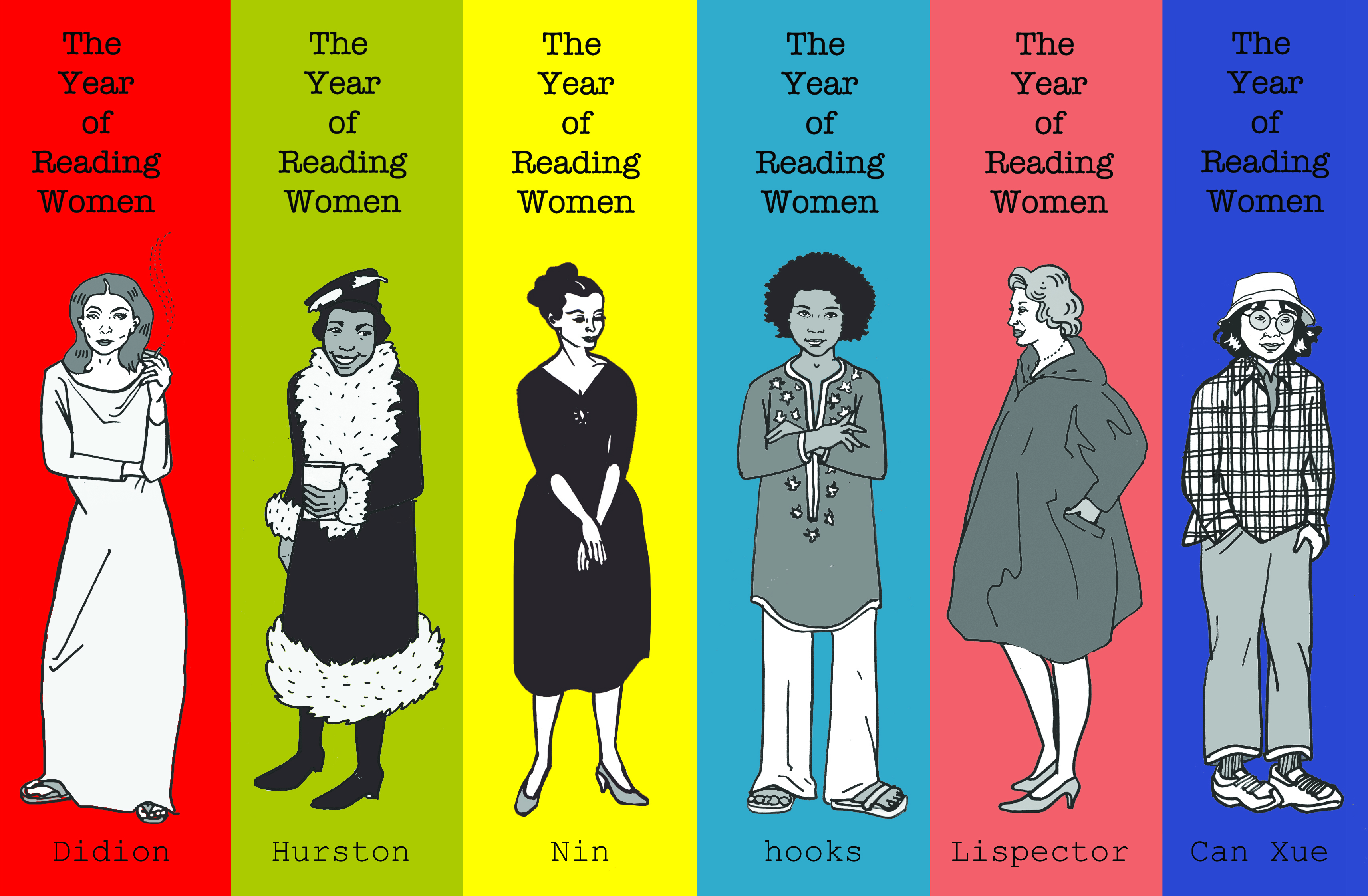
Earlier this year, the excellent Joanna Walsh inadvertently started a campaign to encourage wider and more extensive reading of women writers. What began life as New Year’s cards featuring a collection of women writers soon transformed into a Twitter hashtag—#ReadWomen2014—and then into book clubs, discussions, and a campaign which seeks, simply, to ‘create a little extra space … in which more women can be heard more loudly, both by women and men.’

Joanna Walsh's bookmarks for #ReadWomen2014. To order: They cost £10/$16/€13 for a sheet, including postage anywhere in the world. If you'd like more than one sheet, any number of subsequent sheets posted together cost £5/$8/€7 each.  To buy a set, go to Paypal, and send your payment to readwomen2014@gmail.com. Please leave a message with your payment confirming the number of sheets you'd like, and the address you'd like them sent to.

Joanna Walsh’s bookmarks for #ReadWomen2014. To order:
They cost £10/$16/€13 for a sheet, including postage anywhere in the world. If you’d like more than one sheet, any number of subsequent sheets posted together cost £5/$8/€7 each.
To buy a set, go to Paypal, and send your payment to readwomen2014@gmail.com. Please leave a message with your payment confirming the number of sheets you’d like, and the address you’d like them sent to.

I think, often, that the key to being happy as an academic is to realise how strange an occupation it is. In my case, it is doubly odd because I work in a research institute and have minimal teaching duties. I am paid to think, to write, to travel, and to read. I spend most of my time reading, and yet am constantly on the edge of panic that I’m not reading enough. Academia is a conversation with other writers. Everything is historiography. Not to read is intellectual failure.

But I need to read beyond work—mostly novels, memoirs, essays, and occasionally short stories. I read to feel the world more intensely; to feel myself in the world more intensely. I read to remind myself that what I feel is felt and shared—and has been felt and shared—by so many others. To some extent, to distinguish between academic and non-academic books is arbitrary. The most moving, thought provoking, and beautifully written book I’ve read this year was published by a university press. But for the sake of categories, and because I read fiction differently, here is a list of all of 2014’s non-academic books. I’ve not been particularly careful about only reading women writers this year, despite supporting Joanna’s campaign. And out of twenty books read and being read, twelve were by women. Reading two novels and a memoir by Michael Ondaatje—who, for some reason, I think would be a fan of #ReadWomen2014—rather increased things in favour of male writers.

I like this comment by Alexander Chee in his article about #ReadWomen2014:

I think women writers appealed to me because they acknowledged the struggles of women as well as those of men; as writers, they simply provided a fuller picture of the world.

I think so too. I think this is why I tend to reach, instinctively, for women writers.

Read in 2014: Anne Lamott, Bird by Bird; Bill Buford, Heat; Geoff Dyer, Jeff in Venice, Death in Varanasi; Anne Patchett, Bel Canto; Francesca Marciano, Casa Rossa; Monique Truong, The Book of Salt; Hannah Kent, Burial Rites; Michael Ondaatje, Running in the Family, In the Skin of a Lion, and The Cat’s Table; Robertson Davies, The Rebel Angels; Chimimanda Ngozi Adichie, Americanah; Michael Paterniti, The Telling Room; Joanna Rakoff, My Salinger Year; Jane Bowles, Two Serious Ladies; Rebecca Solnit, Men Explain Things to Me; Jane Smiley, The Greenlanders.

Can’t/won’t finish: Michel Houllebecq, Platform.

Still reading: Eleanor Catton, The Luminaries; Marilynn Robinson, Lila.

To read next: Karen Russell, Vampires in the Lemon Grove; Dana Goodyear, Anything That Moves; WG Sebald, The Emigrants, and Austerlitz.

Creative Commons License Tangerine and Cinnamon by Sarah Duff is licensed under a Creative Commons Attribution-ShareAlike 3.0 Unported License.
Food Links, 24.12.2014

  • What will a new relationship mean for Cuban and American farmers?
  • Hunger rates are at an all time high in the US, Canada, and the UK.
  • California needs even more rain.
  • Disease is built into the food system.
  • ‘I hope that ultimately the glycemic index will be left on the shelf.’
  • ‘So the more you drink – up to two drinks a day for woman, and four for men – the less likely you are to die.’
  • Eating invasive species.
  • Wine is getting stronger.
  • One alternative to Big Beef.
  • The chip and mayonnaise protest.
  • Wholefoods may begin selling rabbit.
  • China discovers cheese.
  • Holy harvest.
  • Hazelnut, chip, and butter shortages.
  • Banana beer.
  • Some of Argentina’s best restaurants are illegal.
  • Make your own alfajores.
  • A global history of the turkey.
  • ‘he is concerned that Hollywood plans for a comedy about the heist could damage the maple syrup industry’s image. “While it’s nice to have a good laugh, at some point it gets too much.”‘
  • The best restaurants in the South.
  • The rise and rise of the mason jar.
  • The rise and rise of the turkey.
  • The salt tolerant potato.
  • George Orwell’s fruit loaf.
  • Why St John in London has been so successful.
  • Avocado crème brûlée.
  • Julia Child’s refusal to be ‘perfect’ on television.
  • Breakfast in Kurdistan.
  • Green grass refrigerator pickles. (Thanks, mum!)
  • How to slice tomatoes.
  • How to make sugar cookies.
  • Portraits of bees.
  • Couscous Hanukkah fritters.
  • ‘Thou shalt have fries with that. Onion rings can be substituted, if available. But, by no means consider salad an acceptable side, and don’t forget to ask the waitress for ketchup. Thou shalt not call it tomato-y goodness.’
  • How to prevent watery coleslaw.
  • Feasts in children’s books.
  • Gingerbread, 1836.
  • How roasting replaced boiling.
  • Salade Aphrodite.
  • Urban livestock in nineteenth-century New York.
  • Lady Bird Johnson’s Texas chilli.
  • Beef Fizz and Saucy Susans.
  • Chocolate Lego.
  • A truffle was sold for $61,250.
  • Food to eat around a campfire.
  • Vegan barbecue recipes.
  • Catching rats for Vietnamese farmers.
  • What to do with leftover coffee grounds.
  • Why does peppermint cool us down? And watch candy canes being made.
  • Should you make your own fondant?
  • Swiss wine.

Fugitive Knowledge

I never expected to receive an email from the Wayne County Airport Police. I had been so disoriented by the unpleasantness of immigration, crossing from Canada to the United States, that I’d dropped my travel notebook in Detroit airport. I’d only discovered its absence when unpacking in Ann Arbor and, as with most deep, unhappy losses, had only begun to realise how much I missed my small, black Moleskine diary a day or two later. But it was found, and a policewoman emailed to ask if it was mine. It arrived in a Fedex box six times its size within the week.

The diary would mean very little to anyone, I think. It contains addresses and phone numbers; lists of places to visit, things to buy, books to read, what to pack. It also includes recipes and descriptions of food I’ve eaten in Australia, Europe, Canada, and the US. It was these that I was particularly sorry to lose. In Kingston—a few days before arriving in Michigan—I’d written down the recipe for apple pie made by Elva McGaughey, my friend Jane’s mother, and an encyclopaedia of information on the home cooking of Ontario families.

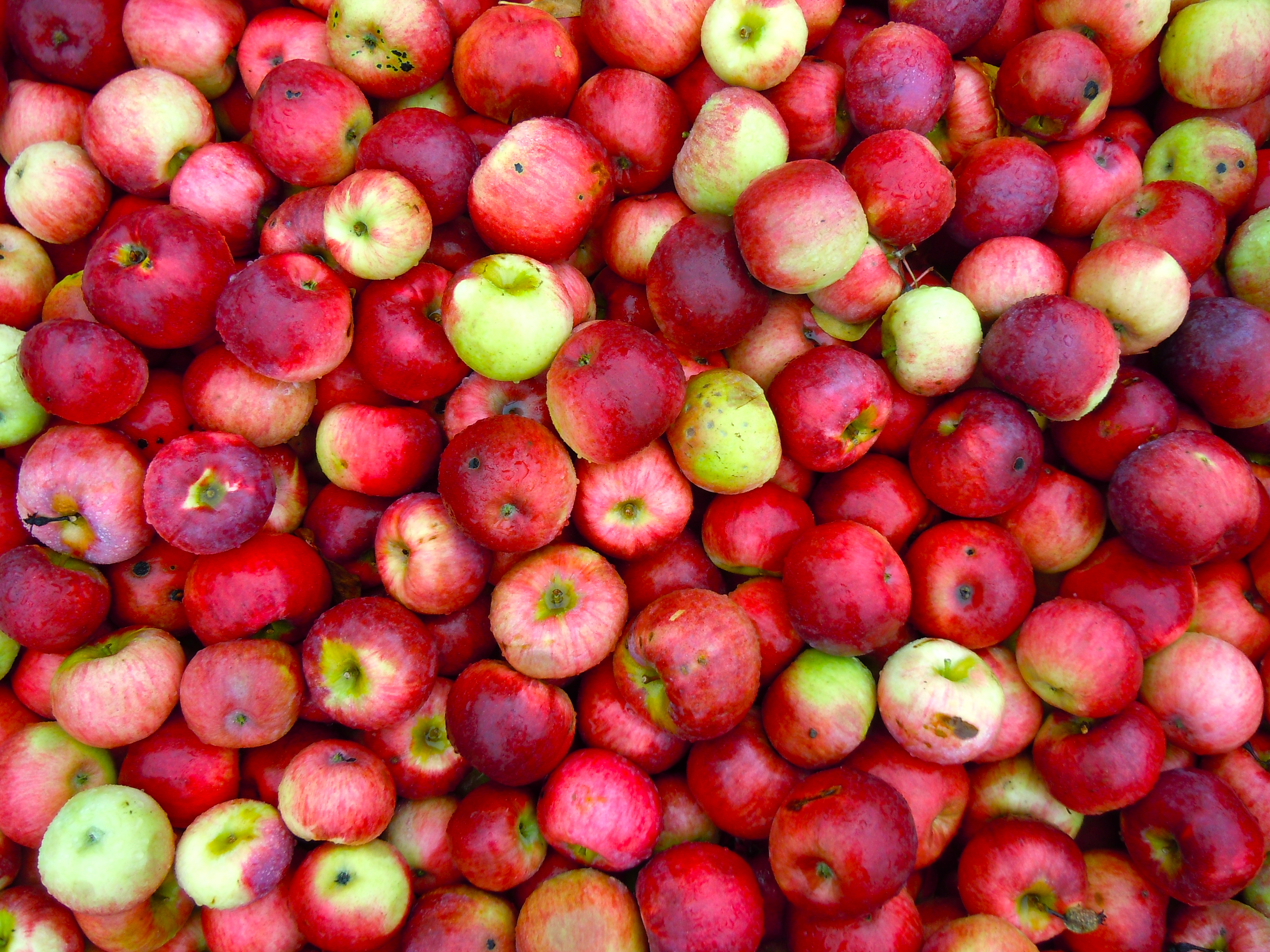
That it was apple pie was significant. A week previously, Jane and Jennifer and Jennifer’s small son Stephen and I had picked apples in Québec’s Eastern Townships. We drove from Montréal, through bright green, softly rolling countryside. The sky was low and it drizzled. At the orchard, as Stephen snored gently in his sling, we filled deep paper bags with McIntosh and Cortland apples.

DSCN1484

Several people pointed out to me that the saying should be, really, ‘as Canadian as apple pie’ because—in their view—the best pie is made with Macs, a popular variety developed by John McIntosh, who discovered these tart, crunchy apples on his farm in Ontario in 1811. The Mac now constitutes 28% of the Canadian apple crop, and two thirds of all the apples grown in New England. It is—as I discovered—excellent for eating straight off the tree, and cooks down into a slightly sour, thick mush in pie.

Today, the Mac is one of only a handful of apples grown commercially. Industrialised food chains demand hardy, uniform, easily grown varieties which can withstand long periods of storage and transport without going off or developing bruises. Until comparatively recently, there were thousands of apple varieties to choose from. Writing about the United States, Rowan Jacobsen explains:

By the 1800s, America possessed more varieties of apples than any other country in the world, each adapted to the local climate and needs. Some came ripe in July, some in November. Some could last six months in the root cellar. Some were best for baking or sauce, and many were too tannic to eat fresh but made exceptional hard cider, the default buzz of agrarian America.

Nomenclature of the Apple: A Catalogue of the Known Varieties Referred to in American Publications from 1804 to 1904 by the pomologist WH Ragan, lists 17,000 apple names. I wonder if a small part of the enthusiasm fueling the current rediscovery of old varieties—even neglected apple trees will continue bearing fruit for decades—is due to the multiple meanings we’ve attached to apples over many, many centuries. They feature prominently in classical and Norse mythology, where they are symbols of fertility, love, youth, and immortality, but also of discord. They are fruit with doubled meanings. The apple in fairytales represents both the victory of the evil stepmother, as well as the beginning of our heroine’s salvation: her prince will kiss her out of the coma induced by the poisoned apple. In her novel The Biographer’s Tale, AS Byatt represents the two wives—one in England, the other Turkish—of the bigamist Victorian explorer Sir Elmer Bole with green and red apples. The fruit in the Garden of Eden—since at least the first century CE described as an apple—bestowed both knowledge and banishment.

If the name McIntosh seemed oddly familiar, then it may be because of a now-ubiquitous Californian brand: the Apple Macintosh, launched in 1984, was named ‘Apple’ by Steve Jobs—apparently then on a fruitarian diet—and after the Mac apple, a favourite of one of the company’s top engineers. It is appropriate that these sophisticated machines which offer access to so much knowledge—licit, illicit, open, secret—should be named for apples.

In Berlin Childhood around 1900, Walter Benjamin describes being woken early—at half past six—on winter mornings before school. His nursemaid would light the fire in a small stove by his bed:

When it was ready, she would put an apple in the little oven to bake. Before long, the grating of the burner door was outlined in a red flickering on the floor. And it seemed, to my weariness, that this image was enough for one day. It was always so at this hour; only the voice of my nursemaid disturbed the solemnity with which the winter morning used to give me up into the keeping of the things in my room. The shutters were not yet open as I slid aside the bolt of the oven door for the first time, to examine the apple cooking inside. Sometimes, its aroma would scarcely have changed. And then I would wait patiently until I thought I could detect the fine bubbly fragrance that came from a deeper and more secretive cell of the winter’s day than even the fragrance of the fir tree on Christmas eve. There lay the apple, the dark, warm fruit that—familiar and yet transformed, like a good friend back from a journey—now awaited me. It was the journey through the dark land of the oven’s heat, from which it had extracted the aromas of all the things the day held in store for me. So it was not surprising that, whenever I warmed my hands on its shining cheeks, I would always hesitate to bite in. I sensed that the fugitive knowledge conveyed in its smell could all too easily escape me on the way to my tongue. That knowledge which sometimes was so heartening that it stayed to comfort me on my trek to school.

The baked apple—Proust’s madeleine for twenty-first-century theorists—both opens up Benjamin’s memories of childhood during a period of acute homesickness, but, as a child, it contained the ‘fugitive knowledge’ of what lay ahead. It could fortify—sustain—him on the journey to school, between the dark warmth of home and the noise and brightness of school.

Notebooks contain the same fugitive knowledge: they are both guides for future action, and repositories of information, memory, fact gathered over time and place. They travel in pockets and backpacks and book bags from Drawn and Quarterly, accruing meaning, emotional and intellectual. They belong to time present, as well as time future and past.

Creative Commons License Tangerine and Cinnamon by Sarah Duff is licensed under a Creative Commons Attribution-ShareAlike 3.0 Unported License.
Food Links, 17.12.2014

  • Combating illegal fishing.
  • Jack Monroe on poverty.
  • Levels of mercury in fish have increased dramatically.
  • The mystery of the disappearing vitamins.
  • Explaining parabens.
  • The looming olive oil shortage.
  • Does Britain have a drinking problem?
  • Americans go wild for almonds.
  • Radical Mycology.
  • Foraging is not cool.
  • Shorter trees mean cheaper fruit.
  • Lab grown milk.
  • How not to respond to being accidentally overcharged at a restaurant.
  • Most vegetarians and vegans return to eating meat.
  • The bulletproof coffee diet.
  • The Maillard Reaction.
  • Slavery, sugar, and drinking in the thirteen colonies.
  • Nixon’s lunch on his last full day of office.
  • How to open a bottle of wine with a shoe.
  • How to wrap a loaf.
  • Producing cava in Catalonia.
  • Cheese and hats.
  • Puddings for picnics.
  • Savoury ice cream.
  • Eat more schmaltz.
  • An interview with Betty Fussell.
  • Best things eaten in 2014.
  • Moments of food revelation in film.
  • ‘”It’s not out of the question that someone at some point may have made a mould of some famous woman’s breasts and then used it for a glass,” she went on, “but I don’t think there’s anything to indicate that Marie Antoinette herself would have lent her breast for a vessel.”‘
  • Ancient Egyptian bread.
  • Lasse Hallström’s new movie misrepresents chefs.
  • Making cheese in goatskin.
  • The watermelon bagel.
  • How to drink absinthe.
  • The plio diet.
  • Eton mess cake.
  • Pork schnitzel and marital bliss.
  • A corner shop made out of felt.
  • Bodega cats.
  • The best bars in Buenos Aires.
  • New York’s first mustard sommelier.
  • Kosher and sustainable seafood?
  • Fluffy dinner balls.
  • Make better sugar cookies.
  • Make better latkes.
  • Make better tea.

A Pumpkin Spice too Far

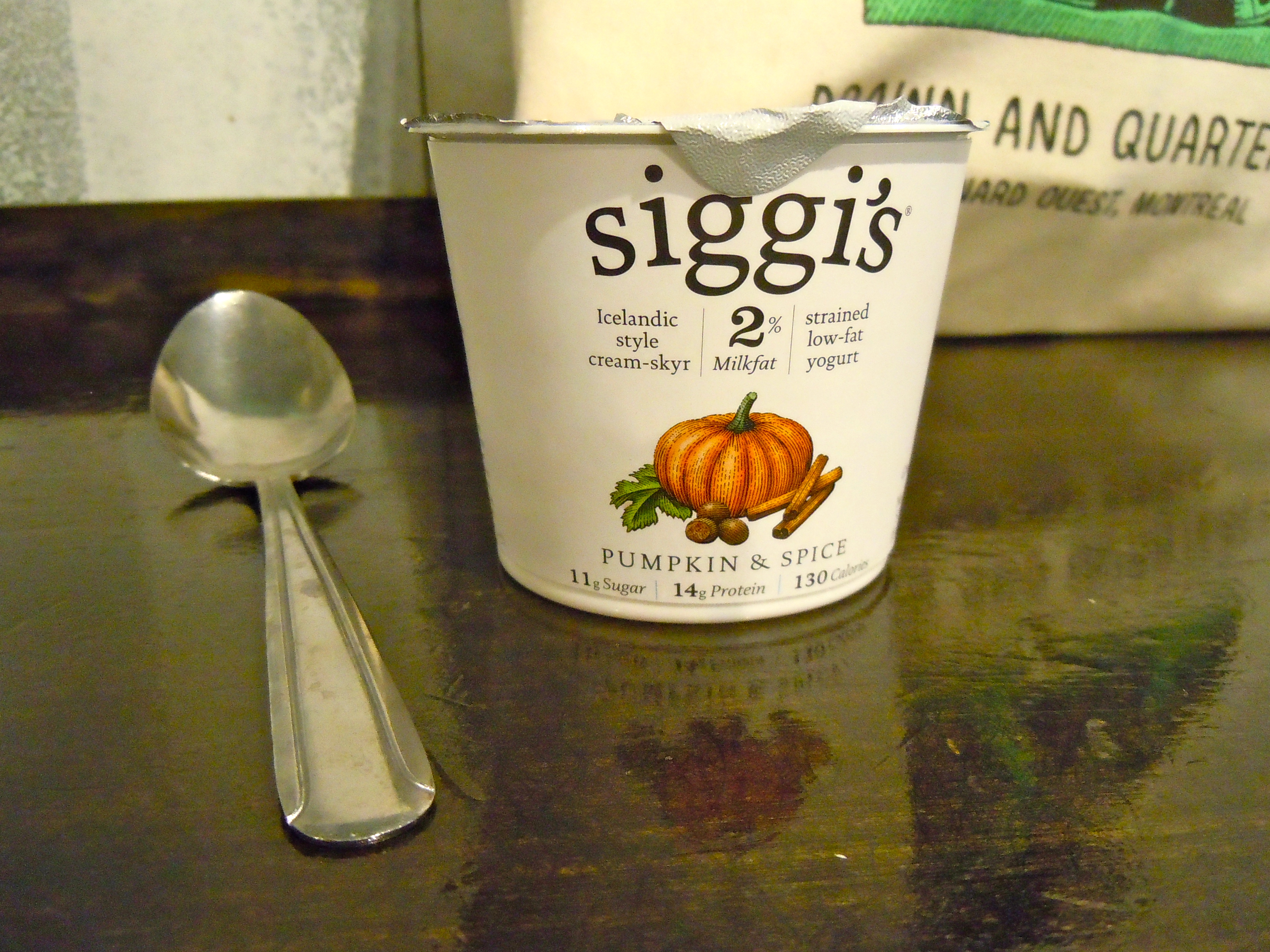
I spent most of October and November in the United States and Canada, coinciding with Canadian Thanksgiving, Hallowe’en, and, probably most importantly, pumpkin spice season. This blend of cinnamon, nutmeg, and cloves—the flavourings associated with pumpkin pie—has become comically ubiquitous in the US. Alongside pumpkin spice muffins, macaroons, and cupcakes, I saw pumpkin spice air freshener, rooibos tea, and beer. I tried pumpkin spice chips (inadvisable) and Icelandic yogurt (odd).

Too far, I think.

Too far, I think.

The pumpkin spice phenomenon originated in 2003, when Starbucks—then on the cusp of almost-global domination—debuted a new flavour for autumn. As reported last year to mark the drink’s ten-year anniversary, the company was hesitant to introduce the pumpkin spice latte. It already sold several flavoured coffees, but was not entirely sure that another seasonal drink would take off. They needn’t have worried. Forbes reports that in 2013 Starbucks had sold more than 200 million pumpkin spice lattes:

If you just do the math, that means Starbucks has sold an average 20 million beverages a year whose flavoring once belonged primarily in a seasonal pie…

At the basic price of about $4 for a 12-ounce tall size, PSL means at least $80 million in revenue … for Starbucks, which serves it beginning in September. … The company says the PSL is by far the most popular seasonal beverage in its lineup.

In fact, the pumpkin spice latte was held responsible for a bounce in the chain’s revenues this year. Outrages and fears over pumpkin spice shortages, and the annual dash for the first pumpkin spice latte of the season, are canny marketing strategies which have helped to position the drink—the #PSL on Twitter—alongside Starbucks’s red cups as a marker of the beginning of autumn and the holiday season. Unsurprisingly, other chains and supermarkets have begun to produce their own versions of the PSL.

Small, independent coffee shops—the alternatives to corporate caffeine—have also developed ways of cashing in on the pumpkin spice craze. I had a pumpkin pie flavoured latte at New Moon—an excellent café in Burlington, Vermont—and a lumberjack latte at Babo in Ann Arbor, Michigan. They were sweet and spicy: less coffee than coffee flavoured drinks.

I don’t think that the wild enthusiasm for pumpkin spice—as a flavouring—is particularly surprising. After all, in the US, Europe, and some other parts of the world, this combination of spices has long been a feature of winter or festive cooking and baking. A more interesting question is why Americans drink so much flavoured coffee. In the interests of research, I also tried vanilla, and brown sugar and sea salt flavoured coffees, and resolved never to waver from the true path of Americanos, flat whites, and the odd cappuccino. For all the fact that new technologies and techniques—drip, siphon, cold brew—have gained wild popularity for making coffee which tastes, apparently, more acutely and complicatedly of coffee, the popularity of flavoured coffees continues unabated.

It's decorative gourd season at the Ann Arbor farmers' market.

It’s decorative gourd season at the Ann Arbor farmers’ market.

America remains the largest coffee market in the world, with a third of consumers drinking ‘gourmet’ (or specially prepared) brews every day. To some extent, the ubiquity of coffee today is linked to a major fall in the price of the commodity twenty years ago. In 1962, John F. Kennedy shepherded the International Coffee Agreement into existence. Including mainly Latin American countries—the producers of superior Arabica coffee beans—the ICA controlled the price of coffee globally and was also intended to stabilise these countries’ economies, immunising them against potential Soviet influence. The ICA favoured the US and Brazil, giving both countries veto rights on policy decisions.

The collapse of the ICA, along with the Berlin Wall, in 1989 was produced both by shifting Cold War politics as well as by the emergence of new coffee producing countries—like Vietnam—which were not signatories to the Agreement. The fall in the price of coffee meant a coffee boom, particularly in the US where enthusiasm for Arabica had grown steadily over the course of the 1980s. It is no coincidence that you may have tried your first cappuccino—in the US and elsewhere—in the early 1990s. The growth of Starbucks—founded as a small independent in Seattle in 1981—traced the demise of the ICA and the fall in the international coffee price.

It is now easier than ever to buy extraordinarily good coffee for relatively little money. I wonder if this could account for the amazing variety of coffee based drinks available in the US. As a cheap beverage—as an affordable luxury, as Sidney Mintz describes the consumption of sugar in the nineteenth century—has coffee become unmoored from its position as a bitter drink to be had in small quantities at defined moments in the day, to a sweet, comforting snack to be consumed at any time?

Further Reading

Isaac A. Kamola, ‘Coffee and Genocide,’ Transition, no. 99 (2008), pp. 54-72.

Sidney W. Mintz, Sweetness and Power: The Place of Sugar in Modern History (New York: Penguin, 1985).

Stefano Ponte, ‘Behind the Coffee Crisis,’ Economic and Political Weekly, vol. 36, no. 46/47 (Nov. 24-30, 2001), pp. 4410-4417.

Creative Commons License Tangerine and Cinnamon by Sarah Duff is licensed under a Creative Commons Attribution-ShareAlike 3.0 Unported License.

Back in a dash (of salt)

I’ve writing to do, and then I’ll be in North America for a month, conferencing and seeing some of the best people. In the meanwhile, I leave you with this recipe for a whole fish baked in salt:

And with these links:

  • ‘A judge convicted one of Togue’s clients for feminine mannerisms and for drinking Bailey’s Irish Cream, which he felt only a woman would drink.’
  • Plastic in beer.
  • ‘Our research leads us to question why the frontline in reforming the food system has to be in someone’s kitchen.’
  • Why listeria is so dangerous.
  • McDonald’s in the new conflict with Russia.
  • We need to eat less red meat.
  • Big or small farms?
  • The decline of unpasteurised cheese in France.
  • Please stop foraging.
  • Please stop brunching.
  • Conflict Kitchen.
  • Livestock and the history of sexuality.
  • Why wait hours for food?
  • René Redzepi in Mexico.
  • Systemic saccharification syndrome.
  • Could lab-grown meat be kosher?
  • Ingenious pizza box design.
  • Pulled chicken.
  • Elizabeth David’s recipes for mackerel.
  • The return of the Colorado Orange.
  • The dominance of Red Delicious.
  • The dominance of clover honey.
  • Pickling courgettes.
  • Texas Monthly‘s barbecue editor.
  • Thoughts on making avocado toast.
  • How to navigate Andrés Carne de Res in Chia, Colombia.
  • The rise and rise of Pop-Tarts.
  • Sønderjysk Kaffebord.
  • Expensive meals.
  • Pecans in Georgia.
  • What is a sandwich?
  • Hervé This, food scientist.
  • Every comment on every recipe blog.
  • Wine flavoured Kit Kat.
  • Funfetti cake.
  • Drunk texts from famous authors.
  • Shrewsbury cakes.
  • How to eat sushi.
  • How to froth milk in the microwave.
  • Food to cook straight out of the freezer.
  • Flavoured butter.
  • Should we eat more swan?
  • A multi-layered birthday cake.
  • The difference between jasmine and basmati rice.
  • How to make Turkish delight.
  • Frankling D. Roosevelt’s pfannkuchen.
  • A fried chicken iPhone case.
  • New York’s first fine dining Chinese restaurant.
  • Cooking with a waffle iron.
  • Andouille corn dogs.
  • What is tobiko?
  • What is parmo?
  • ‘Results of a taste test of the two bakeries’ offerings were inconclusive, because all the doughnuts were delicious and because this reporter started to feel sick after the fourth of six doughnuts sampled. A friend with a stronger stomach said that the sour cream doughnut from Peter Pan was more succulent than the Moe’s Doughs version, but that he appreciated the dossant’s delicate, flaky crust. He agreed that all of the doughnuts tested were tasty.’

Oh, and I was on the radio recently, talking to Redi Tlhabi about changing tastes. Take a listen here. See you in November xx

Food Links, 10.09.2014

  • The fast food workers’ strike in the US. They were not paid to strike. But will these strikes actually work?
  • Russians respond to the ban on western food.
  • The rich are eating better, the poor are eating worse.
  • Synbio.
  • Sugar and fat are not addictive.
  • In Boston, food trucks are safer than restaurants.
  • Why fast food is more expensive this year.
  • Organic farming won’t save the world.
  • Raw sugar is no healthier than refined sugar.
  • Alain Ducasse (almost) abandons meat.
  • Urban agriculture in Cleveland.
  • Rumours of shortages of kale, chia seeds, amaranth, and quinoa.
  • A brief history of the pumpkin spice latte.
  • Americans are eating more butter.
  • The barn revival.
  • Roald Dahl on food.
  • In praise of Yotam Ottolenghi and Diana Henry.
  • ‘They proudly revel in the relentless, boorish stuffing of faces, unchecked public intoxication, and wasteful excess.’
  • A history of picnics through photography.
  • Vegan cheesecake.
  • The evolution of caffeine.
  • Patat Oorlog.
  • The language of tea. (Thanks, mum!)
  • A market in Da Lat, Vietnam.
  • Insect snacks in Massachusetts.
  • How to divide cake batter evenly between pans.
  • Where to eat in Gujarat.
  • The science of chocolate chip cookies.
  • Breakfast in Istanbul.
  • Jennifer Lopez’s birthday cake.
  • Buttered coffee.
  • Why restaurants discontinue dishes.
  • Eating rat.
  • How to clean a wooden rolling pin.
  • Things that contain no calories.
  • Eating across Texas.
  • Raspberry and quince jelly teacake.
  • South Indian cool drinks.
  • Making maple syrup.
  • Death threats at a whiskey distillery in Texas.
  • Monster soup.
  • Coasters.
  • Salt beef sandwiches.
  • The end of cereal?
  • A recipe comic.
  • Chicken, bacon, and bean stew.
  • Minimalist cocktail posters.
  • Unpaid graft.

Human Beans

A few weeks ago, my friend Nafisa sent me a photograph of a banner outside a cafe in Linden in Johannesburg’s northern suburbs. In a particularly good demonstration of why punctuation helps to avoid horrific confusion, it advertises that it ‘now serves TIM NOAKES’—with ‘breakfasts and lunches’ in smaller script below.

In Linden, Johannesburg. Courtesy of Nafisa Essop Sheik.

In Linden, Johannesburg. Courtesy of Nafisa Essop Sheik.

Personally, I would prefer neither to eat Tim Noakes nor his high-fat, low-carbohydrate diet. This sign is interesting, though, because it still refers to a Noakes, rather than Banting, diet. In the past couple of months, restaurants all over South Africa have added Banting friendly meals to their menus, and I think it’s worth taking a closer look at Banting, his diet, and context. William Banting (1796-1878) was a prominent undertaker and funeral director whose family had long been responsible for organising the Royal Family’s funerals. He and what became known as ‘Bantingism’ rose to prominence in 1863 with the publication of A Letter on Corpulence, Addressed to the Public. In it, he described how he shrunk from obesity to a ‘normal’ weight as a result of a miraculous diet. The aptly named Michelle Mouton explains:

After many vain attempts to find a doctor with a cure for corpulence, and after futile experiments with Turkish baths and the like, it is ironically diminished sight and hearing that incidentally lead Banting to his miracle. His ear surgeon suspects a constriction of the ear canals, Banting reports, and advises him to abstain from what Banting terms ‘human beans’—‘bread, butter, milk, sugar, beer, and potatoes’—so called because they are as harmful to older persons as are beans to horses.

The diet was so efficacious that Banting lost forty-six pounds in a year, and reported feeling healthier than ever before. So what did he eat?

For breakfast, I take four or five ounces of beef, mutton, kidneys, broiled fish, bacon, or cold meat of any kind except pork; a large cup of tea (without milk or sugar), a little biscuit, or one ounce of dry toast. For dinner, five or six ounces of any fish except salmon, any meat except pork, any vegetable except potato, once ounce of dry toast, fruit out of a pudding, any kind of poultry or game, and two or three glasses of good claret, sherry, or Madeira—champagne, port and beer forbidden. For tea, two or three ounces of fruit, a rusk or two, and a cup of tea without milk or sugar. For supper, three or four ounces of meat or fish, similar to dinner, with a glass or two of claret. For nightcap, if required, a tumbler of grog—(gin, whisky, or brandy, without sugar)—or a glass or two of claret or sherry.

Noakes-ites will note that Banting included some carbohydrates in his diet, and seemed to shun pork (if not bacon) and salmon, possibly on the grounds that they were too fatty. His injunction against sugar is mildly ridiculous considering the amount of fortified alcohol he drank. No wonder he enjoyed the diet so much—it gave him licence to remain in a permanent state of gentle tipsiness.

Much of Bantingism’s popularity was linked to the fact that it emerged during a period when diets, perceptions of physical and moral beauty, and ideas about health were undergoing rapid change. The wild success of his pamphlet in Britain, the United States, and elsewhere caused intense debate within a medical profession which was increasingly linking weight—Banting’s corpulence—to health. Urban living and industrialised food production reduced the price of food and altered eating patterns. For the middle classes, for instance, meals were now eaten three times a day, with dinner moving to the evening. At the same time, thinness was increasingly associated both with physical beauty and moral behaviour. This diet seemed to offer an easy way to achieve both ideals. Self-denial would result in a more moral, thinner person. Mouton writes:

Toward the end of 1864, George Eliot wrote to a friend, ‘I have seen people much changed by the Banting system. Mr A. [Anthony] Trollope is thinner by means of it, and is otherwise the better for the self-denial,’ she adds.

The diet also offered the new middle classes a way of navigating new food choices, in much the same way that their embrace of evangelical Christianity assisted them in finding a place for themselves within Britain’s class system. As Joyce L. Huff observes, Banting chose to write his pamphlet as a tract. Similar to other confessions of earnest Christians who had come to the light of God’s grace, Banting’s Letter traces the journey of a humble man—a sinner in a fat body—to the light and clarity of a high protein diet. He had achieved full mastery of both his body and his soul.

William Banting (from here), presumably after his diet.

William Banting (from here), presumably after his diet.

Enthusiasm for the diet petered out fairly quickly, but Banting’s writing has been resuscitated more recently by pro-protein evangelicals like Robert Atkins, Gary Taubes, and Noakes. Thinking about Banting’s diet in historical context draws attention to a few exceptionally important points:

Firstly, anxieties about diet occur in the midst of major social change. I don’t think that it’s any accident that Noakes has found an audience among South Africa’s middle classes: whose numbers are growing, but who are also feeling the impact of global recession. Diets—particularly strict diets—offer a sense of being in control and of group belonging in times of radical uncertainty.

Secondly, as a closer look at Banting’s day-to-day eating demonstrates, his diet and that advocated by Noakes are fairly different. In fact, I wonder if Banting lost weight simply because he was eating less food more generally, than as a result of his switch to greater quantities of protein. Noakes cites Banting and other eighteenth- and nineteenth-century high protein dieters to lend his writing greater validity. This is knowledge, he implies, that has been around for some time. All he’s done is to bring it to wider public knowledge. Yet it’s clear that what we define as high protein has changed over time. Noakes’s diet is a diet of the early twenty-first century.

Thirdly, as the short lived initial enthusiasm for Bantingism suggests, this diet is no more successful than other diets at causing weight loss. Put another way, while eating a high protein diet will cause initial, dramatic weight loss—partly through dehydration—those who follow diets which encourage greater exercise and generally lower calorie intake lose the same amount of weight over a longer period of time. This has been demonstrated by study after study. More worryingly, we have no idea what the longterm health implications of high protein diets may be.

Connected to this, Noakes argues that it is largely industry—Big Food—which has been behind efforts to discredit high fat diets. Although Banting was ridiculed by some doctors during the 1860s, this was at a time when medical professionals jostled with quacks for recognition, and did not occupy the same position of authority that they have since the mid-twentieth century. Doctors could not band together to suppress this kind of information. Moreover, food companies were in their infancy. Clearly, people chose to relinquish the diet for a range of other reasons.

Finally, this—as Banting’s contemporaries pointed out—is a diet for the wealthy, and for a planet with unlimited resources. It is out of reach for the vast majority of people who are obese, most of whom are poor. We know that intensive livestock farming has a devastating impact on the environment. Addressing poverty and rethinking agriculture offer the best means of improving the health of the world’s population and of mitigating climate change. Not eating more animal protein.

Further Reading

Sander L. Gilman, Fat: A Cultural History of Obesity (Cambridge: Polity, 2008).

Joyce L. Huff, ‘A “Horror of Corpulence”: Interrogating Bantingism and Mid-Nineteenth-Century Fat Phobia,’ in Bodies out of Bounds: Fatness and Transgression, eds. Jana Evans Braziel and Kathleen LeBresco (Berkeley: University of California Press, 2001), pp. 39-59.

Michelle Mouton, ‘“Doing Banting”: High-Protein Diets in the Victorian Period and Now,’ Studies in Popular Culture, vol. 24, no. 1 (Oct. 2001), pp. 17-32.

Creative Commons License Tangerine and Cinnamon by Sarah Duff is licensed under a Creative Commons Attribution-ShareAlike 3.0 Unported License.