My expectations of the London Olympics’ opening ceremony were so low that, I suppose, I would have been impressed if it had featured Boris as Boudicca, driving a chariot over the prostate figures of the Locog committee. (Actually, now that I think about it, that would have been fairly entertaining.)
Appalled by the organising committee’s slavishly sycophantic attitude towards its sponsors and their ‘rights’ – which caused them to ban home knitted cushions from being distributed to the Olympic athletes, and to require shops and restaurants to remove Olympic-themed decorations and products – as well the rule that online articles and blog posts may not link to the official 2012 site if they’re critical of the games, the decision to make the official entrance of the Olympic site a shopping mall, and the creation of special lanes for VIP traffic, I wasn’t terribly impressed by the London Olympics.
As some commentators have noted, this was the opposite of the kind of kings-and-queens-and-great-men history curriculum which Michael Gove wishes schools would teach. Oh and the parachuting Queen and Daniel Craig were pretty damn amazing too.
There was even a fleeting, joking reference to the dire quality of British food during the third part of the ceremony. There was something both apt, but also deeply ironic about this. On the one hand, there has been extensive coverage of Locog’s ludicrous decision to allow manufacturers of junk food – Coke, Cadbury’s, McDonald’s – not only to be official sponsors of a sporting event, but to provide much of the catering. (McDonald’s even tried to ban other suppliers from selling chips on the Olympic site.)
But, on the other, Britain’s food scene has never been in better shape. It has excellent restaurants – and not only at the top end of the scale – and thriving and wonderful farmers’ markets and street food.
It’s this which makes the decision not to open up the catering of the event to London’s food trucks, restaurants, and caterers so tragic. It is true that meals for the athletes and officials staying in the Village have been locally sourced and made from ethically-produced ingredients, and this is really great. But why the rules and regulations which actually make it more difficult for fans and spectators to buy – or bring their own – healthy food?
Of course, the athletes themselves will all be eating carefully calibrated, optimally nutritious food. There’s been a lot of coverage of the difficulties of catering for so many people who eat such a variety of different things. The idea that athletes’ performance is enhanced by what they consume – supplements, food, and drugs (unfortunately) – has become commonplace.
Even my local gym’s café – an outpost of the Kauai health food chain – serves meals which are, apparently, suited for physically active people. I’ve never tried them, partly because the thought of me as an athlete is so utterly nuts. (I’m an enthusiastic, yet deeply appalling, swimmer.)
The notion that food and performance are linked in some way, has a long pedigree. In Ancient Greece, where diets were largely vegetarian, but supplemented occasionally with (usually goat) meat, evidence suggests that athletes at the early Olympics consumed more meat than usual to improve their performance. Ann C. Grandjean explains:
Perhaps the best accounts of athletic diet to survive from antiquity, however, relate to Milo of Croton, a wrestler whose feats of strength became legendary. He was an outstanding figure in the history of Greek athletics and won the wrestling event at five successive Olympics from 532 to 516 B.C. According to Athenaeus and Pausanius, his diet was 9 kg (20 pounds) of meat, 9 kg (20 pounds) of bread and 8.5 L (18 pints) of wine a day. The validity of these reports from antiquity, however, must be suspect. Although Milo was clearly a powerful, large man who possessed a prodigious appetite, basic estimations reveal that if he trained on such a volume of food, Milo would have consumed approximately 57,000 kcal (238,500 kJ) per day.
Eating more protein – although perhaps not quite as much as reported by Milo of Croton’s fans – helps to build muscle, and would have given athletes an advantage over other, leaner competitors.
Another ancient dietary supplement seems to have been alcohol. Trainers provided their athletes with alcoholic drinks before and after training – in much the same way that contemporary athletes may consume sports drinks. But some, more recent sportsmen seem to have gone a little overboard, as Grandjean notes:
as recently as the 1908 Olympics, marathon runners drank cognac to enhance performance, and at least one German 100-km walker reportedly consumed 22 glasses of beer and half a bottle of wine during competition.
Drunken, German walker: I salute you and your ability to walk in a straight line after that much beer.
The London Olympic Village is, though, dry. Even its pub only serves soft drinks. With the coming of the modern games – which coincided with the development of sport and exercise science in the early twentieth century – diets became the subject of scientific enquiry. The professionalization of sport – with athletes more reliant on doing well in order to make a living – only served to increase the significance of this research.
One of the first studies on the link between nutrition and the performance of Olympic athletes was conducted at the 1952 games in Helsinki. The scientist E. Jokl (about whom I know nothing – any help gratefully received) demonstrated that those athletes who consumed fewer carbohydrates tended to do worse than those who ate more. Grandjean comments:
His findings may have been the genesis of the oft-repeated statement that the only nutritional difference between athletes and nonathletes is the need for increased energy intake. Current knowledge of sports nutrition, however, would indicate a more complex relationship.
As research into athletes’ diets has progressed, so fashions for particular supplements and foods have emerged over the course of the twentieth century. Increasing consumption of protein and carbohydrates has become a common way of improving performance. Whereas during the 1950s and 1960s, athletes simply ate more meat, milk, bread, and pasta, since the 1970s, a growing selection of supplements has allowed sportsmen and –women to add more carefully calibrated and targeted forms of protein and carbohydrates to their diets.
Similarly, vitamin supplements have been part of athletes’ diets since the 1930s. Evidence from athletes competing at the 1972 games in Munich demonstrated widespread use of multivitamins, although now, participants tend to choose more carefully those vitamins which produce specific outcomes.
But this history of shifting ideas around athletes’ diets cannot be understood separately from the altogether more shadowy history of doping – of using illicit means of improving one’s performance. Even the ancient Greeks and Romans used stimulants – ranging from dried figs to animal testes – to suppress fatigue and boost performance.
More recently, some of the first examples of doping during the nineteenth century come from cycling (nice to see that some things don’t change), and, more specifically, from long-distance, week-long bicycle races which depended on cyclists’ reserves of strength and stamina. Richard IG Holt, Ioulietta Erotokritou-Mulligan, and Peter H. Sönksen explain:
A variety of performance enhancing mixtures were tried; there are reports of the French using mixtures with caffeine bases, the Belgians using sugar cubes dripped in ether, and others using alcohol-containing cordials, while the sprinters specialised in the use of nitroglycerine. As the race progressed, the athletes increased the amounts of strychnine and cocaine added to their caffeine mixtures. It is perhaps unsurprising that the first doping fatality occurred during such an event, when Arthur Linton, an English cyclist who is alleged to have overdosed on ‘tri-methyl’ (thought to be a compound containing either caffeine or ether), died in 1886 during a 600 km race between Bordeaux and Paris.
Before the introduction of doping regulations, the use of performance enhancing drugs was rife at the modern Olympics:
In 1904, Thomas Hicks, winner of the marathon, took strychnine and brandy several times during the race. At the Los Angeles Olympic Games in 1932, Japanese swimmers were said to be ‘pumped full of oxygen’. Anabolic steroids were referred to by the then editor of Track and Field News in 1969 as the ‘breakfast of champions’.
But regulation – the first anti-drugs tests were undertaken at the 1968 Mexico games – didn’t stop athletes from doping – the practice simply went underground. The USSR and East Germany allowed their representatives to take performance enhancing drugs, and an investigation undertaken after Ben Johnson was disqualified for doping at the Seoul games revealed that at least half of the athletes who competed at the 1988 Olympics had taken anabolic steroids. In 1996, some athletes called the summer Olympics in Atlanta the ‘Growth Hormone Games’ and the 2000 Olympics were dubbed the ‘Dirty Games’ after the disqualification of Marion Jones for doping.
At the heart of the issue of doping and the use of supplements, is distinguishing between legitimate and illegitimate means of enhancing performance. The idea that taking drugs to make athletes run, swim, or cycle faster, or jump further and higher, is unfair, is a relatively recent one. It’s worth noting that the World Anti-Doping Agency, which is responsible for establishing and maintaining standards for anti-doping work, was formed only in 1999.
What makes anabolic steroids different from consuming high doses of protein, amino acids, or vitamins? Why, indeed, was Caster Semenya deemed to have an unfair advantage at the 2009 IAAF World Championships, but the blade-running Oscar Pistorius is not?
I’m really pleased that both Semenya and Pistorius are participating in the 2012 games – I’m immensely proud that Semenya carried South Africa’s flag into the Olympic stadium – but their experiences, as well as the closely intertwined histories of food supplements and doping in sport, demonstrate that the idea of an ‘unfair advantage’ is a fairly nebulous one.
Further Reading
Elizabeth A. Applegate and Louis E. Grivetti, ‘Search for the Competitive Edge: A History of Dietary Fads and Supplements,’ The Journal of Nutrition, vol. 127, no. 5 (2007), pp. 869S-873S.
Ann C. Grandjean, ‘Diets of Elite Athletes: Has the Discipline of Sports Nutrition Made an Impact?’ The Journal of Nutrition, vol. 127, no. 5 (2007), pp. 874S-877S.
Richard IG Holt, Ioulietta Erotokritou-Mulligan, and Peter H. Sönksen, ‘The History of Doping and Growth Hormone Abuse in Sport,’ Growth Hormone & IGF Research, vol. 19 (2009), pp. 320-326.
One of the perks of academia is being able to travel for research, study, and conferences. The odd side-effect of this is that academics become unwitting experts in the quality of travel food – by which I mean the meals available in airports and railway stations and on planes and trains.
I’ve never really understood the griping about airline meals: they’re certainly not the most inspired dinners and, particularly, breakfasts I’ve ever eaten – and I’ve probably drunk the worst coffee in the world while on long-haul flights between Cape Town and London – but I haven’t ever had anything that was actively offensive.
In fact, I rather liked the lamb biryani with cashew nuts and caramelised bits of onion I ate on a flight from Qatar to Joburg, and the macadamia and honey ice cream I had while flying from Perth to Melbourne. I’ve had considerably worse food on trains. On a nine-hour journey between Montrose in northern Scotland and London, the dining car was closed because the tea urn was broken. Which, although an interesting commentary on the centrality of tea to the British diet, was nevertheless unpleasant. A woman can subsist on crisps for only so long.
I wonder why there’s so much complaining about airline food. I think it has something to do with the overall unpleasantness of economy-class flying – the cramped seats, the mucky loos, and the dismaying misfortune of being stuck beside fellow passengers with strange personal habits – but it’s also connected, to some extent, with the ways in which we understand travel.
I’ve just returned from a month in Australia – it was amazing – and became particularly aware of how much I spend on food when I travel because it’s probably the most expensive country I’ve ever visited. But I still went out of my way to eat friands and Anzac cookies and to drink fantastic coffee to try to understand the cities I visited in Australia.
There are few non-fiction genres which blur so easily into each other as food and travel writing – as attested by the continuing popularity of magazines like the Australian Gourmet Traveller, and the legion of food-and-travel cookery books and blogs. The best food writing is a kind of inadvertent travel writing. Claudia Roden’s writing on the Middle East and North Africa, Fuchsia Dunlop on China, Madhur Jaffrey on India, and, to a lesser extent, Elizabeth David’s writing on France, are as much introductions to these countries and regions at particular moments in time, as they are recipe books.
And it’s striking how much travel writing focusses on food. One of the most memorable sections of Robert Byron’s The Road to Oxiana (1937) – by far my favourite travel narrative ever – features a blue porcelain bowl of chicken mayonnaise.
It was in Isfahan I decided sandwiches were insupportable, and bought a blue bowl, which Ali Asgar used to fill with chicken mayonnaise before starting on a journey. Today there had been treachery in the Gastrell’s kitchen, and it was filled with mutton. Worse than that, we have run out of wine.
Later, stranded in the middle of the night and in the freezing cold on the road between Herat and Murghab, Byron and his travelling companions take refuge in a makeshift tent after their car breaks down:
Quilts and sheep-skins replaced our mud-soaked clothes. The hurricane lantern, suspended from a strut in the hood, cast an appropriate glow on our dinner of cold lamb and tomato ketchup out of the blue bowl, eggs, bread, cake, and hot tea. Afterwards we settled into our corners with two Charlie Chan detective stories.
Byron uses food to suggest his and his companions’ feelings at particular moments of the journey. Relieved to have reached Maimana – now on the Afghan border with Turkmenistan – he and Christopher Sykes are treated to a feast:
The Governor of Maimena was away at Andkhoi, but his deputy, after refreshing us with tea, Russian sweets, pistachios, and almonds, led us to a caravanserai off the main bazaar, a Tuscan-looking old place surrounded by wooden arches, where we have a room each, as many carpets as we want, copper basins to wash in, and a bearded factotum in high-heeled top-boots who laid down his rifle to help with the cooking.
It will be a special dinner. A sense of well-being has come over us in this land of plenty. Basins of milk, pilau with raisins, skewered kabob well salted and peppered, plum jam, and some new bread have already arrived from the bazaar; to which we have added treats of our own, patent soup, tomato ketchup, prunes in gin, chocolate, and Ovaltine. The whisky is lasting out well.
Byron is less interested in what the people around him are eating, than in how food reflects his experiences of his journey through the Middle East and Central Asia. Writing in 1980, in an essay included in the collection What am I doing here, Bruce Chatwin uses food to emphasise his sense of what was lost – culturally, socially – during the communist revolution in Afghanistan:
And we shall lose the tastes – the hot, coarse, bitter bread; the green tea flavoured with cardamoms; the grapes we cooled in the snow-melt; and the nuts and dried mulberries we munched for altitude sickness.
His elegy for Afghanistan is problematic on so many levels – his deliberate misunderstanding of Afghan politics, his romanticising of pre-1960s Afghanistan, and Chatwin’s own dubious reputation for factual accuracy – but it’s an evocative piece of writing which conjures up what feels like a realistic and layered portrayal of the regions of Afghanistan which Chatwin visited.
Describing food is absolutely integral to this: unlike foreign religious ceremonies or social customs, we can all sample – or imagine sampling – the cuisines of other societies. Food allows us some purchase on ways of living which are unfamiliar to us: we can use food to try to understand a different society, and also to judge it.
In her account of a journey through parts of West Africa in the mid-1890s, Mary Kingsley used food – this time cannibalism – to explain the what she perceived to be the ‘backwardness’ of Fang society:
It is always highly interesting to observe the germ of any of our own institutions existing in the culture of a lower race. Nevertheless it is trying to be hauled out of one’s sleep in the middle of the night, and plunged into this study. Evidently this was a trace of an early form of the Bankruptcy Court; the court which clears a man of his debt, being here represented by the knife and the cooking pot; the whitewashing, as I believe it is termed with us, also shows, only it is not the debtor who is whitewashed, but the creditors doing themselves over with white clay to celebrate the removal of their enemy from his sphere of meretricious activity. This inversion may arise from the fact that whitewashing a creditor who was about to be cooked would be unwise, as the stuff would boil off the bits and spoil the gravy. There is always some fragment of sound sense underlying African institutions.
Uncivilised – in this case, taboo-breaking – food and eating habits suggest an uncivilised society.
When I was in Perth, I dropped into the fantastic New Edition bookshop in William Street. Having taken photographs of the incredible mural which covers the shop’s back wall, I was afflicted with guilt – and also the same desperate desire that I feel in most independent bookshops for it to survive and flourish (which makes visiting independent bookshops needlessly stressful) – so I bought a book: a small, light collection of Italo Calvino’s essays, Under the Jaguar Sun (1983).
The three essays which comprise the collection are the germ of a longer book which Calvino had planned to write on the five senses. He completed only these three before his death, and the titular essay, happily, focuses on the sensation of taste. It’s about a couple who visit Oaxaca in Mexico. Their interest in the country’s cuisine becomes, gradually, the purpose of the holiday itself:
From one locality to the next the gastronomic lexicon varied, always offering new terms to be recorded and new sensations to be defined. …we found guacamole, to be scooped up with crisp tortillas that snap into many shards and dip like spoons into the thick cream (the fat softness of the aguacate – the Mexican national fruit, known to the rest of the world under the distorted name of ‘avocado’ – is accompanied and underlined by the angular dryness of the tortilla, which, for its part, can have many flavours, pretending to have none); then guajote con mole pablano – that is, turkey with Puebla-style mole sauce, one of the noblest among the many moles, and most laborious (the preparation never takes less than two days), and most complicated, because it requires several different varieties of chile, as well as garlic, onion, cinnamon, cloves, pepper, cumin, coriander, and sesame, almonds, raisins, and peanuts, with a touch of chocolate; and finally quesadillas (another kind of tortilla, really, for which cheese is incorporated in the dough, garnished with ground meat and refried beans).
This obsession with the country’s food coincides, unexpectedly, with their shared enthusiasm for Mexico’s Pre-Columbian past. After a visit to a ‘complex of ruins’ in Monte Albán, where their guide implies that the losers of a ballgame played at one of the ruined temples were not only ritually slaughtered, but also eaten by the temple’s priests and the victorious team, Olivia, the narrator’s partner, becomes preoccupied with discovering how these human remains were prepared. The story implies that her desire to eat ever-more exotic Mexican dishes stems from her belief – never articulated – that some remnant of these cannibalistic feasts must exist within contemporary Mexican cooking.
The narrator reflects:
the true journey, as the introjection of an ‘outside’ different from our normal one, implies a complete change of nutrition, a digesting of the visited country – its fauna and flora and its culture (not only the different culinary practices and condiments but the different implements used to grind the flour or stir the pot) – making it pass between the lips and down the oesophagus. This is the only kind of travel that has a meaning nowadays, when everything visible you can see on television without rising from your easy chair.
For Olivia, eating becomes a way, literally, to imbibe the culture, politics, and history of Mexico. If she can’t be Mexican, then she can, physically, become closer to Mexico – its land and people – itself.
I don’t, obviously, advocate cannibalism as part of the average tourist itinerary – it’s illegal in most countries, for one thing – but I think that this idea of ‘eating’ a country is a useful way of exploring how we use food to construct national identities.
In some ways, food stands in for a society: we eat piles of pancakes with bacon and maple syrup in the United States as a way of engaging with what many believe to be an excessive, consumerist society. Travellers who think of themselves as being in pursuit of the ‘real’ – unpredictable, utterly unfamiliar, occasionally dangerous – India eat the delicious, yet potentially diarrhoea-inducing, street food of country: eating the more familiar offerings at hotels signifies a failure to leave the tourist bubble. Since the 1940s and 1950s, France has promoted its cuisine as a symbol of its national culture. (Something which Charles de Gaulle may have been thinking about when he wondered how he would govern nation that has two hundred and forty-six different kinds of cheese.) French food is sophisticated, so French society is sophisticated.
There are grains of truth in all these stereotypes, but they remain that – simplified and often clichéd understandings of complex societies. They are also, largely, not a real reflection of how most people eat: they exclude the ingredients bought at supermarkets, and the meals eaten at fast food joints. So if we want, truly, to understand countries and societies through their food, we have to be willing to eat that which is, potentially, less interesting and, perhaps, less enticing, than the exotic meals described in travel books.
Pausing occasionally to wonder at the collection of life choices which had led to this moment, I scanned these black and white photographs of lactating women from the 1920s and 1930s, attempting to understand the set of criteria according to which they were categorised into ‘good’ and ‘bad’ breasts.
The pictures were taken and kept by the Mothercraft Training Centre in London, and were intended for nurses and other healthcare practitioners working with mothers and young babies. Informed by the programme of scientific childrearing developed by the New Zealand doctor Truby King during the first decade of the twentieth century, the Centre’s staff promoted breastfeeding as the best way of providing babies with adequate nutrition.
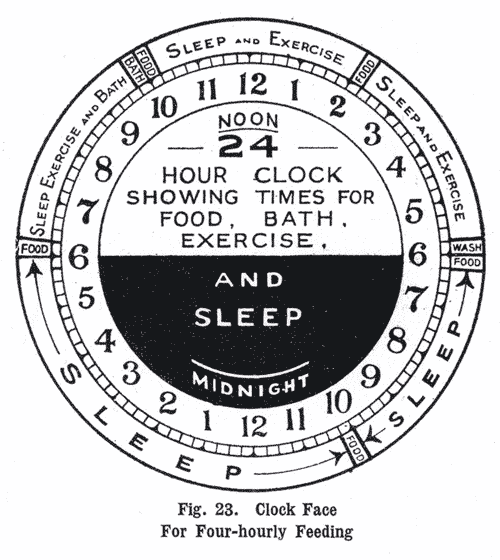
In King’s view, breastfeeding needed to be approached scientifically. Mothers should not feed on demand but, rather, according to a strict schedule, depending on the age of the infant. This feeding by the clock was a technique aimed as much at mothers as it was at shaping obedient and self-reliant babies and young children.
Like other specialists in the relatively new field of paediatrics, King believed that mothers were irrational and emotional, and inclined to follow what he characterised as the unscientific and unsanitary advice provided by their female relatives. By breastfeeding in King’s ‘scientific’ manner, mothers could learn to be rational creatures.
In King’s view, not only were there right and wrong ways of breastfeeding, but also good and bad breasts. The photographs in the Mothercraft Training Centre’s collection were meant to help nurses identify the link between the shape of women’s breasts and the ways they would feed their babies.
I was reminded of these photographs this week by the most recent cover of Time magazine, which features 26 year-old Jamie Lynn Grumet breastfeeding her son. She is young, slim, and wears a skimpy top, and her child is a sturdy three year-old.
The debate which erupted around the cover focussed on the age of the boy: wasn’t it weird, asked some, for a mother to be feeding so old a child? The picture – deliberately, I think – provoked this controversy by upsetting contemporary notions of what nurturing motherhood should look like.
But what interested me is that Time chose this particular photograph for its cover. The edition’s focus is not, in fact, on breastfeeding. It’s about a popular childrearing guide The Baby Book (1992) written by William Sears, which advocates that mothers and babies remain as close together as possible for as long as possible. Kate Pickert explains:
While the concept sounds simple, the practicalities of attachment parenting ask a great deal of mothers. The three basic tenets are breast-feeding (sometimes into toddlerhood), co-sleeping (inviting babies into the parental bed or pulling a bassinet alongside it) and ‘baby wearing,’ in which infants are literally attached to their mothers via slings. Attachment-parenting dogma also says that every baby’s whimper is a plea for help and that no infant should ever be left to cry.
Hilariously lampooned by Maggie Gyllenhaal in Away We Go, attachment parenting has been the subject of extensive and frequently ferocious debate. Breastfeeding, though, is only one feature of this particular mode of parenting. So why the cover on Time? It’s partly because photographs of breastfeeding women still – depressingly – provoke argument. As Jill Leporewrites, there’s a long history of banning magazines which print pictures of breastfeeding women:
Like its historical antecedents – a centrefold in a 1938 issue of Life called ‘The Birth of a Baby,’ and another, in 1965, called ‘The Drama of Life’ – it has gotten a great deal of attention. Sales have been brisk. Interest has been prurient. Outrage is all the rage.
Life’s ‘Birth of a Baby’ issue was banned all over the country (but not before selling seventeen million copies). Overnight, Gallup conducted a nationwide poll, asking: ‘In your opinion, do these pictures violate the law against publication of material which is obscene, filthy or indecent?’ (Twenty-four per cent of respondents said yes; seventy-six per cent no.) A generation later, the photographs on the 1965 cover, ‘The Drama of Life’ were shipped into outer space on board the Voyager (but not before selling eight million copies in four days). Each gave rise to criticism, some of it quite wonderful. The week after Life published ‘The Birth of a Baby,’ The New Yorker published a parody, called ‘The Birth of an Adult,’ written by EB White. ‘The Birth of an Adult is presented with no particular regard for good taste,’ White wrote. ‘The editors feel that adults are so rare, no question of taste is involved.’
‘Respectable’ news magazines often print photographs of women with semi-covered breasts. If these usually sexualised images of women are tolerated, why do pictures of breastfeeding women provoke such disgust? Given that the World Health Organisation and many governmentsadvise mothers to breastfeed their babies exclusively for the first six months of life, it seems strange that breastfeeding women should be regarded as a kind of social embarrassment.
Indeed, Facebook’s decision to treat photographs of women breastfeeding as pornography, and women’s experiences of being forced out of public spaces when breastfeeding, seem to suggest that the issue is connected to how women’s bodies are understood socially.
Our bodies are socially and culturally constructed. As South Africa has seen over the past fortnight, the portrayal of the President’s penis in Brett Murray’s painting ‘The Spear’ has provoked outrage partly because it defies taboos around nudity in some South African communities and is seen as being part of a long history of white exploitation of black bodies.
Depictions of breastfeeding women are relatively common in art before the early twentieth century. These were meant to celebrate women as mothers – in a role which most believed celebrated women’s God-given and ‘natural’ role on earth. The photographs of lactating breasts in the Mothercraft Training Centre collection were intended for medical purposes – as were the pictures of breastfeeding mothers in mothercraft publications. I wonder if it’s possible to link the worldwide decline in breastfeeding during the 1940s and 1950s to the decreasing tolerance for the portrayal of breastfeeding women in popular publications? As breasts have become increasingly sexualised in advertising and the media, has this accompanied a discomfort with the idea that they can also be used to nourish and to nurture?
Although decades apart, there are similarities between the attitudes which informed mothercraft and those behind the Time cover: that women’s bodies are not their own to control. The Time cover suggests, firstly, that breastfeeding in public is not only worthy of comment, but also freakish – that it should be done within the secluded confines of the home. And, secondly, it implies that when women are in charge of raising their children, they behave irrationally: that they embrace ‘gurus’ and are ‘driven to extremes’. There is nothing on this cover to suggest that this mother chose – calmly and carefully – to feed and to care for her child in this way.
Further Reading
Marilyn Yalom, A History of the Breast (New York: Ballantine Books, 1997).
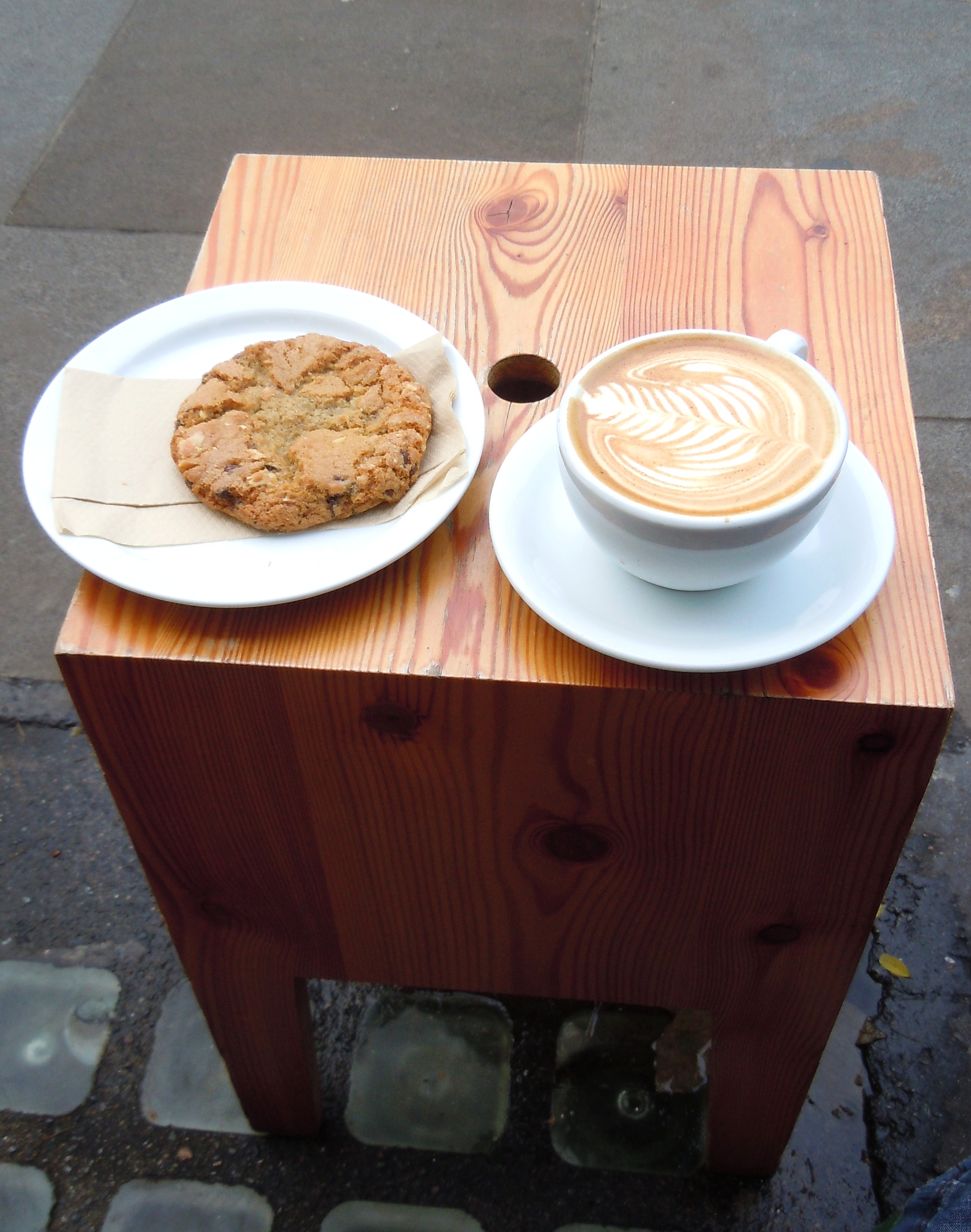
My friend Elizabeth and I have breakfast together every Friday morning. For the past month or so, we’ve managed to eat at a different cafe each week – our only criteria being that they’re in central Cape Town and open early. This week we went to The Power and the Glory, a restaurant and club now irredeemably associated with the city’s burgeoning population of hipsters. But it serves an excellent breakfast. (More evidence that hipsters can serve breakfast well.) And it is – inadvertently – immensely entertaining. As I sat at a window, waiting for Elizabeth to arrive, a hipster customer arrived to buy a take-away coffee.
The scene was almost a parody of hipster-ness: hipster customer was wearing a high-waisted print skirt, brogues, and an elaborate tattoo; hipster waitress behind the serving counter was in a red vintage frock with a tousled pixie hairdo. Both were very pale, and very skinny. (I think we need a term to describe the extreme thinness of hipsters.) Hipster customer removed her hipster shades and asked for a cappuccino.
An awkward silence fell.
Hipster cafes don’t sell cappuccinos. They sell flat whites. Asking for a flat white is as much an indicator of hipster membership as a subscription to The Gentlewoman.
This left hipster waitress in a difficult position. Should she forgo her hipster principles for a moment, ignore the faux pas and order her customer a flat white? Or should she correct her? Was the hipster customer an influential hipster, and not worth insulting? Or was this the time to establish which of the pair was the real hipster?
The barrista, a beefy non-hipster who’d been watching this with some amusement, stepped in. ‘I think you mean a flat white,’ he said.
‘I do!’ said hipster customer.
And all was resolved.
Even if this hilarious moment of hipster awkwardness was so much of its time and place – it was at once typically Capetonian and typical of a particular sub-culture – the fact that it happened over a coffee, gives it almost a timeless quality.
Coffee is unusual in that it has managed to remain fashionable since its arrival in Europe at the beginning of the seventeenth century. Flat whites are only the most recent manifestation of cool coffee. They seem to have originated in Auckland in the late 80s, and differ from cappuccinos or lattes – the more familiar, Italianate forms of hot coffee-and-milk – in that the milk is heated until it’s thick and warm, rather than only frothy.
Flat whitesarrived in London four or five years ago, with the opening of a series of small coffee shops in the cooler parts of east and central London by Kiwi expats. Chains like Costa and Starbucks have since added flat whites to their menus, but – as hipsters know – a flat white is defined as much as the cafe and person who makes it, as it is by its ratio of coffee to milk.
And that is the issue. Coffee is coffee, but we’ve come to associate particular meanings with the ways in which we prepare it: between someone who buys their coffee from Origin or Truth in Cape Town and another who only drinks instant, chicory-flavoured Ricoffy with UHT milk. (Which is, incidentally, my idea of culinary hell.) Both are forms of coffee, but they are socially and culturally miles apart. Studying shifting patterns in coffee fashion is fascinating in itself, but they become more interesting when we think of them within the complex networks of trade and finance which allow us to buy coffee at restaurants and in supermarkets.
The coffee craze in Europe in the seventeenth and eighteenth centuries contributed to a boom in the coffee trade. Coffee had been available since early 1600s, having been imported to Europe from Turkey via Venice. Mixed with milk and sugar, it became popular with the new European middle classes. It was associated with exotic sophistication – and also became a marker of intellectual adventurousness. It’s difficult to underestimate the extent to which drinking coffee and the culture and politics of the Enlightenment were entangled, as Anne EC McCants writes:
The expression ‘to break bread together’ now has an archaic feel to it. A proximate contemporary substitute, albeit devoid of the powerful religious significance of bread, is to ‘go out for a cup of coffee’, which is at least as much about conversation as it is about nourishment per se. Historians associate this total reorientation of the culture of food and drink with the substitution of coffeehouses for taverns; the wider dissemination of public news; trading on the stock exchange; new table etiquette and table wares; new arrangements of domestic and public space; the ability to sustain new industrial work schedules despite their tedium….
One of the best depictions of the appeal of the new, middle-class coffee culture is JS Bach’s Coffee Cantata (1732-1735), in which a ‘disobedient’ and ‘obstinate’ young woman’s addiction to coffee so annoys her father that he threatens not to allow her to marry, unless she gives up coffee. In the end she agrees, but – without her father knowing – resolves to include her clause in her marriage contract which stipulates that she must have a steady supply of coffee.
The first coffee house opened in Britain in 1650, and within a decade there were around 3,000 of them in London. These were places where men could meet to talk in relative freedom. In 1675, Charles II tried to close them in fear that coffee house patrons were plotting to overthrow him. (Given his father’s sticky end, a paranoia about the middle classes was always inevitable.) Monarchical and official suspicion of coffee houses never really ended, though. These were places where the free exchange of information allowed for the dissemination of the Enlightenment ideas that transformed the eighteenth-century world.
But trade was also changing this world. When the Dutch managed to get hold of coffee plants from Arab traders in 1690, they established plantations in Java, where they already cultivated a range of spices. The French began to grow coffee in the West Indies at the beginning of the eighteenth century, and over the course of the next hundred years or so, coffee was planted in West Africa and parts of Latin America.
The plantation system – in many ways the origins of modern capitalism – was dependent on slave labour. Europe’s taste for coffee was satisfied by slavery. But even after the abolition of slavery in the early and middle of the nineteenth century, European demand for coffee shaped the economies of countries very far away.
The domestication of coffee consumption in the nineteenth century – when women began to drink coffee, and more of it was served at home – caused demand to spike. Improvements in transport meant that coffee could be shipped over longer distances far quicker and in greater quantities than ever before. During the 1820s and 1830s, coffee cultivation became a way of linking the economies of newly-independent nations in Latin America, to global trade. Coffee production in Guatemala, Nicaragua, Costa Rica, and El Salvador increased exponentially, and governments introduced measures to facilitate the industry: new transport infrastructure, tax breaks for landowners, low or no export duties, and legislation to lower the cost of labour.
Plentiful land and cheap labour were secured by progressively disenfranchising Indian populations, whose right to own property and to work where they pleased was eroded by pro-plantation legislation. Uprisings against governments and landowners were stamped out – usually with the help of the military. The argument for increased coffee production just seemed so compelling. By the end of the nineteenth century, ninety per cent of the world’s coffee came from South America.
Brazil was the largest single Latin American supplier of coffee, and from 1906 onwards was the controller of the international coffee trade. The Brazilian government bought up beans, stockpiled them, and then released them into the market, thereby regulating the coffee price. European and North American countries encouraged African countries to begin cultivating coffee on a grander scale too.
African producers tended to grow Robusta coffee varieties, which are generally hardier, but less tasty, than the Arabica coffee produced in Latin America. This meant that when demand for instant coffee grew in the 1950s, coffee production in postcolonial African states, whose governments subsidised coffee farmers and facilitated the free movement of labour, flourished. The entry of African coffee growers into the world market meant that the price began to plummet – and the Kennedy administration in the US realised that this was an ideal opportunity for some Cold War quiet diplomacy.
The 1962 International Coffee Agreement was meant to stabilise Latin American economies and to immunise them against potential Soviet-backed revolutions by introducing production quotas for every major coffee producing nation. Even if the ICA did include African producers, it favoured the US and Brazil, effectively giving them veto rights on any policy decisions.
The collapse of the Agreement in the late eighties – partly as a result of the increased production of non-signatories, like Vietnam – caused a major decline in the price of coffee. For consumers and cafe owners, this was distinctly good thing: good coffee was cheaper than ever before. Coffee shops in the US, in particular, fuelled a demand for good, ‘real’, coffee.
But for Rwanda, the collapse of the international coffee price and the end of regulation had disastrous implications. In 1986 and 1987, Rwanda’s annual coffee sales more than halved. The government was bankrupted and increasingly dependent aid from international institutions including the World Bank, which demanded the privatisation of state enterprises, cuts in government spending, and trade liberalisation. (Hmmm – sound familiar?) The government could no longer fund social services and schools and hospitals closed. This exacerbated existing political tensions, and created a large unemployed population, many of whom became volunteers for the paramilitary groups which carried out the genocide in 1994.
It’s supremely ironic that Rwanda has turned – again – to coffee to pull itself out of the disaster of the nineties. This time, though, coffee is being produced in ways which are meant to be more sustainable – both ecologically and economically. There, though, problems with this. Isaac A. Kamola writes:
However, widely lauded ‘fair-trade’ coffee is not without its own contradictions. First, fair-trade coffee is an equally volatile market, with much of the additional price paid to growers dependent upon goodwill consumption. Such consumption patterns are highly vulnerable to economic fluctuations, changes in cultural and ethical patterns, education campaigns, and individual commitment. Furthermore, fair-trade coffee also faces an oversupply problem, with more fair-trade coffee being produced than there are consumers of it.
In Mexico, for instance, the current instability in the global food prices – caused partly by food speculation – is placing incredible pressure on small farmers who cultivate coffee: the fluctuating coffee price has shrunk their incomes at a time when maize has never been so expensive. And even prosperity brings problems. Kenyan coffee is of particularly good quality, and the increase in the coffee price has benefitted local farmers. It has also brought an increase in crime, as gangs steal coffee berries and smuggle them out of the country.
Demand abroad fuels coffee production in Africa, Latin America, and elsewhere. No other commodity demonstrates the connectedness of global patterns of consumption and production than coffee. As Kamola makes the point, we need to make this system fairer, but the fair-trade model still ensures that African farmers are dependent on demand abroad:
This does not mean that fair trade should be discouraged. It should be underscored, however, that reforms in First World consumption patterns are not alone sufficient to ensure the protection of people from the violent whims of neoliberal markets.
As much as coffee is associated with sophistication in the West – as much as it helped to facilitate the Enlightenment – it has also been the cause of incredible deprivation and suffering elsewhere. Invented in New Zealand, popularised in the UK, and made from Rwandan beans certified by the Fairtrade Foundation based in London, a flat white in Cape Town tells a global story.
Further Reading
Sources cited here:
Anne E.C. McCants, ‘Poor consumers as global consumers: the diffusion of tea and coffee drinking in the eighteenth century,’ Economic History Review, vol. 61, no. 1 (2008), pp. 172-200.
Isaac A. Kamola, ‘Coffee and Genocide,’ Transition, no. 99 (2008), pp. 54-72.
Dale Pendell, ‘Goatherds, Smugglers, and Revolutionaries: A History of Coffee,’ Whole Earth, (June 2002), pp.7-9.
Craig S. Revels, ‘Coffee in Nicaragua: Introduction and Expansion in the Nineteenth Century,’ Conference of Latin Americanist Geographers, vol. 26 (2000), pp. 17-28.
Other sources:
Joyce Appleby, The Relentless Revolution: A History of Capitalism (New York: WW Norton, [2010] 2011).
Merid W. Aregay, ‘The Early History of Ethiopia’s Coffee Trade and the Rise of Shawa,’ The Journal of African History, vol. 29, no. 1, Special Issue in Honour of Roland Oliver (1988), pp. 19-25.
Roy Love, ‘Coffee Crunch,’ Review of African Political Economy, vol. 26, no. 82, North Africa in Africa (Dec.,1999), pp. 503-508.
Sidney W. Mintz, Sweetness and Power: The Place of Sugar in Modern History (New York: Penguin, 1985).
Stefano Ponte, ‘Behind the Coffee Crisis,’ Economic and Political Weekly, vol. 36, no. 46/47 (Nov. 24-30, 2001), pp. 4410-4417.
Wolfgang Schivelbusch, Tastes of Paradise: A Social History of Spices, Stimulants, and Intoxicants, trans. David Jacobson (New York: Random House, 1992).
James Walvin, Fruits of Empire: Exotic Produce and British Taste, 1660-1800 (Basingstoke and London: Macmillan, 1997).
This week the committee organising the 2012 Olympics in London caused widespread anger when it announced that breastfeeding mothers would have to buy an extra ticket to bring their babies into sports venues. Some venues have a few discounted tickets for children, but others don’t. One commentator posted on Mumsnet
that while she and her husband were lucky enough to get tickets to an equestrian event in August, organisers had told her there are no children’s tickets so she will have to pay £95 for a three-month old in a sling.
Those who can’t afford an extra ticket, or who lose out in the next round of ticket allocation, are advised to stay away. Unsurprisingly, Britain’s Equality and Human Rights Commission has suggested that this is potentially a case of ‘indirect sex discrimination’ because it will affect considerably more women than men.
This situation is ridiculous in so many ways. What angers me the most is that the Olympic committee took this decision in a country where the National Health Serviceadvises that babies be breastfed exclusively for the first six months of life. The members of the committee seem either to think that women shouldn’t breastfeed in public – an irritating view about which I am going to be extraordinarily rude at some stage – or that mothers with babies have no desire to attend public events.
In the midst of the uproar, The Ecologisttweeted an article which it had published six years ago about the debate over whether women should breast- or bottle-feed their babies. It’s an argument that parents, doctors, and policy makers have been holding since at least the beginning of the twentieth century, and it’s to the credit of Pat Thomas that her piece provides a good overview of shifting attitudes towards infant feeding over the course of the past hundred years or so.
But it’s also a problematic piece of writing, and one which demonstrates particularly well why so many mothers feel bullied about how they decide to feed their babies. Thomas makes no attempt to hide her view that all mothers should breastfeed their children. She begins with a terrifying list of statistics:
The health consequences – twice the risk of dying in the first six weeks of life, five times the risk of gastroenteritis, twice the risk of developing eczema and diabetes and up to eight times the risk of developing lymphatic cancer – are staggering. With UK formula manufacturers spending around £20 per baby promoting this ‘baby junk food’, compared to the paltry 14 pence per baby the government spends promoting breastfeeding, can we ever hope to reverse the trend?
I’d love to know where she found these figures – particularly given her opening statement that women have breastfed for ‘nearly half a million years’. (How does she know this? Why the coy, qualifying ‘nearly’?) Thomas is, though, correct to point to the compelling evidence that breastfed babies tend to be healthier than those who are fed on formula, and that breastfed children may do better at school and have stronger immune systems. Also, there is a direct and proven link between the use of baby formula and high child mortality rates in the developing world.
She blames the slow decline of breastfeeding over the course of the twentieth century on the medicalization of childcare, and on the advertising strategies employed by formula companies – most notoriously Nestle. I have little to add to her second point, other that, broadly, I agree with her. The International Code of Marketing of Breastmilk Substitutes, a response to the Nestle Boycott of the late seventies, needs to be properly implemented. But her argument about the medicalization of women’s experiences of childbirth and childrearing is not entirely correct. She quotes Mary Renfrew from the Mother and Infant Research Unit at the University of York:
‘If you look at medical textbooks from the early part of the 20th century, you’ll find many quotes about making breastfeeding scientific and exact, and it’s out of these that you can see things beginning to fall apart.’ This falling apart, says Renfrew, is largely due to the fear and mistrust that science had of the natural process of breastfeeding.
In particular, the fact that a mother can put a baby on the breast and do something else while breastfeeding, and have the baby naturally come off the breast when it’s had enough, was seen as disorderly and inexact. The medical/scientific model replaced this natural situation with precise measurements – for instance, how many millilitres of milk a baby should ideally have at each sitting – which skewed the natural balance between mother and baby, and established bottlefeeding as a biological norm.
During the early years of twentieth century, global concern about high rates of child mortality animated a child welfare movement which aimed to improve the conditions in which children were raised. In Europe, North America, Australia, New Zealand, and parts of Africa and Latin America, medical professionals held up rational and scientific methods of feeding and caring for babies as the best means of eradicating the ‘ignorant’ practises which, many believed, caused babies to die. This new emphasis on hygiene, speedy medical intervention, and regular monitoring of babies’ development and health at clinics and hospitals did lower rates of morbidity – as did declining fertility rates, the control of infectious disease, economic prosperity, and increased attendance of school.
Doctors and specialists in the relatively new field of paediatrics were particularly interested in how babies were fed. Contrary to what Thomas suggests, the nineteenth-century orthodoxy that breastfeeding was the healthiest and best option for both mothers and babies lasted well into the 1940s. Innovations in artificial formulas provided mothers who couldn’t breastfeed – for whatever reason – with good alternatives, and doctors did recommend them. There were anxieties that malnourished mothers’ milk would not feed babies sufficiently, and doctors recommended ‘top ups’ with formula or other liquid.
The real difference between nineteenth- and twentieth-century attitudes towards breastfeeding was that it was increasingly controlled and patrolled by trained professionals. As Renfrew notes, mothers were told how much milk their babies needed at each feed, and there was a lot of debate in medical journals and in other professional forums about how and when babies should be fed.
The set of guidelines formulated by the incredibly influential, New Zealand-based Dr Truby King emphasised the importance of routine in feeding. King’s mothercraft movement – which established clinics and training centres around the British Empire during the first half of the twentieth century – taught mothers to feed ‘by the clock’. At five months, a baby was to be fed only five times per day – and at the same time every day – while one month-old babies had an extra, sixth feed.
Like many childcare professionals of the period, King believed that feeding on demand was not only unhealthy – it placed babies at risk of under- or overfeeding – but it was morally and intellectually damaging too. Babies who understood that crying would cause them to be fed would become spoilt, lazy children and adults. Indeed, this points to the infant welfare movement’s more general preoccupation with mothers and motherhood. As the interests of the state were seen, increasingly, as being linked to the proper rearing and education of children, the role of the mother grew in importance. King called his centres ‘shrines to motherhood’, for instance.
But the naturally fussy, over-cautious, and credulous mother was not to be trusted to follow her own instincts: authorities and professionals, who tended to be male, were to provide her with rational, scientific advice on raising her baby. It’s difficult to gauge mothers’ response to the information aimed at them. In her study of mothers in the United States in the 1920s and 1930s, Julia Grant concludes that mothers did heed childcare professionals, but modified their advice according to the views and experiences of their peers. Similarly, mothers in New Zealand took what they wanted from King’s pamphlets on childrearing.
Equally, mothercraft clinics and breastfeeding advice days were well attended by mothers and babies. Several mothercraft centres all over the world also included a dietetic wing, where nursing mothers could stay for up to a fortnight, learning how to breastfeed their babies. There, they would be taught how to breastfeed by the clock, and how to cope with mastitis and painful breasts and nipples. Wonderfully, hospital fees were means tested, so poor mothers could attend for free.
Throughout its existence, the Cape Town dietetic hospital never had an empty waiting list, and similar units in Britain, Australia, and New Zealand were as enthusiastically supported by women. Mothercraft seems to have been at its most successful when mothers could choose how and when they wanted to its advice and services.
While it’s true that the medicalization of breastfeeding transformed this act into a ‘science’ which needed to be re-taught to mothers – that it became possible to inform a mother that she was breastfeeding incorrectly – and that this was underpinned by misogynistic and eugenicist ideas around childhood, motherhood, and the nation, it is as true that mothers did respond positively to the advice provided by mothercraft and other organisations. Clearly, mothers wanted more advice about how to feed their babies – and that they altered it to suit their conditions and needs.
It’s for this reason that I think that Thomas is doing mothers a disservice. Encouraging more women to breastfeed needs to respect the fact that women’s choices about how to feed their babies are influenced by a variety of factors and considerations. Thomas – and other breastfeeding evangelicals – seems to buy into the same discourse of maternal irresponsibility as childcare professionals did in the early twentieth century: the belief that women somehow don’t really understand what’s best for their babies, and must be properly educated. Even if her – and others’ – motives are progressive and well-meaning, they still fail to take mothers seriously.
Further Reading
Sources cited here:
Rima D. Apple, Mothers and Medicine: A Social History of Infant Feeding, 1890-1950 (Madison: University of Wisconsin Press, 1987).
Linda Bryder, A Voice for Mothers: The Plunket Society and Infant Welfare 1907-2000 (Auckland: Auckland University Press, 2003).
Julia Grant, Raising Baby by the Book: The Education of American Mothers (New Haven and London: Yale University Press, 1998).
Philippa Mein Smith, Mothers and King Baby: Infant Survival and Welfare in an Imperial World: Australia 1880-1950 (Basingstoke: Macmillan, 1997).
Other sources:
Linda M. Blum, At the Breast: Ideologies of Breastfeeding and Motherhood in the Contemporary United States (Boston: Beacon Press, 1999).
Molly Ladd-Taylor, Mother-Work: Women, Child Welfare, and the State, 1890-1930 (Urbana and Chicago: University of Illinois Press, 1994).
Marilyn Yalom, A History of the Breast (New York: Ballantine Books, 1997).






 Tangerine and Cinnamon
Jul 29
A Sporting Chance
My expectations of the London Olympics’ opening ceremony were so low that, I suppose, I would have been impressed if it had featured Boris as Boudicca, driving a chariot over the prostate figures of the Locog committee. (Actually, now that I think about it, that would have been fairly entertaining.)
Appalled by the organising committee’s slavishly sycophantic attitude towards its sponsors and their ‘rights’ – which caused them to ban home knitted cushions from being distributed to the Olympic athletes, and to require shops and restaurants to remove Olympic-themed decorations and products – as well the rule that online articles and blog posts may not link to the official 2012 site if they’re critical of the games, the decision to make the official entrance of the Olympic site a shopping mall, and the creation of special lanes for VIP traffic, I wasn’t terribly impressed by the London Olympics.
But watching the opening ceremony last night, I was reduced to a pile of NHS-adoring, Tim Berners-Lee worshipping, British children’s literature-loving goo. Although a reference to the British Empire – other than the arrival of the Windrush – would have been nice, I think that Danny Boyle’s narrative of British history which emphasised the nation’s industrial heritage, its protest and trade union movements, and its pop culture, was fantastic.
As some commentators have noted, this was the opposite of the kind of kings-and-queens-and-great-men history curriculum which Michael Gove wishes schools would teach. Oh and the parachuting Queen and Daniel Craig were pretty damn amazing too.
There was even a fleeting, joking reference to the dire quality of British food during the third part of the ceremony. There was something both apt, but also deeply ironic about this. On the one hand, there has been extensive coverage of Locog’s ludicrous decision to allow manufacturers of junk food – Coke, Cadbury’s, McDonald’s – not only to be official sponsors of a sporting event, but to provide much of the catering. (McDonald’s even tried to ban other suppliers from selling chips on the Olympic site.)
But, on the other, Britain’s food scene has never been in better shape. It has excellent restaurants – and not only at the top end of the scale – and thriving and wonderful farmers’ markets and street food.
It’s this which makes the decision not to open up the catering of the event to London’s food trucks, restaurants, and caterers so tragic. It is true that meals for the athletes and officials staying in the Village have been locally sourced and made from ethically-produced ingredients, and this is really great. But why the rules and regulations which actually make it more difficult for fans and spectators to buy – or bring their own – healthy food?
Of course, the athletes themselves will all be eating carefully calibrated, optimally nutritious food. There’s been a lot of coverage of the difficulties of catering for so many people who eat such a variety of different things. The idea that athletes’ performance is enhanced by what they consume – supplements, food, and drugs (unfortunately) – has become commonplace.
Even my local gym’s café – an outpost of the Kauai health food chain – serves meals which are, apparently, suited for physically active people. I’ve never tried them, partly because the thought of me as an athlete is so utterly nuts. (I’m an enthusiastic, yet deeply appalling, swimmer.)
The notion that food and performance are linked in some way, has a long pedigree. In Ancient Greece, where diets were largely vegetarian, but supplemented occasionally with (usually goat) meat, evidence suggests that athletes at the early Olympics consumed more meat than usual to improve their performance. Ann C. Grandjean explains:
Eating more protein – although perhaps not quite as much as reported by Milo of Croton’s fans – helps to build muscle, and would have given athletes an advantage over other, leaner competitors.
Another ancient dietary supplement seems to have been alcohol. Trainers provided their athletes with alcoholic drinks before and after training – in much the same way that contemporary athletes may consume sports drinks. But some, more recent sportsmen seem to have gone a little overboard, as Grandjean notes:
Drunken, German walker: I salute you and your ability to walk in a straight line after that much beer.
The London Olympic Village is, though, dry. Even its pub only serves soft drinks. With the coming of the modern games – which coincided with the development of sport and exercise science in the early twentieth century – diets became the subject of scientific enquiry. The professionalization of sport – with athletes more reliant on doing well in order to make a living – only served to increase the significance of this research.
One of the first studies on the link between nutrition and the performance of Olympic athletes was conducted at the 1952 games in Helsinki. The scientist E. Jokl (about whom I know nothing – any help gratefully received) demonstrated that those athletes who consumed fewer carbohydrates tended to do worse than those who ate more. Grandjean comments:
As research into athletes’ diets has progressed, so fashions for particular supplements and foods have emerged over the course of the twentieth century. Increasing consumption of protein and carbohydrates has become a common way of improving performance. Whereas during the 1950s and 1960s, athletes simply ate more meat, milk, bread, and pasta, since the 1970s, a growing selection of supplements has allowed sportsmen and –women to add more carefully calibrated and targeted forms of protein and carbohydrates to their diets.
Similarly, vitamin supplements have been part of athletes’ diets since the 1930s. Evidence from athletes competing at the 1972 games in Munich demonstrated widespread use of multivitamins, although now, participants tend to choose more carefully those vitamins which produce specific outcomes.
But this history of shifting ideas around athletes’ diets cannot be understood separately from the altogether more shadowy history of doping – of using illicit means of improving one’s performance. Even the ancient Greeks and Romans used stimulants – ranging from dried figs to animal testes – to suppress fatigue and boost performance.
More recently, some of the first examples of doping during the nineteenth century come from cycling (nice to see that some things don’t change), and, more specifically, from long-distance, week-long bicycle races which depended on cyclists’ reserves of strength and stamina. Richard IG Holt, Ioulietta Erotokritou-Mulligan, and Peter H. Sönksen explain:
Before the introduction of doping regulations, the use of performance enhancing drugs was rife at the modern Olympics:
But regulation – the first anti-drugs tests were undertaken at the 1968 Mexico games – didn’t stop athletes from doping – the practice simply went underground. The USSR and East Germany allowed their representatives to take performance enhancing drugs, and an investigation undertaken after Ben Johnson was disqualified for doping at the Seoul games revealed that at least half of the athletes who competed at the 1988 Olympics had taken anabolic steroids. In 1996, some athletes called the summer Olympics in Atlanta the ‘Growth Hormone Games’ and the 2000 Olympics were dubbed the ‘Dirty Games’ after the disqualification of Marion Jones for doping.
At the heart of the issue of doping and the use of supplements, is distinguishing between legitimate and illegitimate means of enhancing performance. The idea that taking drugs to make athletes run, swim, or cycle faster, or jump further and higher, is unfair, is a relatively recent one. It’s worth noting that the World Anti-Doping Agency, which is responsible for establishing and maintaining standards for anti-doping work, was formed only in 1999.
What makes anabolic steroids different from consuming high doses of protein, amino acids, or vitamins? Why, indeed, was Caster Semenya deemed to have an unfair advantage at the 2009 IAAF World Championships, but the blade-running Oscar Pistorius is not?
I’m really pleased that both Semenya and Pistorius are participating in the 2012 games – I’m immensely proud that Semenya carried South Africa’s flag into the Olympic stadium – but their experiences, as well as the closely intertwined histories of food supplements and doping in sport, demonstrate that the idea of an ‘unfair advantage’ is a fairly nebulous one.
Further Reading
Elizabeth A. Applegate and Louis E. Grivetti, ‘Search for the Competitive Edge: A History of Dietary Fads and Supplements,’ The Journal of Nutrition, vol. 127, no. 5 (2007), pp. 869S-873S.
Ann C. Grandjean, ‘Diets of Elite Athletes: Has the Discipline of Sports Nutrition Made an Impact?’ The Journal of Nutrition, vol. 127, no. 5 (2007), pp. 874S-877S.
Richard IG Holt, Ioulietta Erotokritou-Mulligan, and Peter H. Sönksen, ‘The History of Doping and Growth Hormone Abuse in Sport,’ Growth Hormone & IGF Research, vol. 19 (2009), pp. 320-326.
Tangerine and Cinnamon by Sarah Duff is licensed under a Creative Commons Attribution-ShareAlike 3.0 Unported License.