I have an odd enthusiasm for Iceland. I think it stems partly from the fact that in Brave New World, troublesome and insubordinate academics are exiled there. Although when Aldous Huxley published the novel in 1932, the Iceland he imagined was one of the least technologically advanced nations in Europe – and not the socially and politically progressive place it is imagined to be today. In fact, much of the current interest in Iceland stems from its response to the 2008 crash: Icelanders did what so many in the West wanted to do. Laurie Penny writes:
What most of the world appears to believe is that, some time between 2008 and 2009, the country refused to bail out its banks when the global economy crashed and that instead it jailed all of its bankers, overthrew the government, wrote a new constitution on the internet and elected a lesbian prime minister who solved all the nation’s problems with a flick of her magic wand.
Iceland became, seemingly, a Guardian reader’s paradise. But the reality is more complex, and, possibly, less attractive:
Although it is true that the three largest banks – Glitnir, Kaupthing and Landsbanki – were allowed to go bust in 2008, this was hardly a political choice: Iceland could do nothing else, because their debts were ten times the size of its GDP.
Popular protest did force the writing of a new constitution, but this has never been implemented. Earlier this year – for all the promise of Iceland being lead by a Pirate Party – Icelanders re-elected the centre-right coalition which was in power before the recession. And Iceland is no feminist paradise either.
But it remains a compellingly fascinating place. I think Penny sums this up particularly well:
Iceland has always been a land self-authored in myth and legend. Its lava fields and glacial plains are supposedly populated by elves, trolls and huldufólk – hidden folk – in whom 80 per cent of the population believes. At least, that’s what the PR for Icelandair wants you to think… In fact, it turns out that only 30 per cent of the population believes that fairies exist, although that third is prepared to agitate for roads to be diverted around their supposed homes. This is remarkable enough that one wonders why the tourist board bothered to exaggerate.
A few months ago, while visiting another city on the same latitude as Scandinavia – Edinburgh – I bought a copy of Sarah Moss’s memoir Names for the Sea: Strangers in Iceland (2012). It’s an account of a British family’s year in Reykjavik, during which Moss taught English literature at the University of Iceland.
Interested in histories of eating and cooking, some of Moss’s most evocative passages are concerned with how she comes to terms with Iceland through food. The availability of a variety of – occasionally rotting, often seriously under-ripe – exceptionally expensive fresh produce imported from all over the world, suggested the enthusiasm with which Icelanders embraced consumerism during the boom. (Another potent example of this was the stigma attached to buying second-hand goods and clothes. Her efforts to buy a used washing machine were greeted with appalled horror by many of her colleagues and friends.) In fact, she and her family packed with them the foods of home – ‘the manifestations of English metropolitan middle-class identity’:
We have five litres of olive oil, a dozen tins of anchovies and a dozen jars of capers, miso paste, pomegranate syrup, cocoa nibs, seeds for growing coriander, basil and mint. Smoked chillies, sumac, allspice, dried dill, cumin. Preserved lemons, three kinds of paprika, dried lime leaves.
On a quick trip back to Kent, they bought and smuggled into Iceland
two whole salamis, a wheel of Kentish cheese … approximately three kilogrammes of chocolate, from Cadbury to Valrhona, two Christmas cakes and a stollen, half a dozen russet apples, a bag of unwaxed lemons and a couple of dozen tins of anchovies, capers and vine leaves.
Anxious about being caught by immigration officials, she hurries her husband and children through the airport. Max, her eldest son, ‘looks anxiously into [her] face. He’d make a lousy chorizo mule.’
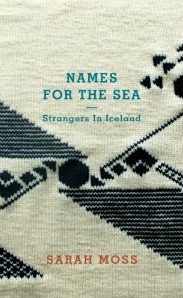
Moss is not unaware of the irony of importing what are, essentially, the ingredients of Mediterranean peasant food to Iceland, a nation apparently with a close relationship with the natural world. However, she sympathises with the taste that Icelanders’ developed for imported food, given the relative monotony of diets until, at least, the mid-twentieth century. These were heavy in smoked and dried fish, and meat often preserved in whey, blood pudding and liver sausage, potatoes, and plenty of dairy products. Grains and green vegetables were a luxury.
These high-fat diets seemed, though, to sustain farmers through long winters. Matthew, a colleague also from Britain, remembered his introduction to rural cuisine in the 1960s:
the worst imaginable kind of food I could ever think of was put on the table, steaming salted fish with a terrifying smell to it, and hot sheep fat, and potatoes. That’s all there was. And I knew I was going to be there for six weeks, and I would have to eat it or starve. I told myself, you wanted to come to Iceland, you wanted to find out what it’s like here, you bloody well eat their food, and I forced myself to eat it. And it was delicious, absolutely glorious. It’s one of my favourite dishes today.
Matthew’s answer to why they didn’t fall ill – in the absence of fruit and vegetables – was that they ate a lot of fish:
And Iceland moss, swede, and white cabbage. A lot of white cabbage. … And of course a lot of milk, and skyr [curd cheese].
Why didn’t they get scurvy?
People drank a lot of Iceland moss tea, and they were probably using many more grasses and herbs than is recorded. That knowledge has gone.
I think his point about forgetting what people used to eat is an important one. I was reminded of Moss’s book a little while ago when – for various reasons – I attended a lecture presented by Tim Noakes. Once best known for his deep knowledge of sports science, Noakes has recently developed a reputation for his almost evangelical faith in the carbohydrate-free, meat-heavy Paleo diet.
I was struck by Noakes’s use of eighteenth- and nineteenth-century texts which recommended excluding carbohydrates from diets, to bolster his arguments. And by his insistence that because people – like Icelanders – in the past were able to live healthily off diets consisting mainly of red meat and animal fat we should attempt to replicate them in the twenty-first century.
There are many problems with Noakes’s arguments – not least his dubious methodology in a recent paper – but I’d like to focus on his use of history to argue for a return to what our ancestors (allegedly) ate. As Moss’s friend Matthew makes the point, our knowledge of how eating habits changed over time is patchy, at best. Peasants did not painstakingly record every slurp of nettle tea. Also (and this is taken from a satirical piece, but it’s accurate):
You simply do not see specific, trans-regional trends in human subsistence in the archaeological record. People can live off everything from whale blubber to seeds and grasses. You want to know what the ideal human diet consists of? Everything. Humans can and will eat everything, and we are remarkably successful not in spite of this fact, but because of it. Our adaptability is the hallmark of the human species. We’re not called omnivores for nothing.
Noakes’s reliance on an idealised vision of the past is a significant weakness in his argument. It ignores the fact that we have a tendency to eat as wide a variety of foods as possible: when vegetables and fruit became more easily available, Icelanders happily included them in their diets.
The current obesity ‘crisis’ cannot, in other words, be fixed by returning to the mythical diets of the past. It is caused by such a myriad range of factors – ranging from poverty to urban planning – that to blame a taste for carbohydrates is to demonstrate a very narrow understanding of the problem.

Tangerine and Cinnamon by Sarah Duff is licensed under a Creative Commons Attribution-ShareAlike 3.0 Unported License.




Dec 2
Luck
A while ago my friend Nafisa lent me Secret Ingredients: The New Yorker Book of Food and Drink. I was particularly taken by an essay by Jane Kramer called ‘The Reporter’s Kitchen.’ She describes exactly the connection between cooking and writing: how baking biscuits or, more usually in my case, bread can be fitted into the writing of an essay. How following recipes follows the same process of unfolding as constructing an argument. How cooking food can both distract from difficult writing, as well as address the causes of writers’ block:
During times of stress, she turns both to writing and to cooking. I tend to do the same, but this week I’ve not been able to write. I was mugged in the Johannesburg CBD on Friday evening, and, at almost exactly the same time the following Monday, a man drove into the back of my car as I was on my way home.
I’ve hesitated about mentioning these events because they seem to confirm some of the worst stereotypes about Johannesburg, and, although annoying and stress making, they’re by far not the most important things that have happened in the past few weeks.
Instead of writing, I have spent quite a lot of time in my kitchen. I have a weakness for epic cooking, and over the weekend we made David Chang’s version of bo ssam, or Korean slow-roasted pork, a process which involved marinating, slow roasting, and long resting.
The pork shoulder, before roasting.
Bo ssam.
On the night of the car accident I made for us Marcella Hazan’s tomato pasta sauce:
On Wednesday, having seen the doctor about my sore neck, I made granola (loosely based on this recipe), the basic proportions of which are:
I have wondered, though, if I’ve been at the receiving end of some kind of elaborate cosmic joke,* and if it would be worth devoting myself to the preparation of lucky food.
So many societies eat coin-shaped and sweet things at New Year, for instance: from rice cake soup in Korea to lentil dishes in Italy and black-eyed peas in the southern states of the US. Pomegranates in the Mediterranean world, cabbage and pigs in Germany, and long noodles in Japan symbolise prosperity and longevity. We stir Christmas pudding batter for good luck.
We can understand the social meanings of food particularly well through religion – the taboos which surround pork or beef, for example – and ritual. When Catholic monks insisted upon wheat communion wafers in colonial Mexico they did so because they associated maize with the ‘uncivilisation’ of the indigenous people to whom they evangelised. Ingesting maize wafers would have implied some kind of acceptance – a swallowing – of the customs and traditions of pre-colonial central America.
The significance of ‘lucky’ foods is that they are part of rituals: that they mark particular moments of time; that they call for pause and contemplation. In a way, they slow down time – as does cooking. I don’t want to make any grand claims for the healing powers of cooking, but being forced to focus and to work systematically and repetitively, offers one way out of panic and anxiety.
And, anyway, I can write now.
* Not really.
Tangerine and Cinnamon by Sarah Duff is licensed under a Creative Commons Attribution-ShareAlike 3.0 Unported License.