Skip to content

Food Links, 23.09.2013

[Exit, pursued by a warthog.]

Kindly readers! I shall be away for a week or so, finishing a manuscript at Pullen Farm in the lowveld. I believe there may be warthogs. I have packed, of course, a copy of C. Louis Leipoldt’s Bushveld Doctor. And a lot of mosquito repellent.

In the meanwhile, I leave you:

This piece I wrote for Africa is a Country about Johannesburg’s newest museum in Fietas.

This photograph of street food in Fordsburg:

DSCN8788

This new video from the Lumineers:

And these links:

Be back soon xx

Food Links, 09.10.2013

The Food Writer as Culture Broker

I first came across Marcella Hazan’s tomato and onion pasta sauce on Molly Wizenberg’s blog Orangette. I remembered it – like so many people, I imagine – because of its odd method: simmer a large tin of plum tomatoes in a pan with a peeled, halved onion, and five tablespoons of butter. This sounded so unlikely – so unlike any other recipe I’d ever read for tomato-based pasta sauce – that I was sceptical as to whether it would work. And since then I’ve found the same recipe on nearly every other decent food blog I tend to visit.

I got round to making it last week, after reading so much about Hazan’s life in the incredible number of respectful, and even loving, obituaries and articles written after her death a week ago. The sauce is unbelievably good: it is rich without being sickly, fresh without being too sharp. My only suggestion is that you make it with very, very good tinned, or slightly overripe fresh, tomatoes.

Probably because my knowledge of Italian cooking comes through British sources, Marcella Hazan never featured for me in the same way as did Anna del Conte. The most I’d read about her was in The Pedant in the Kitchen by Julian Barnes:

The writer I find most reassuring … is Marcella Hazan. This came as a surprise when I first started cooking from her. I had always imagined that since Italian cuisine, of all the major European styles, depends on pure and often speedy handling of the freshest ingredients, there was little room for manoeuvre.

Hazan freely lists plausible alternatives; is indulgent about dried herbs; actively recommends tinned tomatoes as tasting better than most fresh; often prefers dried porcini and bottled clams to their fresh equivalents. She spares you suffering by noting which dishes can be cooked to which stage ahead of time.

He concludes:

Marcella Hazan was beatified. Her recipes not only give the anxious Pedant as much latitude as possible, they also produce, in my experience, a higher percentage of successes, and a truer authenticity of taste, than any I know.

High praise indeed.

What struck me in so much of what I read about her – other than her two doctorates, one in biology and natural sciences – is how often she was described as translating Italian cooking for American kitchens.

When she moved to the United States with her husband in 1955, Hazan not only needed to learn how to cook, but she had to find ways of recreating the dishes of her native Italy in a country which didn’t sell the ingredients she needed. Combined with formidable teaching skills and a deeply practical attitude towards cooking, the knowledge she acquired while teaching herself to make familiar foods in an unfamiliar culture, transformed her into an authority on Italian cooking for American audiences.

The reason for her success – which began with the publication of The Classic Italian Cook Book: The Art of Italian Cooking and the Italian Art of Eating in 1973 – was not that she wrote down recipes as she would have cooked them in Italy, but that she adapted them for how Americans shopped and cooked. It is this which Barnes praises: her willingness to use a range of processed or not-particularly-Italian foods which, she felt, recreated the ‘authentic’ (whatever we may mean by that) taste of home.

ecic_custom-s6-c30

Cooks have long been involved in making national identities. Encarnación Pinado’s El cocinero español (The Spanish Chef), published in 1898, was an attempt to establish an ‘authentic’ Mexican cuisine. Similarly, shortly after Italian union, Pellegrino Artusi manufactured a ‘real’ Italian food culture in his 1891 book La scienza in cucian e l’arte di mangier bene (The Science of Cooking and the Art of Eating Well).

These recipe books were intended partly to explain to Mexicans and Italians what constituted their national cuisines. Food is a potent means of uniting a nation, particularly if that nation happens to have been recently made. As obvious as it sounds, it’s worth paying attention, too, to those food writers who translate their cuisines mainly for foreign audiences.

In a way, food writers become culture brokers: the people who mediate between different cultures, who explain and translate one group to another.  Although Hazan found an enthusiastic audience of Italians at home, she is remembered for having introduced America to ‘real’ Italian cooking.

I think, though, that she mediated far more than food. As Elizabeth David and Julia Child did for France, Claudia Roden did for the Middle East and Mediterranean, Madhur Jaffrey did for India, and Ken Hom did for China, she introduced Americans to a version – to her version – of Italy. When they read her books or watched her on television, they also learned something about Italy.

So when we think of the complicated ways in which national identities are created – and these are made in a tension between internal and external perceptions of a particular country or political entity – we need also to include those food and recipe book writers who translate and mediate the cooking of one group of people to another. How do they represent one nation to another? Why do they emphasise some aspects of a nation’s cooking, and not others? And to what extent do they tailor their writing to fit or complement pre-existing stereotypes about other countries?

Creative Commons License
Tangerine and Cinnamon by Sarah Duff is licensed under a Creative Commons Attribution-ShareAlike 3.0 Unported License.

Foodie Pseudery (46)

Destoying meals and wasting food for picturesque effect.

I just don’t understand this.

Food Links, 02.10.2013

On Books

I am interested in the histories and (possible) futures of books and reading. In lieu of a post this week – I’m knee-deep in manuscript at the moment – here are two recent posts on print cultures in South Africa:

On the Matter of Books

The Futures of Books

Detail from William Kentridge, 'Universal Archive (Nine Typewriters'

Detail from William Kentridge, ‘Universal Archive (Nine Typewriters)’

Food Links, 25.09.2013

Whose Heritage, Again

Today is Heritage Day and I tried to visit a museum. The museum was closed, so I took photographs of its façade and the surrounding suburb instead. Or, rather, the museum was open, but not to members of the public. Its opening ceremony was limited to members of the community and officials from the Department of Arts and Culture.
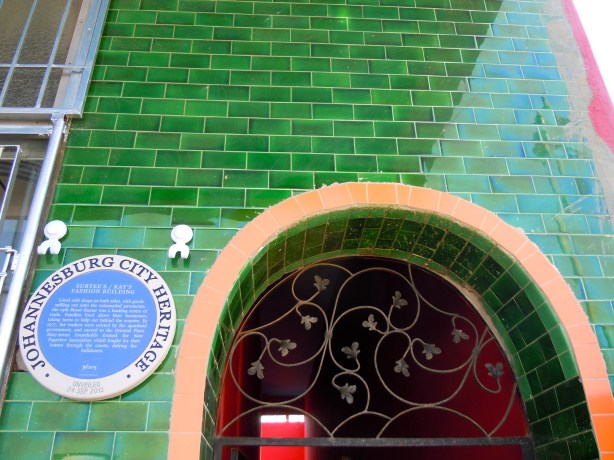
At the Fietas Museum.

At the Fietas Museum.

I’ll return at some stage in the future, but I think that this museum in Fietas – a working-class suburb near the Johannesburg CBD – says a great deal about the complicated ways in which South Africans are reflecting on their past.
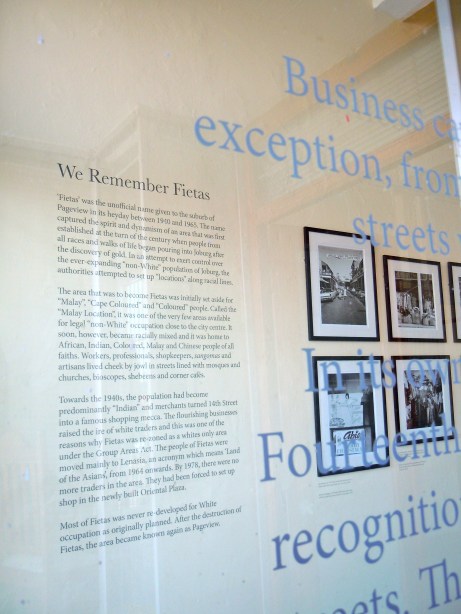
The Fietas Museum

The front of the Fietas Museum.

I have very mixed feelings about Heritage Day. A lot of the debate about this public holiday on social media and local radio stations circles around – although never really articulates – its most problematic and unresolved feature: ‘heritage’ is a construct. Put simply, heritage is constituted of whatever parts of our past we choose to remember.

Partly because it is so difficult to define what exactly a South African heritage is, there have been various attempts to recast this holiday in ways which make it easier and less controversial to celebrate. The campaign to reinvent Heritage Day as a depoliticised National Braai Day emphasises most South Africans’ shared enthusiasm for barbecue.
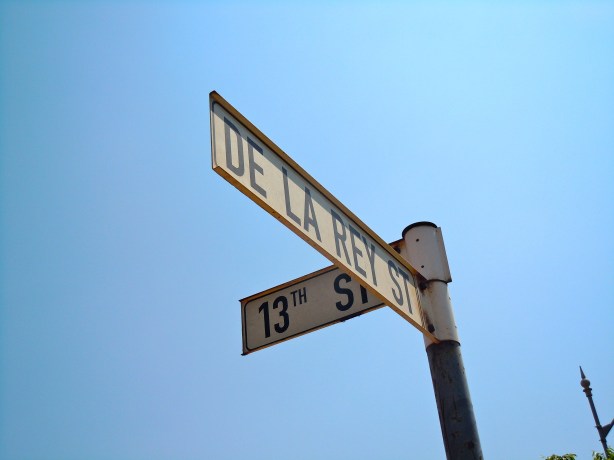
In Fietas/Pageview/Vrededorp.

In Fietas/Pageview/Vrededorp.

On the other end of the scale, the recent launch of Freedom Fridays by LeadSA – a fairly socially conservative campaign led by media outlets to encourage South Africans to be better citizens (whatever they may mean by that) – and the Department of Arts and Culture exhorts South Africans to wear something every Friday that symbolises their love for the country.

Both Braai Day and Freedom Day are problematic. Whatever the good intentions of its founders, Braai Day transforms Heritage Day into yet another opportunity for supermarkets to make quite a lot of money (in much the same way that Women’s Day has become another version of Mothers’ Day). And Freedom Friday promotes an unthinking patriotism which ignores South Africa’s far-from-uncomplicated political and social trajectory post-1994. The fact that it was launched six months before a general election can’t be harmful either.

Indeed, both elide South Africa’s deeply conflicted past: for all their enthusiasm for ‘heritage’, there’s very little history in how these two initiatives explore and redefine what it is to be South African.

One of the remaining shops in Fietas.

One of the remaining shops in Fietas.

What discomforts me about Heritage Day is that it attempts to use South Africa’s past in much the same way as did the National Party during apartheid. In fact, Heritage Day is a renamed Shaka Day (instituted to pay homage to Shaka kaSenzangakhona, the most significant leader of the Zulu kingdom) which was co-opted by the apartheid state in an effort to invent a separate, distinct heritage for each of the race groups into which South Africans were divided.
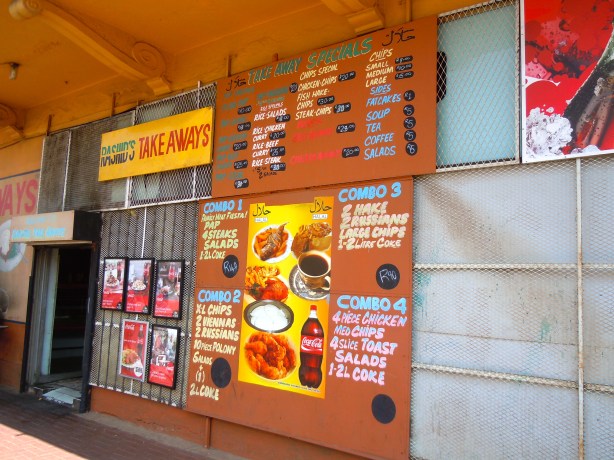
Buying food in Fietas.

Buying food in Fietas.

Over the weekend I visited another apartheid-era attempt to construct a discrete ethnic identity, and partly in the service of segregated city planning: the Oriental Plaza. Based in Fordsburg – a predominantly Indian suburb – the Plaza was created by the state in the mid-1970s as a kind of shopping mall for Indian traders. As the Plaza’s domes, décor, and palm trees suggest, it was designed with a kind of stereotyped Arab bazaar in mind – its architecture owes more to The Thief of Baghdad than to any knowledge of Middle Eastern or south Asian architecture.

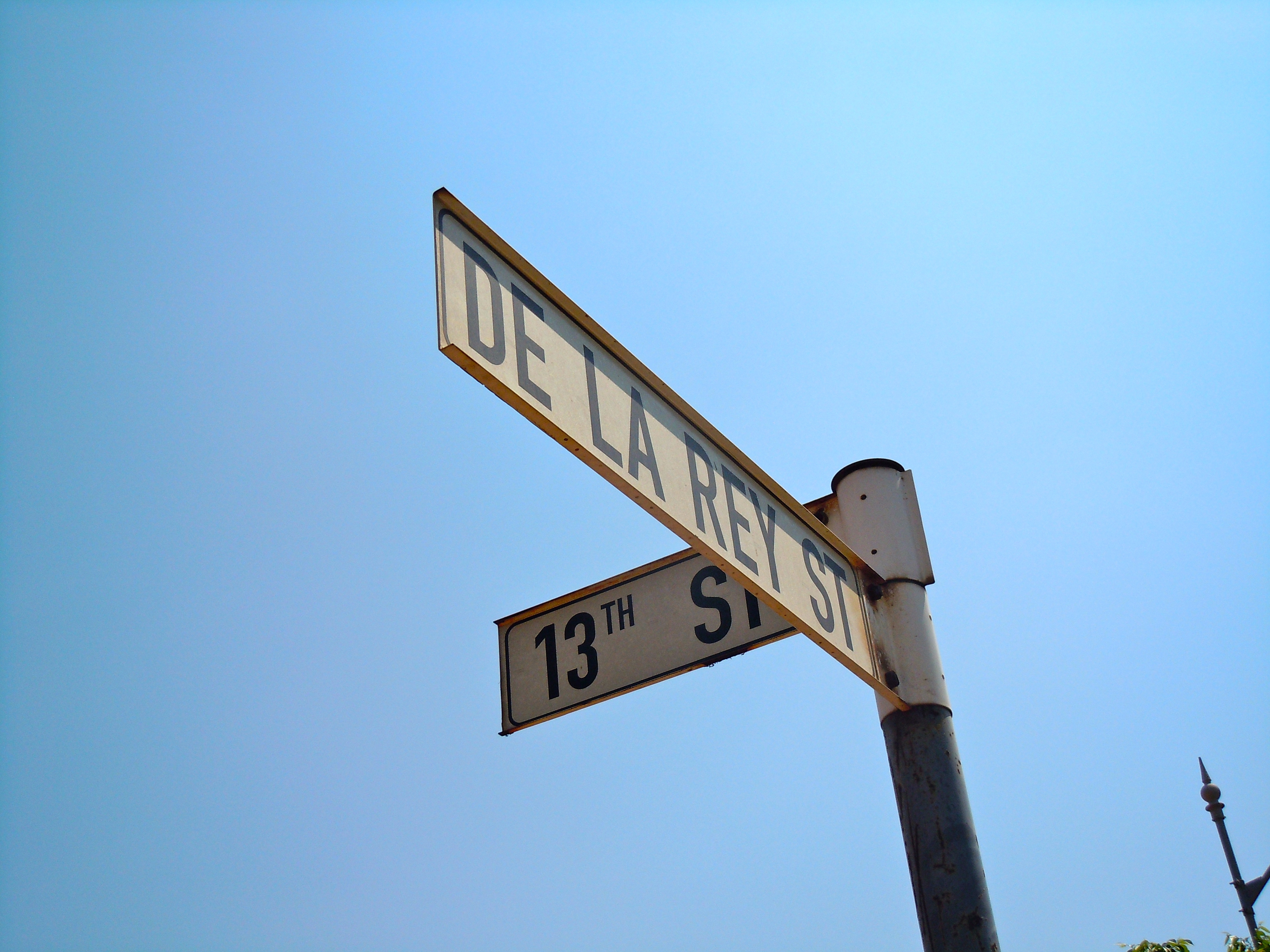
Many of the shop owners were there because they had been forced out of various Johannesburg suburbs. One of these was Fietas – consisting of Pageview and Vrededorp – an inner-city area of Johannesburg which had been settled by Indians since at least the beginning of the twentieth century. Fourteenth Avenue – where the Fietas Museum is now situated – was the area’s main shopping street, and was dominated by Indian-owned shops. In 1968, Vrededorp was rezoned as ‘white’ under the Group Areas Act, and in 1975, Indian shop owners were given notice that they had to leave – and many of them to the Oriental Plaza.
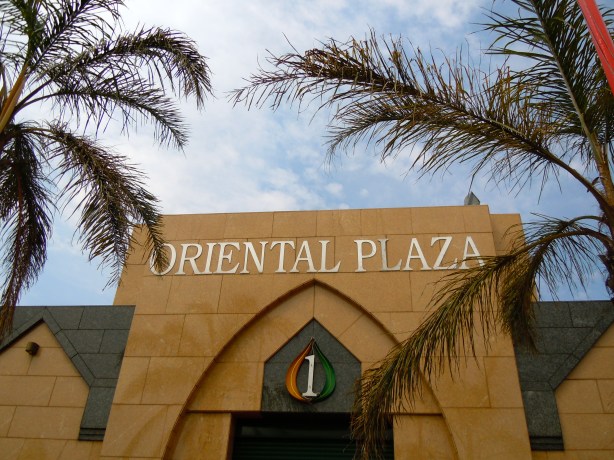
DSCN8836

The Plaza was an attempt to contain Indian traders within a part of the city designated as ‘Indian’, and in a space which evoked a particular interpretation of their ‘Indian-ness’. My point here is not to criticise the shopkeepers and shoppers who chose – and still choose – to work and shop there. But, rather, to make the point that Johannesburg’s landscape is constituted of various attempts to define people’s heritage for them.
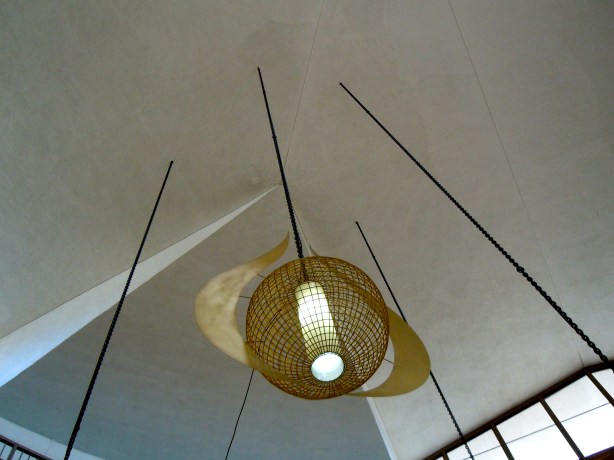
In the Oriental Plaza.

In the Oriental Plaza.

It’s for this reason that I find the Fietas museum so interesting: I hope that it will retrieve the profoundly traumatic history of the destruction of the suburb: of the people forced to move, of the lives and livelihoods destroyed, and of the homes and businesses bulldozed in an effort to make Fietas ‘white’.

In fact, I hope it will begin to answer a question that Teju Cole posed last week at a talk at the Troyeville Hotel. Referring to the ways in which we write about cities, he asked:

Cities are built on people’s bones. How, then, do we tell stories about cities so that those who have died, do not die a double death through forgetting? Below us, on street corners, are people’s dreams.

The problem with any attempt to define a specific South African heritage is that it tends to be a triumphalist retelling of the country’s past. It has, then, the potential to ignore ordinary struggles and ordinary lived realities: the lives of people who just got by under extraordinarily difficult conditions.

We need to tell those stories too.

Creative Commons License
Tangerine and Cinnamon by Sarah Duff is licensed under a Creative Commons Attribution-ShareAlike 3.0 Unported License.

Food Links, 18.09.2013

  • The political, economic, and ethical implications of eating out.
  • Sobering statistics around advertising food to children.
  • Analysing hunger in Zimbabwe.
  • Debating GM.
  • The return of the short-haired bumblebee.
  • Does artificial meat have a future?
  • Where America’s fresh produce comes from.
  • Is it possible to farm salmon sustainably?
  • How fridges are contributing to climate change.
  • Scarcity ‘puts people in a kind of cognitive tunnel, limiting what they are able to see. It depletes their self-control. It makes them more impulsive and sometimes a bit dumb.’
  • How Chinese demand for pecan nuts is transforming Texan agriculture.
  • What entomology can bring to the table: an infographic.
  • Thoughts on salad, from 1615.
  • Saffron salt.
  • The rise and rise of bluefin tuna.
  • ‘Why does it give me such a bad dose of the pip? Is it … the insistence that they’re purveying “cucina povera” (a style of cooking born of extreme Italian poverty)? Meat is rarely used in this; and, if it is, it’s of the innards and extremities variety.’
  • The illegal vodka pipeline.
  • Purple sweet potatoes could be used for food dyes.
  • Guardian readers share photographs of their breakfasts.
  • Fine art cakes. (Thanks, Mum!)
  • Vintage Chinese restaurant menus.
  • Weird pizza toppings.
  • The results of an OED appeal for references to Earl Grey tea.
  • An alphabet of potentially deadly foods.
  • Flavour connections.
  • ‘Part of [Stalin’s] sunniness mandate was the creation of a Soviet socialist food canon – source of all the meat patties (kotleti), mayonnaise-laden salads, and spicier fare from ethnic republics that would fuel the USSR for its next 50-plus years.’ (Thanks, Nafisa!)
  • Accra’s first farmers’ market.
  • The best butchers in Bohemia.
  • The difficulties of running a fast-food restaurant in France.
  • Fad diets are really very silly indeed.
  • How serving temperature influences the way food tastes.
  • Where to buy cronuts in South Africa.
  • ‘So onto a play set inside a giant Emmental: Cheese, an absurdist allegory of the financial crisis.’